Liabilities
Learn what liabilities are, the main types, and how to track what your Singapore business owes.
Published Wednesday 30 September 2026
Table of contents
Key takeaways
- Liabilities are amounts your business owes to others, and they sit on your balance sheet alongside assets and equity
- Current liabilities fall due within 12 months, non-current liabilities fall due later, and contingent liabilities depend on a future event
- You record a liability with a credit when it arises and reduce it with a debit as you pay it off
- Checking your current ratio and gearing ratio regularly shows whether you can comfortably cover what you owe
What are liabilities?
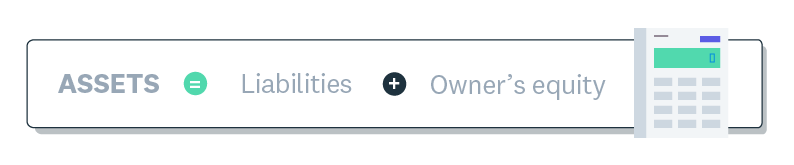
The accounting equation
Liabilities are amounts your business owes to other people or organisations. You'll settle them later with cash, goods or services.
In accounting, a liability is a present obligation from a past event, such as buying stock on credit. Liabilities are one of three elements on your balance sheet, alongside assets and equity.
The accounting equation links them: assets = liabilities + equity. Everything you own is funded by what you owe or by what owners have put in.
Taking on liabilities is normal. A loan for new equipment can help you grow, as long as you know what's due and when.
Types of liabilities
Liabilities fall into three groups based on when they're due and how certain they are. Knowing which apply helps you prioritise payments.
Current liabilities
Current liabilities are amounts due within 12 months. They draw on your day-to-day cash first.
In Singapore, several of them come from rules set by the Inland Revenue Authority of Singapore (IRAS) and the Central Provident Fund (CPF) Board. Common current liabilities include:
- accounts payable, meaning money you owe suppliers for goods or services you've already received
- wages payable, meaning salaries your staff have earned but haven't received
- CPF contributions payable, meaning the employer and employee amounts you owe the CPF Board for the month
- goods and services tax (GST) payable, meaning GST at 9% you've charged customers but haven't yet paid to IRAS
- income tax payable, meaning corporate income tax your company owes to IRAS for the year
- short-term loans and credit lines, meaning overdrafts or trade financing due within 12 months
- the current portion of long-term loans, meaning repayments due in the next 12 months
- accrued expenses, meaning costs you've incurred but haven't been billed for yet
- unearned (deferred) revenue, meaning payments customers have made for work you haven't delivered yet
Non-current liabilities
Non-current liabilities, also called long-term liabilities, are amounts due after 12 months. You usually repay them over several years.
Examples of non-current liabilities include:
- long-term business loans, meaning the part of a loan due after the next 12 months
- property mortgages, meaning loans used to buy a shop, office or industrial unit
- lease liabilities, meaning payments still owed on a multi-year lease for premises or equipment
- deferred tax liabilities, meaning tax you'll pay later because of timing differences between accounting and tax rules
Contingent liabilities
Contingent liabilities are possible obligations that depend on a future event, such as a customer lawsuit or a warranty claim.
Each of Singapore's reporting frameworks is based on International Financial Reporting Standards (IFRS). The Accounting and Corporate Regulatory Authority (ACRA) issues all three: Singapore Financial Reporting Standards (International), or SFRS(I); Financial Reporting Standards (FRS); and SFRS for Small Entities.
These frameworks follow the approach in IAS 37 (International Accounting Standard 37). A contingent liability stays off the balance sheet; you disclose it in the notes unless the chance of an outflow is remote. When an outflow becomes probable and you can estimate it reliably, you record a provision.
Say a client sues your catering company over a cancelled event. If you'll probably pay and can estimate the amount, you record a provision; if payment is only possible, you disclose it.
How liabilities are recorded on the balance sheet
You record a liability when a past event creates a present obligation you'll need to settle.
Double-entry bookkeeping uses debits and credits to track each change. Liabilities increase with a credit and decrease with a debit.
Here's how a S$20,000 bank loan moves through your books:
- when the funds arrive, debit bank S$20,000 and credit loan payable S$20,000
- when you make a S$1,000 repayment that includes S$150 interest, debit loan payable S$850 and debit interest expense S$150
- for the same repayment, credit bank S$1,000, so your cash falls by the full amount
- loan payable then stands at S$19,150
Splitting principal from interest matters: principal reduces the liability on your balance sheet, while interest is an expense on your profit and loss statement.
Examples of liabilities in business
Imagine you run a catering company in Singapore. At the end of the quarter, your balance sheet shows these liabilities:
- S$8,500 in accounts payable to your food supplier
- S$3,200 in wages payable to your kitchen crew for the last two weeks
- S$1,800 in GST collected from customers but not yet paid to IRAS
- S$45,000 due after the next 12 months on a five-year van loan
- S$120,000 due after the next 12 months on a mortgage for your central kitchen
Your current liabilities total S$13,500 (S$8,500 + S$3,200 + S$1,800). Your non-current liabilities total S$165,000 (S$45,000 + S$120,000), bringing total liabilities to S$178,500.
Compare that with your assets. If your business owns S$250,000 in assets, your equity is S$71,500 (S$250,000 minus S$178,500). Equity funds about 29% of your assets, and liabilities fund the other 71%.
Liabilities that don't look like debt
Some liabilities come from customers paying you early. Until you deliver, you owe them goods or services, so the money is a liability.
Common examples include:
- deferred revenue, such as a 12-month maintenance contract paid upfront that you recognise as income month by month
- customer deposits, such as a S$2,000 deposit for a wedding banquet you'll cater next quarter
- gift vouchers, which stay a liability until a customer redeems them
- loyalty points, where part of each sale relates to rewards customers can claim later
Once you deliver, the liability shrinks and you record the matching income, which keeps your profit figures accurate.
Liabilities vs assets
Assets are what your business owns, and liabilities are what it owes. The gap between them is your equity.
Assets include cash, inventory, equipment and property. Liabilities include loans, unpaid bills, taxes owed and customer deposits.
The two often move together. When you borrow S$50,000 to buy kitchen equipment, you gain a S$50,000 asset and a S$50,000 liability. Over time, depreciation lowers the equipment's value while your repayments shrink the loan.
Keeping assets above liabilities gives you positive equity, which lenders look for.
Liabilities vs expenses
An expense is a cost you incur to earn revenue in a period, while a liability is an amount you still owe. Expenses appear on your profit and loss statement, and liabilities appear on your balance sheet.
Take a S$30,000 equipment loan repaid over five years. The outstanding balance is a liability, while the monthly interest and the equipment's depreciation are expenses.
One transaction can create both. When a S$400 utility bill arrives, you record a S$400 expense and S$400 in accounts payable. Paying the bill clears the liability, and the expense stays in that month's profit and loss.
How to manage business liabilities
Managing what you owe keeps cash free for new opportunities. These steps help you stay on top of it each month.
1. Review your current liabilities
List everything due in the next 12 months with its amount and due date. Update the list monthly.
2. Set aside GST and CPF amounts
GST you've collected is owed to IRAS, and CPF contributions are owed to the CPF Board each month. Moving these amounts into a separate account as they build up means the money's ready when payment is due.
Do the same for your estimated corporate income tax.
3. Organise supplier payments
A clear accounts payable process helps you pay bills on time without paying too early. Ask suppliers for longer terms where you can.
4. Check your current ratio
Your current ratio divides current assets by current liabilities. A result between 1.5 and 2.0 is generally healthy for small businesses.
5. Watch your gearing ratio
Your gearing ratio compares your debt with your equity. A ratio between 25% and 50% suits most small businesses.
6. Protect your working capital
Healthy working capital, the gap between current assets and current liabilities, gives you room to handle slow months. Build a cash reserve and refinance high-interest debt when lower rates come up.
If repayments start to feel tight, an accountant can help you restructure debt.
Track your business liabilities with Xero
Xero gives you an up-to-date balance sheet, so your current and non-current liabilities are clear at a glance.
Automated bank feeds bring in loan repayments and supplier payments, cutting manual entry. You can run financial reports to review working capital or share figures with your accountant.
Try Xero with your own numbers when you get one month free, and see how simple tracking liabilities can be.
FAQs on liabilities
These answers cover common questions small business owners ask about liabilities.
Is equity a liability?
Equity sits separately from liabilities: it's the owners' claim on what's left after all debts are paid. A dividend your company has declared but not yet paid, though, becomes a liability until you pay it.
Is a loan an expense or a liability?
The loan balance is a liability, and only interest and fees count as expenses. That's why repaying principal lowers your cash without lowering your profit.
What's the difference between a provision and a contingent liability?
A provision is a likely obligation you can estimate, such as expected warranty repairs, so you record it on the balance sheet. A contingent liability is only possible, so you disclose it in the notes instead.
Are liabilities bad for a business?
Liabilities are a common way to fund growth before cash comes in. Aim to keep repayments within what your cash flow can comfortably cover.
Is GST collected a liability?
Yes, GST you collect from customers is a liability until you pay it to IRAS. On your GST return, you subtract the GST you've paid on business purchases, and the difference is what you owe or can claim back.
Related terms
Learn more about liabilities
Handy resources
Advisor directory
You can search for experts in our advisor directory
Xero Small Business Guides
Discover resources to help you do better business
Financial reporting
Keep track of your performance with accounting reports
Disclaimer
This glossary is for small business owners. The definitions are written with their requirements in mind. More detailed definitions can be found in accounting textbooks or from an accounting professional. Xero does not provide accounting, tax, business or legal advice.