Assets
Learn what business assets are, the main types, examples, and how they're valued for your small business.
Published Monday 17 August 2026
Table of contents
Key takeaways
- Assets are resources your business owns that provide economic value, including cash, equipment, inventory, and intangible items like patents.
- In accounting, assets form one side of the equation (Assets = Liabilities + Owner's equity) and help determine your business net worth.
- Assets can be classified as current or fixed, tangible or intangible, and financial, depending on their nature and how they're used.
- Tracking and valuing assets accurately gives you a clearer picture of your financial position and supports better business decisions.
What are assets?
Assets are resources a business owns that have economic value and can generate future benefits. They represent what your business has, while liabilities represent what your business owes. Business assets come in many forms and typically include:
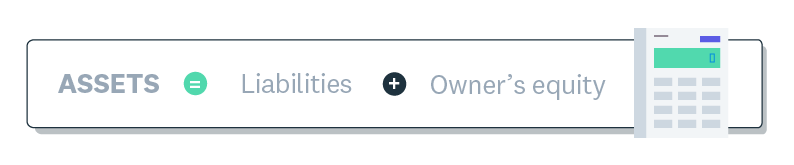
The accounting equation
- cash and bank balances
- accounts receivable (money owed to you by customers)
- inventory and raw materials
- equipment and tools
- property and vehicles
- intangible assets like trademarks, patents, royalties, and other intellectual property
For example, a plumber's assets might include:
- a work van
- plumbing tools and equipment
- spare parts inventory
- outstanding invoices from customers
Understanding your assets is a core part of small business accounting and helps you see what your business is worth.
What are assets in accounting?
In accounting, assets add value to your business and form one side of the accounting equation. This equation underpins every set of financial statements and states:
Assets = Liabilities + Owner's equity
The equation must always balance. If your assets exceed your liabilities, your business has positive equity, which means the business is worth more than it owes. The greater this difference, the higher your business net worth.
Types of assets
Assets can be grouped in several ways depending on how they're used and what form they take. Common categories include:
- current assets: resources used or converted to cash within one year, such as inventory, accounts receivable, and cash (these form part of your working capital)
- fixed assets: long-term resources used over multiple years, such as property, machinery, and vehicles
- tangible assets: physical items you can touch, like equipment and buildings
- intangible assets: non-physical assets like copyrights, patents, and brand trademarks
- financial assets: investments such as shares and bonds
Examples of assets
Singapore small businesses typically own a mix of tangible and intangible assets. Common examples include:
- cash in the bank
- accounts receivable
- inventory and stock
- equipment and tools
- vehicles
- commercial property or office space
- intangible assets like trademarks and patents
Assets vs liabilities
Assets are what a business owns, while liabilities are what it owes. Liabilities include bank loans, tax obligations, and accounts payable (money owed to suppliers).
Both sit on the balance sheet. Assets appear on one side, liabilities on the other, with the difference representing owner's equity. Tracking this relationship shows whether your business is building wealth or accumulating debt.
Why assets matter for your business
Assets keep your business running day to day. Equipment lets you deliver products or services, inventory gives you something to sell, and cash covers expenses.
Beyond daily operations, assets help generate income and can serve as collateral when applying for loans. They also show what your business is worth, which matters when seeking investors or planning to sell.
How assets are valued
Assets are recorded on the balance sheet at their value when acquired. Over time, fixed assets like equipment, vehicles, and property lose value through wear and use. This reduction is tracked through depreciation, which spreads the cost of an asset over its useful life.
Accurate asset records help you understand your true financial position and ensure your accounts reflect realistic values rather than outdated purchase prices.
Track your business assets with Xero
Knowing what your business owns gives you a clearer picture of its financial health. Xero makes it simple to record assets, track depreciation, and generate balance sheets, so you can see where you stand at any time. Ready to take control of your finances? Get one month free and see how Xero can help.
FAQs on assets
Here are answers to common questions about business assets.
What are examples of assets?
Examples include cash, accounts receivable, inventory, equipment, vehicles, property, and intangible items like patents or trademarks. The specific assets vary depending on the type of business you run.
Is labour an asset?
Labour itself is not recorded as an asset on the balance sheet. However, the skills and knowledge your employees bring, sometimes called human capital, contribute to your business's ability to generate value over time.
What is the difference between current and fixed assets?
Current assets are used or converted to cash within 12 months, while fixed assets are held for the long term. A delivery van is a fixed asset; the fuel in its tank is a current asset.
What are intangible assets?
Intangible assets are non-physical resources that still hold value, such as patents, copyrights, trademarks, and goodwill. They can be difficult to value but often represent a significant part of a business's worth.
Related terms
Learn more about assets
Handy resources
Advisor directory
You can search for experts in our advisor directory
Xero Small Business Guides
Discover resources to help you do better business
Fixed assets in Xero
Manage your fixed assets with easy-to-use accounting software
Disclaimer
This glossary is for small business owners. The definitions are written with their requirements in mind. More detailed definitions can be found in accounting textbooks or from an accounting professional. Xero does not provide accounting, tax, business or legal advice.