Balance sheet
Learn what a balance sheet is, its three parts, and how to read one for your small business.
Published Monday 17 August 2026
Table of contents
Key takeaways
- A balance sheet summarises your business's financial position at a specific point in time, showing what you own (assets), what you owe (liabilities), and what remains for the owners (owner's equity).
- The accounting equation (assets = liabilities + owner's equity) must always balance, and any discrepancy signals missing or incorrect data.
- Comparing balance sheets over time helps you track changes in liquidity, solvency, and overall financial health.
- Used alongside the profit and loss statement and cash flow statement, the balance sheet gives a complete picture of your business finances.
What is a balance sheet
A balance sheet is a financial report that summarises a business's financial position at a single point in time, showing its assets, liabilities, and owner's equity. It's also called a statement of financial position.
Think of it like a personal net worth snapshot. Just as you might list your savings, property, and debts to see where you stand financially, a balance sheet does the same for your business. The report captures everything your business owns and owes on a specific date, giving you a clear view of its financial foundation.
What is a balance sheet used for
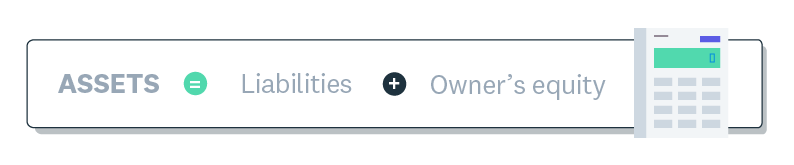
The accounting equation
Business owners and managers use balance sheets to understand financial health, plan for growth, and make informed decisions about spending or investment. By reviewing assets and liabilities side by side, you can see whether your business has enough resources to cover its obligations.
External parties rely on balance sheets too. Lenders review them to assess creditworthiness before approving loans. Investors examine them to evaluate the net worth and stability of a business before committing capital. Suppliers may request them to gauge whether you can pay invoices on time.
The accounting equation
The foundation of every balance sheet is the accounting equation: assets = liabilities + owner's equity. This equation must always balance, which is how the report gets its name.
If your balance sheet doesn't balance, it usually means there's missing or incorrect data somewhere in your records. Common causes include unrecorded transactions, data entry errors, or misclassified accounts. The equation works because of double-entry bookkeeping, where every transaction affects at least two accounts by equal amounts.
The 3 parts of a balance sheet
A balance sheet organises financial information into three main components that work together to show the full picture of a business's finances.
- Assets: everything the business owns that has value
- Liabilities: everything the business owes to others
- Owner's equity: the residual value belonging to the owners after liabilities are subtracted from assets
Assets
Assets are resources your business owns that have economic value. They're typically divided into current assets (expected to be converted to cash or used within one year) and non-current assets (held for longer than one year).
Current assets include cash, accounts receivable, and inventory. Non-current assets include property, equipment, and intangible assets like patents or trademarks. When recording non-current assets, you'll also account for accumulated depreciation, which reduces the asset's book value over time to reflect wear and usage.
Liabilities
Liabilities are obligations your business owes to external parties. Like assets, they're split into current liabilities (due within one year) and non-current liabilities (due after one year).
Current liabilities include accounts payable, accrued expenses, and the current portion of any loans. Non-current liabilities include long-term loans, mortgages, and other debts that extend beyond 12 months.
Owner's equity
Owner's equity represents the owners' claim on the business after all liabilities have been paid. It's sometimes called net assets or shareholders' equity in a company structure.
Owner's equity consists of capital contributed by the owners plus retained earnings, which are profits reinvested in the business rather than distributed. If your business has been profitable and hasn't withdrawn all earnings, retained earnings will grow over time.
Example of a balance sheet
Here's a simplified balance sheet for a small retail business. The figures are illustrative, but they demonstrate how the accounting equation works in practice. You can use Xero's free balance sheet template to create your own.
- Cash: $30,000
- Accounts receivable: $15,000
- Inventory: $25,000
- Equipment: $50,000
- Total assets: $120,000
- Accounts payable: $20,000
- Short-term loan: $10,000
- Long-term loan: $40,000
- Total liabilities: $70,000
- Owner's equity: $50,000
The equation balances: $120,000 in assets equals $70,000 in liabilities plus $50,000 in owner's equity.
How to read a balance sheet
Start by comparing your current balance sheet to previous periods. Look for significant changes in asset values, liability levels, or owner's equity. These shifts can reveal trends in your business's financial direction.
Check your liquidity by calculating the current ratio: divide current assets by current liabilities. A ratio above 1.0 suggests you have enough short-term assets to cover short-term debts. You can explore other liquidity ratios for deeper analysis.
Assess solvency by looking at debt-to-equity, which compares total liabilities to owner's equity. A higher ratio means more of your business is funded by debt rather than owner investment, which can indicate higher financial risk.
Balance sheet vs profit and loss statement
The balance sheet and profit and loss statement serve different purposes, and understanding both is essential for a complete financial picture.
- A balance sheet shows financial position at a single point in time, capturing what you own and owe on a specific date.
- A profit and loss statement (also called an income statement) shows financial performance over a period, summarising revenue, expenses, and resulting profit or loss.
- The cash flow statement, the third core report, tracks money moving in and out of your business during a period.
Together, these three financial statements give you a comprehensive view of your business finances. The profit and loss statement explains how your equity changed, while the cash flow statement explains changes in your cash balance.
Limitations of a balance sheet
A balance sheet is a snapshot, not a video. It captures your financial position on one specific date, so it may not reflect seasonal fluctuations or recent changes that occurred just after the reporting date.
Balance sheets also use historical cost for most assets, meaning property or equipment may be recorded at purchase price rather than current market value. This can understate or overstate the true worth of your assets. For these reasons, you'll get the best insights by reading your balance sheet alongside your profit and loss statement and cash flow statement.
Simplify your balance sheet with Xero
Preparing a balance sheet manually takes time and invites errors, especially as your business grows. Xero's accounting software generates balance sheets automatically from your financial data, so you always have an up-to-date view of your business's financial position.
Bank feeds and automated reconciliation keep your records current without manual data entry. When you're ready to review your numbers, your balance sheet is just a few clicks away. Get one month free and see your balance sheet update in real time.
FAQs on balance sheets
Here are answers to common questions about balance sheets.
What is the purpose of a balance sheet?
A balance sheet helps you understand your business's financial position by showing what you own, what you owe, and what's left for the owners. It's essential for making informed decisions about cash management, borrowing, and growth.
What are the 3 main parts of a balance sheet?
The three main parts are assets (what the business owns), liabilities (what it owes), and owner's equity (the owners' residual stake). These three components must satisfy the accounting equation.
Why must a balance sheet balance, and what if it doesn't?
It must balance because of double-entry bookkeeping, where every transaction affects two accounts equally. If it doesn't balance, there's likely a recording error, missing transaction, or misclassified entry that needs investigation.
What is the difference between current and non-current assets?
Current assets can be converted to cash or used up within one year, such as inventory or accounts receivable. Non-current assets are held longer, like property, equipment, or long-term investments.
How often should you prepare a balance sheet?
Most businesses prepare balance sheets monthly or quarterly for internal review, and at least annually for tax and compliance purposes. More frequent reporting helps you spot issues early and make timely decisions.
Related terms
Learn more about balance sheet
Handy resources
Advisor directory
You can search for experts in our advisor directory
Xero Small Business Guides
Discover resources to help you do better business
Financial reporting
Keep track of your performance with accounting reports
Disclaimer
This glossary is for small business owners. The definitions are written with their requirements in mind. More detailed definitions can be found in accounting textbooks or from an accounting professional. Xero does not provide accounting, tax, business or legal advice.