What Is Revenue? Definition, Formula and How to Track It
Learn what revenue is and how it helps you price, forecast, and grow profit.

Written by Shaun Quarton—Accounting & Finance Content Writer and Growth Marketer. Read Shaun's full bio
Published Friday 16 January 2026
Table of contents
Key takeaways
- Calculate your net revenue by subtracting discounts, returns, and allowances from gross sales to get an accurate picture of your actual earnings.
- Track revenue consistently using automated tools like accounting software rather than manual spreadsheets to reduce errors and save time on financial record-keeping.
- Distinguish between operating revenue from your core business activities and non-operating revenue from secondary sources to better understand your primary income drivers.
- Implement revenue recognition principles by recording income when goods are delivered or services completed, not when payment is received, to ensure accurate financial reporting.
What is revenue?
Revenue is the total money your business earns from selling products or services before any expenses are deducted. It's also called sales or turnover and serves as the starting point for calculating profit.
Revenue comes from:
- Product sales: Physical goods like bread from a bakery
- Service delivery: Professional services like consulting or freelancing
- Subscription fees: Recurring payments for ongoing services
How to calculate revenue
Here are steps on how to calculate and track revenue:
Use the basic revenue formula
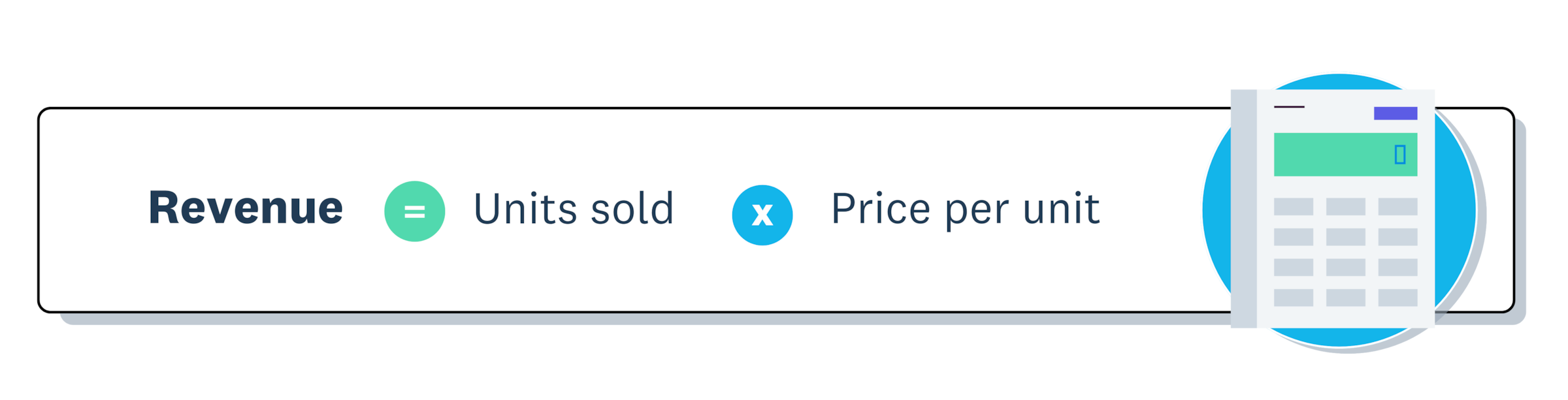
The first step in understanding your business's income is calculating your revenue. The basic formula is:
Revenue = Units sold × Price per unit
For example, if a bakery sells 100 loaves of bread at $5 each, the revenue would be: 100 × $5 = $500
Adjust for different business models
Depending on your business type, the method for calculating revenue may differ. Here's how to adjust your calculation.
Service-based businesses
Revenue = Hourly rate × Number of hours worked (For consultants or freelancers)
Subscription-based businesses
Revenue = Number of subscribers × Subscription price (For gyms, streaming services, etc).
Ecommerce businesses
Each transaction may have a different price, so track every sale individually.
Using ecommerce platforms or accounting software like Xero will help simplify the process.
Calculate net revenue
Net revenue shows your actual earnings after accounting for business realities like returns and discounts.
Formula: Net revenue = (Units sold × Price per unit) – Discounts – Returns
Net revenue provides a realistic view of income by including:
- Customer returns: Products sent back for refunds
- Discount impact: Price reductions and promotional offers
- Allowances: Credits given for damaged or defective items
Track your revenue
To maintain accurate financial records and make better decisions, track your revenue consistently.
Follow these steps to track your revenue effectively.
1. Choose a Method:
- Spreadsheets (Best for small businesses, but prone to errors and time-consuming)
- Point of Sale (POS) Systems (Great for physical stores, integrates sales data automatically)
- Accounting software such as Xero and QuickBooks (best for automation and advanced financial reporting)
2. Record Transactions:
- Ensure every sale is recorded correctly and consistently.
- Use tools to automate as much of the process as possible, reducing errors and saving time.
Types of business revenue
Businesses generate revenue through different channels, which fall into two main categories: operating revenue and non-operating revenue.
Operating revenue
Operating revenue is income generated from your core business activities, or the money you earn from your main products or services.
This revenue type:
- Forms the foundation: Primary measure of business performance
- Shows sustainability: Indicates whether your core business model works
- Drives growth: Provides funds for expansion and improvement
Examples include:
- Sales revenue: Income from selling goods and services, like a bakery selling bread and pastries.
- Service revenue: Earned by providing services such as consulting or repair work.
- Subscription revenue: Recurring income from subscription-based models, such as gym memberships or streaming services.
Sales revenue is often used as a catch-all term for main income-generating activities, whether selling goods or providing services. Service revenue is used when a business wants to specifically track income from services, particularly if it offers both goods and services.
Non-operating revenue
Non-operating revenue is income generated from activities outside your core operations. These earnings are often irregular and not directly tied to your business's ongoing performance.
They include earnings like:
- Interest income: Earnings from interest on investments, like depositing retained earnings in a bank.
- Dividend income: Income from shares in other companies, e.g., investing in tracker funds that pay dividends.
- Rental income: Leasing out property or equipment, such as renting extra space in a bakery.
- Gain on sale of assets: Income from selling assets like old equipment, such as when a bakery sells its old ovens after upgrading.
- Licensing fees: Income from allowing others to use intellectual property, like patents or trademarks.
- Franchise fees: Earnings from franchisees operating under your brand, e.g., expanding a bakery through franchising.
- Advertising revenue: Income from displaying ads on your website or property.
Revenue vs other financial metrics
While revenue is a key indicator of sales performance, it's important to understand how it differs from other financial terms like profit and income. This helps you get a complete picture of your business's financial health.
Revenue vs profit
Revenue and profit measure different aspects of business performance:
Revenue:
- Definition: Total money earned from sales
- Position: Appears at the top of income statements
- Purpose: Shows market demand and sales performance
Profit:
- Definition: Money remaining after all expenses
- Position: Appears at the bottom of income statements
- Purpose: Shows actual financial gain and business sustainability
Why both metrics matter:
- Revenue alone misleads: High sales don't guarantee profitability
- Expense control is crucial: Costs can eliminate profits despite strong revenue
- Decision-making: Use both metrics to assess true business health
Revenue vs income
The terms revenue and income are often used interchangeably, but they have distinct meanings.
Revenue refers specifically to the money earned from your main business activities. Income is a broader term that includes revenue plus any other money the business receives, such as interest from investments or gains from selling an asset.
What is revenue recognition?
Revenue recognition determines when to record revenue in your accounting records – typically when you earn it, not when you receive payment.
How it works:
- Timing: Record revenue when goods are delivered or services completed
- Payment timing: Doesn't matter when the customer actually pays
- Example: Deliver bread in July, get paid in August; record revenue in July
This ensures accurate financial reporting for each period.
Revenue is generally recognised according to International Financial Reporting Standards (IFRS). In New Zealand, this is governed by NZ IFRS 15, which is effective for reporting periods from 1 January 2023.
Some small businesses, like sole traders, may use cash accounting, where revenue is recorded when payment is received, not when it is earned. New Zealand’s Inland Revenue (IRD) provides specific guidance on income timing for professional services.
Here's more about cash vs accrual accounting.
Why tracking revenue is important for your small business
Revenue tracking reveals how much money flows into your business before expenses, enabling smarter financial decisions.
Key benefits include:
- Trend identification: Spot patterns in sales performance
- Strategic planning: Make informed decisions about growth and investments
- Performance measurement: Track progress toward financial goals
Drive business growth
Steady revenue growth helps you reinvest in your business, scale your operations, and attract investors.
Revenue growth enables strategic investments:
- Expansion: Open additional locations or enter new markets
- Equipment upgrades: Invest in better tools and technology
- Product development: Launch new offerings to attract customers
Measure performance
Performance monitoring helps you assess business health through key questions:
- Target achievement: Are monthly and yearly revenue goals being met?
- Improvement opportunities: Which products or services underperform?
- Success drivers: What generates the highest revenue?
Benchmarking against the market can also provide valuable insights. Explore Xero Small Business Insights (XSBI) to learn more.
Gain insights and identify trends
Revenue analysis reveals critical business patterns:
- Sales trends: Track whether revenue is growing or declining over time
- Product performance: Identify your best-selling and underperforming offerings
- Seasonal impacts: Understand how time of year affects your earnings
Make informed business decisions
Strategic decision-making becomes clearer with revenue data:
- Pricing adjustments: Determine if current prices support growth targets
- Equipment investments: Assess whether revenue justifies new purchases
- Market expansion: Evaluate readiness for geographic or product line growth
Revenue does not equal profitability. Learn more about increasing revenue.
Best practices for effective revenue tracking
Accurate revenue tracking prevents costly business problems. Risks of poor tracking include:
- Bad decisions: Incorrect data leads to wrong strategic choices
- Cash flow issues: Inability to predict or manage money flow
- Tax problems: Compliance issues with revenue reporting
Follow proven tracking practices to maintain data accuracy.
Maintain accurate records
Daily: Update your records to stay on top of transactions.
Monthly: Reconcile revenue with bank statements to spot discrepancies early.
Always: Keep receipts and other supporting documents for tax and auditing purposes.
Categorise your revenue
Break down revenue by product lines, sales channels (online, in-store), and customer segments. This helps you understand where your revenue is coming from and enables more effective decision-making.
Use tools for automation
Invest in accounting software to streamline tracking and reduce human error. This saves time and ensures more accurate financial insights.
Review data regularly
Set aside time each month to review your revenue data, spot trends, and identify areas for improvement.
Start tracking revenue with Xero
Knowing about revenue and tracking it is key to understanding where your money's coming from, your business future, and the decisions you need to make to succeed.
Xero simplifies revenue management with automated monitoring, real-time insights, and streamlined accounting, all in one platform.
This helps you spend less time on your books and more time running your business. Get one month free.
FAQs on revenue
Here are some common questions small business owners have about revenue.
What's the difference between revenue and profit?
Revenue is the total amount of money your business brings in from sales before any expenses are taken out. Profit is the amount that's left after all expenses, like rent, salaries, and cost of goods, are subtracted from revenue. A business can have high revenue but still not be profitable.
Is revenue the same as cash flow?
No, they are different. Revenue is the money your business earns from selling products or services, which might not be received immediately if you sell on credit. Cash flow is the actual movement of money into and out of your business. You can have high revenue but negative cash flow if your customers don't pay on time.
How can I increase my business revenue?
You can increase revenue by attracting new customers, encouraging existing customers to buy more, raising your prices, or introducing new products or services. Analysing your revenue data can help you decide which strategy is best for your business.
Disclaimer
Xero does not provide accounting, tax, business or legal advice. This guide has been provided for information purposes only. You should consult your own professional advisors for advice directly relating to your business or before taking action in relation to any of the content provided.
Get one month free
Purchase any Xero plan, and we will give you the first month free.