What is dropshipping and how does it work? Pros, cons and how to start
Learn what dropshipping is, how the model works and how to launch your own store in Australia.
Written by Jotika Teli—Certified Public Accountant with 24 years of experience. Read Jotika's full bio
Published Monday 15 June 2026
Table of contents
Key takeaways
- Dropshipping lets you sell products online without holding inventory, because your supplier ships orders directly to your customers.
- The global dropshipping market is projected to reach $476 billion in 2026, and Australian sellers can tap into this growth with relatively low startup costs.
- Success depends on choosing reliable suppliers, a profitable niche and a clear marketing strategy, while staying on top of your Australian Goods and Services Tax (GST) obligations.
- Tracking your margins, cash flow and expenses from day 1 helps you spot what's working and make confident decisions as your store grows.
What is dropshipping?
Dropshipping is a retail fulfilment method where your online store doesn't keep the products it sells in stock. Instead, when a customer places an order, you purchase the item from a third-party supplier who ships it directly to the customer.
That means you never handle, store or pack inventory yourself. Your role is to market products, manage your storefront and deliver a great customer experience, while the supplier takes care of warehousing and shipping.
It's one of the fastest-growing segments of e-commerce. The global dropshipping market is projected to reach $476 billion in 2026, driven by low barriers to entry and the rise of online shopping.
If you're selling to Australian customers, you'll need to understand your GST obligations. Businesses with an annual turnover of $75,000 or more must register for GST and include it in their pricing. Tracking key e-commerce metrics from the start will help you stay across your financial performance.
How does dropshipping work?
The dropshipping process follows 6 straightforward steps, from setting up your store to getting the product into your customer's hands.
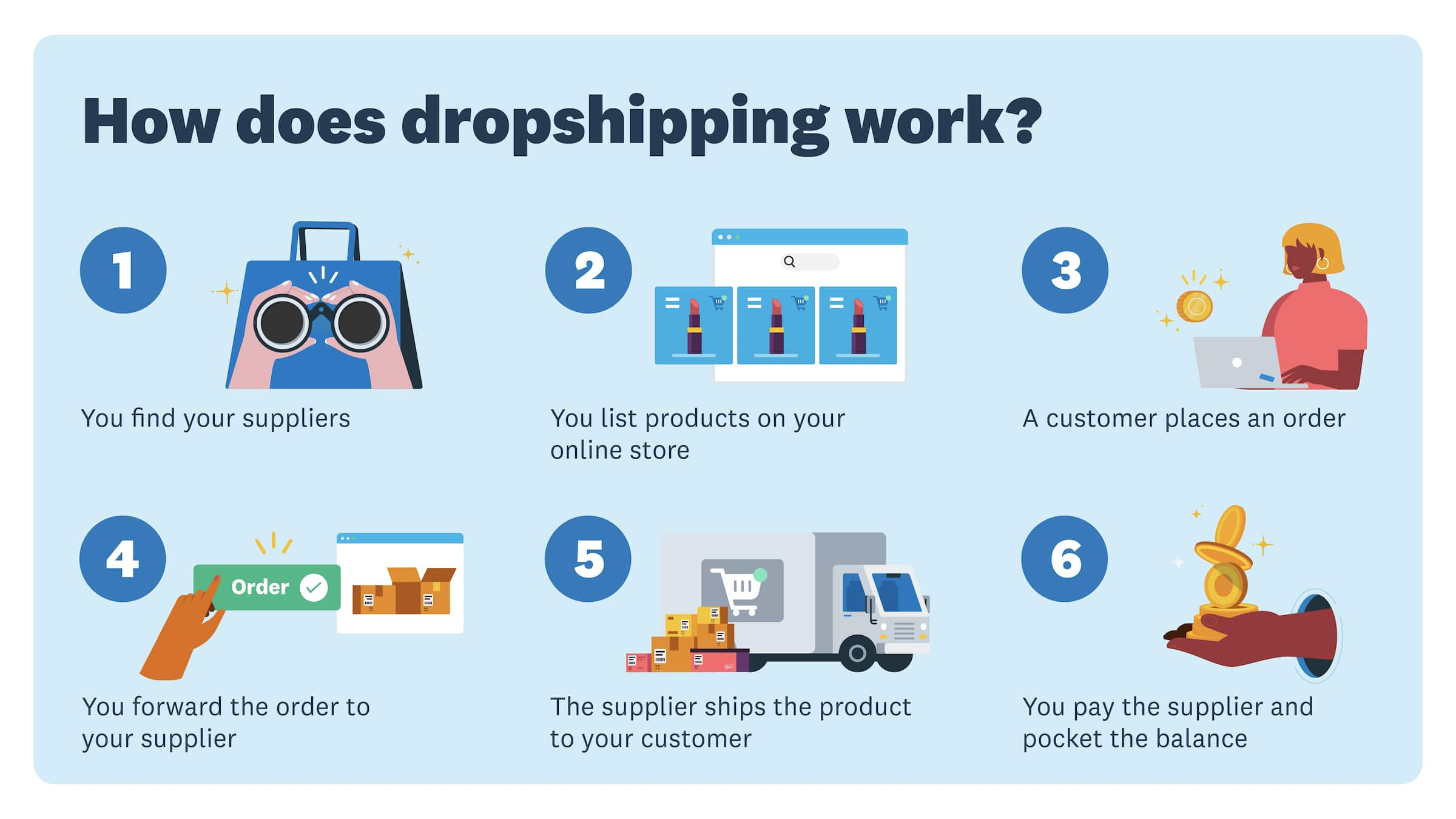
1. Set up your online store
Choose an e-commerce platform and list the products you want to sell. You set your own retail prices, write product descriptions and design your storefront, but you don't purchase any stock upfront.
2. Customer places an order
A customer visits your store, selects a product and completes the checkout. They pay your retail price, which includes your profit margin on top of the supplier's wholesale cost.
3. You forward the order to your supplier
Once the order is confirmed, you send the details to your dropshipping supplier. Many platforms automate this step so orders flow through to suppliers in real time.
4. Supplier picks and packs the product
Your supplier locates the item in their warehouse, packages it and prepares it for shipping. Some suppliers offer custom packaging or branded inserts so the delivery feels like it came directly from your business.
5. Supplier ships to your customer
The supplier dispatches the order straight to your customer's address. You'll typically receive a tracking number so you can keep your customer updated on shipping progress.
6. You handle customer service
Even though the supplier ships the product, your customer's experience is your responsibility. You manage enquiries, process returns and resolve any issues. Building trust through responsive service is what turns first-time buyers into repeat customers.
Dropshipping business models
Not all dropshipping businesses operate the same way. The model you choose affects your margins, branding options and the products you can offer. Here are 3 common approaches.
- Wholesale dropshipping: you partner with a wholesaler who supplies products at bulk pricing. You list them in your store at a marked-up retail price and pocket the difference. This model works well for everyday goods with consistent demand.
- Print on demand: a supplier prints your custom designs on products like t-shirts, mugs or phone cases only after a customer orders. It's ideal if you want to build a brand around original artwork or niche designs without minimum order quantities.
- Retail dropshipping: you source products from other retailers or marketplaces and resell them at a higher price. Margins tend to be thinner, but it lets you test product ideas quickly without negotiating supplier agreements.
Dropshipping vs traditional retail
Choosing between dropshipping and traditional retail comes down to how much risk, capital and control you're comfortable with. Here are the key differences.
- Inventory investment: traditional retailers buy stock upfront and store it in a warehouse or shop. Dropshippers never purchase products until a customer has already paid, which reduces financial risk.
- Fulfilment control: with traditional retail, you pack and ship orders yourself (or pay a third-party logistics provider). With dropshipping, the supplier handles fulfilment, giving you less control over packaging and delivery speed.
- Profit margins: traditional retailers typically earn higher margins because they buy at wholesale volume. Dropshippers accept slimmer margins in exchange for lower overheads and less capital tied up in stock.
Certain products tend to suit dropshipping better than others. Here are some characteristics to look for.
- Lightweight, easy-to-ship items that keep postage costs manageable
- Non-perishable goods that won't spoil or degrade during longer shipping times
- Niche or trending products that are hard for customers to find locally
- Items with a healthy markup between wholesale and retail price
- Products that don't require hands-on inspection or fitting before purchase
Is dropshipping right for you?
Dropshipping isn't for everyone. Before you commit, it helps to honestly assess whether the model suits your goals, skills and financial situation.
Dropshipping could be a good fit if you meet most of these criteria.
- You have a limited startup budget and want to avoid investing thousands in inventory before you've made your first sale.
- You value flexibility and want a business you can run from anywhere with an internet connection.
- You're comfortable with lower profit margins in exchange for reduced risk and overhead costs.
- You're willing to spend time researching and vetting suppliers so your customers receive quality products on time.
- You're prepared to take full responsibility for the customer experience, including returns, refunds and complaints, even when the supplier is at fault.
Dropshipping pros and cons
Every business model involves trade-offs. Here's a balanced look at the advantages and disadvantages of dropshipping for Australian small businesses.
Pros of dropshipping
Dropshipping offers several advantages that make it appealing to new and small business owners.
- Scalability: because you don't manage physical stock, you can add new products and test new markets without needing extra warehouse space or staff.
- Location flexibility: you can run a dropshipping store from your living room, a co-working space or while travelling. All you need is a laptop and an internet connection.
- Lower startup costs: without inventory to purchase or a warehouse to lease, your upfront investment is significantly lower than a traditional retail business.
- Improved cash flow: you collect payment from customers before you pay your supplier, which can help with managing cash flow. That said, payment terms vary by supplier, so it pays to track your cash position closely.
- Lower environmental impact: because products ship directly from the supplier to the customer, there's 1 less leg of transportation compared to traditional retail. Less packaging and warehousing also reduces waste.
Cons of dropshipping
Alongside the benefits, there are genuine challenges you should plan for.
- Complex shipping logistics: if you sell products from multiple suppliers, your customers may receive separate parcels at different times, which can lead to confusion and higher shipping costs.
- Lower profit margins: because you're buying individual items rather than in bulk, your cost per unit is higher. Payment processing fees compound the pressure; 32% of Australian accountants and bookkeepers say fees of up to 5% per transaction are a margin risk for online sellers.
- Intense competition: low barriers to entry mean many sellers compete on the same products and suppliers. Standing out requires strong branding and a clear pricing strategy.
- Dependence on suppliers: your reputation depends on your supplier's reliability. Late shipments, stock-outs or poor product quality reflect directly on your business, even though you don't control them.
- Branding limitations: when a supplier ships a plain or generically branded package, it's harder to create a memorable unboxing experience. Some suppliers offer white-label or custom packaging, but it usually costs extra.
How to start dropshipping in Australia
Getting started doesn't have to be complicated. If you're ready to learn how to start dropshipping in Australia, these 4 steps will help you build a solid foundation.
1. Find your market niche
A profitable niche is specific enough to attract a loyal audience, but broad enough to sustain consistent sales. Start by researching what Australian customers are searching for and identify gaps that existing sellers aren't filling well.
Look at trending product categories, seasonal demand patterns and competitor pricing. Choosing a niche you're genuinely interested in makes it easier to create compelling product descriptions and marketing content.
2. Choose reliable suppliers
Your supplier is the backbone of your business. Spend time finding dropshipping suppliers who offer consistent product quality, reliable shipping times and clear communication.
Order samples before you commit so you can check quality first-hand. Make sure your supplier can handle your expected order volume and ask about their return and refund policies. If you're sourcing from overseas, confirm they understand Australian consumer law and unfair contract term protections for small businesses.
3. Create your online store
Pick an e-commerce platform that integrates with your chosen suppliers and makes it easy to manage orders, payments and inventory. Popular options in Australia include Shopify, WooCommerce and BigCommerce.
Focus on clear product photography, honest descriptions and a smooth checkout flow. Consider outsourcing inventory management where possible so you can spend more time on marketing and customer service. Listing your products on marketplaces like Amazon can also widen your reach; check this selling on Amazon checklist for tips.
4. Plan your marketing strategy
Even the best store won't sell if nobody knows it exists. Build a marketing plan that combines search engine optimisation (SEO), social media, email campaigns and paid advertising to drive traffic to your store.
It pays to budget carefully; 38% of Australian accountants and bookkeepers say marketing expenses catch online business beginners off guard, particularly pay-per-click advertising costs. Start small, measure what converts and scale the channels that deliver the best return on your ad spend.
Is dropshipping profitable?
Dropshipping can be profitable, but it's not a guaranteed path to high income. Typical margins sit between 15% and 20%, though this varies widely depending on your niche, supplier costs and pricing strategy.
Several factors affect how much profit you'll actually keep. Supplier pricing, shipping costs, marketing spend, payment processing fees and returns all eat into your margins. Sellers who negotiate better supplier terms and focus on higher-value products tend to do better.
The key is tracking your numbers from day 1. Use accounting software to monitor revenue, expenses and profit per product so you can calculate profitability accurately. When you can see exactly where your money is going, you can cut what isn't working and double down on what is.
Take control of your dropshipping finances with Xero
Running a dropshipping business means juggling supplier payments, customer refunds, GST and fluctuating margins. Keeping all of that organised in spreadsheets gets messy fast.
Xero Accounting Software connects to your bank accounts and e-commerce platforms, so transactions flow in automatically. You can reconcile sales, track expenses by category and see your cash position in real time, giving you the clarity to make confident financial decisions as your store grows. Get one month free.
FAQs on dropshipping
Here are answers to some frequently asked questions about dropshipping.
Is dropshipping legal in Australia?
Yes, dropshipping is legal in Australia. As the seller of record, you're responsible for complying with Australian Consumer Law, which means honouring warranties and handling refunds even when a third-party supplier ships the product.
How much money do I need to start dropshipping?
You can start a basic dropshipping store for as little as $200 to $500, covering an e-commerce platform subscription, a domain name and initial marketing. Costs scale as you invest more in advertising and tools.
Can I dropship products from overseas suppliers?
Yes, many Australian dropshippers source from overseas suppliers. Be aware that GST applies to imported goods sold to Australian consumers, and longer shipping times can affect customer satisfaction.
Is dropshipping worth it in 2026?
It can be, but results vary widely. Sellers who pair a focused niche with strong supplier relationships and consistent marketing tend to build sustainable income, while those who compete purely on price often struggle to cover their costs.
How do I handle returns and refunds with dropshipping?
You'll need a clear returns policy that aligns with both your supplier's terms and Australian Consumer Law. When a customer requests a return, you coordinate with your supplier to arrange the exchange or refund, then communicate updates to your customer promptly.
Disclaimer
Xero does not provide accounting, tax, business or legal advice. This guide has been provided for information purposes only. You should consult your own professional advisors for advice directly relating to your business or before taking action in relation to any of the content provided.
Get one month free
Purchase any Xero plan, and we will give you the first month free.