Mobile accounting app for small businesses on the go
Discover how a mobile accounting app saves time, cuts admin, and gives real-time cash flow insights.
Written by Jotika Teli—Certified Public Accountant with 24 years of experience. Read Jotika's full bio
Published Friday 15 May 2026
Table of contents
Key takeaways
- A mobile accounting app lets you send invoices, capture receipts, and reconcile transactions from your phone, so you can stay on top of finances wherever you are.
- Automated bank feeds and receipt capture technology reduce manual data entry and help keep your financial records accurate while you're on the go.
- Sending invoices straight after completing work helps improve cash flow, because customers pay faster when they receive bills promptly.
- Real-time financial dashboards and cloud-based security give you the confidence to make informed business decisions from anywhere.
Managing your mobile business
A mobile accounting app lets you manage invoicing, expenses, and cash flow from your phone or tablet. You can track expenses, monitor cash flow, and send invoices right when you need to.
Small business owners are often on the move. Whether you're meeting clients, working on-site, or travelling between jobs, you probably spend most of your time away from a desk.
Your mobile device already handles emails, appointments, and documents. A mobile accounting app adds financial management to that list, so you can stay on top of the numbers while you're out running your business.
Mobile bookkeeping app or mobile accounting app?
Mobile bookkeeping apps and mobile accounting apps are often the same thing. While bookkeeping and accounting have different technical meanings, app developers tend to use these terms interchangeably.
When searching for software, look for both terms. You'll find more options and can compare features across a wider range of products. This is especially useful if you're new to small business bookkeeping and want to explore what's available.
Key features to look for in a mobile accounting app
Not all mobile accounting apps offer the same capabilities. Here are the key features to look for when choosing one for your business.
Bank synchronisation and automated data entry
Automated bank feeds connect your accounting app directly to your business bank account. Transactions are copied across automatically with a high degree of accuracy, saving you from manual data entry.
This connection gives you an up-to-date picture of money coming in and going out. You'll still need to reconcile and categorise transactions, but the raw data entry is handled for you.
Receipt capture and expense tracking
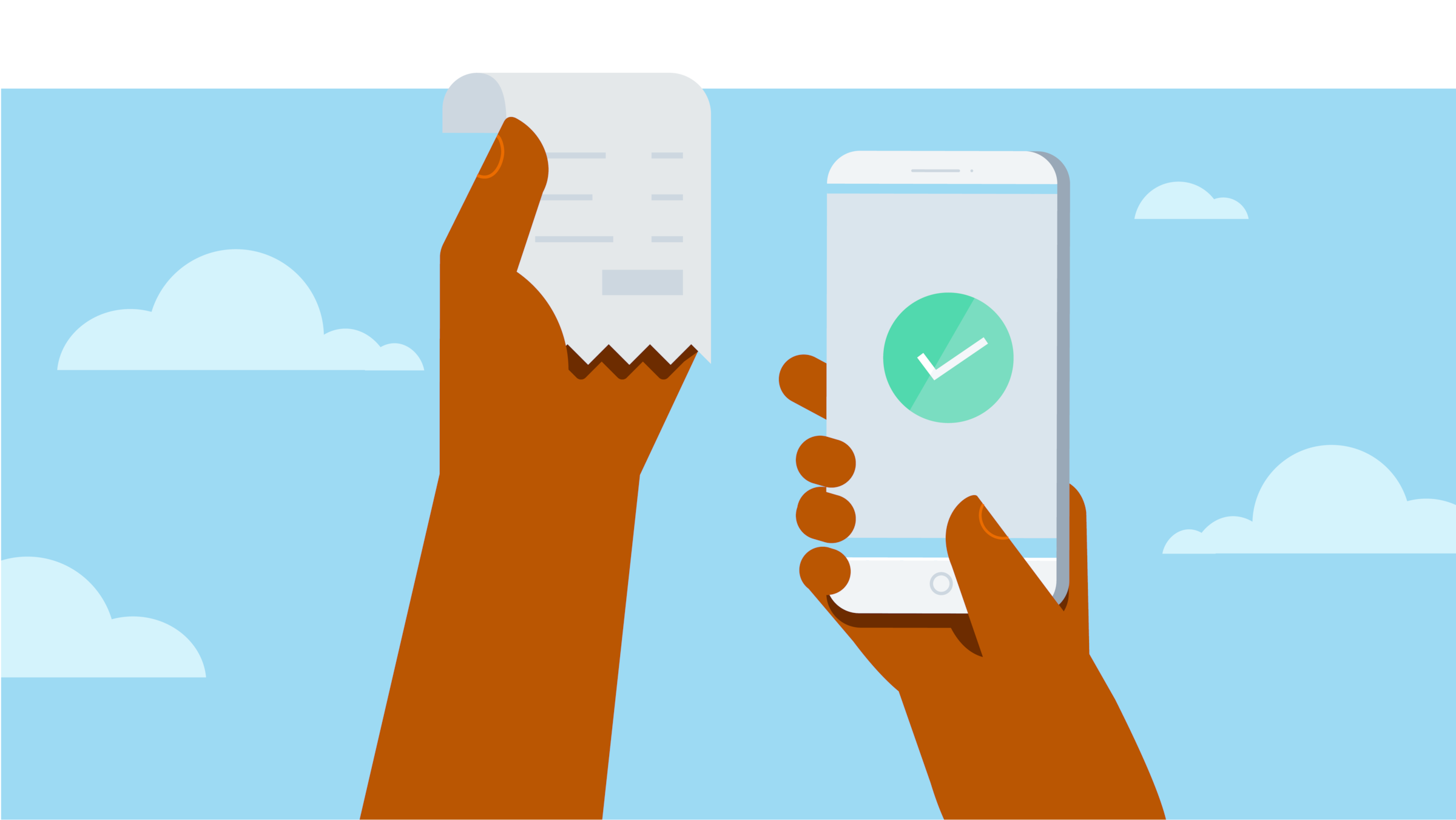
Receipt capture lets you photograph receipts with your phone. Some technology even sends electronic receipts to your software at checkout. The image is stored with your accounts, so you can easily track what's been spent.
Data capture tools like Hubdoc or Dext Prepare take this further. They read the image and enter details like supplier, date, and amount into your accounting software automatically.
Mobile invoicing and payment tracking
Mobile invoicing lets you create and send invoices straight after finishing a job, directly from your phone. You don't have to wait until you're back at the office, and you're more likely to send every invoice on time.
Getting invoices out faster improves cash flow. When customers receive bills promptly, they tend to pay sooner. You can also set up customisable templates, online payment links, and automatic reminders to streamline the process further.
Payment tracking shows you which invoices have been paid and which are still outstanding. The app matches incoming payments to invoices automatically, so you can quickly see what's been settled.
Bank reconciliation on the go
Bank reconciliation means matching the data on your bank statements to the data in your accounting records. According to the ATO, having strong reconciliation processes helps businesses report accurately, with ATO data showing reconciliation is key to correct reporting.
Most people sit down once a month and work through hundreds of transactions at a time. A mobile accounting app changes this by showing you fresh bank transactions every day.
You can reconcile transactions right on your phone, for a few minutes at a time. This keeps your workload manageable and your records accurate.
Real-time financial dashboards
Financial dashboards give you a clear view of your business performance at a glance. You can see revenue, expenditure, overdue invoices, and upcoming payments in one place.
The data refreshes regularly, so you always have a current picture of your cash flow position. This helps you make confident decisions about spending, pricing, and chasing payments from anywhere.
Security and data protection
Cloud-based cloud security means your financial data is stored on secure servers with encryption to protect it during transmission. For businesses concerned about offshore data storage, some providers offer options to host all data in Australia.
You can set up two-factor authentication (2FA), which the Australian Taxation Office (ATO) now requires cloud accounting platforms to provide. You can also control who has access to different parts of your accounts.
Your data is backed up automatically, so your records stay safe regardless of what happens to your device.
Multi-user access and collaboration
Multi-user access lets you invite your accountant, bookkeeper, or team members to work in the same accounting app. Everyone sees the same up-to-date data, which reduces miscommunication and duplicated work.
You can set different permission levels for each user. This means your bookkeeper can manage day-to-day transactions while you retain full control over sensitive financial information.
Real-time collaboration also makes it easier to get advice from your accountant without sending spreadsheets back and forth.
Automated notifications and reminders
Automated notifications help you stay on top of important financial tasks without having to remember them yourself. Your app can alert you when a bill is due, a payment comes in, or an invoice is overdue.
Invoice reminders are especially useful for improving cash flow. Instead of manually chasing late payments, the app sends follow-up reminders to your customers on a schedule you set.
An accounting app for Android, iOS and iPad
Mobile accounting apps work on any device because they're cloud-based online services. The software runs on secure servers, and you access it through your phone, tablet, or computer.
Whether you use Android, iPhone, or iPad, the app works the same way. You can switch between devices throughout the day while keeping full access to your data.
Benefits of mobile accounting for your business
Mobile accounting apps help you stay on top of finances from wherever you are. Here's what that means for your business:
- Save time on admin: capture expenses, send invoices, and reconcile accounts in spare moments rather than dedicating evenings to bookkeeping
- Improve cash flow: send invoices straight after completing work, so customers pay faster
- Make better decisions: access real-time financial data when you need to, not days later when you're back at the office
- Reduce errors: automated bank feeds and data capture help you maintain more accurate entries, which supports correct tax reporting
- Stay organised: digital receipts and records are stored securely and easy to find at tax time, simplifying bank reconciliation at the end of each period
Because these apps pull fresh data from your bank accounts, you're always working with accurate numbers.
How to choose the right mobile accounting app
The right mobile accounting app depends on your business needs and how you work day to day. Here's how to evaluate your options:
- Consider your business type and mobility: think about how often you're away from a desk and what tasks you need to complete on the go
- Identify essential features: decide which capabilities matter most, such as invoicing, receipt capture, or bank reconciliation
- Check bank compatibility: make sure the app connects to your business bank for automatic transaction feeds
- Think about multi-user access: consider whether your accountant, bookkeeper, or team members need to access the app
- Review integration capabilities: check that the app connects with other tools you already use, such as payroll, point-of-sale, or inventory software
- Check for offline access: some apps let you view previously loaded data without an internet connection, which is useful if you work in areas with patchy connectivity
- Compare pricing and plan flexibility: look for transparent pricing with plans that scale as your business grows, so you only pay for what you need
Are mobile accounting apps right for your business?
Mobile accounting apps suit almost any business, but they're especially useful for sole traders and small businesses where the owner handles the books.
If you do most of the bookkeeping yourself, an app can save you significant time. You can handle financial tasks on the fly rather than letting them pile up for evenings and weekends.
Businesses that benefit most include:
- Tradies and contractors working on-site
- Consultants and service providers meeting clients
- Retail and hospitality owners managing multiple locations
- Business owners who spend more time out of the office than in it
How to get started with mobile accounting
Setting up a mobile accounting app takes just a few steps. Once it's running, you'll have your business finances in your pocket wherever you go.
Follow these steps to get up and running:
- Choose an app that fits your business: look for features that match your daily needs, such as invoicing, receipt capture, and bank feeds. Check that it works on your device and offers plans within your budget.
- Connect your bank account: link your business bank account so transactions flow into the app automatically. This removes the need for manual data entry and keeps your records current.
- Set up categories and chart of accounts: organise your income and expenses into categories that match how your business operates. This makes reporting and tax time much simpler.
- Capture your first receipt: use the app's camera to photograph a receipt and check that it reads the details correctly. This is a quick way to confirm everything is working.
- Invite your accountant or bookkeeper: give your accountant or bookkeeper access so they can review your records, provide advice, and help with compliance.
Simplify your business finances with the Xero mobile app
A mobile accounting app puts your business finances at your fingertips. You can send invoices, track expenses, and monitor cash flow from anywhere.
The Xero mobile app connects to your bank, captures receipts automatically, and gives you a clear view of your financial position. It's built to be easy to use and grows with your business.
Ready to try mobile accounting? Get one month free and see how the Xero mobile app can simplify the way you manage your business.
FAQs on mobile accounting apps
Here are answers to frequently asked questions about mobile accounting apps.
Do I need internet access to use a mobile accounting app?
You need an internet connection to sync data and access your accounts in real time. Some apps let you view previously loaded information offline, but you'll need to reconnect to save changes or pull fresh data. If you work in areas with limited connectivity, check whether your chosen app offers offline viewing.
Can I manage all my bookkeeping from my mobile device?
You can handle most daily tasks on your phone, including sending invoices, tracking expenses, and reconciling your bank. More complex tasks like running detailed reports or setting up integrations are often easier on a desktop. Most cloud-based apps sync across devices, so you can switch between mobile and desktop as needed.
What happens to my data if I lose my phone?
Your data stays safe because it's stored securely in the cloud, not on your device. Simply log in from another phone, tablet, or computer to access your accounts. You can also revoke access from the lost device through your account settings to keep your information secure.
Can my accountant or bookkeeper access my mobile accounting app?
Most mobile accounting apps let you invite your accountant or bookkeeper to access your accounts. You can control what they see and do by setting different permission levels. This makes collaboration easier and means your adviser can review your records without needing separate files.
How is mobile accounting different from desktop accounting software?
Mobile accounting apps are cloud-based, so your data syncs across all devices automatically. Desktop software typically stores data locally on one computer. Mobile apps are designed for quick, everyday tasks on the go, while desktop versions may offer more detailed reporting and configuration options.
Is a mobile accounting app secure for business finances?
Reputable mobile accounting apps use bank-level encryption to protect your data during transmission and storage. Features like two-factor authentication (2FA) add an extra layer of protection. Your data is backed up automatically in the cloud, so it's safe even if your device is lost or damaged. Look for apps that let you control user permissions and offer Australian data hosting if that's a priority for your business.
Accounting software for your small business
Run your business on Xero’s simple and powerful online accounting software.
Learn more about Xero accounting software
Disclaimer
Xero does not provide accounting, tax, business or legal advice. This guide has been provided for information purposes only. You should consult your own professional advisors for advice directly relating to your business or before taking action in relation to any of the content provided.
Get one month free
Purchase any Xero plan, and we will give you the first month free.