Cash accounting
Learn what cash accounting is, how it differs from accrual accounting, and which Canadian businesses use it.
Published Thursday 23 July 2026
Table of contents
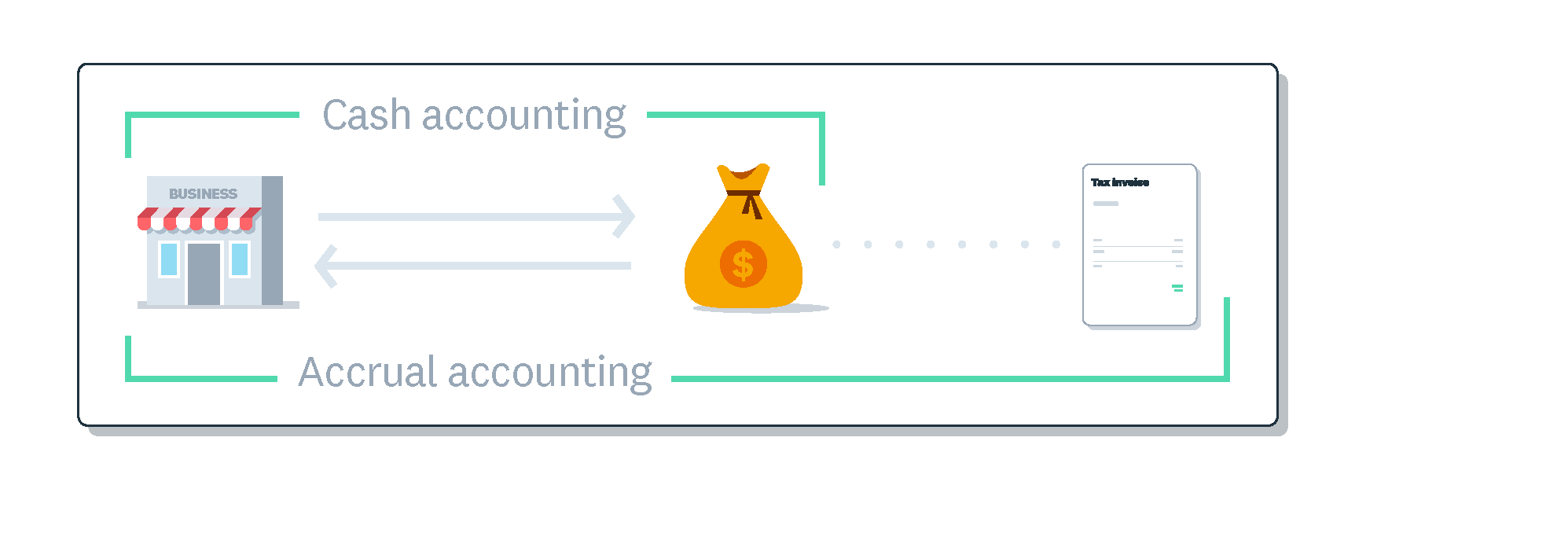
Cash accounting focuses only on money, not bills or invoices.
Key takeaways
- Cash accounting records income when payment lands in your account and expenses when you actually pay them.
- It differs from accrual accounting, which records income and expenses when they’re earned or owed, not when money changes hands.
- It suits many solopreneurs, freelancers, and service businesses with little or no inventory.
- The Canada Revenue Agency sets rules on who can use the cash method, so your business type affects your choice.
What is cash accounting?
Cash accounting records income when you receive payment and expenses when you pay them. It focuses only on money moving in and out, not on the bills or invoices behind that money.
This makes it one of the simplest ways to track your finances. You count a sale the day the cash arrives, and you count a cost the day you settle it, so your books mirror your bank balance closely. It’s sometimes called cash basis accounting or the cash method.
Cash accounting vs accrual accounting
The main difference between the two methods is timing: when you record a transaction. Cash accounting waits for money to change hands, while accrual accounting records it when the sale or expense happens.
- Cash method: records income when you’re paid and expenses when you pay
- Accrual method: records income when you invoice and expenses when you receive a bill
- Cash method: closely tracks your bank balance and available cash
- Accrual method: shows a fuller picture of what you’re owed and what you owe
To see how the two stack up in more detail, read this guide to cash vs accrual accounting.
Cash accounting examples
A couple of everyday scenarios show how the timing works. In each case, you record the transaction on the day the money actually moves.
- You invoice a client $2,000 in January, but they pay in March. Under cash accounting, you record the $2,000 as income in March, when the payment arrives.
- You receive a $500 supplier bill in April, but you pay it in June. Under cash accounting, you record the $500 expense in June, when you settle the bill.
Who uses cash accounting in Canada?
Cash accounting tends to appeal to smaller businesses that want simple books tied to their bank balance. It’s common among owners who don’t carry much stock and who bill for their time or services.
- Solopreneurs running a business on their own
- Freelancers and independent contractors
- Service businesses with little or no inventory
- Farming and fishing businesses, which may use the cash method
Pros and cons of cash accounting
Cash accounting is straightforward, but it isn’t right for every business. Weighing the benefits against the drawbacks helps you decide if it fits how you work.
These are the main advantages of the cash method:
- Keeps your books simple and easy to maintain
- Shows how much cash you have on hand at any time
- Suits small businesses with few transactions
- Makes it clear when income is taxable, since it’s taxed when received
And these are the main disadvantages to keep in mind:
- Leaves out money you’re owed but haven’t collected yet
- Leaves out bills you’ve received but haven’t paid
- Gives a less complete view of long-term performance
- May not meet the rules for larger or incorporated businesses
Cash accounting and tax in Canada
The Canada Revenue Agency (CRA) sets rules on which businesses may use the cash method. Your business structure and industry largely decide whether it’s an option for you.
Corporations, other than professional corporations, and some partnerships are generally required to use accrual accounting. Farming and fishing businesses, by contrast, may use the cash method. To understand how these methods sit within the wider rules, see the glossary entry on basis of accounting.
How to choose between cash and accrual accounting
Choosing a method comes down to how your business runs and what the rules allow. A few practical factors point you toward the right fit.
- Business size: smaller, simpler operations often lean toward the cash method
- Inventory: businesses holding stock usually need accrual accounting
- CRA eligibility: your structure may require one method over the other
- Financial picture: accrual gives a fuller view of what you’re owed and owe
If you’re still setting up your books, this guide on how to record accounting transactions walks through the basics.
Simplify your cash accounting with Xero
Whichever method you choose, tracking money in and out gets easier when your finances sit in one place. Xero brings your bank transactions, invoices, and bills together so you can see where your money really is. Get one month free.
FAQs on cash accounting
Here are answers to some frequently asked questions about cash accounting for Canadian small businesses.
Is cash basis accounting GAAP or IFRS compliant?
Cash basis accounting isn’t compliant with GAAP or IFRS, since both frameworks are built on the accrual method. Businesses that must follow these standards generally can’t rely on the cash method for their financial statements.
Can you switch between cash and accrual accounting?
You can move from one method to the other, but the change affects how income and expenses are reported in the year you switch. It’s worth speaking to an accountant so the transition is handled correctly.
Is cash accounting allowed in Canada?
Cash accounting is allowed in Canada for certain businesses, such as farming and fishing operations and many sole proprietors. Eligibility depends on your business type under CRA rules.
What is the main disadvantage of cash accounting?
Its biggest drawback is that it ignores money you’re owed and bills you haven’t paid, so it can hide upcoming obligations. This can make it harder to judge your true financial position.
Related terms
Learn more about cash accounting
Handy resources
Advisor directory
You can search for experts in our advisor directory
How to do bookkeeping
Learn about data entry, bank rec, reporting and tax prep in our guide to doing bookkeeping.
Online accounting with Xero
Automate your accounting in the cloud
Disclaimer
This glossary is for small business owners. The definitions are written with their requirements in mind. More detailed definitions can be found in accounting textbooks or from an accounting professional. Xero does not provide accounting, tax, business or legal advice.