What is a general ledger?
Learn what a general ledger is, what it records, and how it keeps your books balanced.
Published Thursday 23 July 2026
Table of contents
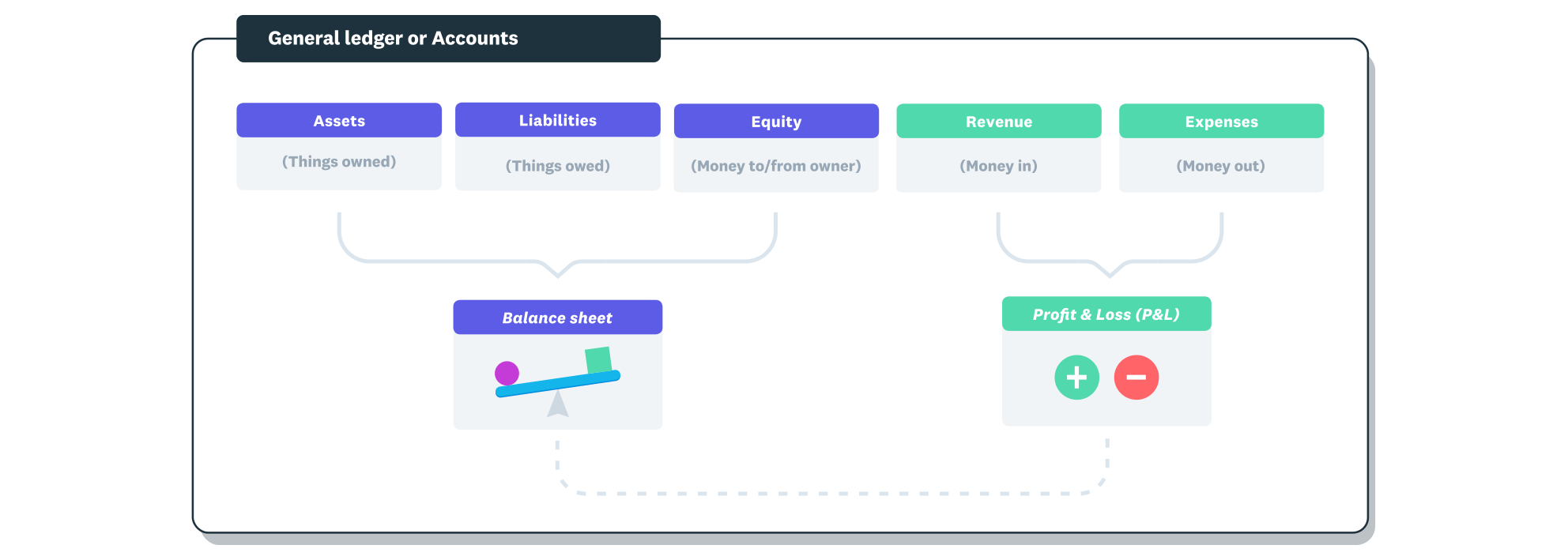
Transactions are entered into the correct account in order to produce the financial reports.
Key takeaways
- A general ledger is the central record of every financial transaction in your business, sorted into accounts for assets, liabilities, equity, revenue and expenses.
- It runs on double-entry bookkeeping, so each transaction affects at least two accounts and keeps your books in balance.
- Your ledger feeds every key report, including the trial balance, balance sheet, profit and loss statement and cash flow statement.
- Accurate ledger records give you a clear audit trail, real-time insight into your finances and a smoother tax time.
What is a general ledger?
A general ledger is the master record of all your business transactions, grouped into accounts. It's the single source of truth your financial statements are built from.
Every sale, purchase, payment and receipt lands in the ledger and gets sorted into the right account. So when you want to know how much cash you hold or how much you owe, the answer is there.
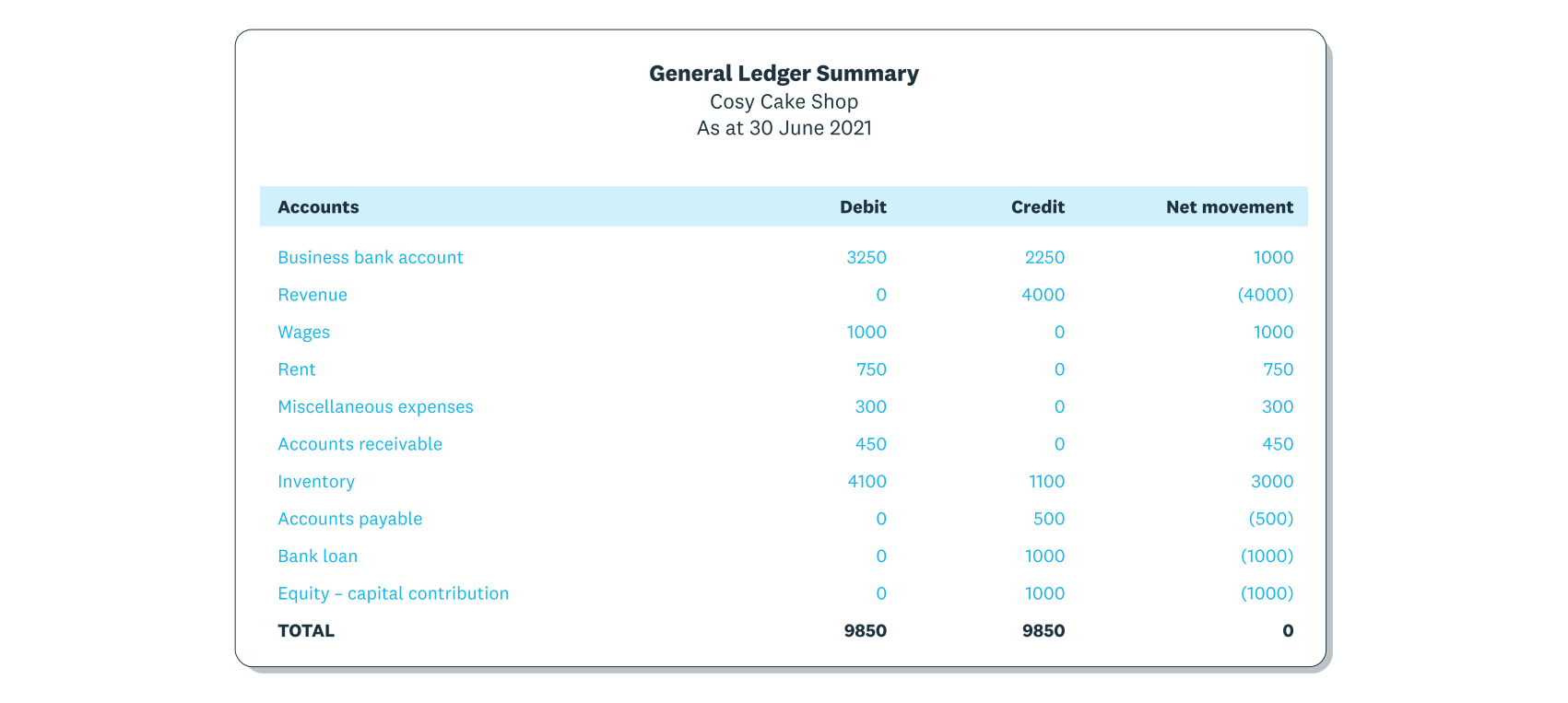
The general ledger summarises the credit and debit transactions for each account.
If you've ever asked "what is a general ledger" and pictured a giant book of numbers, that's close. Today it usually lives in accounting software rather than on paper.
What is recorded in a general ledger
Your ledger organises transactions into 5 account types. Here's what each one covers, with a plain Australian example:
- Assets: things your business owns, like the cash in your bank account or your inventory
- Liabilities: what your business owes, like a bank loan or unpaid supplier bills
- Equity: the owner's stake in the business, like owner drawings or retained earnings
- Revenue: money you earn, like sales of goods or services to your customers
- Expenses: the costs of running the business, like rent, wages or power bills
Every account you use belongs to one of these types. That structure is what makes general ledger accounting consistent and easy to report on.
How a general ledger works
A general ledger works on double-entry bookkeeping, where each transaction is recorded in at least 2 accounts. One side is a debit and the other is a credit, and the two always match in value.
This keeps the accounting equation in balance: Assets = Liabilities + Equity. When you record a transaction, the equation stays true because the debits equal the credits.
Whether a debit or credit increases an account depends on the account type. For example, a debit increases an asset account, while a credit increases a revenue account.
Transactions move through your books in a set order. Here are the main steps:
- Record the transaction as a journal entry, with its debits and credits
- Post that entry to the matching accounts in the general ledger
- Total the accounts and prepare a trial balance to check debits equal credits
General ledger vs general journal
People often mix up the general ledger and the general journal, but they do different jobs. Knowing the difference helps you follow how a transaction is recorded.
The general journal is the first place a transaction is recorded, in date order as it happens. You can think of it as a running diary of every entry.
The general ledger is where those journal entries are grouped by account. So the journal captures transactions as they occur, and the ledger organises them so you can see the balance of each account. You can learn more in our guide to the journal entry.
Chart of accounts and sub-ledgers
Your chart of accounts is the list of every account in your general ledger. It gives each account a name and usually a number, so entries land in a consistent place.
The numbering typically follows the 5 account types. For example, asset accounts might sit in the 100s, liabilities in the 200s and revenue in the 400s, which keeps related accounts together.
Sub-ledgers hold the detail behind a single ledger account. Common examples include accounts receivable, which tracks what each customer owes you, and accounts payable, which tracks what you owe each supplier.
The sub-ledger totals roll up into one line in the general ledger. So you get the summary in the ledger and the transaction-level detail in the sub-ledger.
How a general ledger drives reporting
Your general ledger is the foundation for your financial reports. Once transactions are posted, the ledger balances flow straight into the statements you rely on.
The first step is the trial balance, which lists every account balance and confirms total debits equal total credits. From there, the ledger data feeds your main reports:
- Balance sheet: shows your assets, liabilities and equity at a point in time
- Profit and loss (P&L) statement: shows your revenue and expenses over a period
- Cash flow statement: shows how cash moved in and out of the business
Because these reports draw from the same ledger, accurate entries mean accurate statements. That's how a well-kept ledger turns into insight you can act on.
General ledger example
A quick worked example shows how debits and credits play out. Say you buy a $500 laptop for your business and pay from your bank account.
This transaction touches 2 accounts. You debit your equipment account by $500 to record the new asset, and you credit your bank account by $500 to record the cash going out.
In your equipment account, the ledger shows a $500 debit that increases its balance. In your bank account, it shows a $500 credit that reduces its balance.
The debits equal the credits, so your books stay in balance. That single rule sits behind every entry in general ledger accounting.
Why a general ledger matters for your business
A general ledger does more than tidy up your numbers. It gives you the accurate records and the visibility you need to run and grow your business with confidence.
Here's what a well-kept ledger gives you:
- Accurate records and a clear audit trail for every transaction
- Easier financial reporting, since your statements build straight from the ledger
- Real-time insight into cash, profit and what you owe
- Simpler tax time, with organised figures ready when you need them
With accounting software, your bank transactions flow in and post to the ledger for you. That cuts the manual admin and keeps your records up to date as you go.
Keep your general ledger accurate with Xero
A tidy general ledger keeps your reporting reliable and your decisions grounded in real numbers. When your transactions reconcile and post automatically, you spend less time on the books and more time on your business.
Xero brings your bank feeds, invoices and reports together in one place, built on solid double-entry bookkeeping and a clear chart of accounts. See how it fits your business when you get one month free.
FAQs on general ledgers
Here are answers to some frequently asked questions about general ledgers to round out the basics.
What are the 5 types of general ledger accounts?
The 5 types are assets, liabilities, equity, revenue and expenses. Every account in your ledger fits into one of these categories.
What is the difference between a general ledger and a trial balance?
The general ledger holds every transaction sorted by account. The trial balance is a summary that lists each account's balance to check debits equal credits.
Is a general ledger the same as a balance sheet?
No. The ledger records all your transactions, while the balance sheet is a report built from ledger balances that shows your assets, liabilities and equity.
How do debits and credits work in a general ledger?
Each transaction records a debit in one account and a credit in another of equal value. Whether that increases or decreases an account depends on the account type.
Do small businesses need a general ledger?
Yes. Any business that wants accurate records, clear reporting and a smooth tax time needs a general ledger, and accounting software keeps it updated for you.
Handy resources
Advisor directory
You can search for experts in our advisor directory
Xero Small Business Guides
Discover resources to help you do better business
Online accounting with Xero
Automate your accounting in the cloud
Disclaimer
This glossary is for small business owners. The definitions are written with their requirements in mind. More detailed definitions can be found in accounting textbooks or from an accounting professional. Xero does not provide accounting, tax, business or legal advice.