Payroll
Payroll is how you pay staff in New Zealand: calculate pay, make deductions and file with Inland Revenue.
Published Thursday 23 July 2026
Table of contents
Key takeaways
- Payroll covers five core steps: calculating pay, applying deductions, processing payments, paying authorities and keeping records.
- In New Zealand you deduct PAYE, KiwiSaver, student loan and other amounts through payroll, then file them with Inland Revenue.
- You can run payroll in-house, with payroll software or by outsourcing, depending on your team size and the time you have.
- You must keep wage, time, holiday and leave records for at least 6 years to stay compliant.
Payroll definition
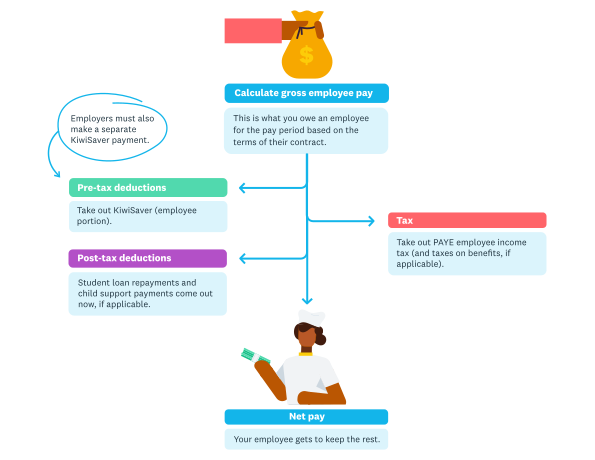
Payroll is what happens each payday and involves sending the right amounts of money to the employee, but also to a number of other locations.
Payroll is the process of paying your employees for their work. It covers calculating wages, deducting taxes and making payments on scheduled dates.
Payroll can also mean the list of employees who receive pay, or the total amount you spend on employee compensation.
Each pay run works out gross pay, which is what an employee earns before deductions, and net pay, which is the take-home amount after tax and other deductions come out.
How payroll works: the 5 steps
Running payroll follows the same five steps each pay period, whether you do it by hand or with software.
- Calculate pay, including wages, overtime, benefits and reimbursements.
- Apply deductions, such as tax, KiwiSaver contributions and student loan repayments.
- Process payments to your employees' bank accounts.
- Pay authorities, including tax payments and employer contributions.
- Maintain records by keeping accurate payroll documentation for compliance.
Payroll deductions in New Zealand
When you run payroll in New Zealand, you take several amounts out of each employee's gross pay and send them to the right agency. Inland Revenue collects most of these through the pay as you earn (PAYE) system.
New Zealand payroll typically involves several standard deductions.
- PAYE is the income tax you deduct from each employee's wages and pay to Inland Revenue on their behalf.
- KiwiSaver contributions come out of employee pay, and you add a compulsory employer contribution on top.
- Student loan repayments apply when an employee earns above the repayment threshold.
- Child support deductions are amounts Inland Revenue directs you to withhold and pass on.
- The ACC earners' levy is collected through PAYE and funds cover for injuries that happen outside work.
As an employer, you also pay employer superannuation contribution tax (ESCT) on your KiwiSaver contributions, plus an ACC work levy based on your industry.
Pay cycles and pay frequency
Your pay cycle is how often you pay your employees. Most New Zealand businesses run payroll weekly, fortnightly or monthly.
Common pay cycles include:
- weekly, which suits businesses with hourly or shift-based staff
- fortnightly, a common middle ground that many employees expect
- monthly, which cuts down admin but needs careful budgeting for wages
To choose a cycle, weigh your cash flow, the admin time each run takes and what your employees are used to. Once you set a frequency, keep it consistent so your team knows when they'll be paid.
Types of payroll systems
You can manage payroll in three main ways, depending on your team size, budget and how much time you have.
Payroll software sits between doing it all yourself and handing it over: it automates calculations, deductions and payday filing while you stay in control. It's the option most growing small businesses settle on.
In-house payroll systems
In-house payroll means you manage all payroll tasks yourself, using software or manual processes.
The benefits of running payroll in-house include:
- controlling your payroll timing, processes and employee data
- avoiding monthly service fees to external providers
- making changes and running payroll whenever you need
This works best if you have a simple pay structure and time to manage payroll tasks.
Outsourced payroll services
Outsourced payroll means a payroll specialist or accountant manages your calculations, payments and compliance for you.
The benefits of outsourcing payroll include:
- staying compliant with changing tax laws
- freeing up time to focus on your business
- reducing errors by letting specialists handle complex calculations and filing
This works best if your business is growing, has a complex pay structure, or you have limited time for payroll admin.
Getting started with payroll in New Zealand
Setting up payroll for the first time is easier when you break it into clear steps.
- Get an IRD number and register with Inland Revenue for pay as you earn (PAYE) and your employer obligations.
- Set up employee records, including tax codes, bank details and KiwiSaver information.
- Choose your payroll system, whether that's manual processing, payroll software or outsourcing.
- Establish pay schedules by setting your weekly, fortnightly or monthly pay cycles.
- Create approval and authorisation processes for reviewing and signing off each pay run.
Payday filing and staying compliant
Staying compliant means reporting your payroll to Inland Revenue and keeping the right records.
Each time you pay staff, you file employment information with Inland Revenue through payday filing, usually within 2 working days of payday. Most payroll software submits these filings for you automatically.
You also need to keep good records. In New Zealand, you must keep wage and time records, and holiday and leave records, for at least 6 years.
Simplify payroll with Xero
Payroll runs more smoothly when your software handles the calculations, deductions and payday filing for you. With Xero payroll you can pay staff accurately, stay compliant with Inland Revenue and spend less time on admin, and you can get one month free when you sign up.
FAQs on payroll
Here are answers to some frequently asked questions about payroll for New Zealand small businesses.
What are the two types of payroll systems?
The two main types are in-house payroll, where you manage payroll yourself, and outsourced payroll, where a specialist or accountant handles it for you. Many small businesses use payroll software to run in-house payroll more accurately.
What's the difference between gross pay and net pay?
Gross pay is what an employee earns before any deductions. Net pay is the take-home amount left after tax, KiwiSaver and other deductions come out.
How much does payroll cost for small businesses?
Manual processing has no software cost but takes the most time, while payroll software in New Zealand is usually priced per employee or bundled into an accounting plan. Outsourcing to a bookkeeper or payroll specialist costs more but saves you admin time.
How do I pay myself from my business?
How you pay yourself depends on your business structure, such as taking a salary, drawings or shareholder payments. Our guide on how to pay yourself walks through the options.
Related terms
Learn more about payroll
Handy resources
Advisor directory
You can search for experts in our advisor directory
Your guide to hiring
Learn tips for hiring, onboarding and paying an employee, while keeping everyone happy
Payroll with Xero
Learn how Xero can help with your payroll requirements
Disclaimer
This glossary is for small business owners. The definitions are written with their requirements in mind. More detailed definitions can be found in accounting textbooks or from an accounting professional. Xero does not provide accounting, tax, business or legal advice.