Assets
Learn what assets are, the main types, and why they matter for your small business.
Published Thursday 23 July 2026
Table of contents
Key takeaways
- Assets are the resources your business owns, and they're the opposite of liabilities, which are what your business owes.
- Assets sit on one side of the accounting equation, where assets equal liabilities plus equity, and they show up on your balance sheet.
- Assets fall into groups such as current or fixed, tangible or intangible, operating or non-operating, and liquid or illiquid.
- Knowing what you own helps you borrow, value your business, and keep day-to-day operations running.
What are assets?
If you're getting to grips with your books, it helps to start with what your business actually owns. That's where assets come in.
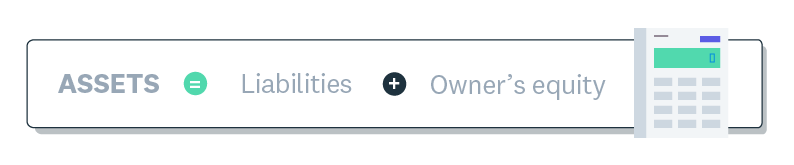
The accounting equation
Assets are the resources owned by a business. They are the opposite of liabilities, which are what the business owes.
Your assets can include property, equipment, cash, accounts receivable, inventory, and raw materials, as well as intangibles such as trademarks, patents, and royalties. The simplest way to tell the two apart: assets put value into your business, while liabilities represent claims against it.
What are assets in accounting?
In accounting, assets aren't just a list of things you own. They play a specific role in how your business balances what it owns against what it owes.
Assets are one side of the accounting equation: assets equal liabilities plus equity. The equation shows that everything your business owns is funded either by money it owes (liabilities) or by the owner's stake (equity).
On your balance sheet, assets appear at the top or on the left, with liabilities and equity balancing them out. The more your assets exceed your liabilities, the more your business is worth.
Types of assets
Assets aren't all the same, and grouping them makes your finances easier to read. Here are the main ways to sort them, each with a quick example:
- Current or fixed: current assets are expected to be used or sold within a year, such as cash or inventory, while fixed assets are held for long-term use, such as a delivery van
- Tangible or intangible: tangible assets are physical, such as equipment, while intangible assets have no physical form, such as a trademark
- Operating or non-operating: operating assets are used in daily trading, such as stock, while non-operating assets sit outside core operations, such as a spare property held as an investment
- Liquid or illiquid: liquid assets can be turned into cash quickly, such as money in the bank, while illiquid assets take longer to sell, such as specialized machinery
Fixed assets are also called non-current assets, because you hold them for longer than a year rather than converting them to cash in the short term.
Examples of business assets
Assets look different depending on what you do, so it helps to picture a few real businesses. The examples below show how the same categories apply across trades and services.
The assets of a plumber might include their building (if owned rather than rented), the products and parts they hold as inventory to sell to customers, equipment such as tools, workbenches, shelving, and computers, plus cash in the bank and accounts receivable.
A retailer's assets might include shop fittings, point-of-sale hardware, and inventory on the shelves. A consultant working from home might own far less: a laptop, software, and the money clients still owe them for completed work.
Why assets matter for your business
Assets are more than an accounting detail; they shape what your business can do. They matter in 3 practical ways.
First, assets can act as collateral when you borrow, so a lender is often more willing to offer finance when you own equipment or property. Second, your assets feed into what your business is worth, which counts if you plan to sell, raise investment, or bring on a partner.
Third, assets keep the day-to-day running: the equipment, stock, and cash you own are what let you serve customers and pay your bills on time.
Manage your business assets with Xero
Keeping track of what you own gets easier when your records live in one place and update as you work. Accounting software gives you a clear view of your assets, from cash and invoices to equipment and inventory, so you always know where your business stands. Try Xero accounting software and get one month free.
FAQs on assets
Here are answers to some frequently asked questions about assets to clear up the terms you'll come across most often.
What are fixed assets?
Fixed assets are resources you keep for long-term use rather than selling within a year, such as vehicles, machinery, or buildings. They usually lose value over time through depreciation, which spreads their cost across the years you use them.
What are non-current assets?
Non-current assets are another name for fixed assets: things your business holds for more than a year. The label "non-current" simply signals that you don't expect to turn them into cash in the short term.
What is the difference between current and fixed assets?
Current assets are ones you expect to use or convert to cash within a year, like inventory or accounts receivable. Fixed assets stay in the business longer and support how you operate, like a workshop or a fleet of vans.
Are intangible assets counted as assets?
Yes, intangible assets count even though you can't touch them, and common examples include trademarks, patents, and software. They can carry real value on your balance sheet, especially for businesses built around a brand or intellectual property.
Related Terms
Learn more about assets
Handy resources
Advisor directory
You can search for experts in our advisor directory
Xero Small Business Guides
Discover resources to help you do better business
Fixed assets in Xero
Manage your fixed assets with easy-to-use accounting software
Disclaimer
This glossary is for small business owners. The definitions are written with their requirements in mind. More detailed definitions can be found in accounting textbooks or from an accounting professional. Xero does not provide accounting, tax, business or legal advice.