Fringe benefits tax explained for Australian businesses
Learn how fringe benefits tax works in Australia and what it means for your business.

Written by Lena Hanna—Trusted CPA Guidance on Accounting and Tax. Read Lena's full bio
Published Monday 20 April 2026
Table of contents
Key takeaways
- Recognize that fringe benefits tax applies to non-cash perks you provide to employees, such as private use of a work car, expense reimbursements, and discounted loans, and that you must self-assess your liability each year with the Australian Taxation Office.
- Calculate your FBT by identifying taxable benefits, determining their value using the correct method for each benefit type, grossing up the amount, and applying the current 47% FBT rate to find what you owe.
- Utilize available exemptions, such as the minor benefits exemption for one-off perks under $300, the work-related items exemption for laptops and phones, and the electric vehicle exemption, to reduce or eliminate your FBT bill.
- Lodge your FBT return by 21 May each year and register with the ATO as soon as you know you have a liability, as missing deadlines can result in fines and increase your risk of an audit.
What is fringe benefits tax?
Fringe benefits tax (FBT) is a tax employers pay on certain benefits they provide to their employees or their employees' family members. As an employer, you must self-assess your FBT liability each year. It applies to non-cash benefits like allowing an employee to use a work car for private purposes, paying for their gym membership, or reimbursing personal expenses. FBT is separate from income tax and is calculated on the taxable value of the fringe benefits provided.
Understanding the different types of fringe benefits helps you identify your FBT obligations.
Types of fringe benefits
There are several categories of fringe benefits that may attract FBT. Understanding these categories helps you identify which employee perks need to be reported.
Car and vehicle benefits
This is one of the most common fringe benefits. It occurs when you provide a business car for an employee's private use, including commuting to and from work.
Expense payment benefits
If you pay or reimburse an employee for their personal expenses, such as school fees, private phone bills, or health insurance premiums, it falls under this category.
Loan benefits
Providing a loan to an employee at a discounted interest rate, or charging no interest at all, is considered a loan fringe benefit.
Other common benefits for small businesses
Other benefits include providing free or discounted parking, paying for staff entertainment like meals and holidays, or giving employees physical goods like electronics. Read more about small business cloud accounting.
Do you need to register for fringe benefits tax?
Registration requirements depend on whether your business provides fringe benefits.
You need to register for FBT if your business provides fringe benefits to employees. Register with the Australian Taxation Office (ATO) as soon as you know you have a liability.
Even if your benefits are exempt, you can still register. Registering lets you lodge a nil FBT return and helps you avoid audits for previous years.
You can register at any time of the year through:
- the ATO online services portal
- a registered tax agent
- phone call
Staying registered makes it easier to manage your obligations each FBT year, which runs from 1 April – 31 March.
Why is fringe benefits tax important for small businesses?
FBT compliance protects your business from unexpected costs and gives you a clear view of employee benefit expenses. Getting it right means fewer surprises at tax time.
Why it pays to stay compliant:
- Avoid extra tax bills: Understand how benefits increase your employment costs
- Meet deadlines: Prevent fines for late registration, filing or payment
- Identify triggers: Know which expenses, such as team dinners, may attract FBT
Common FBT challenges for small businesses:
- Classify benefits correctly: Definitions can vary across benefit types
- Choose the right valuation method: Each benefit type has specific calculation rules
- Track the FBT year: The FBT year runs from April – March, not the standard financial year
How to calculate and file your fringe benefits tax in Australia
Calculating FBT involves five steps. Following this process helps you stay compliant and reduces your audit risk.
- Identify taxable benefits
- Determine their value
- Gross up the amount
- Apply the FBT rate
- Report and pay
1. Identify your taxable fringe benefits
Check if your employee benefits fall into these ATO categories:
- Car fringe benefits: Vehicles provided for business and personal use, including parking
- Expense payment benefits: Staff meals, accommodation, holidays or parties (not client entertainment)
- Loan fringe benefits: Loans to employees at below-market interest rates
- Housing fringe benefits: Rent-free or subsidised accommodation
- Expense reimbursements: Private expenses such as medical insurance or school fees
- Property fringe benefits: Goods such as electronics, shares or other physical property
See the full list of fringe benefit categories on the Australian Taxation Office website.
Here's an example of how car fringe benefits work.
Example: Toyota Hilux valued at $50,000 (plus GST)
For example, if you provide an employee with a Toyota Hilux (worth $50,000 plus GST) for work during the week and personal use on weekends, the private use makes it a car fringe benefit and triggers fringe benefits tax.
2. Work out the taxable value of the benefit
Taxable value is the dollar amount used to calculate your FBT liability. The calculation method depends on the benefit type. Choose the method that best suits your records and gives the most accurate result.
Car fringe benefits have two valuation methods. Choose the one that best suits your record-keeping:
- Statutory formula method: Base value × 20% × (private use days ÷ 365)
- Operating cost method: Actual costs × private use percentage
Read more about the statutory formula method on the Australian Taxation Office website.
Loan fringe benefits are calculated using the benchmark rate comparison method.
Benchmark rate comparison: Compare the interest you charge with the ATO benchmark rate to determine the taxable value.
Entertainment and expense payments can be valued using two methods:
- Actual cost method: The full amount spent on employee benefits
- 50/50 split method: Half of total entertainment costs (applies to entertainment benefits only)
Scenario 1: Full personal use
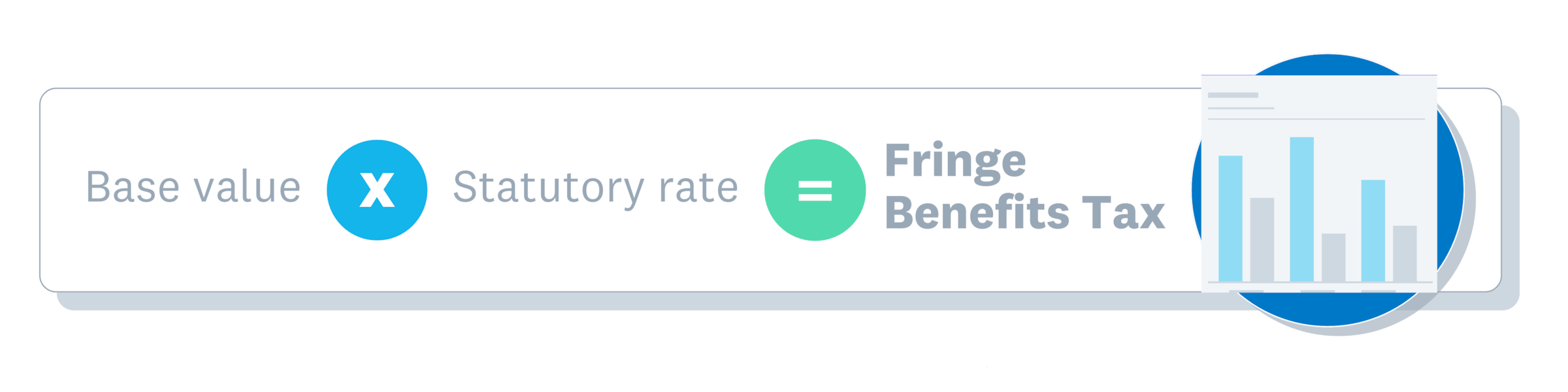
Base value × statutory rate = taxable value
$50,000 × 20% = $10,000 taxable value
Scenario 2: Weekend personal use only (104 days per year)
Base value × statutory rate × (days available ÷ 365) = taxable value
$50,000 × 20% × (104 ÷ 365) = $2,849 taxable value
The taxable value drops significantly when the car is only available for personal use part of the time.
If you need more help, use the Australian Taxation Office car fringe benefits calculator. You can also view the Australian Taxation Office guide to fringe benefits tax rates and thresholds.
3. Gross up the taxable value to account for income tax
Grossing up converts benefit values into equivalent pre-tax salary amounts. This ensures FBT reflects what an employee would need to earn to buy the same benefit with after-tax dollars.
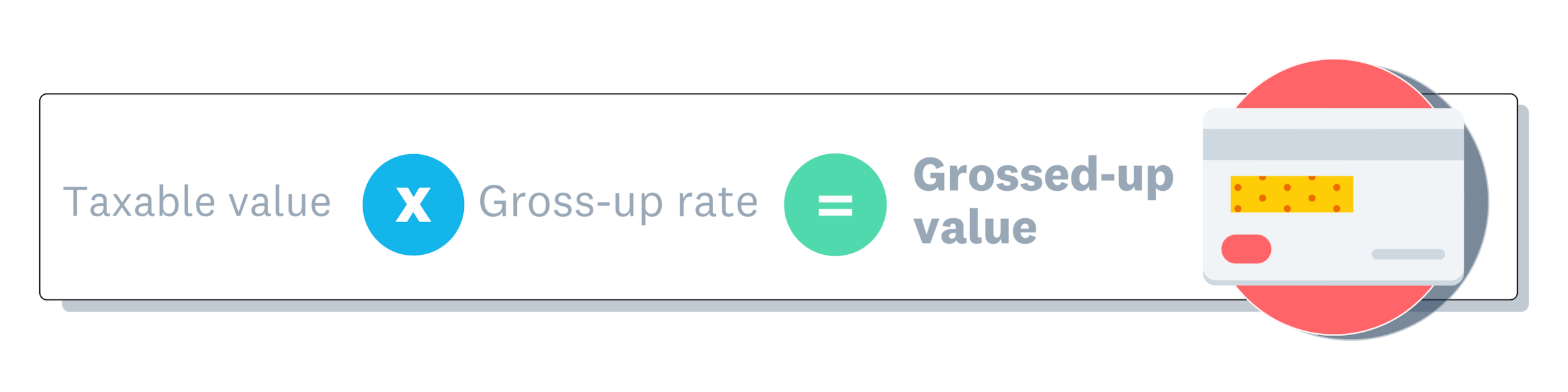
Formula: Taxable value × gross-up rate = grossed-up value
The rate you use depends on whether your business can claim a GST credit:
- Type 1 gross-up rate (×2.0802): Use when you can claim a GST credit, such as for company cars or entertainment expenses.
- Type 2 gross-up rate (×1.8868): Use when you can't claim a GST credit, such as for employee loans.
The taxable value of the Toyota Hilux you provide for personal use is $10,000. Because cars include GST and the employer can claim a credit, the Type 1 gross-up rate applies:
$10,000 × 2.0802 = $20,802 grossed up value
4. Calculate the payable FBT
Apply the FBT rate to your grossed-up value to calculate what you owe. The current FBT rate for 2024–25 is 47%, which applies to all FBT years up to 31 March 2027.
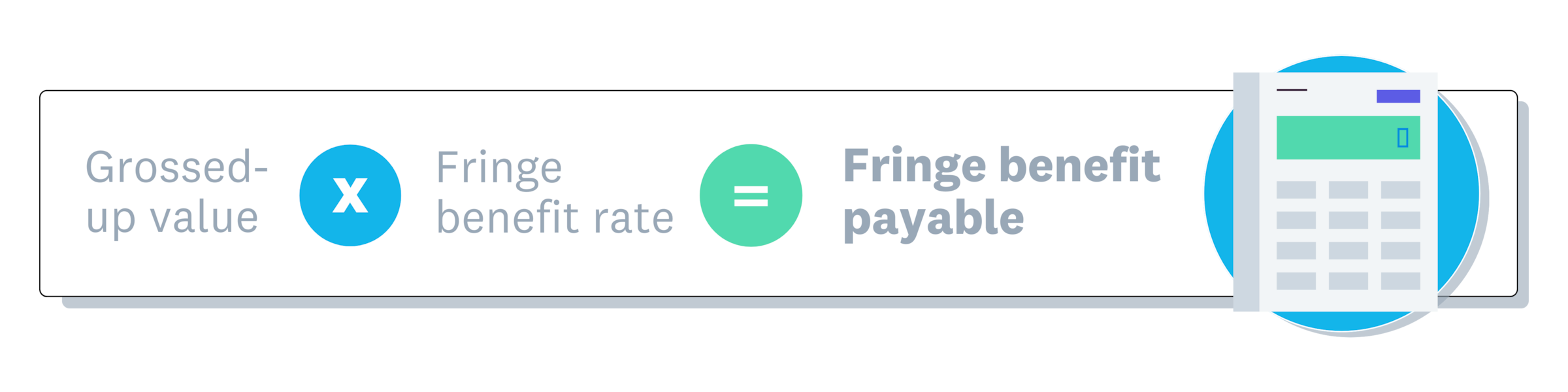
Formula: Grossed-up value × FBT rate = FBT payable
Example calculation:
The grossed-up value of the Toyota Hilux car benefit was $20,802.
$20,802 × 47% = $9,777
The employer pays $9,777 in FBT for providing this vehicle for personal use.
Check the current FBT rates and thresholds on the Australian Taxation Office website.
5. Report your FBT and pay it to the ATO
Lodge your FBT return by 21 May each year if your business provides taxable fringe benefits. You can get an extension by lodging through a registered tax agent.
Keep these key dates and requirements in mind when lodging your FBT return:
- FBT year: 1 April – 31 March (different from the financial year)
- Lodgement deadline: 21 May each year
- Reportable fringe benefits: If an employee receives benefits with a total taxable value over $2,000, include a reportable fringe benefits amount (RFBA) on their income statement
Read more about reportable fringe benefits amounts on the Australian Taxation Office website.
FBT exemptions for small businesses
FBT exemptions let you provide valuable employee benefits without paying tax on them. Three key exemptions can reduce your bill:
- Minor benefits exemption: Infrequent, irregular benefits with a notional taxable value under $300
- Work-related items exemption: Items mainly used for work, such as laptops, phones, safety equipment or software. Small businesses can provide more than one work-related portable electronic device per FBT year.
- Electric vehicle exemption: Zero-emission vehicles below the luxury car tax threshold. This discount has applied since July 2022 and can save up to $9,000 a year on a $50,000 vehicle.
Read more about FBT exemptions on the Australian Taxation Office website.
Salary sacrificing and FBT
Salary sacrificing lets employees receive benefits from their pre-tax salary. While this can be tax-effective for employees, it has FBT implications for your business.
What is salary sacrificing?
Salary sacrificing is an arrangement where an employee agrees to forgo part of their future salary or wages. In return, the employer provides benefits of a similar value.
How salary sacrificing affects FBT
When you provide benefits through salary sacrifice arrangements, you're still liable for FBT on those benefits. The FBT treatment is generally the same whether the benefit is provided as part of a salary sacrifice arrangement or not.
However, some benefits are exempt or concessionally taxed under salary sacrifice arrangements, such as superannuation contributions and work-related items.
FAQs on fringe benefits tax
Here are answers to common questions about fringe benefits tax for small businesses.
What is the FBT rate for 2024–25?
The FBT rate for 2024–25 is 47%. This rate applies to all FBT years up to 31 March 2027.
When is the FBT return due?
Your FBT return is due by 21 May each year. You can get an extension if you lodge through a registered tax agent.
Do I need to register for FBT if I provide minor benefits?
If you only provide minor benefits that fall under the exemption threshold, you don't need to register. However, registering can help you lodge nil returns and avoid audits.
Can I claim GST credits on fringe benefits?
Yes, you can claim GST credits on many fringe benefits, such as car expenses and entertainment. This affects which gross-up rate you use in your FBT calculations.
What's the difference between FBT and income tax?
FBT is a tax you pay as an employer on benefits you provide to employees. Income tax is what employees pay on their salary and wages. FBT is separate from income tax.
Disclaimer
Xero does not provide accounting, tax, business or legal advice. This guide has been provided for information purposes only. You should consult your own professional advisors for advice directly relating to your business or before taking action in relation to any of the content provided.
Get one month free
Purchase any Xero plan, and we will give you the first month free.