Gross profit margin formula, example and how to improve
Gross profit margin shows how much you keep from sales. Learn how to improve yours.
Written by Lena Hanna—Trusted CPA Guidance on Accounting and Tax. Read Lena's full bio
Published Wednesday 22 April 2026
Table of contents
Key takeaways
- Calculate your gross profit margin by subtracting cost of goods sold from revenue, dividing the result by revenue, and multiplying by 100 — this tells you what percentage of each sales dollar you keep after direct costs.
- Track your gross profit margin at least monthly to spot trends early, so you can respond quickly to shifts in pricing, supplier costs, or operational efficiency.
- Improve your margin by adjusting prices strategically, negotiating better rates with suppliers, and cutting waste in your operations — even small gains can have a significant impact on your bottom line.
- Benchmark your gross profit margin against industry standards for businesses of a similar size and sector to assess whether your margins are strong enough to cover operating expenses and generate a net profit.
Key takeaways
Here are the main points about calculating and improving your gross profit margin.
- Calculate your gross profit margin by subtracting cost of goods sold from revenue, dividing by revenue, and multiplying by 100 to determine what percentage of each sales dollar remains after direct costs.
- Monitor your gross profit margin trends regularly to identify patterns in business performance and make informed decisions about pricing, supplier relationships, and operational efficiency.
- Improve your gross profit margin by adjusting prices strategically, negotiating better rates with suppliers to reduce cost of goods sold, and streamlining operations to eliminate waste.
- Benchmark your gross profit margin against industry standards and similar-sized businesses in your sector. For example, the ATO provides key benchmarks for different annual turnover brackets. Use this to assess whether your margins are sufficient to cover operating expenses and generate net profit.
What is gross profit margin?

Gross profit margin is the percentage of sales revenue remaining after you pay your cost of goods sold (COGS). This metric reveals your business's core profitability before operating expenses.
Gross profit margin provides key insights into your business performance. It tells you:
- Production efficiency: how well you convert resources into sellable products or services
- Revenue retention: what proportion of each sale stays in your business after direct costs
- Profitability by area: which products, services, or segments generate the strongest returns, allowing you to focus on items that carry a higher gross margin
- Financial sustainability: whether margins cover operating expenses and generate net profit
Higher gross margins mean you have more money to pay for essential expenses like rent, utilities and marketing, while still making a profit.
Gross profit margin vs gross profit
Gross profit is a dollar amount. Gross profit margin is a percentage. Both measure profitability, but they express it differently.
- Gross profit: the dollar amount remaining after subtracting cost of goods sold from revenue (for example, $50,000)
- Gross profit margin: the percentage that gross profit represents of total revenue (for example, 25%)
Gross margin is another term for gross profit margin. They describe the same percentage-based measure.
How to calculate gross profit margin
Calculate gross profit margin by subtracting your cost of goods sold from revenue, dividing the result by revenue, then multiplying by 100.
Gross profit margin calculation
Gross profit margin formula: (Gross Profit ÷ Revenue) × 100
Your gross profit margin equals your gross profit divided by revenue, multiplied by 100.
Gross profit margin formula explained
The calculation involves two straightforward steps. Follow these two steps:
- Find your gross profit: subtract your cost of goods sold from your sales revenue
- Apply the formula: divide gross profit by revenue, then multiply by 100

Gross profit margin example calculation
A cleaning business would calculate its gross profit margin like this:
Step 1: Calculate gross profit
- Revenue: $20,000 (office cleaning services)
- Cost of goods sold: $8,000 (cleaning supplies, labour)
- Gross profit: $20,000 − $8,000 = $12,000
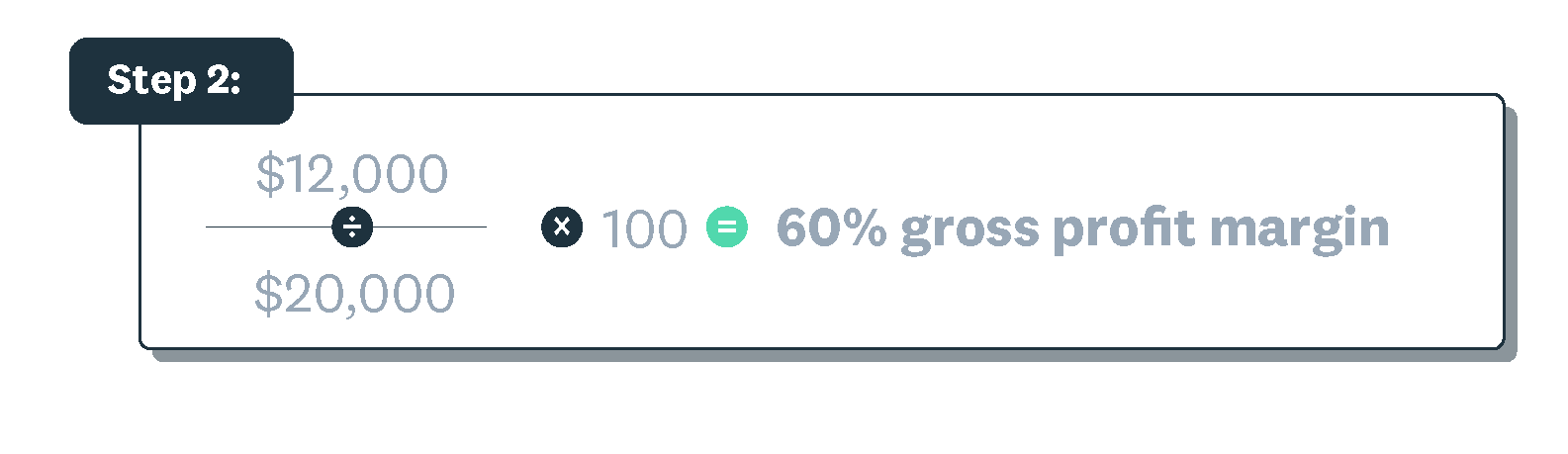
Step 2: Calculate gross profit margin
- Gross profit margin: ($12,000 ÷ $20,000) × 100 = 60%
A 60% gross profit margin means you keep 60 cents of every dollar earned after covering direct costs.
Avoid common calculation mistakes
The most common calculation mistake is miscategorising costs. Your cost of goods sold (COGS) should only include costs directly tied to producing what you sell.
These costs belong in your COGS calculation. Include in COGS:
- Raw materials: inventory and supplies used in production
- Direct labour: wages for staff who produce goods or deliver services
- Production overhead: manufacturing costs directly tied to output
Keep these costs separate from your COGS. Exclude from COGS:
- Operating expenses: rent, utilities, and marketing costs
- Administrative costs: office supplies and general business expenses
- Financial costs: interest payments and taxes
Accurate cost categorisation leads to reliable margin calculations and better business decisions.
Analysing gross profit margin for business insights
Analysing your gross profit margin reveals which products, services, or business areas generate the strongest returns. Regular analysis helps you spot problems early and find opportunities to improve.
Your margin analysis can guide important business decisions. Use your margin analysis to:
- Price competitively: adjust prices based on what the market will bear
- Control costs: identify where spending cuts would have the biggest impact
Interpreting gross profit margin trends
Track your margins over time to spot patterns in business performance. Look for:
- Revenue strength: which products or services consistently generate higher margins
- Cost fluctuations: how supplier prices or labour costs shift by season
- Trend direction: whether margins are improving, declining, or holding steady
Factors affecting gross profit margin
Several external factors can push your gross profit margin up or down, often outside your direct control.
Market conditions directly affect your margins. Market demand changes:
- Falling demand: forces price reductions to attract customers
- Rising demand: allows for higher pricing and improved margins
Your suppliers' pricing affects your bottom line. Supplier cost increases:
- Material price rises: directly reduce your profit margins
- Labour cost inflation: squeezes margins unless you adjust prices
Broader economic factors also play a role. Economic conditions:
- Consumer spending decline: reduces sales volume and pricing power
- Inflation: affects both your costs and customers' purchasing ability
Monitor these factors regularly and adjust your pricing strategy as conditions change.
How to improve gross profit margin
Improve your gross profit margin by adjusting prices, reducing costs, or streamlining operations. Each approach works differently.
Adjust your prices
Review your pricing regularly as market conditions shift.
- Respond to competition: If a competitor lowers their price, decide whether to match it or differentiate on value.
- Add value to justify increases: Improve your products or services to support higher prices.
- Test price changes: Small adjustments can reveal what customers will pay without hurting sales volume.
Reduce your cost of goods sold
Lower your cost of goods sold to keep more of each sale as profit.
- Negotiate with suppliers: Build relationships that lead to bulk discounts and better rates.
- Compare alternatives: Regularly review supplier pricing against competitors.
- Reduce waste: Minimise materials lost to damage, spoilage, or inefficiency. A CPA case study found that unaccounted for stock losses and destroyed items can reduce gross profit margin by over 10 percent.
Streamline your operations
Efficient operations reduce costs without compromising quality. Focus on processes that eliminate waste and improve productivity.
Start improving your gross profit margin today
Understanding and monitoring your gross profit margin gives you the insights you need to make better business decisions. Whether you adjust pricing, reduce costs, or streamline operations, small improvements to your margin can significantly impact your bottom line.
Xero's accounting software helps you track your gross profit margin automatically, so you can spot trends and take action quickly. Explore Xero's features to see how we can help you improve your business performance.
FAQs on gross profit margin
Here are answers to common questions about gross profit margin.
What's a good gross profit margin?
A good gross profit margin varies by industry. Retail businesses typically see margins between 20% and 40%, while service businesses often achieve 50% or higher. Compare your margin to industry benchmarks and similar-sized businesses in your sector to assess your performance.
How often should I calculate gross profit margin?
Calculate your gross profit margin monthly at minimum. More frequent calculations help you spot trends earlier and respond to changes in costs or pricing more quickly.
Can I have a high gross profit margin but still lose money?
Yes. Gross profit margin only accounts for direct costs. You can have strong gross margins but still generate a loss if your operating expenses (rent, salaries, marketing) exceed your gross profit.
How do I find my cost of goods sold?
Start with your beginning inventory, add purchases made during the period, then subtract your ending inventory. Add direct labour costs and production overhead to get your total cost of goods sold.
Disclaimer
Xero does not provide accounting, tax, business or legal advice. This guide has been provided for information purposes only. You should consult your own professional advisors for advice directly relating to your business or before taking action in relation to any of the content provided.