Markup
Learn what markup is, how to calculate it, and how it differs from margin, with SGD examples.
Published Wednesday 30 September 2026
Table of contents
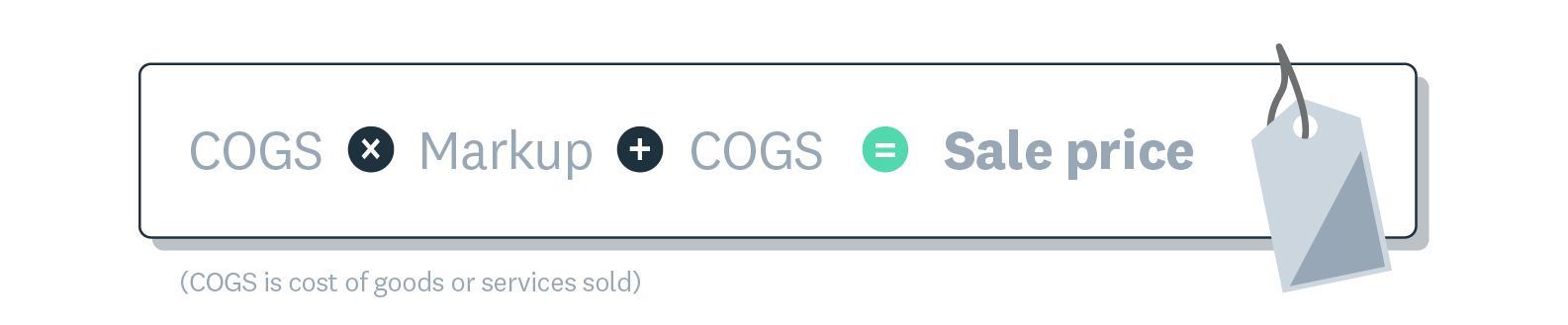
Markup is entered as a decimal. For example, a 35% markup is shown as 0.35
Key takeaways
- Markup is the percentage you add to a product’s cost to set its selling price
- To find your selling price, multiply your cost by 1 plus your markup as a decimal, so a 35% markup becomes 1.35
- Markup is always higher than margin for the same sale, because markup divides profit by cost and margin divides it by price
- In Singapore, you work out markup on pre-GST figures, then add goods and services tax (GST) on top if you’re GST-registered
What is markup?
Markup is the amount you add to what a product or service costs you, so you can sell it at a profit. It’s usually shown as a percentage of that cost.
Many businesses price this way, called cost-plus pricing: they work out what it costs to supply something, then add a set percentage.
Say you run a café and each latte costs you SGD 2 in ingredients and cups. Selling it for SGD 5 means you’ve added SGD 3, which is a 150% markup.
That SGD 3 is your gross profit on the sale. It pays your overheads, and whatever’s left over is yours to keep.
Markup formula
You need two numbers to work out markup: what an item costs you and what you sell it for. Corporate Finance Institute sets out the standard way to calculate markup, and you can use it in two directions.
- Markup percentage: (selling price − cost) ÷ cost × 100
- Selling price: cost × (1 + markup)
This matches multiplying your cost by the markup, then adding the cost back on. Enter the markup as a decimal, so a 35% markup is 0.35. A SGD 40 item then sells for SGD 40 × 1.35 = SGD 54.
How to calculate markup
Calculating markup takes four steps once you know your costs. Follow them in order to price any product or service.
1. Find your total cost per unit
Add up the direct costs of making or buying one unit, such as materials and packaging, plus any labour that goes straight into it. This is your cost of goods sold (COGS) for that item.
2. Choose your markup percentage
Pick a percentage that covers your overheads and leaves you a profit, then compare it with what similar businesses charge.
3. Convert the percentage to a decimal
Divide your markup percentage by 100. A 50% markup becomes 0.5 and a 120% markup becomes 1.2.
4. Work out your selling price
Multiply your cost by 1 plus the decimal. The result is your selling price before GST.
Worked example in SGD
Say you run a home bakery and each celebration cake costs you SGD 12 in ingredients and packaging. With a 50% markup, you’d charge SGD 12 × 1.5 = SGD 18, which gives you SGD 6 gross profit per cake.
To check the markup on a price you already charge, work backwards: (SGD 18 − SGD 12) ÷ SGD 12 × 100 = 50%. If you’re GST-registered, you then add 9% GST, so your customer pays SGD 19.62.
Markup examples
Here’s how different markups change the selling price of an item that costs you SGD 100.
- 5% markup: sells for SGD 105, with SGD 5 gross profit
- 20% markup: sells for SGD 120, with SGD 20 gross profit
- 30% markup: sells for SGD 130, with SGD 30 gross profit
- 50% markup: sells for SGD 150, with SGD 50 gross profit
- 100% markup: sells for SGD 200, with SGD 100 gross profit
Markup vs margin
Markup and margin measure the same profit, but they compare it with different numbers. Markup divides profit by cost, while margin divides it by selling price.
Take an item that costs you SGD 60 and sells for SGD 100. Your SGD 40 profit is a 66.7% markup (SGD 40 ÷ SGD 60) and a 40% margin (SGD 40 ÷ SGD 100).
When you make a profit, your cost is always lower than your price, so markup is always the higher number. A 30% markup gives you a margin of about 23.1%, because SGD 30 profit on a SGD 130 price is 23.1%.
Knowing which one you’re using keeps your prices on target. To reach a 30% margin, you’d need a markup of about 42.9%.
What affects your markup
The right markup depends on both your costs and your market. Weigh these factors when you set or adjust it.
- Direct costs: your COGS are the base your markup builds on, so higher supplier prices reduce your profit until you adjust.
- Overheads: rent and utilities sit outside COGS, so your markup needs to cover them as well.
- Competition and demand: customers compare prices, while strong demand or a unique offer gives you room to charge more.
- Customer perception of value: people pay more when they see extra quality or convenience, so how you present your offer shapes the markup you can charge.
- GST: the Inland Revenue Authority of Singapore (IRAS) confirms the current GST rate is 9%. Work out markup on your pre-GST cost and price, then add GST on top if you’re GST-registered.
Getting the balance right keeps your cash flow healthy. A markup that’s too low may leave you short of cash to run the business and make a profit. One that’s too high can put customers off.
When to review your markup
Your markup works best when it keeps pace with your costs and your market. Check it whenever:
- your suppliers raise their prices
- competitors change what they charge
- your gross profit drifts below your target
- you launch a new product or service
Reviewing your profit and loss report each month shows whether your gross profit is holding steady. If it moves, look at your costs and markup together before you change prices.
Price with confidence using Xero
When you know your costs, you can set a markup with confidence and adjust it as your market moves.
Xero brings your sales and costs together in easy-to-read reports, so you can track gross profit and margins in real time and spot trends early. Sign up today and get one month free to see how your pricing performs.
FAQs on markup
Here are quick answers to other questions small business owners often ask about markup.
Should overheads be included in markup?
You can leave overheads out of unit cost and set a markup that covers them, or add a share of overheads to each unit. Whichever method you choose, use it for every product so you can compare them fairly.
Can markup be more than 100%?
Yes, a markup above 100% means you sell for more than double your cost. A SGD 10 item sold for SGD 35 has a 250% markup. Margin works differently and always stays below 100%.
What’s the difference between markup and markdown?
Markup is what you add to cost to set a price, while a markdown is a reduction from that price, such as during a sale. A 20% markup on a SGD 100 cost gives you SGD 120. A 20% markdown on that price brings it to SGD 96, below your cost.
What’s a good markup?
A good markup varies by industry and business model, so there’s no single figure that suits everyone. The right one covers all your costs and leaves you a profit at a price your customers accept.
Do you add markup before or after GST?
If you’re GST-registered, apply markup to your costs before GST, then charge GST on the marked-up price. The GST you collect is paid to IRAS, so leave it out of your profit figures.
Related terms
Learn more about markup
Handy resources
Advisor directory
You can search for experts in our advisor directory
Balance sheet template
Compare assets and liabilities of your business with our free template.
Financial reporting
Keep track of your performance with accounting reports
Disclaimer
This glossary is for small business owners. The definitions are written with their requirements in mind. More detailed definitions can be found in accounting textbooks or from an accounting professional. Xero does not provide accounting, tax, business or legal advice.