Cost of sales: what it is and how to calculate yours
Learn how to calculate cost of sales step by step, with worked examples to control margins and price with confidence.
Written by Lena Hanna—Trusted CPA Guidance on Accounting and Tax. Read Lena's full bio
Published Tuesday 6 October 2026
Table of contents
Key takeaways
- Cost of sales includes only costs directly tied to making or delivering what you sell, such as raw materials, direct labour, packaging and shipping.
- Add up direct costs for service and manufacturing businesses, or use beginning inventory + purchases − ending inventory if you’re a retailer.
- If an expense rises when you make more sales, it probably belongs in cost of sales. Treat grey-area costs the same way every time.
- Track your cost of sales regularly so you can price above your direct costs and spot shrinking margins early.
What is cost of sales?
Cost of sales is the total cost of providing a product or service to a customer. Under the international accounting standard for inventories (IAS 2), you expense stock’s purchase and production costs in the period you recognise its sales revenue. You might also see it called cost of goods sold (COGS).
Knowing this figure helps you set competitive prices and choose suppliers with confidence.
For most small businesses, cost of sales equals direct costs: the expenses directly linked to the goods or services you sell. These differ from indirect costs, which are general business expenses that don’t relate to making products or delivering services.
What counts as cost of sales varies by business type. For a retailer, it’s mainly stock, packaging and shipping. For a freelancer, it’s the software subscriptions and tools needed for client work.
Cost of sales vs cost of goods sold
Cost of sales and cost of goods sold (COGS) are often used interchangeably, but they have slightly different meanings.
COGS refers specifically to the direct costs of producing goods. US GAAP (generally accepted accounting principles) gives specific guidance that these include direct materials, direct labour and overhead costs. Businesses that make or trade physical products typically use this term.
Cost of sales is broader and includes all costs tied to delivering a product or service. Service businesses often prefer it because it covers labour, software and transport that don’t fit neatly into “goods”.
Here’s how the two terms compare:
- COGS suits manufacturers and retailers, and covers raw materials, production labour and inventory costs
- Cost of sales suits both service and product businesses, and covers all direct costs of delivery, including labour and software
For most small businesses, the terms work the same way in practice. Choose the one that best describes your business model and use it consistently.
What to include in your cost of sales calculation
Include any expense directly tied to producing or delivering your product or service. The items depend on your business type. The rule is simple: if you couldn’t make the sale without it, it’s likely a cost of sale.
Common costs to include:
- raw materials and inventory
- direct labour (employees who make or deliver products)
- packaging and shipping
- software and tools required for service delivery
- sales commissions tied to specific transactions
- subcontractor fees for client work
Costs to exclude:
- rent and utilities (unless for a dedicated production space)
- marketing and advertising
- administrative salaries
- office supplies
- insurance and professional fees
If you’re unsure about a cost, ask yourself: “Does this expense increase when I make more sales?” If yes, it’s probably a cost of sale. If it stays the same whatever your sales volume, it’s likely an operating expense.
How to calculate cost of sales in different industries
The formula changes with your business type, but the method stays the same. Follow these steps to calculate your cost of sales:
- Choose your reporting period (month, quarter or year)
- List every cost directly tied to making or delivering what you sold
- Remove indirect costs such as rent, marketing and admin salaries
- Pick the formula for your business type (service, retail or manufacturing)
- Add up the direct costs, or for retail work out beginning inventory + purchases − ending inventory
- Check your result by working out gross profit (revenue − cost of sales) and your gross profit margin
Each business type below has its own formula and a worked example in Singapore dollars. Use the one that matches how you deliver value to customers.
Cost of sales example formula for service businesses
Service businesses calculate cost of sales by adding up the input costs directly tied to delivering their services.
Service business cost of sales = labour + facilities + travel + equipment
Include:
- employees who deliver services to clients
- workspace costs for service delivery
- travel expenses for client work
- equipment used to complete projects

Exclude:
- back-office employees (admin, HR, finance)
- general office costs not tied to service delivery
Say a design studio spends $6,000 on client-facing staff, $800 on studio space, $300 on client travel and $400 on project equipment in one month. Its cost of sales for the month is $6,000 + $800 + $300 + $400 = $7,500.
For freelancers working from home, travel and equipment costs may not apply.
Cost of sales example formula for retailers
Retailers work out cost of sales from the stock they had, bought and have left over.
Retail cost of sales = beginning inventory + purchases − ending inventory
This formula tracks how much inventory you’ve sold during a period. Say your shop starts the quarter with $12,000 of stock, buys $30,000 more and ends with $9,000 on hand. Your cost of sales for the quarter is $12,000 + $30,000 − $9,000 = $33,000.

For ecommerce businesses, add these common costs:
- shipping fees
- transaction fees (payment processing)
- packaging materials
These expenses occur with every sale and directly affect your margins. Say the same shop sells online and pays $1,200 in shipping, $600 in transaction fees and $400 in packaging. Its cost of sales becomes $33,000 + $1,200 + $600 + $400 = $35,200.
Cost of sales example formula for manufacturing
Manufacturers include all costs directly tied to producing goods.
Manufacturing cost of sales = raw materials + production labour + manufacturing overhead
Typically included:

- raw materials
- production labour
- factory overhead (utilities, equipment maintenance)
May be included or excluded:
- warehousing costs
- freight and distribution
Some manufacturers treat warehousing and freight as operating expenses, while others count freight as cost of sales when goods are shipped to the customer. Choose the approach that best reflects your production process and apply it consistently.
Say a furniture maker spends $18,000 on raw materials, $9,000 on production labour and $4,500 on manufacturing overhead in one month. Its cost of sales for the month is $18,000 + $9,000 + $4,500 = $31,500.
Cost of sales examples
Some expenses fall into a grey area, so the key rule is to be consistent with how you categorise them. Common grey areas include:
- sales commissions, which can sit in cost of sales when tied to each transaction, or be treated as an operating expense
- equipment repairs, which are cost of sales if the equipment makes your product, or an operating expense for general maintenance
Once you decide how to treat these costs, apply the same approach every time. Consistent categorisation gives you reliable figures and makes your true margins easier to track.
Retail business example
Say you own a homeware store and want to price handmade pottery cups profitably. Here’s what each cup costs you directly:
- $5 purchase price from your supplier
- $2 inbound shipping from the supplier to your store
- $1 packaging
Your cost of sales is $5 + $2 + $1 = $8 per cup. Shop-floor wages for shelving and selling stay out of this figure, because for a retailer they’re an operating expense.
For a 50% gross margin, divide your cost by 1 minus the target margin: $8 ÷ (1 − 0.50) = $16. A 50% markup ($8 × 1.5 = $12) gives you only a 33.3% margin, because the $4 profit is measured against the $12 price.
You can test other price points with the free Xero margin calculator.
Why is cost of sales important?
Cost of sales tells you the minimum you need to charge to make a profit. With this number, you can set prices and margins based on facts.
Knowing your cost of sales helps you:
- set prices above your direct costs so every sale adds to profit
- spot rising costs, like delivery fees, before they eat into your profits
- compare suppliers by how they affect your bottom line
- plan for how costs will change as your business grows
Ecommerce businesses that start from home often enjoy strong margins at first. Those margins can shrink quickly once you pay for warehouse space or extra staff. Calculate your cost of sales regularly and pair it with other ways to measure profitability.
- Fixed costs stay the same whatever you produce, such as employee salaries that don’t change with units sold
- Variable costs change with production levels, such as shipping costs that depend on the supplier, distance and quantity
Include both types in your cost of sales calculation if they’re directly tied to delivering your product or service.
Cost of sales vs expenses
Cost of sales covers expenses directly tied to making a sale. Business expenses (also called operating expenses) cover the costs of running your business, whether you make sales or not.
Here’s how to tell the difference:
- PR agency fees are a business expense, because they build your brand but aren’t required to complete a sale
- Delivery fees are a cost of sales, because you need to deliver the product to complete the sale
Both numbers guide different decisions. If your profit margins are shrinking, look at reducing your cost of sales; if sales volume is low, focus on trimming business expenses.
Track both figures to see where your money goes and where you have room to improve.
Simplify your cost tracking with Xero
Automate your cost tracking and spend more time running your business. Xero gives you a live view of your income and outgoings, so you always know your true margins.
With Xero, you can:
- track cost of sales automatically as you record transactions
- view real-time reports on profitability and cash flow
- spot cost increases before they hurt your margins
- make confident pricing decisions based on accurate data
Ready to take control of your costs? Sign up to get one month free and see how easy cost tracking can be with Xero.
FAQs on cost of sales
Here are answers to some common questions about cost of sales.
Is cost of sales an expense or income?
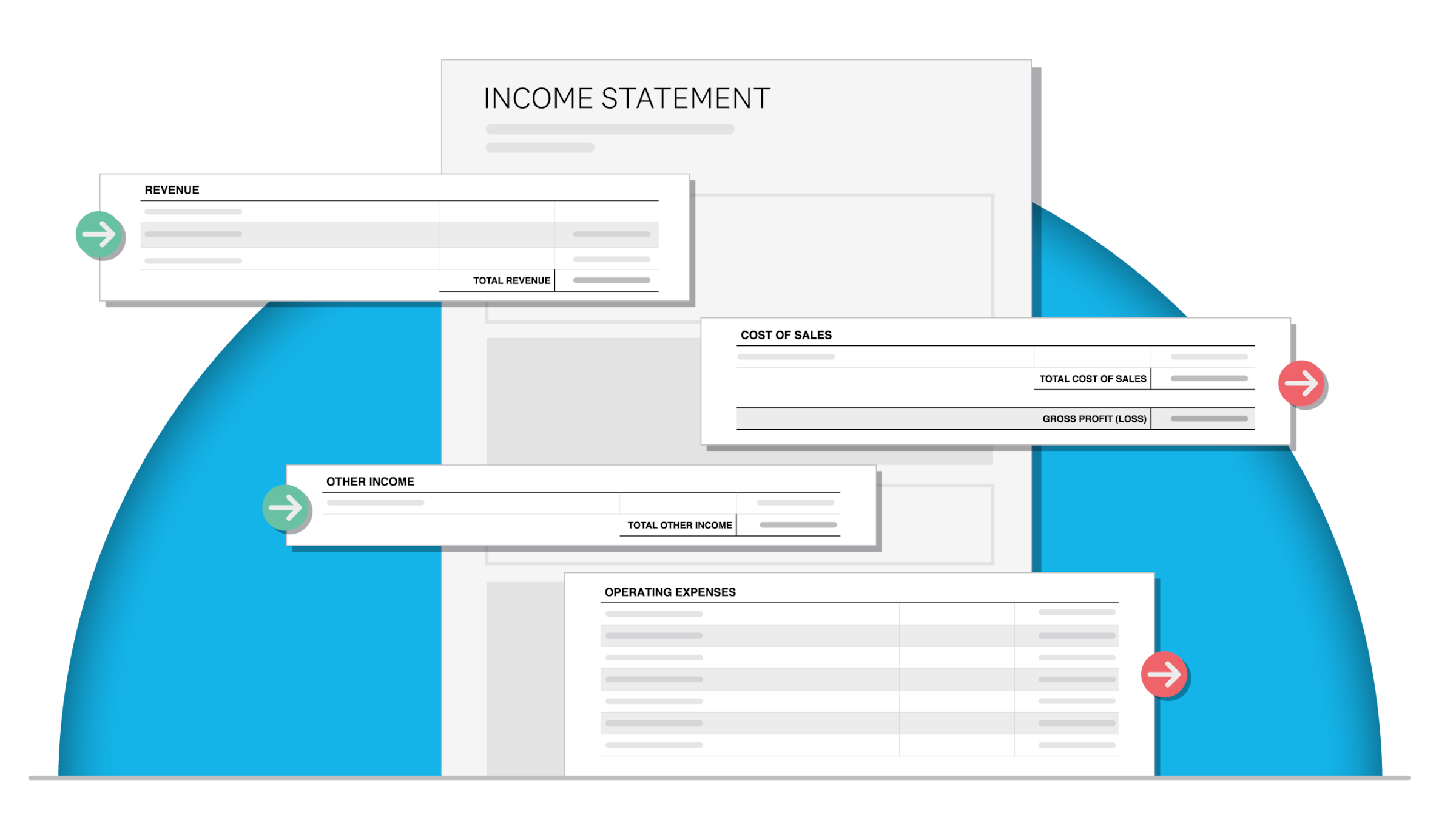
Cost of sales is an expense, because it’s money leaving your business. It appears on your income statement (profit and loss) and reduces your gross profit.
What is a good cost of sales percentage?
A good percentage depends on your industry, and service businesses usually run lower cost of sales percentages than retailers. For many retailers, a gross profit margin of 50–70% is considered healthy, which means cost of sales of 30–50% of revenue.
How do you calculate cost of sales percentage?
Divide your cost of sales by your revenue, then multiply by 100. For a shop with $33,000 in cost of sales and $60,000 in revenue, that’s $33,000 ÷ $60,000 × 100 = 55%.
How can I reduce my cost of sales?
Negotiate better prices or payment terms with suppliers, and use inventory software to avoid overstocking or stockouts. Improving production efficiency and outsourcing specific tasks also help, and these tips to increase profits cover more options.
How does the cost of sales affect profitability?
Cost of sales directly sets your profit margin, so the smaller the gap between cost and selling price, the less you keep. For example, $100,000 in sales with $90,000 in cost of sales leaves just $10,000 in gross profit, a 10% margin.
Is cost of sales the same as cost of goods sold?
In practice, yes: your profit and loss report may use either label for the direct costs that sit above gross profit. If you sell physical products, this guide to COGS explains how first in, first out (FIFO) and average cost methods change the figure.
Disclaimer
Xero does not provide accounting, tax, business or legal advice. This guide has been provided for information purposes only. You should consult your own professional advisors for advice directly relating to your business or before taking action in relation to any of the content provided.
Start using Xero for free
Access Xero features for 30 days, then decide which plan best suits your business.