Profitability: what it means and how to measure it
Learn how to measure profitability, track margins, and make smarter calls about pricing and costs.

Written by Jotika Teli—Certified Public Accountant with 24 years of experience. Read Jotika's full bio
Published Wednesday 1 April 2026
Table of contents
Key takeaways
- Calculate both gross profit margin and net profit margin regularly to understand different aspects of your business performance, as gross margin shows efficiency after direct costs while net margin reveals your true bottom-line profitability after all expenses.
- Focus on improving profitability through strategic pricing reviews, reducing operating expenses, and negotiating better supplier terms, as small increases in margins can significantly impact your overall financial health.
- Track profitability metrics monthly rather than annually to spot trends early and make informed decisions about pricing, cost control, and business growth opportunities.
- Recognise that high profitability means nothing without strong revenue, as you need both healthy margins and good sales volume to build a sustainable and growing business.
What profitability means
Profitability measures how efficiently your business turns revenue into profit. It's expressed as a percentage, showing what portion of each sale you keep after paying costs. The two main profitability metrics are gross profit margin and net profit margin.
Profitability levels signal different things about your business:
- High profitability (large margins): You keep a large portion of revenue as profit. This is generally positive, though it may indicate room to lower prices and increase sales volume.
- Low profitability (small margins): Most of your revenue covers expenses. This could mean costs are too high, pricing is too low, or you're competing heavily on price.
Profit vs profitability
Profit and profitability measure different things:
- Profit: The dollar amount your business earns after paying expenses
- Profitability: The percentage of revenue you keep after covering costs
Why does this matter? High profitability only improves your bottom line when paired with strong revenue. You need both good margins and good sales to grow.
Why profitability matters
Profitability shows whether your business model is sustainable, which is why it's considered one of the top five practice key performance indicators (KPIs) by the Institute of Chartered Accountants in England and Wales (ICAEW). Revenue alone doesn't tell the full story. You need to know how much you actually keep.
Tracking profitability helps you:
- Make informed pricing decisions: Understand if your prices cover costs and generate healthy margins
- Control expenses: Identify where costs are eating into your profits
- Compare performance: Measure progress over time and benchmark against competitors
- Plan for growth: Ensure you have enough margin to reinvest in the business
- Attract investors or lenders: Show that your business operates efficiently. Research shows that including a gross profit line item improves analysts' forecast accuracy. Clear profitability reporting builds confidence with outside stakeholders.

Without visibility into profitability, you're making financial decisions without the full picture.
Profitability metrics

*Net profit can be quoted before or after taxes. If quoting after-tax net profit then you need to also subtract taxes.
Profitability metrics show what percentage of revenue your business keeps as profit. The two most common are gross profit margin and net profit margin, sometimes called profitability ratios. Understanding both helps you analyse different aspects of your financial performance.
Gross profit margin
Gross profit margin measures the percentage of revenue remaining after paying your cost of goods sold (COGS). These are the direct costs of providing your products or services.
- What it shows: How much revenue covers direct production costs
- Why it matters: Gross profit pays for operating expenses like rent, utilities, and marketing. What remains becomes net profit.
Net profit margin
Net profit margin measures the percentage of revenue remaining after paying all business costs, including operating expenses.
- What it shows: Your true bottom-line efficiency after all expenses
- Why it matters: Net profit is what your business keeps. It may be retained in the business, distributed to owners, used to service debt, or allocated for other purposes.
Net profit can be quoted before or after taxes. The examples in this guide use pre-tax net profit.
How to measure profitability
The profitability formula is: (Profit ÷ Revenue) × 100 = Profitability percentage.
Before calculating, determine which profit figure to use. Gross profit margin and net profit margin each require different inputs.
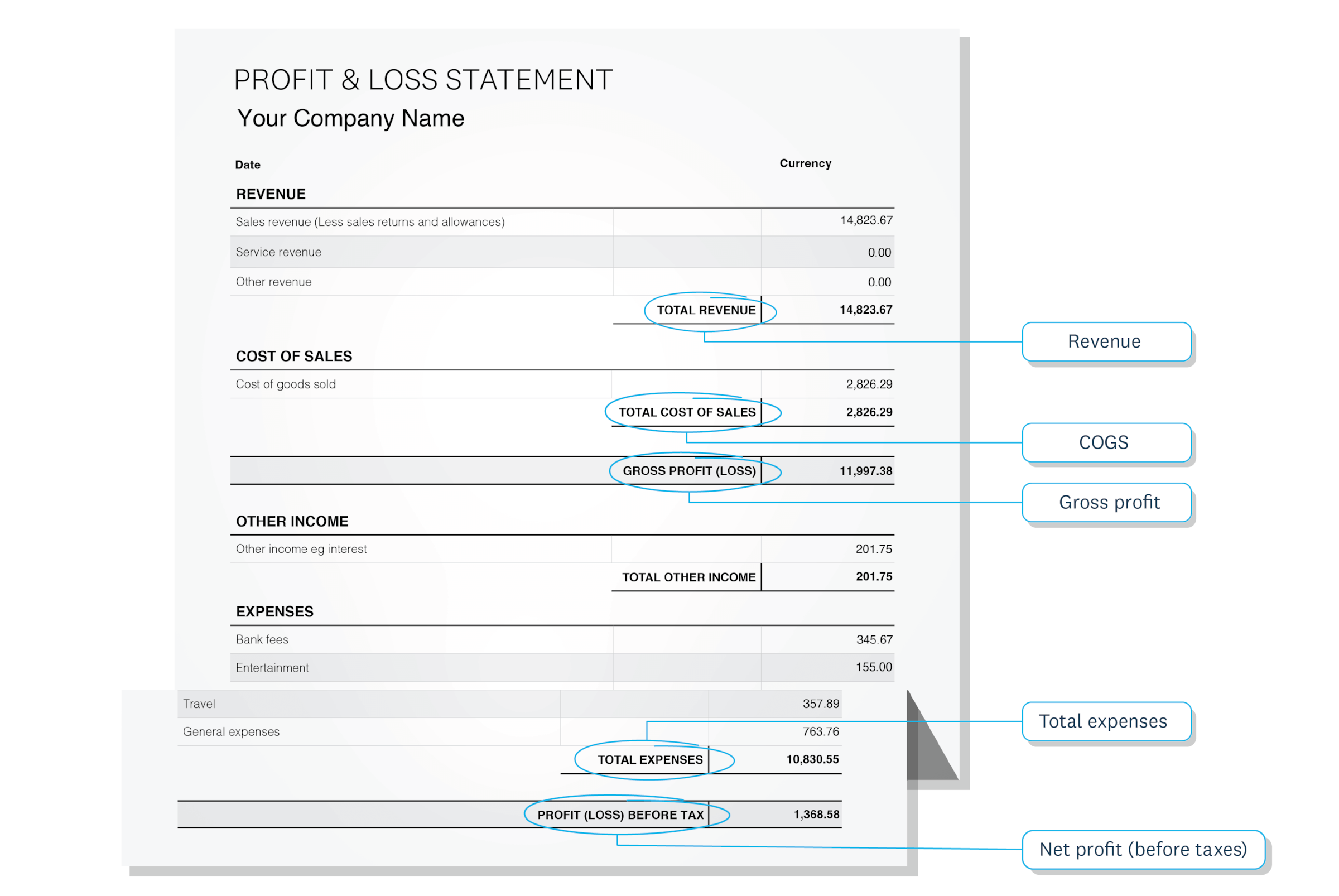
How to measure gross profit margin
Calculate gross profit margin by subtracting cost of goods sold from revenue, then dividing by revenue and multiplying by 100.
Try the gross margin calculator to run your numbers quickly.
How to measure net profit margin
Calculate net profit margin by subtracting all expenses from revenue, then dividing by revenue and multiplying by 100.
Try the net profit margin calculator to see your results instantly.
Example of profitability measurement
A business earns $100,000 in sales, spends $60,000 on inventory (COGS), and $20,000 on operating expenses. Here's how to calculate both profitability metrics:
- Gross profit = $100,000 revenue − $60,000 COGS = $40,000
- Gross profit margin = ($40,000 ÷ $100,000) × 100 = 40%
- Net profit = $100,000 revenue − $60,000 COGS − $20,000 expenses = $20,000
- Net profit margin = ($20,000 ÷ $100,000) × 100 = 20%
This business keeps 40% of revenue after direct costs, and 20% after all expenses.
What affects profitability
Several factors influence your profitability metrics. Understanding these helps you identify where to focus improvement efforts.
- Pricing strategy: Higher prices improve margins if sales volume holds steady
- Cost of goods sold: Supplier costs, production efficiency, and inventory management directly affect gross profit margin
- Operating expenses: Rent, utilities, salaries, and overhead impact net profit margin
- Sales volume: More transactions can offset smaller margins
- Market competition: Competitive pressure may force pricing adjustments
- Operational efficiency: Automation and streamlined workflows reduce costs without cutting output
Review these factors regularly to spot opportunities for margin improvement.
How to improve profitability
Use these proven strategies to boost your margins. These proven strategies help small businesses increase profitability.
- Review your pricing: Ensure prices cover all costs and reflect your value. Small increases can significantly improve margins.
- Reduce operating expenses: Audit recurring costs and eliminate unnecessary spending.
- Improve operational efficiency: Automate routine tasks and streamline workflows to reduce labour costs.
- Increase sales volume: Attract more customers or encourage larger purchases to spread fixed costs across more transactions.
- Negotiate with suppliers: Secure better terms to reduce your cost of goods sold.
- Focus on high-margin offerings: Prioritise products or services that deliver better returns.
Track your profitability metrics monthly to measure the impact of these changes.
Track your profitability with Xero
Measuring profitability consistently helps you spot trends and make confident business decisions. Xero's automated reporting gives you real-time insights into your margins, so you can track performance without manual calculations.
Get one month free and start understanding your business's financial health today.
FAQs on profitability
Find answers to common questions about measuring and improving profitability.
What do you mean by profitability?
Profitability measures how efficiently your business converts revenue into profit. It's expressed as a percentage showing what portion of sales you keep after paying expenses.
What is the profitability formula?
The basic formula is: (Profit ÷ Revenue) × 100. For gross profit margin, use gross profit. For net profit margin, use net profit.
What's a good profitability percentage?
It varies by industry. According to some benchmarks, a healthy profit margin for small businesses typically falls between 7%–10%. This aligns with general guidance that net profit margins above 10% are healthy. Retail may operate at 2–5%, while professional services can reach 20–30%.
How often should I measure profitability?
Measure at least quarterly to track trends. Monthly reviews help you respond quickly to changes. Accounting software like Xero automates these calculations.
Can my business be profitable but still fail?
Yes. Profitability measures efficiency, but cash flow determines survival. A profitable business can fail if it runs out of cash due to slow customer payments or poor cash management.
Disclaimer
Xero does not provide accounting, tax, business or legal advice. This guide has been provided for information purposes only. You should consult your own professional advisors for advice directly relating to your business or before taking action in relation to any of the content provided.
Start using Xero for free
Access Xero features for 30 days, then decide which plan best suits your business.