What is a sales funnel? Stages, benefits and examples
A sales funnel helps turn interest into customers. Learn how to build one for your business.

Written by Shaun Quarton—Accounting & Finance Content Writer and Growth Marketer. Read Shaun's full bio
Published Wednesday 22 April 2026
Table of contents
Key takeaways
- Implement a structured five-stage sales funnel (qualification, proposal, negotiation, closing, retention) to guide prospects from initial interest to purchase, helping you focus resources on the most promising leads while building trust at each stage.
- Track conversion rates at each funnel stage to spot where prospects drop off, then use that data to refine your approach and improve results over time.
- Prioritise customer retention through post-sale support and nurturing programs, as existing customers generate around 65% of most companies' business and upselling to them is 68% more cost-effective than winning new ones.
- Align your marketing and sales teams to create smooth handoffs and consistent messaging throughout the customer journey, as companies with aligned teams are 67% more effective at closing deals and retain 36% more customers.
Key takeaways
- Implement a structured five-stage sales funnel (qualification, proposal, negotiation, closing, retention) to guide prospects from initial interest to purchase. This approach helps you focus resources on the most promising leads while building trust at each stage.
- Track conversion rates at each funnel stage to identify drop-off points and optimise performance. Data-driven insights reveal where prospects lose interest and allow you to refine your approach for better results.
- Prioritise customer retention through post-sale support and nurturing programs. Existing customers generate around 65% of most companies' business and upselling to them is 68% more cost-effective than acquiring new customers.
- Align your marketing and sales teams to create seamless handoffs and consistent messaging throughout the customer journey. Companies with aligned teams are 67% more effective at closing deals and retain 36% more customers.
What is a sales funnel?
A sales funnel is a step-by-step model that guides potential customers from when they first become aware of your brand to when they purchase. It helps you convert prospects into paying customers by nurturing them through each stage of the buying process.
The funnel starts wide at the top where prospects first discover your brand. As they move through each stage, some naturally drop off due to lack of interest, budget constraints, or alternative solutions. Only the most qualified leads reach the bottom, ready to make a purchase decision.
A sales funnel is also known as:
- business growth funnel
- conversion funnel
- purchase funnel
Each stage reflects growing commitment. Understanding this process helps you nurture prospects more effectively and improve conversion rates.
An online store selling speciality coffee beans might see a customer discover the brand through Instagram, browse the website, join the email list for a 10% discount, add a bag of beans to their cart, and finally complete the purchase.
What are the sales funnel stages?
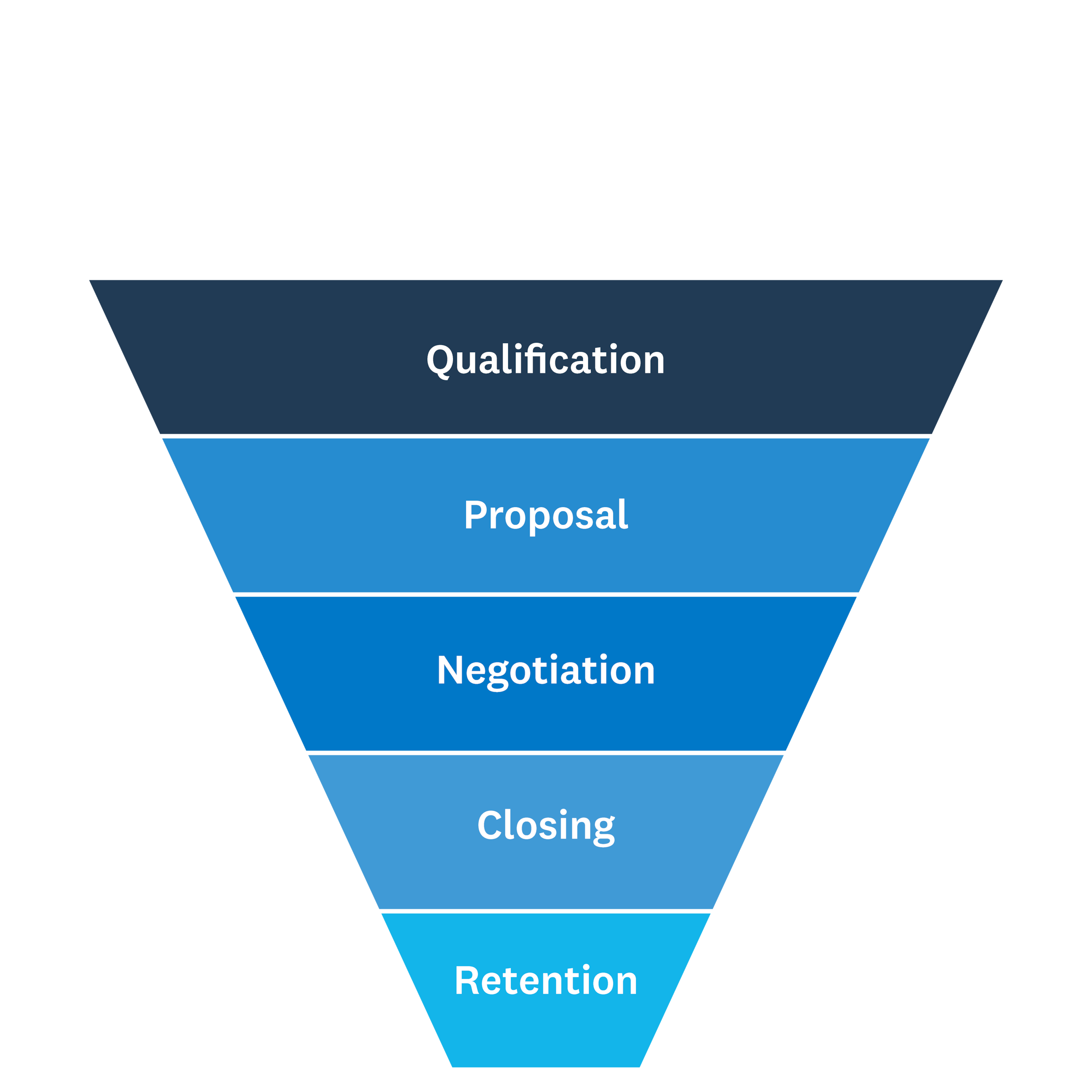
Sales funnel stages are the distinct phases prospects move through before becoming customers. The five key stages are:
- Qualification: Identify the best-fit prospects based on their needs, budget, and timeframe
- Proposal: Present your product or service to qualified prospects, demonstrating its value
- Negotiation: Address any remaining objections and discuss terms, pricing, or contract details
- Closing: Finalise the sale by securing an agreement, processing payments, and completing the transaction
- Retention: Ensure customer satisfaction to encourage repeat business and long-term loyalty
Around 65% of a company's business comes from existing customers, making retention a critical stage.
How does a sales funnel work?
A sales funnel works by systematically moving prospects through stages that build trust and commitment. Each stage serves a specific purpose in the customer journey.
The process follows this sequence:
- Discovery: Prospects find your business through marketing efforts
- Engagement: They interact with your content, request information, or visit your website
- Qualification: You assess their needs and present solutions
- Conversion: You address concerns and close the sale
- Retention: You focus on keeping customers for repeat business
The funnel shape reflects reality: many prospects enter at the top, but only a smaller, more qualified group converts at each stage. This natural filtering helps you focus resources on the most promising leads.
What are the benefits to using a sales funnel?
Sales funnel benefits include increased conversions, improved forecasting, and sustainable growth. For small and medium businesses, an effective funnel delivers measurable advantages that help you compete more effectively in your market.
Better understand customer behaviour
Analysing customer behaviour reveals which prospects are most likely to convert. Sales funnel data shows patterns in successful conversions, helping you identify ideal customer segments earlier and tailor your messaging more effectively.
This insight helps you:
- Focus resources on high-value leads
- Prioritise prospects from industries with higher conversion rates, using tools like ATO performance benchmarks that apply to 100 industries to guide your focus
- Adapt funnel strategies to regional trends and local consumer behaviour
- Allocate more resources to customer acquisition in high-performing sectors
Forecast sales more accurately
Forecasting sales becomes more accurate when you analyse conversion rates at each funnel stage. This process is increasingly automated as 28 per cent of businesses invested in AI in 2024 to analyse data better, according to research on high-growth small businesses. This data helps you predict future sales volumes and plan resource allocation effectively.
Four in five leaders report having missed a quarterly forecast in the past year, according to sales forecasting benchmark research.
If 20% of qualified leads request callbacks and 40% of those convert to customers, you can project sales based on your lead pool. This insight also helps you determine optimal spending on lead acquisition while maintaining profitability.
Drive business growth
Your business grows faster when you use sales funnel data to spot where results are slowing and fix those weak points. Tracking key metrics at every stage reveals opportunities for improvement.
If 40% of brochure downloads request demos but only 3% convert to quotes, you've found a weak point. Improving your demo presentation could significantly increase conversions to the next stage.
The retention stage offers major growth opportunities:
- Track metrics like customer lifetime value and repeat purchase rates
- Develop long-term nurturing strategies
- Focus on upselling to existing customers, which is 68% more cost-effective than acquiring new ones, according to sales funnel statistics
Sales funnel examples
Sales funnel examples show how different business models adapt the core framework to their specific audiences. While the five-stage framework remains consistent, the tactics vary by industry. Here are three common models.
eCommerce sales funnel
The eCommerce sales funnel moves customers from discovering products to purchasing swiftly and with minimal friction. It typically follows six steps:
- Attract: Ads, search engine optimisation (SEO), social media
- Engage: Product pages, images, and reviews
- Capture: Discounts or freebies for email sign-ups
- Nurture: Retargeting ads, abandoned cart emails
- Convert: Seamless checkout experience
- Retain: Personalised product recommendations
Business-to-business (B2B) sales funnel
The business-to-business (B2B) sales funnel focuses on building trust and demonstrating expertise to convert high-value prospects. 47% of B2B buyers now spend significantly more time researching their purchases.
The B2B funnel typically follows six steps:
- Attract: Content marketing, networking, referrals
- Engage: Webinars, case studies, whitepapers
- Capture: Gated content, consultation offers (highly effective since owners of high-growth small businesses are more likely to seek expert advice from consultants or mentors, according to research on high-growth business traits)
- Nurture: Follow-up emails, demos, personalised outreach
- Convert: Proposals and negotiations
- Retain: Ongoing support, upsells
Software-as-a-service (SaaS) sales funnel
The software-as-a-service (SaaS) sales funnel converts prospects into customers through free trials or demos, then retains them by continuing to deliver what they need.
The SaaS funnel typically follows six steps:
- Attract: SEO, PPC, content marketing
- Engage: Landing pages, videos, case studies
- Capture: Free trials, demos, limited-access plans
- Nurture: Onboarding emails, product tutorials, customer success check-ins
- Convert: Upgrade prompts, sales calls for enterprise deals
- Retain: Feature updates, customer support, loyalty programs
FAQs on sales funnels
Here are answers to common questions about sales funnels.
How long does it take to build a sales funnel?
Building a basic sales funnel takes two to four weeks. This includes defining your stages, creating content for each phase, and setting up tracking systems. More complex funnels with automation can take one to three months.
What's the difference between a sales funnel and a marketing funnel?
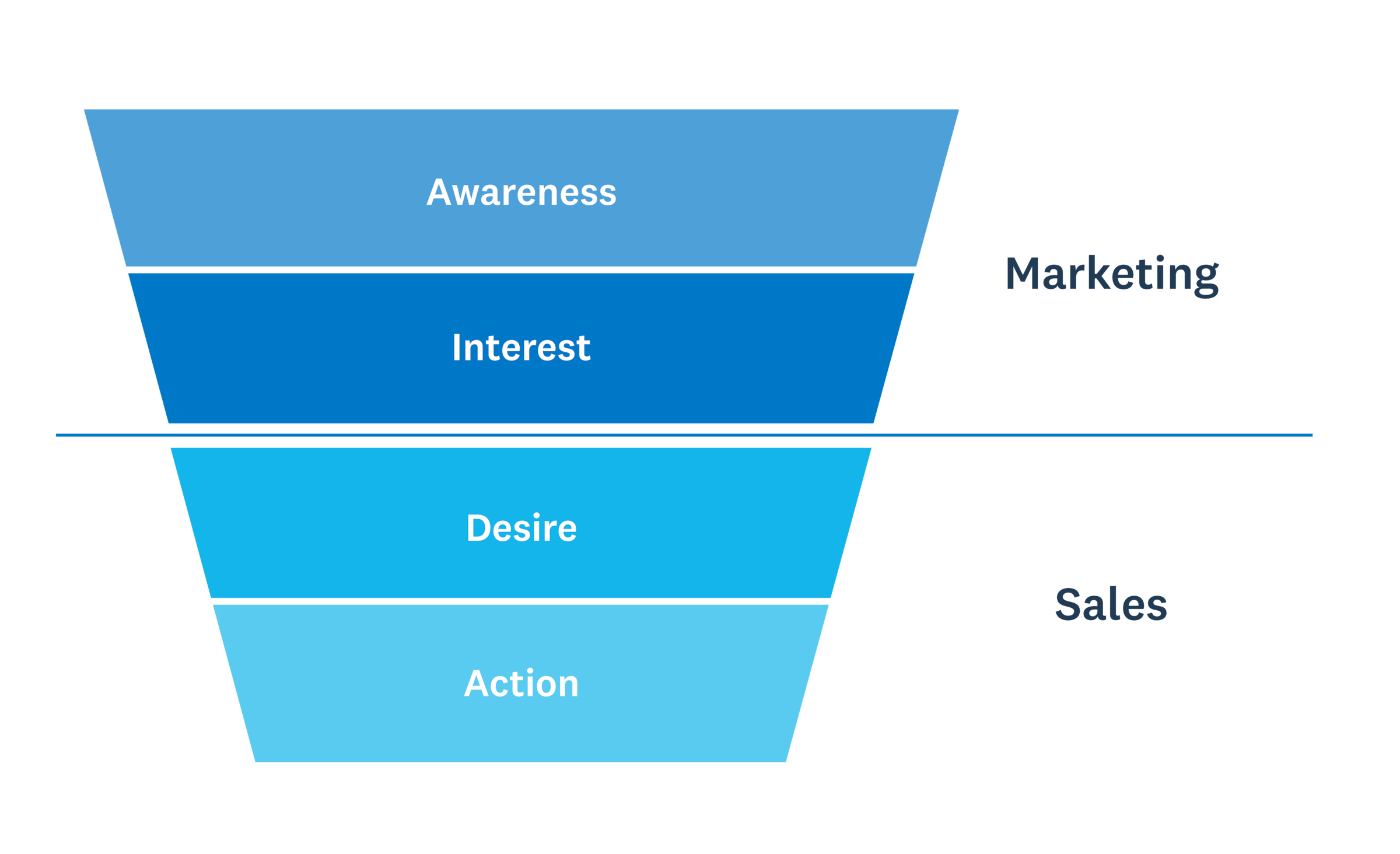
A marketing funnel focuses on attracting and nurturing leads until they're ready to buy. A sales funnel takes over once a prospect is qualified, guiding them through the purchase decision. The two work together as part of your overall customer journey.
How do I know if my sales funnel is working?
Track conversion rates at each stage, customer acquisition costs, and overall revenue growth. If you see improving conversion rates and a steady flow of qualified leads moving through each stage, your funnel is working effectively.
What's a good conversion rate for a sales funnel?
Conversion rates vary by industry and business model. For B2B, a 2-5% conversion rate from lead to customer is typical. For eCommerce, rates of 1-3% are common. Focus on improving your own baseline rather than comparing to industry averages.
Small business continues to adapt and grow*
Read the full report for Xero's small business insights focusing on several core performance metrics, including sales growth, jobs, time to be paid, and late payments.
AU sales:+3.7%*
Small business sales grew an average 3.7% y/y in the three months to September. Published 31 October 2024.
Disclaimer
Xero does not provide accounting, tax, business or legal advice. This guide has been provided for information purposes only. You should consult your own professional advisors for advice directly relating to your business or before taking action in relation to any of the content provided.
Get one month free
Purchase any Xero plan, and we will give you the first month free.