What are assets?
Learn what assets are, the different types, and how tracking them helps your small business grow.
Published Thursday 23 July 2026
Table of contents
Key takeaways
- An asset is anything your business owns that has economic value, from cash and inventory to equipment and intellectual property
- Assets fall into several categories, including current vs. fixed, tangible vs. intangible, and liquid vs. illiquid, each playing a different role in your finances
- The accounting equation (Assets = Liabilities + Equity) ties your assets directly to what you owe and what you own outright
- Tracking your assets regularly helps you understand your business's true worth, plan for growth, and make smarter financial decisions
What is an asset?
Understanding your assets is a key part of managing your business finances. Here's what the term means and why it matters.
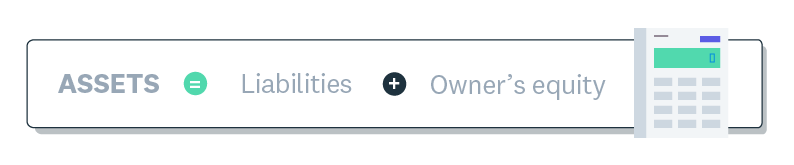
The accounting equation
An asset is any resource your business owns that holds economic value. That includes physical items like equipment and inventory, financial resources like cash and accounts receivable, and non-physical items like patents or trademarks. If it can generate future revenue or be converted to cash, it's an asset.
In accounting, assets are 1 side of the accounting equation: Assets = Liabilities + Equity. This formula shows that everything your business owns (assets) is funded by either what you owe (liabilities) or what you've invested and earned (equity). It's the foundation of your balance sheet.
Knowing what your assets are, and what they're worth, helps you make informed decisions about spending, borrowing, and growing your business.
Types of assets
Assets aren't all the same. They're grouped into categories based on how quickly you can use or convert them, whether they're physical or non-physical, and how easily they turn into cash.
Current assets
Current assets are short-term resources your business expects to use or convert into cash within 1 year. They're essential for covering day-to-day expenses and keeping operations running smoothly.
Common examples include cash, accounts receivable, inventory, and prepaid expenses like insurance. Because they cycle through your business quickly, current assets are a key indicator of your short-term financial health.
Fixed assets
Fixed assets are long-term resources your business holds for more than 1 year. They support your operations over time rather than being sold or used up quickly.
Examples include land, buildings, machinery, vehicles, and office furniture. Most fixed assets lose value over time through depreciation, which lets you spread the cost across the asset's useful life on your financial statements.
Tangible vs. intangible assets
Tangible assets are physical items you can see and touch, like equipment, vehicles, and buildings. Intangible assets, on the other hand, don't have a physical form but still hold significant value.
Intangible assets include patents, trademarks, copyrights, brand recognition, and goodwill. A small business might own a trademark that gives it a competitive edge, or hold a patent that protects a unique product. Both types contribute to the overall worth of your business.
Liquid vs. illiquid assets
Liquidity refers to how quickly and easily you can convert an asset into cash without losing value. Understanding this distinction helps you plan for both expected and unexpected expenses.
Liquid assets include cash, savings accounts, and publicly traded investments you can access fast. Illiquid assets, like real estate, specialized equipment, or long-term contracts, take more time and effort to sell. A healthy business typically keeps a mix of both.
Examples of business assets
Assets look different depending on your industry and business size. Here are some of the most common categories small businesses deal with.
- Cash and bank account balances
- Accounts receivable (money customers owe you)
- Inventory and raw materials
- Office furniture, computers, and equipment
- Vehicles used for business operations
- Real estate or leasehold improvements
- Intellectual property like patents or trademarks
- Software licenses and digital tools
- Prepaid expenses such as insurance or rent
- Goodwill acquired through a business purchase
Assets vs. liabilities
Assets and liabilities are 2 sides of the same coin in your accounting. Knowing the difference helps you understand your business's true financial position.
Assets are what your business owns, while liabilities are what your business owes. A delivery van is an asset; the loan you took out to buy it is a liability. Cash in your bank account is an asset; unpaid supplier invoices are liabilities.
The accounting equation, Assets = Liabilities + Equity, connects them directly. When your assets exceed your liabilities, the difference is your equity, which represents the actual value you hold in your business. Monitoring this balance regularly gives you a clear picture of your financial health.
Why assets matter for your business
Your assets are more than just items on a balance sheet. They play a direct role in how your business operates, grows, and secures its future.
First, assets help determine your business's net worth. Subtracting liabilities from assets shows you exactly how much equity you've built. This number is important when you're looking to sell, attract investors, or simply measure progress over time.
Second, lenders and investors look closely at your assets when evaluating loan applications or funding requests. Strong asset records can improve your chances of getting the financing you need.
Finally, understanding your asset base helps you plan ahead. You can identify underperforming resources, time major purchases, and allocate budgets more effectively when you know exactly what you have and what it's worth.
How to track and manage assets
Good asset tracking doesn't have to be complicated, but it does need to be consistent. A few practical steps can keep you on top of what you own.
Start by creating an asset register: a single list of every asset your business owns, including purchase dates, costs, and current values. This gives you a centralized record to reference during tax season, audits, or financial planning.
For fixed assets, track depreciation so your financial statements reflect accurate values over time. Most accounting software handles depreciation calculations automatically, saving you from manual spreadsheet work.
Review your assets on a regular schedule, at least quarterly. Check for items that are damaged, outdated, or no longer in use. Disposing of or writing off assets you no longer need keeps your records clean and your balance sheet accurate.
Using cloud accounting software makes the whole process easier. It lets you record, categorize, and monitor your assets in real time, so you always have a clear view of what your business owns.
Track your business assets with Xero
Keeping your assets organized is simpler when your accounting software does the heavy lifting. Xero's cloud-based platform helps you record and manage your assets alongside your everyday bookkeeping, so everything stays in 1 place.
With features like automated bank reconciliation, customizable reporting, and real-time financial data, you can see exactly where your business stands at any time. Ready to take control of your finances? Get one month free.
FAQs on assets
Here are answers to frequently asked questions about assets.
What are examples of assets?
Common examples include cash, inventory, equipment, vehicles, real estate, and intellectual property like patents. Any resource your business owns that has economic value counts as an asset.
What is the difference between current and fixed assets?
Current assets are expected to be used or converted to cash within 1 year, like inventory or accounts receivable. Fixed assets are long-term resources held for more than 1 year, such as buildings or machinery.
Are intangible assets real assets?
Yes, intangible assets are real assets even though they don't have a physical form. Patents, trademarks, copyrights, and goodwill all hold economic value and appear on your balance sheet.
How do you calculate total assets?
Add up all your current assets and fixed assets to get your total. You can also use the accounting equation: Total Assets = Liabilities + Equity.
Why are assets important for a small business?
Assets determine your business's net worth and affect your ability to secure loans or attract investors. Tracking them helps you make smarter decisions about spending, growth, and long-term planning.
Handy resources
Advisor directory
You can search for experts in our advisor directory
Xero Small Business Guides
Discover resources to help you do better business
Fixed assets in Xero
Manage your fixed assets with easy-to-use accounting software
Disclaimer
This glossary is for small business owners. The definitions are written with their requirements in mind. More detailed definitions can be found in accounting textbooks or from an accounting professional. Xero does not provide accounting, tax, business or legal advice.