Cash accounting
Learn what cash accounting is, how it works, and how it differs from accrual accounting for your business.
Published Monday 17 August 2026
Table of contents
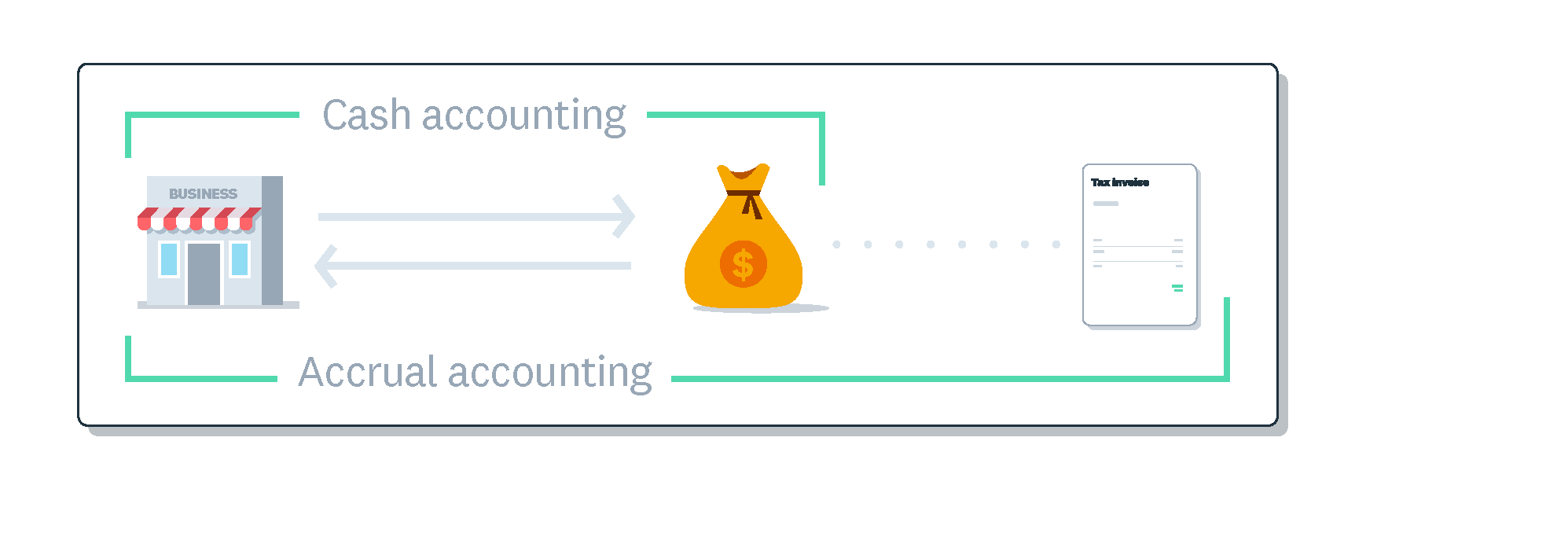
Cash accounting focuses only on money, not bills or invoices.
Key takeaways
- Cash accounting records income when you receive payment and expenses when you pay them, not when invoices or bills are issued.
- It is simple to maintain and gives a clear view of your actual cash position, which suits many small businesses, sole proprietors, and partnerships.
- Because it ignores unpaid invoices and bills, it offers only a short-term view and may not suit growing businesses or those carrying inventory.
- In Singapore, GST-registered businesses usually account for GST on an invoice basis but can apply to IRAS to use a cash basis.
What is cash accounting?
Cash accounting is a method of recording income and expenses based on when money actually changes hands. You record income only when you receive payment and expenses only when you pay them, regardless of when you issue an invoice or receive a bill.
The term "cash" refers to the timing of when transactions are recorded, not the payment method itself. Electronic transfers, card payments, and bank deposits all count under cash accounting because the principle is simple: record it when the money moves.
This approach gives you a straightforward view of how much money you actually have at any given time. Many small businesses find it easier to maintain than other accounting methods because it closely mirrors your bank balance.
How does cash accounting work?
Cash accounting tracks your actual cash position by recording transactions at the moment money enters or leaves your business. This makes it easier to see exactly how much you have available to spend.
The two core rules are:
- record revenue when you receive payment from a customer
- record expenses when you pay a supplier or service provider
Because you're only tracking money that has physically moved, your books reflect your real-time financial position. You won't have unpaid invoices or outstanding bills cluttering your records, which keeps everything simple to reconcile with your bank statements. For a step-by-step look, see how to record accounting transactions.
Cash accounting example
Here's how cash accounting works in practice for a Singapore-based freelance designer.
In March, you complete a branding project for a client and issue an invoice for $4,000 SGD. The client pays you in April. Under cash accounting, you record the $4,000 as income in April (when you received the payment), not in March (when you issued the invoice).
The same principle applies to expenses. Suppose you receive a $600 bill from a printing supplier in March for materials used on a project. You pay this bill in April. Under cash accounting, you record the $600 expense in April (when you paid it), not in March (when you received the bill). Your March records show no expense, and your April records show both the $4,000 income and the $600 expense.
Cash accounting vs accrual accounting
The main difference between cash and accrual accounting is timing. Both methods record the same transactions eventually, but they recognise them at different points.
Here are the key differences:
- cash accounting records income when you receive payment; accrual accounting records income when you issue an invoice
- cash accounting records expenses when you pay them; accrual accounting records expenses when you receive a bill
- cash accounting shows your actual cash position; accrual accounting shows your financial commitments
- cash accounting is simpler to maintain; accrual accounting requires more detailed record-keeping
Accrual accounting gives a more complete picture of your business performance because it captures money you're owed and money you owe. However, it's more complex to manage and may not reflect how much cash you actually have available. For a fuller comparison, read our guide to cash versus accrual accounting.
Pros and cons of cash accounting
Cash accounting suits many small businesses, but it's worth understanding both sides before choosing this method.
Advantages of cash accounting
Cash accounting offers several practical benefits for smaller operations.
- simpler to maintain with less bookkeeping overhead
- provides a clear, real-time view of your actual cash position
- you only pay tax on income you've actually received
- easier to reconcile with your bank statements
Disadvantages of cash accounting
There are also limitations to keep in mind as your business develops.
- ignores unpaid invoices and outstanding bills, which can distort your view of profitability
- offers only a short-term financial picture
- less suitable as your business grows or if you carry inventory
- may not meet the requirements of some lenders or investors
Who can use cash accounting?
In Singapore, most small businesses, sole proprietors, and partnerships can choose cash accounting for their day-to-day record-keeping. It's a practical option if you want straightforward bookkeeping without complex adjustments.
GST-registered businesses in Singapore typically account for GST on an invoice basis. However, you can apply to the Inland Revenue Authority of Singapore (IRAS) to use a cash basis for GST accounting if you meet certain conditions.
Companies preparing statutory financial statements generally need to follow accrual-based accounting standards. If you're seeking external funding, keep in mind that some lenders and investors prefer to see accrual-based accounts because they show a fuller picture of financial performance.
Tax and GST implications of cash accounting
Under cash accounting, you recognise income for tax purposes when you receive payment and expenses when you pay them. This timing can help with cash flow because you're not paying tax on money you haven't yet collected.
For GST purposes, Singapore businesses normally account for GST on an invoice basis. If you prefer to account for GST when you receive or make payments, you can apply to IRAS for approval to use a cash basis. If you are new to this, our guide to registering for GST explains the basics.
Tax rules can be complex, so it's worth checking with IRAS or speaking to an accountant to confirm which approach works best for your situation.
When to switch to accrual accounting
There are several situations where moving from cash to accrual accounting makes sense for your business.
Consider switching when you experience:
- business growth that makes simple cash tracking insufficient
- inventory that you need to value and track accurately
- applications for loans or external investment where lenders expect accrual accounts
- a need for accurate monthly or quarterly profit figures for planning
- statutory reporting requirements that mandate accrual-based standards
Simplify cash accounting with Xero
Xero accounting software can help you track income and expenses as they happen, giving you a clear view of your cash position at any time. You can switch between cash and accrual views in your reports, so you get flexibility without maintaining two sets of books.
With automated bank feeds and easy categorisation, you spend less time on manual data entry and more time running your business. Start today and get one month free when you sign up.
FAQs on cash accounting
Here are answers to common questions about cash accounting in Singapore.
Can I switch from cash to accrual accounting?
Yes, you can switch from cash to accrual accounting. The transition involves adjusting your records to include outstanding invoices and unpaid bills, so it's best to do this at the start of a new financial period with guidance from an accountant.
Can small businesses in Singapore use cash accounting?
Most small businesses, sole proprietors, and partnerships in Singapore can use cash accounting for internal record-keeping. However, companies with statutory reporting obligations typically need to prepare financial statements on an accrual basis.
Is cash accounting the same as single-entry bookkeeping?
No, they're different concepts. Cash accounting refers to when you record transactions (upon payment), while single-entry bookkeeping refers to how you record them (one entry per transaction rather than debits and credits). You can use cash accounting with either single-entry or double-entry bookkeeping.
What is the difference between cash accounting and cash flow?
Cash accounting is a method of recording transactions based on when money is received or paid. Cash flow refers to the movement of money in and out of your business over a period, and cash flow analysis also considers timing, trends, and forecasting.
Related terms
Learn more about cash accounting
Handy resources
Advisor directory
You can search for experts in our advisor directory
How to do bookkeeping
Learn about data entry, bank rec, reporting and tax prep in our guide to doing bookkeeping.
Online accounting with Xero
Automate your accounting in the cloud
Disclaimer
This glossary is for small business owners. The definitions are written with their requirements in mind. More detailed definitions can be found in accounting textbooks or from an accounting professional. Xero does not provide accounting, tax, business or legal advice.