Basis of accounting
Your basis of accounting sets when you record income and expenses. Compare cash and accrual accounting.
Published Monday 17 August 2026
Table of contents
Key takeaways
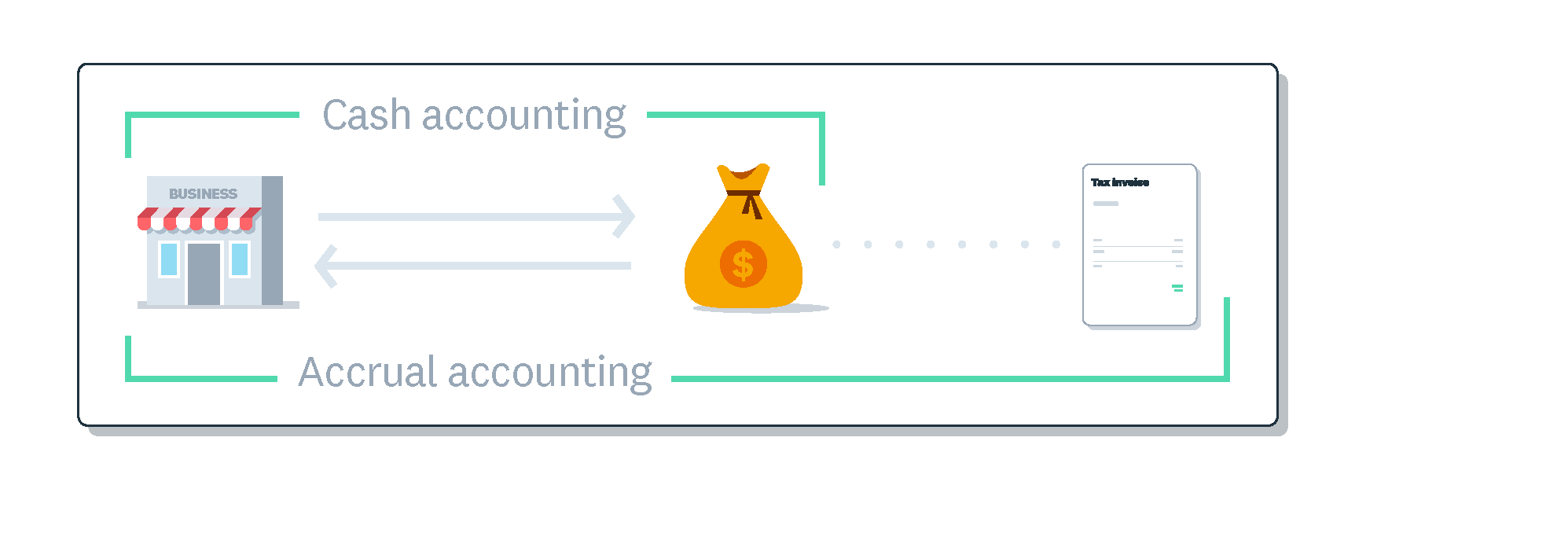
Basis of accounting determines the point at which you recognise transactions.
- Your basis of accounting determines when you recognise income and expenses in your financial records, affecting how you measure business performance.
- Cash basis accounting records transactions when money changes hands, giving you a clear view of short-term liquidity.
- Accrual basis accounting records transactions when they're earned or incurred, providing a more accurate picture of longer-term profitability.
- Singapore companies preparing financial statements under Singapore Financial Reporting Standards (SFRS) use the accrual basis, though smaller businesses may use cash or hybrid methods for internal tracking.
What is the basis of accounting?
The basis of accounting is the set of rules that determines when you record income and expenses in your financial records. It shapes how your business measures financial performance at any given time.
Your choice of accounting basis affects whether your records emphasise liquidity (how much cash you have right now) or profitability (how much you've actually earned over time). Cash basis gives you a short-term view of your bank balance, while accrual basis shows a longer-term picture of what your business has earned and owes. Understanding this distinction helps you interpret your financial reports and make informed decisions. For a detailed comparison, see this guide on cash versus accrual accounting.
Cash basis accounting
Cash basis accounting records income when you receive payment and expenses when you pay them. It's a straightforward method that ties your records directly to the money flowing in and out of your bank account.
Under the cash basis, a sale isn't counted as income until the customer's payment lands in your account. Likewise, a bill isn't recorded as an expense until you've actually paid it. This approach gives you a real-time view of your available cash, which can be useful for managing day-to-day liquidity.
For example, if you invoice a client $2,000 in March but they pay in April, you record the $2,000 as income in April. This keeps your records aligned with your actual bank balance, making it easier to see how much cash you have on hand at any moment. Keeping accurate records is essential regardless of which method you choose, so consider reviewing how to do bookkeeping for best practices.
Accrual basis accounting
Accrual basis accounting records income when it's earned and expenses when they're incurred, regardless of when cash changes hands. This method matches revenue with the expenses that helped generate it, giving you a clearer view of your business's financial performance over time.
Under the accrual basis, you recognise a sale as income as soon as you've delivered the product or completed the service, even if the customer hasn't paid yet. Similarly, you record an expense when you receive goods or services, not when you settle the bill.
Using the same example, if you invoice a client $2,000 in March, you record that income in March, even if payment arrives in April. This approach provides a more accurate picture of profitability because it shows what you've truly earned during a period. To get the timing right, it helps to understand how to record accounting transactions correctly.
Cash basis vs accrual basis: key differences
Choosing between cash and accrual accounting depends on what matters most to your business. Here are the main differences to consider:
- Timing of recognition: cash basis records transactions when money moves; accrual basis records them when earned or incurred.
- Cash flow visibility: cash basis shows your real-time bank balance; accrual basis may show income you haven't collected yet.
- Complexity: cash basis is simpler to maintain; accrual basis requires tracking receivables, payables, and adjusting entries.
- Profitability view: cash basis reflects short-term liquidity; accrual basis gives a more accurate view of longer-term profitability.
- Suitability: cash basis suits smaller, cash-based businesses; accrual basis is better for businesses with credit sales, inventory, or external reporting needs.
Modified or hybrid basis of accounting
Some businesses use a modified or hybrid basis that blends elements of both cash and accrual accounting. This approach can offer flexibility, but it comes with limitations.
A common hybrid method is modified cash basis, where you use cash accounting for most transactions but apply accrual rules for certain items like fixed assets or inventory. This can simplify day-to-day bookkeeping while still capturing important longer-term assets on your balance sheet.
However, hybrid methods don't fully comply with Singapore Financial Reporting Standards (SFRS) or International Financial Reporting Standards (IFRS). If your business needs audited financial statements or plans to seek external financing, you'll likely need to use the accrual basis. It's worth understanding what an accountant can do for your business before adopting a hybrid approach, to make sure it meets your reporting and compliance needs.
How to choose the right basis for your business
The right accounting basis depends on your business model, size, and goals. Consider these factors when deciding:
- Business size and complexity: smaller, cash-based businesses may find cash accounting sufficient, while growing businesses often benefit from the fuller picture accrual provides.
- Credit sales and receivables: if you regularly invoice customers and wait for payment, accrual accounting tracks what you're owed more accurately.
- Inventory: businesses holding inventory typically use accrual accounting to match stock costs with the revenue it generates.
- Reporting and financing needs: lenders, investors, and auditors usually expect accrual-based financial statements.
- Cash flow management: if monitoring day-to-day cash is your priority, cash basis keeps your records closely aligned with your bank balance. For more on managing cash effectively, see this guide on cash flow forecasting.
Basis of accounting in Singapore
Singapore has specific requirements that affect which accounting basis your business should use. Understanding these helps you stay compliant and maintain accurate records.
Companies in Singapore prepare their financial statements under Singapore Financial Reporting Standards (SFRS), which are based on the accrual basis. The Inland Revenue Authority of Singapore (IRAS) expects businesses to maintain proper records, and business or trade income is generally assessed on an accrual basis for tax purposes.
If your business is registered for Goods and Services Tax (GST), you need to file returns with IRAS on a regular basis (most businesses file quarterly). Regardless of which accounting method you use internally, your statutory financial statements and tax filings typically need to follow accrual principles. For specific guidance on your obligations, check with IRAS or consult a qualified accountant.
Simplify cash and accrual accounting with Xero
Managing your accounting basis doesn't have to be complicated. Xero supports cash, accrual, and hybrid reporting, so you can view your finances the way that works best for your business. With automated bank feeds and real-time reporting, you can track cash flow and profitability without extra manual work. To see how Xero can help, get one month free and explore the platform for yourself.
FAQs on basis of accounting
Here are answers to common questions about choosing and using an accounting basis for your business.
What is the difference between cash basis and accrual basis accounting?
Cash basis records income and expenses when money changes hands, while accrual basis records them when earned or incurred. Cash basis shows your current bank balance; accrual basis shows what you've truly earned and owe.
Which basis is better for a small business?
It depends on your business model. Cash basis is simpler and suits businesses with straightforward, cash-based transactions. Accrual basis is better if you have credit sales, inventory, or need financial reports for lenders or investors.
Can you switch from cash basis to accrual basis?
Yes, you can switch, but it requires adjusting your records to account for receivables, payables, and other accrued items. Work with an accountant to ensure the transition is accurate and your historical data remains consistent.
Is the cash basis compliant with accounting standards?
Cash basis is not compliant with SFRS or IFRS, which require the accrual basis for statutory financial statements. However, smaller businesses may use cash basis for internal tracking if they don't need audited accounts.
Which basis of accounting is required in Singapore?
Companies preparing statutory financial statements under SFRS must use the accrual basis. For tax purposes, IRAS generally assesses business income on an accrual basis, though some small businesses may use simplified methods for internal records.
Related terms
Learn more about basis of accounting
s://www.xero.com/sg/guides/gst-sg/what-is-gst/">What is GST?
Handy resources
Advisor directory
You can search for experts in our advisor directory
How to do bookkeeping
Learn about data entry, bank rec, reporting and tax prep in our guide to doing bookkeeping.
Online accounting with Xero
Automate your accounting in the cloud
Disclaimer
This glossary is for small business owners. The definitions are written with their requirements in mind. More detailed definitions can be found in accounting textbooks or from an accounting professional. Xero does not provide accounting, tax, business or legal advice.