Accrual accounting
Learn what accrual accounting is, how it differs from cash accounting, and who uses it in Singapore.
Published Friday 24 July 2026
Table of contents
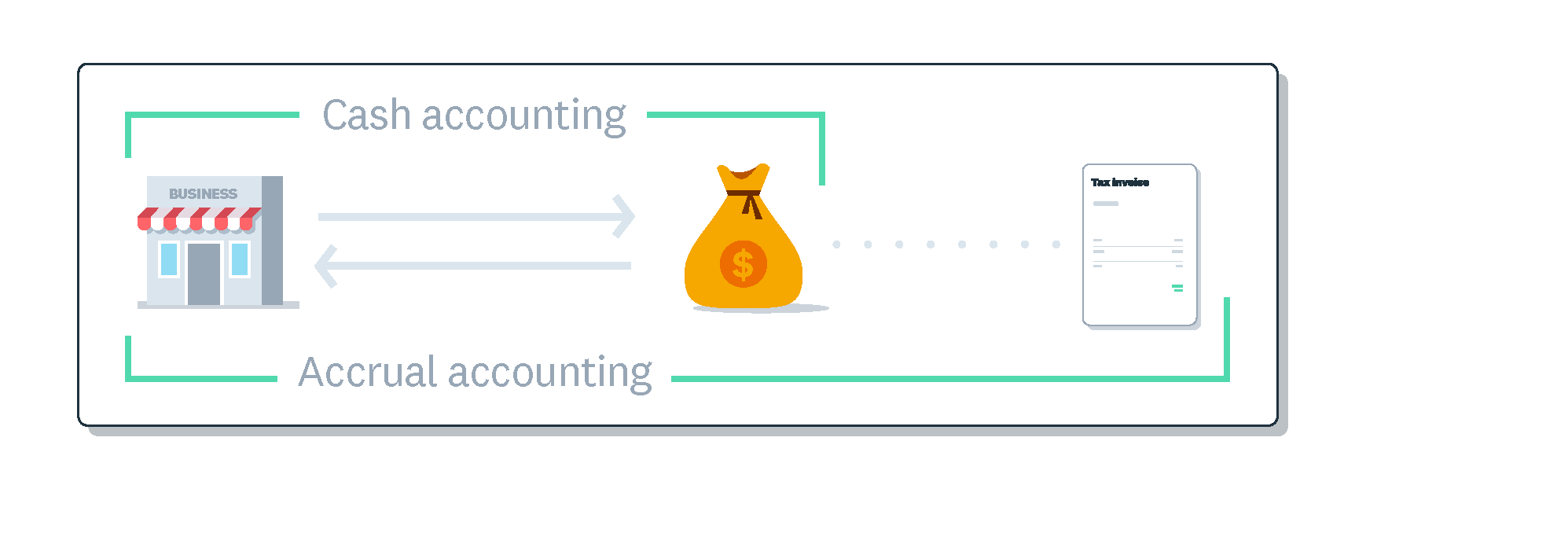
Accrual accounting keeps tabs on bills and sales invoices that are yet to be paid.
Key takeaways
- Accrual accounting records income when you earn it and expenses when you incur them, rather than when cash changes hands.
- Cash accounting is the simpler alternative, but it can hide money that is owed to you or that you still need to pay.
- All Singapore-incorporated companies prepare financial statements under Singapore Financial Reporting Standards, which use the accrual basis.
- Accrual accounting gives a fuller view of your finances, though it takes more effort to maintain than cash accounting.
What is accrual accounting?
Accrual accounting is a method that records income when you earn it and expenses when you incur them, not when money actually moves. It gives you a fuller view of your finances than simply counting cash in and out.
This basis of accounting keeps track of sales invoices and bills that are yet to be paid. So your records reflect what you've genuinely earned and what you still owe, even before any payment lands.
Accrual accounting vs cash accounting
The difference between accrual accounting and cash accounting comes down to timing. One records transactions as they happen, while the other waits for the money to move.
- Under accrual accounting, you record a sale or an expense when it happens, even if payment comes later.
- Under cash accounting, you record a sale or an expense only when the cash actually reaches or leaves your account.
Cash accounting is easier to run and shows exactly how much cash you have. Accrual accounting takes more effort, but it reflects the true state of your business at any point. You can read more in this guide to cash vs accrual accounting.
How accrual accounting works
Accrual accounting follows a few core principles that decide when each transaction is recorded. These principles keep your income and costs matched to the period they belong to.
- Record revenue when you earn it, such as when you deliver a product or complete a service.
- Record expenses when you incur them, such as when you receive a bill or use a service.
- Match expenses to the revenue they helped generate in the same period, which accountants call the matching principle.
Here's a simple example. Say you're a web designer and you finish a project on 28 December, invoice the client $5,000 that day, and get paid on 15 January.
Under accrual accounting, you record the $5,000 as revenue in December, when you earned it. You don't wait until January, when the payment arrives.
Types of accruals
Accruals are the adjustments that let you record income and costs in the right period. The main types you'll come across are:
- accrued revenue, which is income you've earned but not yet invoiced or been paid for
- accrued expenses, which are costs you've incurred but not yet paid
- prepaid expenses, which are costs you've paid in advance for goods or services you'll use later
- deferred revenue, which is money you've received for work you haven't done yet
Advantages of accrual accounting
Accrual accounting takes more work than cash accounting, but it repays the effort with clearer, more useful information. Here's what you gain:
- a more accurate picture of your financial position at any point in time
- better planning and forecasting, because income and costs sit in the period they relate to
- clear visibility of what you're owed and what you owe, through receivables and payables
- greater confidence from lenders, investors and other stakeholders who expect accrual-based accounts
Disadvantages of accrual accounting
Accrual accounting isn't the right fit for every business, and it does have trade-offs. Here are the main drawbacks to weigh up:
- it's more complex to set up and maintain than cash accounting
- you may need help from a bookkeeper or accountant to keep it accurate
- it doesn't show how much cash you have on hand at any moment, so you'll track that separately
Who uses accrual accounting in Singapore
In Singapore, the accounting basis you use often depends on your business structure and reporting obligations. Most established companies report on the accrual basis, while some very small businesses have more flexibility.
All Singapore-incorporated companies must prepare annual financial statements under Singapore Financial Reporting Standards (SFRS), which use the accrual basis. The Inland Revenue Authority of Singapore (IRAS) accepts cash accounting for some small businesses and self-employed persons.
Businesses that are registered for goods and services tax (GST), or that file statutory financial statements with the Accounting and Corporate Regulatory Authority (ACRA), generally report on the accrual basis. If you're unsure which basis applies to you, check with your accountant or IRAS.
Manage accrual accounting easily with Xero
Accrual accounting means keeping close track of invoices and bills as they happen, which is far easier with the right tools. Xero records your income and expenses as they arise, so your accounts stay up to date with less manual admin.
If you'd like to see how it works for your business, you can get one month free when you sign up.
FAQs on accrual accounting
Here are answers to some frequently asked questions about accrual accounting.
Is accrual accounting required in Singapore?
Singapore-incorporated companies prepare their financial statements under SFRS, which is accrual based. Some small businesses and self-employed persons can use cash accounting, so it's worth checking your situation with IRAS or your accountant.
What is the difference between cash and accrual accounting?
The difference is timing: accrual accounting records transactions when they happen, while cash accounting records them when money moves. Accrual gives a fuller view, and cash is simpler to run.
What are the types of accruals?
The common types are accrued revenue, accrued expenses, prepaid expenses and deferred revenue. Each one shifts income or a cost into the period it truly belongs to.
What is the matching principle?
The matching principle records expenses in the same period as the revenue they helped create. It keeps your profit for each period accurate and comparable.
Is accrual or cash accounting better for a small business?
It depends on your size, complexity and reporting obligations, so there's no single answer. Many small businesses start with cash accounting and move to accrual as they grow or take on statutory reporting.
Related terms
Learn more about accrual accounting
Handy resources
Advisor directory
You can search for experts in our advisor directory
How to do bookkeeping
Learn about data entry, bank rec, reporting and tax prep in our guide to doing bookkeeping.
Online accounting with Xero
Automate your accounting in the cloud
Disclaimer
This glossary is for small business owners. The definitions are written with their requirements in mind. More detailed definitions can be found in accounting textbooks or from an accounting professional. Xero does not provide accounting, tax, business or legal advice.