Online business ideas to start from home in Canada
Explore proven online business ideas you can launch from home in Canada, with practical steps to get started.

Written by Lena Hanna—Trusted CPA Guidance on Accounting and Tax. Read Lena's full bio
Published Wednesday 27 May 2026
Table of contents
Key takeaways
- Evaluate your skills, budget, time commitment, and interests before choosing an online business model. Focusing on your strengths increases your chances of building something profitable from home.
- Small businesses stand out from big retailers by creating authentic customer experiences through personal storytelling, thoughtful packaging, and memorable touches that large corporations cannot replicate.
- Start with a niche focus because the internet connects you to customers worldwide who share specific interests. Unusual or specialized products often perform better online than in local markets.
- Validate your business idea by researching your target market and testing demand before investing significant time or money. Then follow a structured launch process that includes business registration, financial systems, and marketing.
How to choose the right online business idea
The best online business for you depends on your skills, budget, and goals. Before you dive into a list of ideas, take a moment to think about what fits your life. This helps you focus on opportunities where you're most likely to succeed, whether you plan to work from home full-time or start a side project.
Consider these factors when evaluating online business opportunities:
- Your skills and experience: What do you already know how to do well?
- Available budget: How much can you invest in startup costs?
- Time commitment: Can you work full-time or is this a side project?
- Your interests: What topics or activities keep you engaged?
- Market demand: Are people actively searching for and buying this?
- Income timeline: Do you need quick returns or can you build over time?
The right business for someone else may not be right for you. A service business suits someone with marketable skills and limited capital. An ecommerce store suits someone with product ideas and more startup budget. A content business suits someone willing to build an audience over months or years.
What type of online business could you set up?
Online businesses you can run from home fall into four main categories, each with different startup requirements and income potential. Understanding these categories helps you match your skills and budget to the right opportunity:
- Retail: Sell products through an online shop or marketplace
- Services: Provide remote services such as training, teaching, consulting, creating, or managing
- Apps/Software as a Service (SaaS): Create an app or software for sale or subscription
- Content and media: Create content that earns through sales, subscriptions, sponsorships, or advertising
Online retail business ideas
Retail remains one of the most popular ways to start an online business from home. A survey of online small businesses revealed the most popular retail categories, offering useful insight into proven markets with strong demand.
The survey found these categories lead globally:
- Fashion and clothing: 25%
- Electronics: 21%
- Hair and beauty: 18%
- Groceries, food, toys, hobbies, crafts, and health: 17% each
North American preferences differ slightly from global trends:
- Fashion and clothing: 28%
- Electronics: 28%
- Groceries and food: 21%
- Hair and beauty: 20%
- Toys, hobbies, and crafts: 19%
Source: eCommerce survey, January 2021. These figures reflect historical trends and may have shifted since the survey was conducted.
Make something yourself
Turn your hobby into income by selling handmade products online. Photography skills can become an online gallery selling prints, cards, or calendars. Knitting expertise can become a niche product line. Even unusual ideas like dog sweaters have proven markets online.
Get something made
You don't need to be crafty to sell products online. Work with manufacturers to customize existing products or design something from scratch. Contract manufacturers can produce small batches at reasonable costs, making it easier than you might think to bring your product idea to market.
Resell products
Buy products from suppliers and sell them at a markup through your own online store. Competition in reselling can be fierce, so differentiation is essential. To stand out from competitors selling similar items:
- Create a distinctive brand identity for your shop
- Focus marketing on a specific customer type
- Offer superior customer service or faster shipping
- Curate products around a theme or lifestyle
Try dropshipping
Dropshipping lets you sell products without holding inventory. Customers order from your store, and you pass the order to a supplier who ships directly to them. This model is ideal for launching a business from home with minimal upfront costs.
Dropshipping suits certain entrepreneurs better than others. This model works well if you have:
- Strong marketing skills
- Limited startup capital
- No space for inventory storage
- Interest in testing multiple product categories
Learn more in the guide to dropshipping.
Print-on-demand
Print-on-demand works similarly to dropshipping, but you add custom designs to products like t-shirts, mugs, phone cases, and tote bags. A third-party provider prints and ships each item only after a customer places an order.
This model is a strong fit for creative entrepreneurs who want to sell branded merchandise from home without managing inventory. Popular print-on-demand platforms include Printful, Printify, and Gelato. Startup costs are low because you only pay for products after you make a sale.
How to compete with big brands
Small businesses compete with big retailers through authenticity, not price or marketing spend. Your personal story and unique brand identity attract customers who value connection over convenience.
Marc McKeown of FortBrave recommends finding something unique about your brand and shouting about it.
"Put as much of your own story into your product and branding as you can," he says. "Customers will gravitate to you because of your authentic story, even if they have to pay a little bit more."
You can set your business apart by creating memorable customer interactions:
- Package products thoughtfully with personal touches
- Include handwritten notes or branded materials
- Use sustainable or distinctive packaging
- Create shareable unboxing moments for social media
"Differentiate yourself from the corporate experience," McKeown adds. "Amazon can't compete with that."
Learn more about ecommerce, shipping, and marketing in the guide to starting a business from home.
Niche down
Niche businesses thrive online because the internet connects you to customers worldwide who share specific interests. Something that might not sell locally could find a passionate audience globally.
McKeown says online shopping habits have given new life to unusual business ideas. "Niche shopping has been enabled by the internet. It's much easier to find out-of-the-ordinary products online than to traipse around town for it, so that's what people do."
Online services business ideas
Online service businesses let you sell your expertise remotely from home. Your existing skills from employment or hobbies can become the foundation of a profitable business.
Many professionals have built successful businesses by offering their expertise remotely. For more inspiration, explore the guide to service business ideas. Popular online service business ideas include:
- Virtual assistance: Administrative support for busy entrepreneurs
- Online tutoring: Teaching students in your subject area
- Freelance writing or design: Creating content for businesses
- Social media management: Running accounts for brands
- Bookkeeping: Managing finances for small businesses
- Consulting: Advising in your area of professional expertise
- Specialist services: Translation, voiceover, or other niche skills for global clients
Growing an online service business out of your day to day
Most online service businesses start with one or two clients and grow from there. Your existing network and professional relationships often provide your first customers.
Olivia Park moved her personal training business online this way. She had been a traditional in-person trainer in Taiwan but agreed to work virtually with her clients after moving to South Korea. Simultaneously, the health and wellness content she distributed on social channels grew in popularity. She was soon able to market online group programs that helped Olivia Park Coaching serve more clients.
Online delivery enables tiered service offerings that multiply your capacity. Park explains the impact:
"It's allowed me to create more products with different tiers of service. Some people are happy to do the online courses on their own. Others ask for customized routines. And others want one-to-one time. But the upshot is that I'm able to deliver twice as much service online as I could when limited to in-person training."
Building your reputation is just the same online
Referrals drive most new business for online service providers, just like traditional service businesses. Michael Yared says referrals are the primary source of new work at his fully online app development agency, Echobind.
"We spun off with one anchor client and built up from there. It was tough for the first couple of years because we never knew if the projects would keep coming. But we just kept asking for referrals and it's still our biggest source of new work."
Echobind eventually grew to an agency with 40 fully remote staff.
Digital product business ideas
Digital products are files or online content you create once and sell repeatedly. This model offers high profit margins because there's no inventory, shipping, or manufacturing cost per sale.
Many creators have found success selling digital products in various formats. Popular digital product ideas include:
- Ebooks and guides: Share expertise in a downloadable format
- Online courses: Teach skills through video lessons and materials
- Templates and tools: Sell spreadsheets, design templates, or planning documents
- Stock photography or graphics: License images to other businesses and creators
- Music and audio: Sell beats, sound effects, or background music
- Printable products: Create planners, art prints, or educational materials
Digital products work well for people with specialized knowledge or creative skills. The main investment is your time creating the initial product. After that, each sale requires minimal additional effort.
Online app and software business ideas
Online apps and software businesses create digital tools that automate tasks for consumers or businesses. These products can scale to millions of users, creating significant income potential from a single development investment.
App and software businesses share several defining traits that set them apart from other online business models:
- High scalability: One product serves unlimited customers
- Recurring revenue: Subscription models create predictable income
- Global reach: Digital distribution crosses geographic boundaries
- Technical requirements: Development skills or budget needed upfront
Types of apps
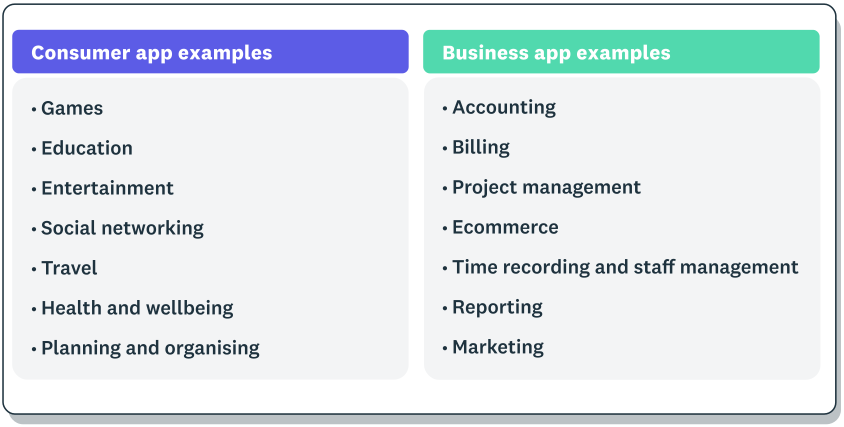
App stores contain dozens of consumer categories, from games to productivity tools. Business apps serve even more specialized needs. Cloud accounting platforms alone integrate with hundreds of business apps that handle everything from gym billing to farm productivity tracking.
Consumer apps typically target broad audiences with simple, engaging experiences. Business apps solve specific operational problems and often charge monthly subscription fees. Both categories offer strong income potential for the right product.
Marketing is essential for app success because competition is intense across all categories. Learn more in the guide to making money from an app.
AI-powered business ideas
Artificial intelligence is creating a wave of new business opportunities you can start from home. AI tools have lowered the barrier to entry for several service and product categories, making this one of the fastest-growing areas for online entrepreneurs.
Here are some of the most promising AI-powered business ideas:
- AI automation agency: Help small businesses automate repetitive tasks like email responses, scheduling, data entry, and customer support using AI tools
- AI content services: Offer AI-assisted writing, editing, or content production for businesses that need blog posts, product descriptions, or marketing copy at scale
- AI prompt creation and consulting: Design and sell specialized prompt libraries, or consult with businesses on how to use AI tools effectively in their operations
- AI-enhanced design services: Use AI image generation tools to offer logo design, social media graphics, or product mockups at competitive prices
- AI tutoring and training: Teach individuals or businesses how to integrate AI tools into their workflows
You do not need a technical background to start many of these businesses. Platforms like ChatGPT, Midjourney, and Zapier provide accessible interfaces that let you build services around AI without writing code.
Online content and media business ideas
Content and media businesses earn income by building audiences through videos, podcasts, blogs, or other media. Revenue typically comes from advertising, sponsorships, subscriptions, or affiliate marketing.
Content businesses can generate revenue through several proven models:
- YouTube channels: Gaming and how-to content attract subscribers and sponsorship deals
- Podcasting: Build loyal audiences who support through ads or subscriptions
- Blogging: Generate traffic that earns through advertising or affiliate links
- Affiliate marketing: Earn commissions when your audience buys products you recommend
Building a successful content business takes specific skills and commitment. Success requires:
- A compelling concept or specific niche
- Consistent content creation over time
- Strong marketing and audience-building skills
- Often a distinctive personality or expertise
Content businesses typically take longer to become profitable than service or retail models. Consider starting alongside other income while you build your audience.
Subscription box business ideas
Subscription boxes let you curate and ship themed collections of products to customers on a recurring basis. This model creates predictable monthly revenue and builds strong customer loyalty over time.
Subscription boxes work well across many niches. Popular categories for Canadian entrepreneurs include:
- Specialty food and snacks: Curate local Canadian treats or international flavours
- Health and wellness: Bundle supplements, skincare, or fitness accessories
- Pet products: Assemble toys, treats, and grooming supplies for pet owners
- Books and stationery: Select titles or creative supplies around a theme
- Hobby kits: Provide craft, cooking, or gardening supplies with instructions
You can start a subscription box business from home by partnering with suppliers and using fulfilment services. Startup costs are moderate because you purchase inventory in small batches and scale as your subscriber base grows.
Where to find online business ideas and inspiration
Finding the right online business idea starts with knowing where to look. These platforms show you what's selling, what's trending, and where gaps exist in the market:
- Trending items on marketplaces like Amazon, Etsy, eBay, Google Shopping, Facebook Marketplace, and AliExpress
- Social media platforms like Instagram, Facebook, and Pinterest
- Crowdfunding sites like Indiegogo and Kickstarter
- App stores
- YouTube and podcast platforms
How to start an online business
Once you've chosen your business idea, follow these steps to launch from home. This process turns your inspiration into a real business.
- Validate your idea: Research your target market and test demand before investing significant time or money.
- Create a business plan: Outline your goals, target customers, pricing, and financial projections.
- Register your business: Choose a business structure and register with your province. The Canada Revenue Agency (CRA) no longer accepts phone registrations for business numbers. You must use the Business Registration Online service to register.
- Set up your online presence: Build a website or establish your marketplace storefront.
- Establish financial systems: Open a business bank account and set up accounting software.
- Source or create your offerings: Prepare your products or define your service packages.
- Set up payment processing: Enable customers to pay you through your website or platform.
- Launch your marketing: Attract your first customers through social media, content, or advertising.
- Deliver excellent service: Build your reputation through quality and responsiveness.
What it costs to start an online business
Startup costs vary widely depending on the type of online business you choose. Here is a general guide to help you budget.
Low-cost options ($0 to $1,000):
- Freelance services such as writing, design, or consulting
- Dropshipping stores with no inventory investment
- Affiliate marketing websites
- Digital products like ebooks or templates
Medium investment ($1,000 to $10,000):
- Online coaching or course businesses
- Ecommerce stores holding inventory
- Simple app development
- Service businesses requiring tools or certifications
Higher investment ($10,000+):
- Private label product lines with manufacturing
- Complex software or app development
- Content businesses requiring professional equipment
- Service businesses requiring significant credentials
Most online businesses can start small and scale as revenue grows. Begin with what you can afford and reinvest profits into expansion. For more low-cost options, see the guide to startup business ideas.
Essential tools and platforms
Every online business needs core tools for selling, marketing, and managing finances. The specific platforms depend on your business type, but most businesses use some combination of these:
- Website builder: Shopify, Wix, WordPress, or Squarespace for your online presence
- Payment processing: Stripe, PayPal, or Square to accept customer payments
- Email marketing: Mailchimp or ConvertKit to communicate with customers
- Accounting software: Track income, expenses, invoices, and cash flow
- Project management: Asana, Trello, or Monday to organize your work
- Communication: Zoom, Slack, or Google Workspace for client and team communication
- Design tools: Canva or Adobe Creative Suite for marketing materials
Start with the essentials and add tools as your business grows. Many platforms offer free tiers or trials to help you get started without significant upfront investment.
Manage your online business finances with Xero
Running an online business from home gives you flexibility, but strong financial management keeps it sustainable. Track every dollar coming in and going out, understand your cash flow, and make informed decisions based on real numbers.
Xero's cloud-based accounting software helps you stay on top of your finances so you can focus on building your business. get one month free.
Ready to dive deeper into launching your online venture? Read the complete guide to starting an online business.
FAQs on online business ideas
Here are answers to common questions about starting an online business in Canada.
What is the best online business to start from home?
The best online business matches your skills, interests, and available resources. Service businesses like consulting or virtual assistance have low startup costs, while ecommerce and digital products offer more scalability but take longer to build.
What online business can I start with $10,000 in Canada?
With $10,000, you could launch an ecommerce store with inventory, create a comprehensive online course, start a service business with professional tools and marketing, or develop a simple app. This budget allows investment in quality branding, a professional website, and essential business tools.
What small business can I start with $5,000?
A $5,000 budget can launch a dropshipping store, freelance service business, digital product business, small batch handmade product line, or online coaching practice. Focus on businesses where your skills matter more than inventory or equipment.
How long does it take for an online business to become profitable?
Service businesses can become profitable within one to three months, while ecommerce businesses often take six to twelve months. Content and media businesses may take twelve to twenty-four months to build enough audience and revenue.
Do I need special licences to start an online business in Canada?
Most online businesses need business registration, and GST/HST registration is required once revenue exceeds $30,000 annually. Check with your provincial government and the Canada Revenue Agency for additional requirements specific to your industry.
What are the most profitable AI business ideas to start online?
AI automation agencies, content services, and consulting are among the most profitable options, with low overhead because they rely on existing AI platforms. Demand is growing as more Canadian businesses look to integrate AI into their operations.
Disclaimer
Xero does not provide accounting, tax, business or legal advice. This guide has been provided for information purposes only. You should consult your own professional advisors for advice directly relating to your business or before taking action in relation to any of the content provided.
Start using Xero for free
Access Xero features for 30 days, then decide which plan best suits your business.