Online business ideas to start today in Australia
Explore online business ideas you can start from home in Australia, from ecommerce to AI services.

Written by Lena Hanna—Trusted CPA Guidance on Accounting and Tax. Read Lena's full bio
Published Friday 15 May 2026
Table of contents
Key takeaways
- Online businesses offer lower startup costs, flexible hours, and the ability to reach customers across Australia and beyond. You don't need a shopfront or large team to get started.
- There are dozens of online business models to explore. From dropshipping and freelance services to AI consulting and content creation, you can match an idea to your skills and budget.
- Choosing the right idea means assessing your strengths, available time, and market demand. Testing a small version of your concept before going all in reduces your risk.
- Getting set up in Australia is straightforward. Register an ABN, choose a business structure, separate your finances, and use accounting software to stay on top of cash flow from day one.
Why start an online business
Starting an online business is one of the most accessible ways to become your own boss. With relatively low barriers to entry and a growing number of digital tools, there's never been a better time to launch something from your laptop.
Here are some of the biggest advantages of running a business online.
- Lower startup costs: you don't need to pay for a lease, fit-out, or signage to open your doors
- Flexible working hours: set your own schedule and work around other commitments
- Scalability: digital products and services can grow without a proportional increase in costs
- Broader reach: sell to customers across Australia or around the world from one location
- Lower ongoing overheads: without a physical premises, you'll save on rent, utilities, and staffing costs
Around 20% of businesses fail in their first year. An online model lets you test ideas quickly and pivot without the heavy financial commitment of a bricks-and-mortar setup.
Online business ideas you can start today
There's no single path to building a successful online business. The right idea depends on your skills, interests, and how much time and money you're ready to invest.
Below, you'll find ideas grouped into four broad categories: retail, services, apps and software, and content and media.
Online retail business ideas
Selling products online is one of the most popular ways to start an ecommerce business. You don't need to manufacture anything yourself; several models let you get started with minimal inventory.
- Dropshipping: sell products without holding stock. Your supplier ships directly to the customer, keeping your upfront costs low. The global dropshipping market is projected to reach $1,253 billion by 2030.
- Handmade goods: if you create jewellery, candles, artwork, or other crafts, platforms like Etsy and your own Shopify store make it simple to reach buyers.
- Reselling: source discounted or vintage items and resell them at a markup through online marketplaces.
- Print-on-demand: design custom t-shirts, mugs, or phone cases. A third-party printer produces and ships each order, so there's no inventory to manage.
Online services business ideas
Service-based businesses often require little more than a laptop, your expertise, and a reliable internet connection. Many freelancers and consultants build profitable businesses this way.
- Virtual assistant: help busy professionals manage emails, scheduling, data entry, and social media.
- Online tutoring: teach a subject you know well through video calls. Demand is strong across school subjects, test preparation, and professional development.
- Freelance consulting: offer your expertise in marketing, finance, HR, or operations to businesses that need specialist help without hiring full-time staff.
- Online coaching: Olivia Park of Olivia Park Coaching says, "I'm able to deliver twice as much service online as I could when limited to in-person training." Life coaching, business coaching, and fitness coaching all translate well to a virtual format.
- Creative services: graphic design, copywriting, video editing, and web development are in high demand from businesses of all sizes.
Online app and software business ideas
If you've got technical skills or a great idea, building digital products can be highly scalable. Once the product is built, each additional customer costs very little to serve.
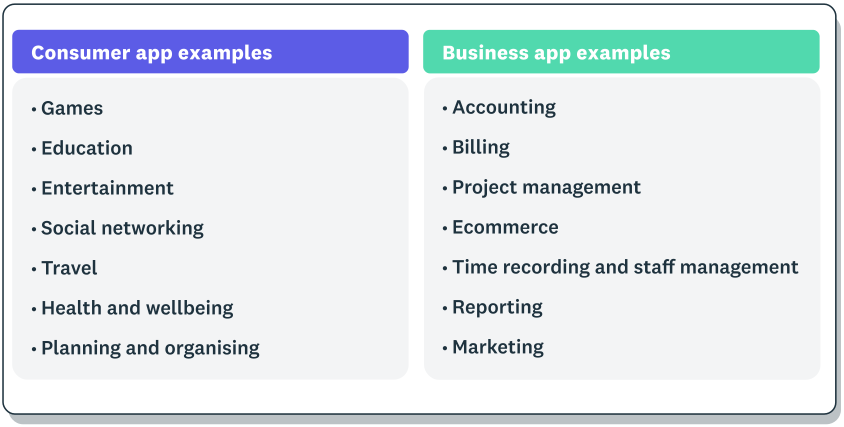
- Consumer apps: solve an everyday problem with a mobile app. You can learn more about how to make money from an app.
- Business apps: create tools that help other businesses save time or manage tasks more efficiently.
- SaaS (software as a service): build a subscription-based product that businesses or consumers pay to use each month. SaaS models provide recurring revenue, which makes cash flow more predictable.
Michael Yared of Echobind shares his experience: "We spun off with one anchor client and built up from there. It was tough for the first couple of years because we never knew if the projects would keep coming. But we just kept asking for referrals and it's still our biggest source of new work."
Online content and media business ideas
Content creation has become a legitimate career path, though it takes persistence to build an audience. Most creators earn under $1,000 per year, so it helps to diversify your income streams early on.
- YouTube channel: create video content in a niche you're passionate about. Revenue comes from ads, sponsorships, and merchandise once your audience grows.
- Podcasting: build a loyal listener base around a specific topic, then monetise through sponsorships, premium episodes, or related products.
- Blogging: write in-depth content that attracts search traffic. Monetise through display ads, sponsored posts, or digital products.
- Affiliate marketing: recommend products you genuinely use and earn a commission on each sale made through your referral links.
AI and tech business ideas
Artificial intelligence is creating new business opportunities at a rapid pace. You don't need to be a data scientist to build a business around AI; many of these ideas are accessible with moderate technical skills or a willingness to learn.
- AI content services: help businesses create blog posts, social media content, product descriptions, and marketing copy using AI tools. Your value comes from knowing how to guide AI output to match a brand's voice and strategy.
- AI consulting: advise small businesses on how to adopt AI tools to save time on repetitive tasks like customer support, data entry, and reporting.
- Chatbot development: build custom chatbots for websites and social media channels. Many small businesses want to automate customer enquiries but don't know where to start.
- Niche SaaS tools: use AI to power software that solves a specific problem, such as automated bookkeeping categorisation, smart scheduling, or lead scoring.
- Prompt engineering services: businesses are willing to pay for expertise in writing effective prompts that get better results from AI platforms. This is a fast-growing skill set with low startup costs.
How to choose the right online business idea
With so many options, narrowing down the right idea can feel overwhelming. A structured approach helps you make a confident decision.
- Assess your skills and interests. The best businesses build on what you already know. You'll stay motivated longer if you enjoy the work.
- Consider your available time. Some business models need daily attention, while others can run alongside a full-time job. Be realistic about what you can commit to.
- Evaluate startup costs. Dropshipping and freelancing need very little capital. App development and ecommerce with inventory require more upfront investment.
- Research market demand. The top reason startups fail is a lack of market need. Search for your idea online, look at competitors, and talk to potential customers before committing.
- Test before you go all in. Start small with a minimum viable product or a side project. Validate that people will pay for what you're offering before scaling up.
How to compete with big brands
It's natural to wonder how a small online business can stand out against large, well-funded competitors. The good news is that smaller businesses have distinct advantages that big corporations struggle to replicate. You can learn more in this guide on how to compete with large retailers.
Marc McKeown, founder of FortBrave, puts it simply: "Put as much of your own story into your product and branding as you can. Customers will gravitate to you because of your authentic story, even if they have to pay a little bit more."
That personal touch is something big brands can't easily match. "Differentiate yourself from the corporate experience," McKeown adds. "Package products nicely and put a personal note in. Amazon can't compete with that."
Finding a niche is another powerful strategy. Rather than trying to serve everyone, focus on a specific audience or product category where you can become the go-to option. McKeown agrees: "Niche shopping has been enabled by the internet. It's much easier to find out-of-the-ordinary products online than to traipse around town for it, so that's what people do."
Here are a few ways to carve out your competitive edge.
- Tell your story. Customers connect with real people. Share why you started your business and what drives you.
- Offer a personal experience. Handwritten thank-you notes, personalised packaging, and responsive customer service go a long way.
- Own your niche. Specialise in something specific so your ideal customers can find you easily.
- Build community. Engage with your audience on social media and through email. Loyal customers become your best advocates.
Tips for running an online business from home
Running a business from home offers flexibility, but it also comes with its own challenges. Setting up the right habits and boundaries from the start makes a big difference. You'll find more inspiration in this guide to home business ideas.
- Create a dedicated workspace. Even a small desk in a quiet corner helps you mentally switch into work mode and stay focused.
- Set clear working hours. Without structure, it's easy to either work too much or too little. Define your start and finish times and communicate them to your household.
- Separate personal and business finances. Open a dedicated business bank account from day one. It simplifies tax time and gives you a clearer picture of how your business is performing.
- Use time management tools. Apps like calendars, task managers, and time trackers help you stay productive without burning out.
- Prioritise your wellbeing. Take regular breaks, move your body, and step away from the screen. A healthy founder runs a healthier business.
Getting started with your online business
Once you've chosen your idea, it's time to turn it into a real business. Here's a practical roadmap to get you up and running in Australia. For a more detailed walkthrough, see this guide on how to start an online business.
- Validate your idea. Before investing time and money, confirm there's demand. Talk to potential customers, run a small test, or pre-sell your product or service.
- Choose a business structure. In Australia, most online businesses start as a sole trader or a company. A sole trader structure is simpler and cheaper to set up, while a company offers limited liability. You can learn how to register as a sole trader to get started quickly.
- Register your ABN. You'll need an Australian Business Number to operate legally. It's free to apply for an ABN through the Australian Business Register.
- Register for GST if needed. If your annual turnover reaches $75,000 or more, you're required to register for GST. It's worth understanding this threshold early so you're prepared.
- Set up your finances. Open a business bank account and connect it to accounting software. Tracking income and expenses from the start saves you hours at tax time and helps you make better decisions.
- Create your online presence. Build a website or set up on a marketplace platform. Make sure your site is mobile-friendly, loads quickly, and clearly explains what you offer.
- Plan your marketing. Start with one or two channels you can manage well. Social media, email marketing, and search engine optimisation are effective and budget-friendly options for new businesses.
Simplify your online business finances with Xero
Keeping your finances organised is one of the most important things you can do when starting an online business. Cloud accounting software makes it easy to track income, manage expenses, send invoices, and stay on top of GST obligations, all from wherever you're working.
Xero gives you a clear view of your cash flow so you can make confident decisions as your business grows. Whether you're dropshipping, freelancing, or building a SaaS product, having your numbers in order from day one sets you up for long-term success.
FAQs on online business ideas
Here are some frequently asked questions about online business ideas.
What is the best online business to start in Australia?
There's no single best option; it depends on your skills, budget, and goals. Service-based businesses like freelancing and consulting have low startup costs and can generate income quickly. Ecommerce and dropshipping suit people who enjoy product selection and marketing.
How much does it cost to start an online business?
You can start some online businesses for under $100, especially service-based ones that only need a laptop and internet connection. Ecommerce businesses with inventory may require $500 to $5,000 or more for initial stock, platform fees, and marketing.
Do you need an ABN for an online business in Australia?
Yes, if you're running a business in Australia, you need an Australian Business Number. It's free to register and allows you to invoice other businesses, claim GST credits (if registered for GST), and meet your tax obligations.
What are the most profitable online businesses in 2026?
AI-related services, SaaS products, and specialised consulting tend to offer strong profit margins because they scale without proportional cost increases. Niche ecommerce and digital products like online courses also perform well when you target a specific audience.
How long does it take to make money from an online business?
Freelancers and consultants can often earn income within weeks of launching. Product-based businesses and content platforms typically take three to six months to gain traction. Building sustainable, full-time income usually takes 12 months or longer.
Do you need technical skills to start an online business?
Not necessarily. Many platforms handle the technical side for you, from website builders to ecommerce marketplaces. For service-based businesses, your professional expertise matters more than coding ability. If you want to build apps or SaaS products, technical skills or a technical co-founder will help.
Disclaimer
Xero does not provide accounting, tax, business or legal advice. This guide has been provided for information purposes only. You should consult your own professional advisors for advice directly relating to your business or before taking action in relation to any of the content provided.
Get one month free
Purchase any Xero plan, and we will give you the first month free.