Cash flow forecasting: how to predict and manage your business cash
Learn how to build a cash flow forecast to spot shortfalls early and make confident business decisions.
Written by Kari Brummond—Content Writer, Accountant, IRS Enrolled Agent. Read Kari's full bio
Published Monday 11 May 2026
Table of contents
Key takeaways
- A cash flow forecast predicts when money will move in and out of your business, helping you spot potential shortfalls weeks in advance so you can act before problems arise.
- Build your forecast around five components: opening balance, cash inflows, cash outflows, net cash flow, and closing balance. The formula is simple: Cash flow = Cash inflows − Cash outflows.
- Update your cash flow forecast monthly by removing the completed month, adding a new period, and comparing actual results to your predictions to sharpen future accuracy.
- Focus your analysis on three areas: closing balances to confirm adequate reserves, net cash flow trends over time, and forecast vs actual comparisons to refine your estimates.
Understanding where your cash sits today, and where it's heading, is one of the most practical things you can do to keep your business running smoothly. A cash flow forecast gives you that visibility.
What is cash flow forecasting?
A cash flow forecast is a projection of how much money your business will receive and spend over a set period, showing your expected cash position at specific points in time. It's sometimes called a cash flow projection.
Cash flow forecasting helps you plan ahead so you can avoid shortages and make confident spending decisions. It differs from a cash flow statement, which records past transactions. A forecast looks forward, estimating future cash positions based on expected income and expenses.
For Australian small businesses, this kind of forward planning is especially useful around GST lodgement periods, Australian financial year-end (30 June), and seasonal trading cycles.
Effective cash flow management starts with a clear picture of what's coming in and going out.
Benefits of cash flow forecasting
Cash flow forecasting helps you avoid financial surprises by showing exactly when money will come in and go out of your business. This visibility supports better decision-making across every part of your operations.
A reliable cash flow forecast lets you:
- spot potential cash shortfalls weeks ahead so you can secure finance, negotiate payment terms, or delay expenses
- decide if you can afford new equipment, staff, or expansion without affecting day-to-day operations
- ensure you receive regular owner payments, even during tight periods
- identify rising expenses or falling revenue before they become a problem
- highlight issues like slow-paying customers, poor payment terms, or seasonal changes
- build confidence with stakeholders, lenders, and investors by demonstrating strong financial planning
- manage debt repayments by timing loan drawdowns and repayments to match your cash position
Key components of a cash flow forecast
A cash flow forecast tracks five key parts that together show your business's complete cash picture. The basic formula is: Cash flow = Cash inflows − Cash outflows.
Here are the five components to include:
- Opening balance: the cash in your bank accounts at the start of the period
- Cash inflows: expected income from sales, loans, grants, or asset sales
- Cash outflows: planned expenses including rent, wages, supplier payments, tax obligations, and loan repayments
- Net cash flow: the difference between your inflows and outflows, showing whether your cash increased or decreased
- Closing balance: your opening balance plus net cash flow, showing where you'll stand at the end of each period
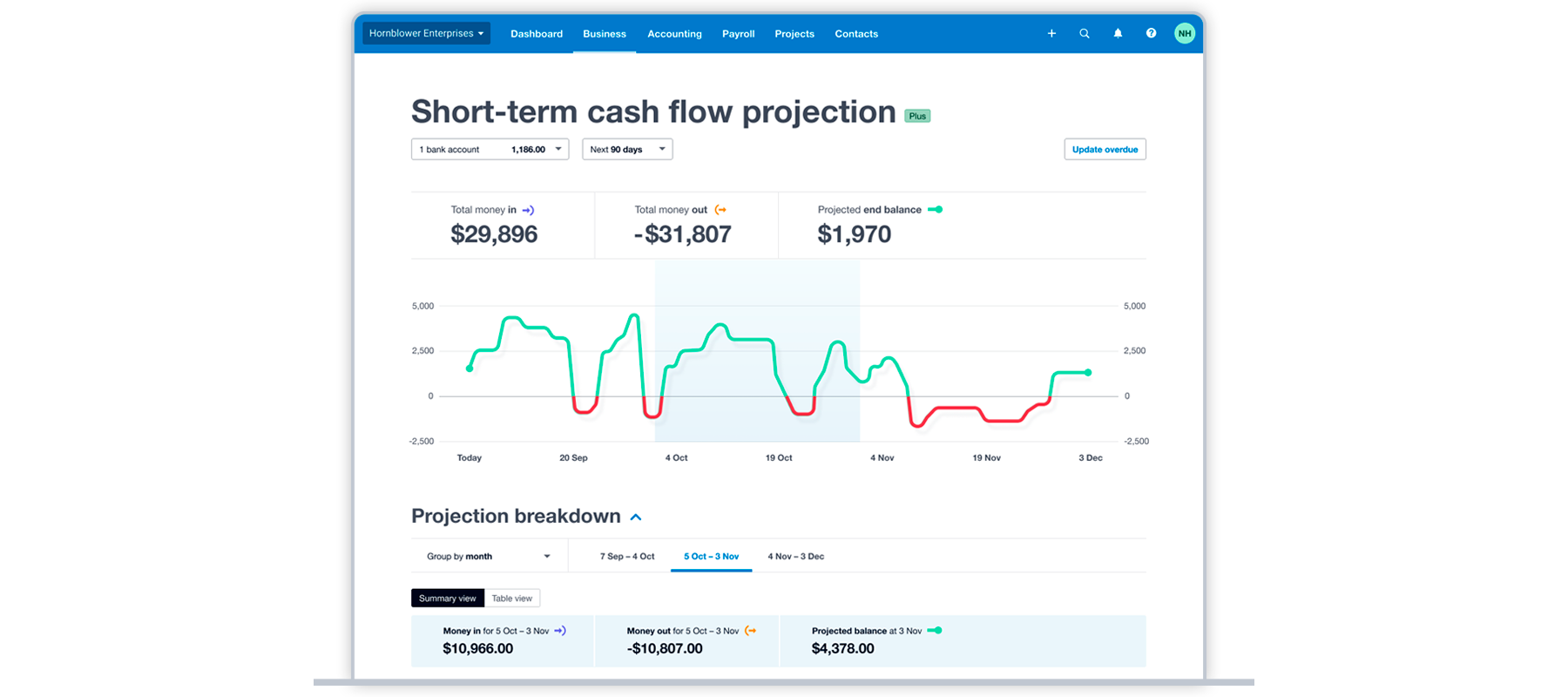
A cash flow dashboard shows how cash balances will rise and fall in response to expected transactions.
A cash flow dashboard shows how cash balances will rise and fall in response to expected transactions.
How to create a cash flow forecast
Creating a cash flow forecast involves estimating when money will move in and out of your business, then tracking how those transactions affect your cash position. Follow these 3 steps to get started.
1. Estimate your income
Check your past sales data, upcoming invoices, and new contracts to predict how much money will come in. Be realistic about when you expect customers to pay, not just when you issue invoices. If you're in your first year, base estimates on market research and your business plan.
2. Estimate your expenses
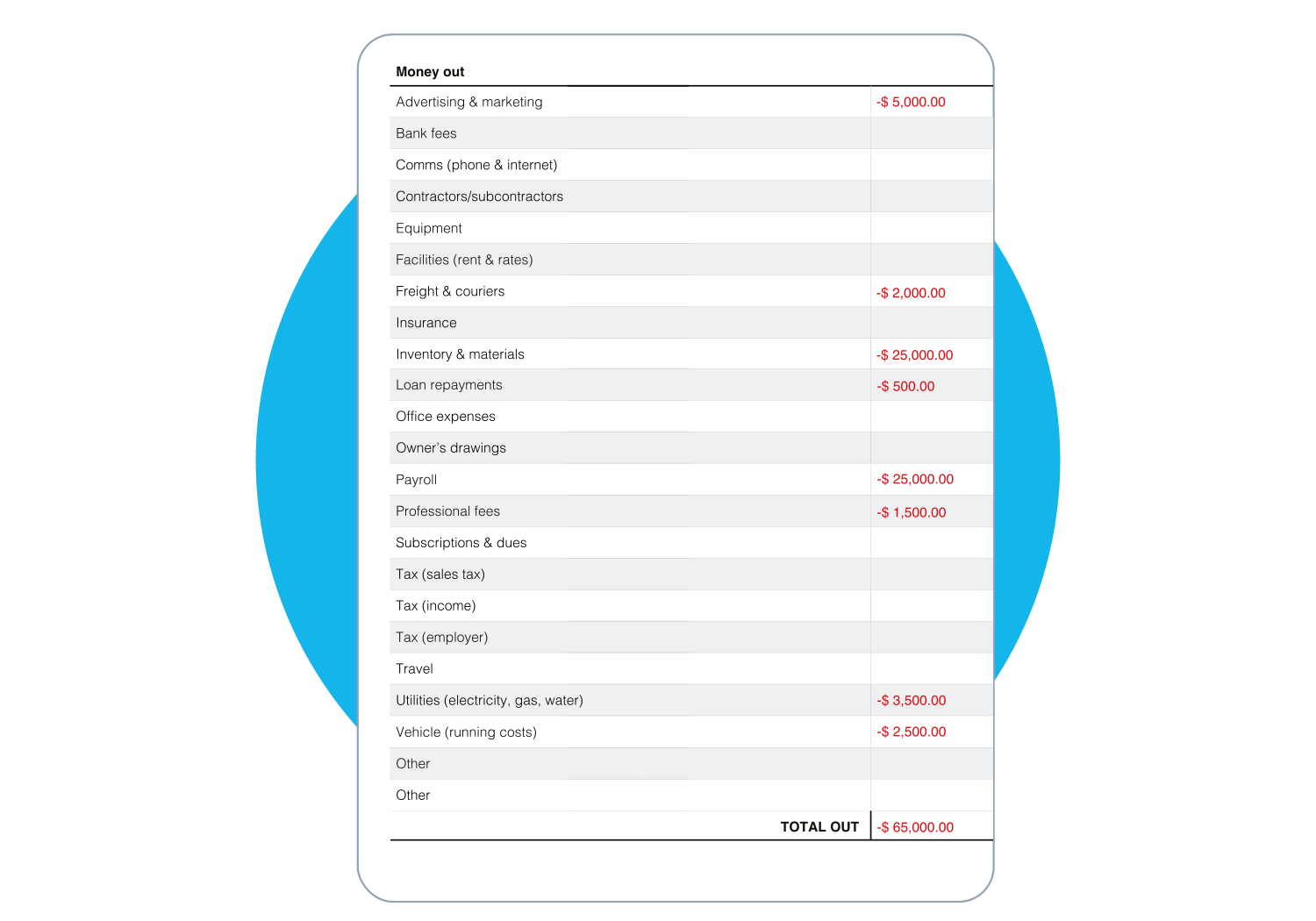
List all your expected costs, including regular bills like rent and payroll, and less frequent payments like GST obligations, income tax instalments, or annual software subscriptions. Include variable costs that change with your sales volume.
3. Put it all together
Follow these 4 steps to assemble your forecast:
- Set your starting point: record your current bank balance and choose your forecast period (typically 3–12 months)
- Project cash inflows: list all expected income with dates, including customer payments, grants, tax refunds, or loan proceeds
- Estimate cash outflows: include routine costs (rent, salaries, supplies), periodic expenses (insurance, ATO payments, equipment repairs), and loan repayments
- Calculate running balances: add income and subtract expenses in order to see your cash position at any point
Cash flow forecast example
Seeing a cash flow forecast in action helps bring the concept to life. Here's a simple example based on a small construction business.
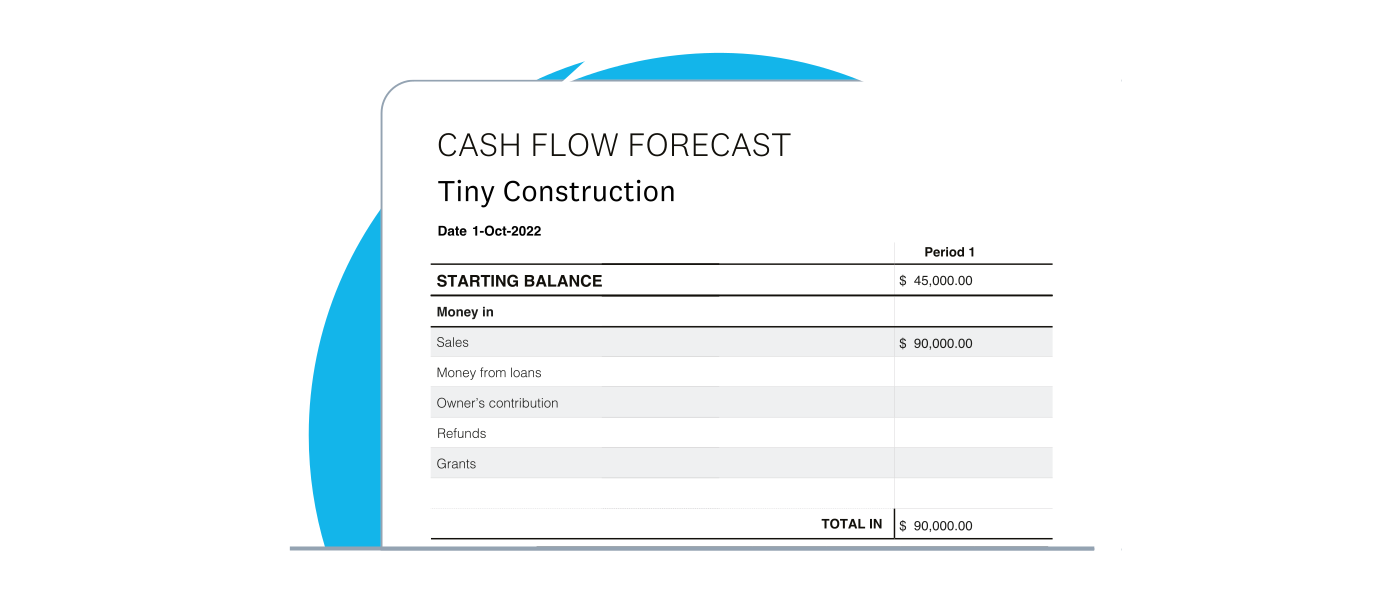
The owner of Tiny Construction wants to know if they can afford a new $20,000 piece of equipment next month. Here's their cash flow forecast:
- Opening balance: $45,000
- Expected sales payments (cash inflows): $90,000
- Expected expenses (cash outflows): $65,000
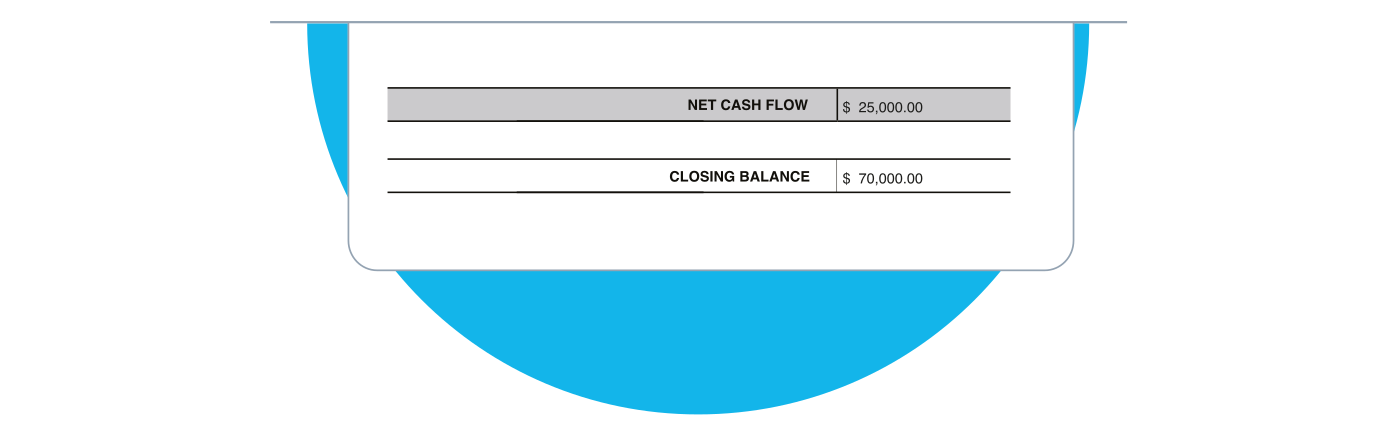
- Net cash flow: $25,000 ($90,000 − $65,000)
- Closing balance: $70,000 ($45,000 + $25,000)
With a closing balance of $70,000, Tiny Construction can comfortably afford the $20,000 equipment purchase and still maintain a healthy cash buffer.
This kind of forward planning is central to managing your cash flow effectively.
Types of cash flow forecasts
You can create forecasts for different timeframes depending on what you need to know. Most businesses benefit from using both short-term and long-term forecasts together.
Short-term cash flow forecast
A short-term forecast usually covers the next 13 weeks. It helps you manage daily cash, pay bills and staff on time, and spot cash gaps early. If your business has many transactions, you may need to check your cash position every day.
Long-term cash flow forecast
A long-term forecast looks further ahead, usually 12 months or more. It helps you plan for goals like securing finance, expanding your business, or setting your annual budget. This type of forecast is also useful when preparing a small business budget.
Direct vs indirect cash flow forecasting
There are two main methods for building a cash flow forecast, and each suits a different purpose. The right choice depends on your timeframe and how much detail you need.
Direct method
The direct method tracks actual cash receipts and payments. You list the real money coming in (customer payments, refunds) and going out (supplier payments, wages, rent). This method is best for short-term forecasting because it uses transaction-level data. It gives you a precise view of your cash position over the coming weeks.
Indirect method
The indirect method starts with net income from your profit and loss statement and adjusts for non-cash items like depreciation, changes in accounts receivable, and inventory movements. This method works well for long-term forecasting and strategic planning, as it connects your cash flow to your broader financial performance.
Three-way cash flow forecasting
A three-way forecast connects your cash flow forecast with your profit and loss statement and your balance sheet into a single integrated model. This gives you a more complete picture of your financial health.
Because all three reports are linked, a change in one automatically updates the others. For example, if your sales forecast increases, your cash inflows, profit projections, and balance sheet all reflect that change.
Three-way forecasting is often required by lenders and investors when you're applying for finance. It demonstrates you understand how cash, profit, and assets work together. For detailed three-way forecasts, specialised tools like Spotlight or Fathom can help.
How to analyse your cash flow forecast
Creating a forecast is only the first step. Analysing it regularly helps you make better business decisions and improve your future predictions.
Focus on three key areas:
- check your closing balances to make sure you have enough cash at the end of each period to cover upcoming obligations
- look at your net cash flow trends to see if you're consistently generating or using cash over time
- compare your forecast to actual results each month and adjust your estimates as needed
When your forecast and actual results don't match, investigate why. Common causes include late customer payments, unexpected expenses, or seasonal shifts you didn't account for.
Common cash flow forecasting mistakes to avoid
Even a well-structured forecast can lead you astray if built on flawed assumptions. Avoiding these common mistakes will make your forecast more reliable.
Watch out for these pitfalls:
- Overestimating income: basing revenue on best-case scenarios rather than realistic payment patterns
- Underestimating expenses: forgetting to account for price increases, bank fees, or unexpected costs
- Ignoring seasonal variations: failing to adjust for quieter trading periods or peak-season expenses
- Not updating regularly: treating your forecast as a one-off exercise instead of a living document
- Forgetting irregular costs: overlooking annual registrations, insurance renewals, or ATO payment obligations
- Not accounting for payment delays: assuming customers will pay on time when many pay late
How often should you update your cash flow forecast?
Update your cash flow forecast every month to keep it accurate and useful for your business decisions. Predictions for next month are more reliable than those for next year, so regular updates help you stay on track.
Most small businesses use 3–12 month forecasts for the best balance of accuracy and planning value. Here's a simple monthly refresh process:
- remove the completed month from your forecast
- add a new month to the end
- update all remaining projections with new information
- compare actual results to previous predictions to improve accuracy
Tips for an accurate cash flow forecast
A few practical habits can make a big difference to how useful your cash flow forecast is. These tips help you build a forecast you can rely on.
- Use historical data: review at least 12 months of past transactions to identify patterns in income and expenses
- Account for seasonal changes: adjust for quieter months, holiday periods, and peak trading seasons that affect Australian businesses
- Build in a cash buffer: keep a reserve for unexpected costs or late-paying customers
- Track fortnightly payroll months: remember that some months have three pay periods if you run fortnightly payroll
- Remember annual registrations: include costs like business registration renewals, insurance premiums, and professional memberships
- Review and adjust regularly: compare your forecast to actual results and update your assumptions accordingly
- Be conservative with income estimates: it's better to be pleasantly surprised than caught short
Cash flow forecasting tools and software
You can start with a spreadsheet, but manual forecasting can be time-consuming and prone to errors. Dedicated software automates much of the work and keeps your data up to date.
Xero accounting software tracks your invoices and bills, so you can create a short-term cash flow projection in just a few clicks. This gives you a real-time view of your finances without manual data entry. You can also monitor your cash flow management from the Xero dashboard.
For more detailed, long-term forecasting, you can connect Xero accounting software to specialised forecasting apps in the Xero App Store, such as Spotlight, Fathom, and Calxa. These tools support three-way forecasting, scenario planning, and detailed reporting.
Take control of your cash flow with Xero
A cash flow forecast gives you confidence in your financial decisions. When you plan ahead, you can avoid surprises and keep your business running smoothly. Xero accounting software makes it simple to track cash in and out, generate short-term projections, and connect with specialised forecasting apps for long-term planning.
FAQs on cash flow forecasting
Here are answers to frequently asked questions about cash flow forecasting.
What is a 3-way cash flow forecast?
A three-way forecast links your cash flow forecast with your profit and loss statement and balance sheet. Because all three are connected, changes in one report automatically update the others, giving you a complete financial picture. Lenders and investors often require this level of detail.
What's the difference between a cash flow forecast and a budget?
A cash flow forecast tracks the actual timing of cash moving in and out of your bank account. A budget plans your income and expenses but doesn't always reflect when cash is actually received or paid. For example, you might budget for a sale in May, but if the customer doesn't pay until June, your cash flow forecast captures that delay.
Can I forecast cash flow with no historical data?
Yes. If you're a new business, base your estimates on market research and your business plan. Estimate your likely sales, cost of sales, and overhead expenses. Be conservative with income estimates and generous with expense estimates to create a buffer.
How do you forecast cash flow for a new business?
Start by estimating your startup costs, expected revenue, and ongoing expenses. Research industry benchmarks and speak with other business owners in your sector. Update your forecast frequently in the early months as you gather real data to replace your assumptions.
What is the difference between a cash flow forecast and a cash flow statement?
A cash flow forecast predicts future cash movements based on expected income and expenses. A cash flow statement is a historical report that records actual cash transactions that have already occurred. Both are useful, but they serve different purposes.
How far ahead should you forecast cash flow?
Most small businesses benefit from a 3–12 month forecast. Short-term forecasts (up to 13 weeks) give you day-to-day cash visibility, while longer forecasts help with strategic planning, loan applications, and annual budgeting. The right timeframe depends on your business needs.
Disclaimer
Xero does not provide accounting, tax, business or legal advice. This guide has been provided for information purposes only. You should consult your own professional advisors for advice directly relating to your business or before taking action in relation to any of the content provided.
Get one month free
Purchase any Xero plan, and we will give you the first month free.