What is cash accounting?
Learn what cash accounting is, how it differs from accrual accounting, and who can use it in Australia.
Published Thursday 23 July 2026
Table of contents
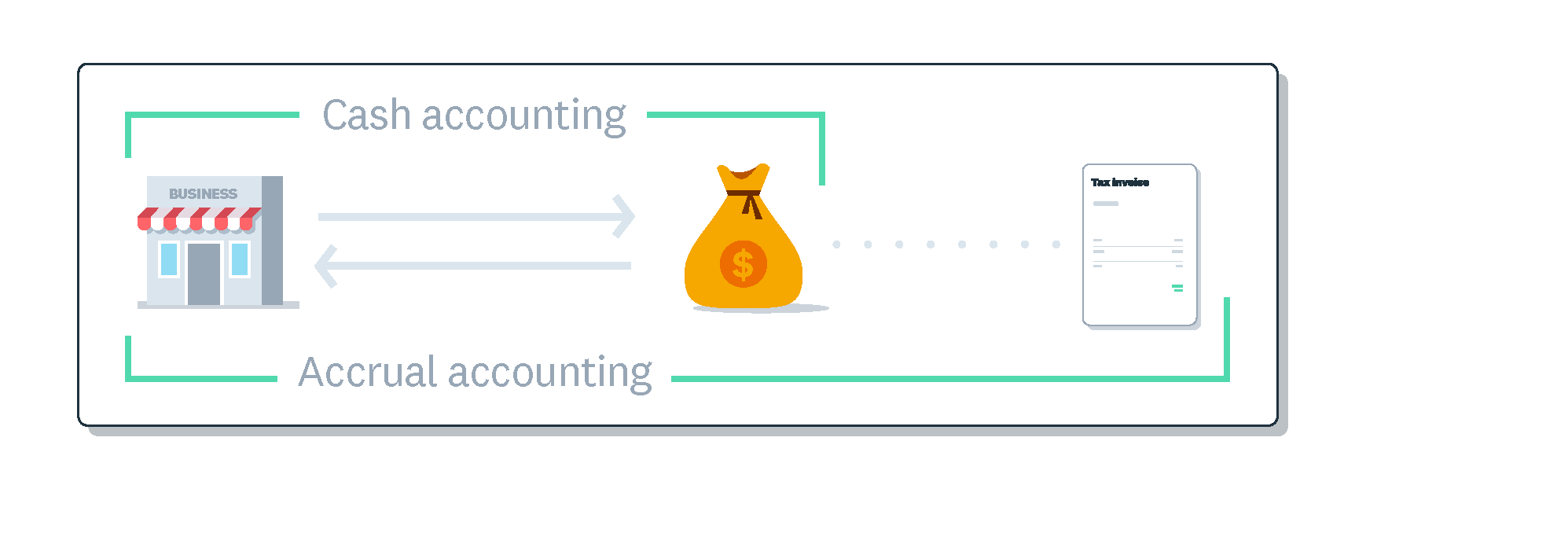
Cash accounting focuses only on money, not bills or invoices.
Key takeaways
- Cash accounting records income and expenses only when money is received or paid, not when you send or receive an invoice.
- Accrual accounting records income and expenses when they’re earned or incurred, so it shows money owed to you and money you owe.
- Many small businesses can use cash accounting for GST in Australia, mainly those with an aggregated turnover under $10 million.
- Cash accounting is simpler and shows real-time cash, but it can hide unpaid invoices, so weigh it against your goals.
What is cash accounting?
Cash accounting is a method that records income and expenses only when money is actually received or paid. You don’t record a sale when you send the invoice, and you don’t record a cost when you get the bill.
This approach is also called cash basis accounting. It follows the real movement of cash in and out of your bank account, which makes it simple to follow.
Because entries line up with your bank balance, cash accounting gives you a clear view of the money you have right now. To see how this fits into your wider record keeping, take a look at our guide on how to do bookkeeping.
How cash accounting works
Under cash accounting, the date that matters is the day money changes hands. The invoice date and the bill date don’t affect your books, so timing is easy to track.
Here’s a short worked example. You send an invoice for $2,000 on 15 March, and your customer pays it on 10 April.
- On 15 March you send the invoice, but you record nothing, because no money has moved.
- On 10 April the payment lands in your account.
- You record the $2,000 as income on 10 April, the date you were paid.
Expenses follow the same rule. If you receive a supplier bill in one month and pay it the next, you record the cost on the day you pay, not the day the bill arrives.
Cash accounting vs accrual accounting
The cash vs accrual accounting choice comes down to timing. Cash accounting records money only when it moves, while accrual accounting records it when it’s earned or incurred.
Accrual accounting recognises income when you raise an invoice and expenses when you receive a bill, even if no money has changed hands yet. That means your books show amounts owed to you and amounts you owe.
The main differences between the two methods are worth knowing before you choose:
- Cash accounting records income when money is received and expenses when money is paid
- Accrual accounting records income when it’s earned and expenses when they’re incurred
- Cash accounting shows the cash you hold now, while accrual shows money owed to you and money you owe
- Accrual accounting gives a fuller picture of profit over a period, which suits growing businesses
For a deeper comparison, read our guide on cash vs accrual accounting, or brush up on the definition of accrual accounting. You can also learn more about the basis of accounting and what it means for your reports.
Pros and cons of cash accounting
Cash accounting suits many small businesses, but it isn’t right for everyone. Weighing the advantages against the drawbacks helps you pick the method that fits how you work.
The main advantages of cash accounting are:
- Keeps record keeping simple, since entries follow your bank account
- Shows your real-time cash position at a glance
- Can defer tax, because you record income only once you’re paid
- Makes day-to-day money decisions easier for owners without an accounting background
The drawbacks matter too, especially if customers are slow to pay. Cash accounting doesn’t show money owed to you or money you owe, so unpaid invoices stay invisible until the cash arrives, as business.gov.au points out.
That gap can be significant. According to Xero Small Business Insights, Australian small businesses waited an average of 23.9 days to be paid in the December quarter of 2025, plus a further 6.6 days on average once an invoice was overdue. Under cash accounting, none of that money owed shows up until it lands in the account.
A cash view can also give a short-term picture that hides upcoming obligations. Some lenders and reporting requirements expect accrual figures, so check what your situation needs before you commit.
Who can use cash accounting in Australia?
Eligibility to account for GST on a cash basis depends on your turnover and enterprise type. The Australian Taxation Office sets out clear rules for who qualifies.
According to the ATO, you can account for GST on a cash basis if you meet any one of these conditions:
- You’re a small business entity, an individual, partnership, trust or company, with an aggregated turnover under $10 million
- You run a non-business enterprise with a GST turnover of $2 million or less
- You account for income tax on a cash basis
- You’re an ATO-agreed enterprise type, such as government schools, endorsed charities or gift-deductible entities, regardless of turnover
Your method also affects your business activity statement. The ATO notes that Simpler BAS is available if your GST turnover is under $10 million, which reduces the GST information you need to report.
Before you choose, think about your business size, how complex your transactions are, whether customers pay you upfront, and whether you need a full financial picture. The guidance on business.gov.au can help you weigh these factors.
Simplify cash accounting with Xero
Whichever method you choose, tracking payments and matching them to invoices takes time when you do it by hand. Xero brings your bank transactions, invoices and reports together in one place, so your records stay current.
You can reconcile transactions, send invoice reminders, and track your cash flow without digging through spreadsheets. That keeps your books accurate whether you account on a cash or accrual basis.
Ready to spend less time in the books and more time running your business? Try Xero and get one month free.
FAQs on cash accounting
Here are answers to some frequently asked questions about cash accounting to help you decide what’s right for your business.
Is cash accounting the same as cash basis accounting?
Yes, the two terms describe the same method. Both record income and expenses only when money is received or paid.
Can I use cash accounting for GST in Australia?
You can if you meet an ATO condition, such as being a small business entity with an aggregated turnover under $10 million. Check the ATO eligibility rules to confirm your situation.
Is cash or accrual accounting better for a small business?
Cash accounting suits simple businesses that want a real-time view of cash, while accrual suits those tracking money owed. The right choice depends on your size, complexity and reporting needs.
Can I switch between cash and accrual accounting?
Many businesses can change methods, though the ATO sets conditions and timing rules for switching. Speak to your accountant or bookkeeper before you make the change.
Handy resources
Advisor directory
You can search for experts in our advisor directory
How to do bookkeeping
Learn about data entry, bank rec, reporting and tax prep in our guide to doing bookkeeping.
Online accounting with Xero
Automate your accounting in the cloud
Disclaimer
This glossary is for small business owners. The definitions are written with their requirements in mind. More detailed definitions can be found in accounting textbooks or from an accounting professional. Xero does not provide accounting, tax, business or legal advice.