What is accrual accounting?
Accrual accounting records income and expenses when they're earned or incurred, not when cash changes hands.
Published Thursday 23 July 2026
Table of contents
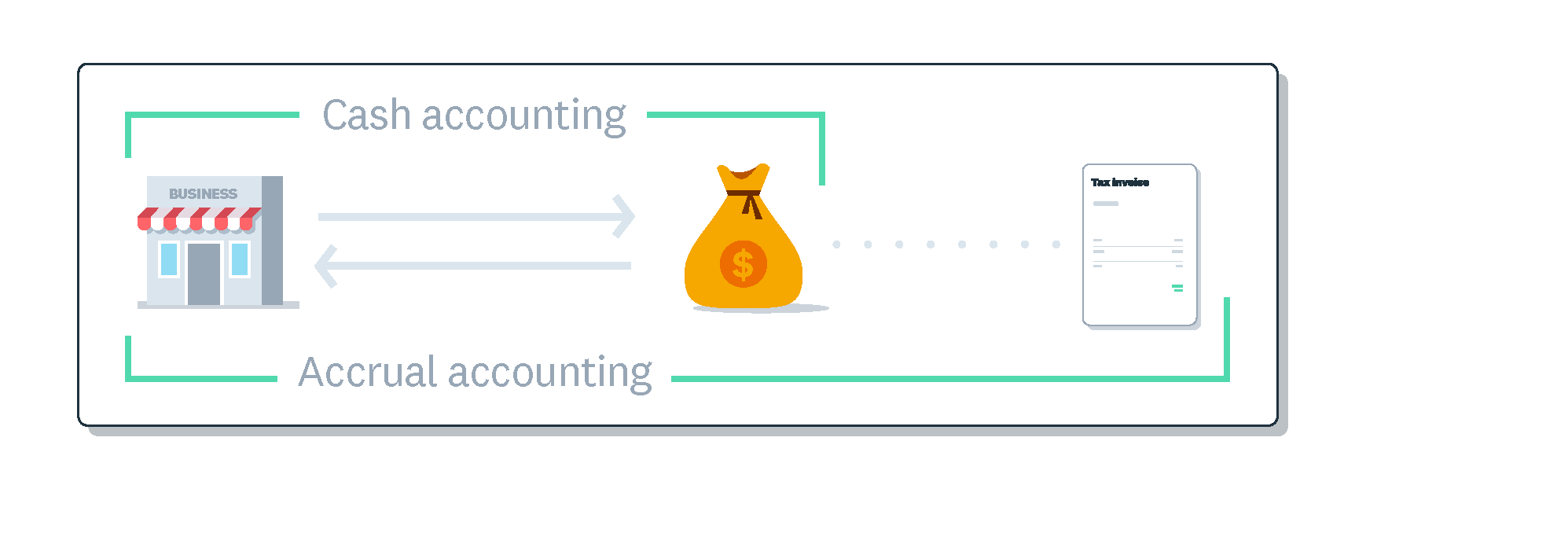
Accrual accounting keeps tabs on bills and sales invoices that are yet to be paid.
Key takeaways
- Accrual accounting records income and expenses when they're earned or incurred, not when money changes hands, giving you a more accurate picture of your business's financial health.
- The matching principle is central to accrual accounting: it pairs revenue with the expenses that helped generate it in the same reporting period, so your profit figures reflect reality.
- In Australia, businesses with an annual turnover of $10 million or more are required to use accrual accounting for GST reporting, though smaller businesses can also choose it voluntarily.
- Cloud accounting software like Xero can automate much of the complexity of accrual accounting, from tracking receivables and payables to generating real-time financial reports.
What is accrual accounting?
Accrual accounting is a method of recording financial transactions when they occur, regardless of when payment is actually received or made. It's a widely used accounting method for businesses that want a complete and accurate view of their finances.
Under this method, you record revenue when it's earned and expenses when they're incurred. For example, if you send an invoice to a customer in June but don't receive payment until July, you'd still record that revenue in June under accrual accounting.
This approach is built on the matching principle, which ensures that revenue and the expenses related to earning it are recognised in the same accounting period. The result is financial statements that give you a realistic snapshot of profitability, rather than just showing when cash moved in or out of your bank account.
For Australian small businesses, accrual accounting is particularly valuable because it helps you track what you're owed (accounts receivable) and what you owe (accounts payable) at any point in time. That visibility makes it easier to plan ahead and make confident financial decisions.
How does accrual accounting work?
Accrual accounting works by recording transactions at the time the economic event happens, not when the cash is exchanged. This means your books reflect the true financial activity of your business in each period.
The matching principle is the engine behind this method. It requires you to match revenue with the costs directly related to earning it within the same reporting period. For instance, if you sell products in March, the cost of goods, shipping, and any sales commissions tied to those sales are all recorded in March too, even if some of those bills aren't paid until April.
Revenue recognition under accrual accounting follows a straightforward rule: you record income when you've delivered your product or service and earned the right to payment. You don't wait for the money to land in your account.
Expense recognition works the same way in reverse. When you receive goods or services from a supplier, you record the expense at that point, even if you haven't paid the bill yet. The unpaid amount sits in your accounts payable until you settle it.
Here's a practical example for an Australian business. Say you run a landscaping company in Melbourne. In April, you complete a $5,000 garden renovation for a client, who pays on 30-day terms. You also receive a $1,200 bill from your mulch supplier for materials used on that job.
Under accrual accounting, you'd record $5,000 in revenue and $1,200 in expenses in April, giving you a clear picture of the profit from that job, even though cash hasn't changed hands yet.
Types of accruals
There are 4 main types of accruals you'll encounter in business accounting. Each one represents a timing difference between when a transaction is recorded and when cash actually moves.
Accrued revenue
Accrued revenue is income you've earned by delivering goods or services but haven't yet invoiced or received payment for. It's recorded as an asset on your balance sheet because the customer owes you money.
For example, if you're an IT consultant who completed 20 hours of work for a client in June but won't invoice until July, you'd record that revenue in June. Once you send the invoice and receive payment, the accrued revenue entry is reversed and replaced with the actual transaction.
Accrued expenses
Accrued expenses are costs your business has incurred but hasn't yet been billed or paid for. They appear as liabilities on your balance sheet because you owe the money.
A common example is employee wages. If your pay period ends on the 15th of each month but you don't process payroll until the 20th, you'd accrue the wages expense for those 5 days in the current period. Utility bills that arrive after the period ends are another typical accrued expense.
Deferred revenue
Deferred revenue, also called unearned revenue, is money you've received from a customer before you've delivered the product or service. It's recorded as a liability because you still owe the customer what they've paid for.
For instance, if you run a yoga studio and a customer pays $600 upfront for a 6-month membership in January, you can't recognise the full $600 as revenue immediately. Instead, you'd recognise $100 each month as you deliver the service, moving it from deferred revenue to earned revenue over time.
Prepaid expenses
Prepaid expenses are costs you've paid in advance for goods or services you haven't yet received or used. They're recorded as assets on your balance sheet because they represent future economic value.
A straightforward example is your annual insurance premium. If you pay $2,400 for 12 months of business insurance in January, you wouldn't record the full amount as an expense in January. Instead, you'd recognise $200 each month as the insurance coverage is used, spreading the cost across the year it relates to.
Accrual accounting vs cash accounting
Choosing between accrual and cash accounting is one of the most important financial decisions for your business. Each method records transactions differently, and the right choice depends on your business size, complexity, and reporting needs.
Cash accounting records transactions only when money is received or paid. It's simpler to manage and gives you a clear view of how much cash you have on hand at any moment. Many sole traders and small businesses start with cash accounting because it's straightforward and easier to maintain without dedicated accounting expertise.
The advantages of cash accounting include:
- Simpler to set up and maintain day to day
- Gives you a clear picture of available cash
- You only pay tax on income you've actually received
- Less time-consuming for very small businesses with simple transactions
The limitations of cash accounting include:
- Doesn't show money owed to you or money you owe
- Can give a misleading picture of profitability in any given period
- Makes it harder to plan ahead because future obligations aren't visible
- Not suitable for businesses with inventory, complex contracts, or significant receivables
Accrual accounting records transactions when they happen, regardless of when cash moves. It gives you a fuller picture of your financial position by tracking receivables and payables alongside actual cash flow.
The advantages of accrual accounting include:
- More accurate picture of profitability and financial health
- Tracks what you're owed and what you owe at any point
- Better for long-term planning and forecasting
- Required by the ATO for businesses over $10 million in annual turnover
- Aligns with Australian Accounting Standards (AASB)
The limitations of accrual accounting include:
- More complex to maintain, often requiring accounting software or professional help
- Can obscure short-term cash flow issues if you're not also monitoring cash position
- Requires tracking adjusting entries like accruals, deferrals, and prepayments
In short, cash accounting tells you how much money you have right now. Accrual accounting tells you how your business is actually performing. Many growing businesses eventually switch to accrual accounting as their transactions become more complex and they need clearer financial insights to make decisions.
Advantages and disadvantages of accrual accounting
Accrual accounting offers significant benefits, but it's not without trade-offs. Understanding both sides helps you decide if it's the right fit for your business.
On the positive side, accrual accounting gives you a far more accurate view of your business performance. Because it matches revenue with the expenses that generated it, your financial statements reflect what's actually happening, not just what's shown up in your bank account. This is particularly useful when you're making decisions about hiring, investing, or expanding.
It also makes forecasting and planning more reliable. When your books include accounts receivable and accounts payable, you can see upcoming cash inflows and outflows before they happen. That forward visibility is invaluable for managing cash flow and avoiding surprises.
For businesses that work with investors, lenders, or government agencies, accrual accounting is often expected or required. It complies with Australian Accounting Standards Board (AASB) standards and is the method used in general-purpose financial reports. If you ever need to apply for a business loan or attract investors, having accrual-based financials will make the process smoother.
On the other hand, accrual accounting is more complex to maintain than cash accounting. You'll need to track adjusting entries, manage accruals and deferrals, and reconcile your accounts regularly. For very small businesses or sole traders with straightforward transactions, this extra work may not be justified.
There's also the risk of focusing too heavily on paper profits while overlooking actual cash position. Your profit and loss statement might show a healthy profit, but if most of that revenue is sitting in accounts receivable, you could still face cash flow challenges. That's why it's important to monitor both your accrual-based reports and your actual bank balance.
When should your business use accrual accounting?
The right accounting method depends on your business size, structure, and how complex your financial transactions are. Here's how to work out which approach suits you.
Accrual accounting is the better choice if your business:
- Has an annual turnover approaching or exceeding $10 million (at which point the ATO requires it for GST)
- Invoices customers on credit terms, such as 14-day or 30-day payment
- Carries inventory or stock
- Has ongoing contracts where work is delivered over time
- Needs to produce financial reports for investors, lenders, or regulatory bodies
- Wants a more accurate picture of profitability to guide business decisions
Cash accounting may be sufficient if you're a sole trader or very small business with simple, cash-based transactions and no inventory. Many freelancers and sole traders start here and switch to accrual accounting as they grow.
Even if you're not required to use accrual accounting, it can still be worthwhile. The clearer picture of your financial health often pays for itself in better decision-making. And if you're using cloud accounting software, much of the complexity is handled automatically, from tracking receivables and payables to generating accrual-based reports.
If you're unsure, your accountant or bookkeeper can help you assess which method makes the most sense for your situation. You can find an accounting professional near you through the Xero advisor directory.
Accrual accounting requirements in Australia
Australia has specific rules around when businesses must use accrual accounting, particularly for GST reporting. Understanding these requirements helps you stay compliant and avoid penalties.
The Australian Taxation Office (ATO) requires businesses to use accrual accounting for GST purposes if their annual turnover is $10 million or more. This means you must account for GST on sales and purchases when you issue or receive an invoice, not when payment is made. Businesses under the $10 million threshold can choose either cash or accrual accounting for GST reporting.
Beyond the GST threshold, the Australian Accounting Standards Board (AASB) sets the rules for financial reporting. If your business is required to prepare general-purpose financial statements, such as a company limited by guarantee, a large proprietary company, or a publicly listed entity, those statements must follow AASB standards, which are based on accrual accounting.
For small proprietary companies, the reporting requirements are less strict. You may not be required to prepare general-purpose financial reports, but using accrual accounting is still considered best practice because it gives you and your stakeholders a more complete view of the business.
It's worth noting that your choice of accounting method for GST doesn't have to match the method you use for income tax. The ATO allows you to use different methods for different tax obligations, so you could report GST on an accrual basis while using cash accounting for income tax, or vice versa. Your tax advisor can help you choose the combination that works best.
Simplify your accrual accounting with Xero
Accrual accounting doesn't have to be complicated. Xero's cloud accounting software automates much of the process, from tracking invoices and bills to generating real-time financial reports that give you a clearer picture of your business's financial position.
With features like automatic bank reconciliation, invoice reminders, and customisable reporting, you can stay on top of your accruals without spending hours on manual data entry. Whether you're managing accounts receivable, tracking payables, or preparing for tax time, Xero keeps everything organised in one place. Get one month free.
FAQs on accrual accounting
Here are answers to some common questions about accrual accounting for Australian businesses.
What's the simplest way to explain accrual accounting?
Accrual accounting records income when it's earned and expenses when they're incurred, regardless of when cash actually changes hands. It gives you a more complete picture of your business finances than only tracking bank transactions.
Can you switch from cash accounting to accrual accounting?
Yes, you can switch methods, but you'll need to make adjusting entries to account for any transactions that overlap the transition. It's best to make the switch at the start of a new financial year and work with your accountant to ensure nothing is missed.
Do sole traders need to use accrual accounting in Australia?
Most sole traders aren't required to use accrual accounting unless their annual turnover reaches $10 million for GST purposes. However, sole traders with complex transactions, inventory, or credit-based invoicing may benefit from using it voluntarily.
How does accrual accounting affect your tax obligations?
Under accrual accounting, you may need to pay tax on income you've earned but haven't yet received. This can affect your cash flow planning, so it's important to set aside funds for tax obligations and monitor your accounts receivable closely.
What's the difference between an accrual and a deferral?
An accrual recognises a transaction before cash is exchanged, such as recording revenue you've earned but haven't been paid for. A deferral postpones recognition until later, such as recording prepaid insurance as an expense over the months it covers rather than all at once.
Handy resources
Advisor directory
You can search for experts in our advisor directory
How to do bookkeeping
Learn about data entry, bank rec, reporting and tax prep in our guide to doing bookkeeping.
Online accounting with Xero
Automate your accounting in the cloud
Disclaimer
This glossary is for small business owners. The definitions are written with their requirements in mind. More detailed definitions can be found in accounting textbooks or from an accounting professional. Xero does not provide accounting, tax, business or legal advice.