Balance sheet
A balance sheet summarises what your business owns, owes and is worth at a single point in time.
Published Wednesday 5 August 2026
Table of contents
Key takeaways
- A balance sheet summarises your business's financial position at a specific point in time, showing what you own, what you owe, and what remains for the owner.
- The balance sheet follows the accounting equation: assets equal liabilities plus owner's equity. If it doesn't balance, there may be missing or incorrect data.
- Reviewing your balance sheet regularly helps you assess solvency, track changes in business value, and make informed financial decisions.
- Key ratios like the current ratio and debt-to-equity ratio turn balance sheet figures into practical insights about liquidity and financial health.
What is a balance sheet?
A balance sheet is a financial report that summarises the financial position of a business at a specific point in time. It shows what your business owns (assets), what it owes (liabilities), and what remains for the owner (owner's equity). You may also see it called a statement of financial position.
What a balance sheet is used for
A balance sheet helps you check whether your business can meet its financial obligations – in other words, whether it's solvent. By comparing balance sheets from different periods, you can see whether your business has gained or lost value over time.
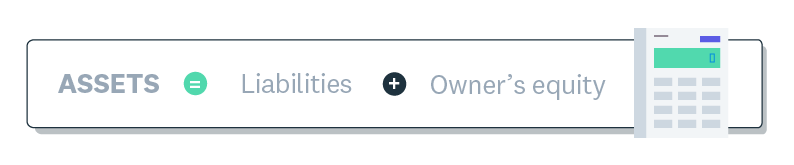
The accounting equation
The balance sheet works alongside other financial statements to give a complete picture of business performance. While the profit and loss statement shows income and expenses over a period, and the cash flow statement tracks money moving in and out, the balance sheet captures your financial position at a single moment.
The parts of a balance sheet
Every balance sheet has three main components: assets, liabilities, and owner's equity. Each category is further divided into current (due within one year) and non-current (due after one year) items.
Common line items include:
- Assets: cash, accounts receivable, inventory, property and equipment
- Liabilities: accounts payable, short-term loans, long-term debt
- Owner's equity: capital contributions and retained earnings
Owner's equity represents the residual value of the business after subtracting liabilities from assets. It reflects what the owner would receive if all assets were sold and all debts paid.
The accounting equation
The balance sheet is built on the accounting equation: assets = liabilities + owner's equity. This equation must always balance.
If your balance sheet doesn't balance, the cause is usually incorrect data entry, missing transactions, or calculation errors. Reviewing your records to find and correct the discrepancy will bring the equation back into alignment.
Balance sheet example
Here's a simplified balance sheet for a small South African business. Notice how total assets equal the sum of liabilities and owner's equity.
Assets:
- Cash: R150,000
- Accounts receivable: R100,000
- Inventory: R200,000
- Equipment: R250,000
- Total assets: R700,000
Liabilities:
- Accounts payable: R80,000
- Short-term loan: R70,000
- Long-term debt: R150,000
- Total liabilities: R300,000
Owner's equity:
- Capital: R200,000
- Retained earnings: R200,000
- Total owner's equity: R400,000
Total liabilities plus owner's equity: R700,000. The equation balances. You can use Xero's free balance sheet template to create your own.
How to read and analyse a balance sheet
Reading a balance sheet means understanding what each section tells you about your business. Start by checking whether it balances, then examine specific figures and calculate key ratios.
Useful liquidity ratios include:
- Current ratio: current assets divided by current liabilities, showing short-term solvency
- Quick ratio: current assets minus inventory, divided by current liabilities, measuring immediate liquidity
- Debt-to-equity ratio: total liabilities divided by owner's equity, indicating financial leverage
Comparing your balance sheet to prior periods reveals trends. A rising current ratio suggests improving liquidity, while increasing debt-to-equity may signal higher financial risk.
How to prepare a balance sheet
Preparing a balance sheet involves gathering your financial data and organising it into the correct categories. Start with a trial balance to confirm your accounts are in order.
- List all assets and their values, separating current from non-current items.
- List all liabilities, again separating current from non-current.
- Calculate owner's equity by adding capital contributions to retained earnings.
- Confirm the balance sheet balances: assets should equal liabilities plus owner's equity.
Keep your balance sheet accurate with Xero
Xero's accounting software generates balance sheets and other financial reports automatically from your connected accounts. With real-time data and clear visuals, you can monitor your financial position without manual calculations. Start with Xero today and get one month free.
FAQs on balance sheets
Here are answers to common questions about balance sheets.
What is a balance sheet in simple terms?
A balance sheet is a snapshot of your business finances on a specific date. It lists everything the business owns and owes, plus the owner's stake.
What are the three main parts of a balance sheet?
The three parts are assets (what you own), liabilities (what you owe), and owner's equity (the owner's residual interest in the business).
What is the balance sheet formula?
Assets = liabilities + owner's equity. Both sides must equal each other for the balance sheet to be correct.
What does a balance sheet tell you about a business?
It reveals whether a business can pay its debts, how much debt it carries relative to equity, and how its financial position has changed over time.
What is the difference between a balance sheet and a profit and loss statement?
A balance sheet shows financial position at a point in time, while a profit and loss statement shows income and expenses over a period. One is a snapshot; the other covers a timeframe.
How often should a small business prepare a balance sheet?
Most small businesses prepare a balance sheet monthly or quarterly. More frequent reviews help you spot issues early and make timely decisions.
Related terms
Learn more about balance sheets
Handy resources
Advisor directory
You can search for experts in our advisor directory
Xero Small Business Guides
Discover resources to help you do better business
Financial reporting
Keep track of your performance with accounting reports
Disclaimer
This glossary is for small business owners. The definitions are written with their requirements in mind. More detailed definitions can be found in accounting textbooks or from an accounting professional. Xero does not provide accounting, tax, business or legal advice.