Cash flow forecast: how to create one for your business
Learn how a cash flow forecast helps you plan spending, spot gaps early, and keep your small business on track.
Written by Lena Hanna—Trusted CPA Guidance on Accounting and Tax. Read Lena's full bio
Published Monday 30 March 2026
Table of contents
Key takeaways
- Create regular cash flow projections by listing your starting balance, expected money coming in, expected money going out, and calculating your closing balance to spot cash shortages early and make informed spending decisions.
- Use short-term forecasts (days or weeks) for immediate needs like payroll and supplier payments, while using long-term forecasts (months or quarters) for strategic planning like expansion or major purchases.
- Refresh your cash flow projections monthly by dropping the past month, adding a new month ahead, and updating all estimates based on actual results to improve accuracy over time.
- Build buffers into your projections to account for common challenges like late customer payments, unexpected expenses, and seasonal variations that can throw off your timing and cash position.
What is a cash flow projection?
Cash flow projection is a method of predicting cash inflows and outflows to see how much money you'll have in the future. It gives you a clear view of your business's financial health and helps you plan spending.
A cash flow projection differs from a cash flow statement. A statement focuses on past cash flows, while a projection aims to predict the future.
Why is a cash flow projection important?
Cash flow projection helps you pay bills on time and ensure you can pay yourself. When costs are rising, getting cash flow management right becomes even more critical. Research shows that managers with higher financial literacy are better able to alleviate financing constraints and manage risk. A projection gives you the visibility to do exactly that.
Benefits of a cash flow projection
Cash flow projection is a good financial habit to get into. It has multiple operational and financial benefits for your business:
- Spot cash shortages early: Give yourself time to delay spending, request supplier credit, or secure a business loan
- Assess growth affordability: See if you'll have enough money to buy new tools or hire a new employee
- Protect your own pay: Ensure you have enough cash to pay yourself as the business owner
- Identify trends quickly: Notice when expenses are climbing or income is slumping
- Fix cash flow problems: Address slow-paying customers, impractical payment terms, seasonal cycles, or over-reliance on high-cost finance
What are the key components of a cash flow projection?
Your cash flow projection will show a few key aspects of your business finances:
- Starting position: cash in the bank at the beginning of the period
- Expected cash in: income from sales, loans, or asset sales
- Expected cash out: all planned expenses and payments
- Net cash flow: whether cash reserves grew or shrank during the period
- Closing balance: cash remaining at the end of the period
Types of cash flow forecasts
Different forecast types serve different business needs. Choose the right approach based on your planning horizon and available data.
Short-term vs long-term forecasts
- Short-term forecasts: Cover days or weeks ahead and help you manage immediate cash needs like paying suppliers or covering payroll
- Long-term forecasts: Cover months or quarters ahead and support strategic planning like expansion, hiring, or major purchases
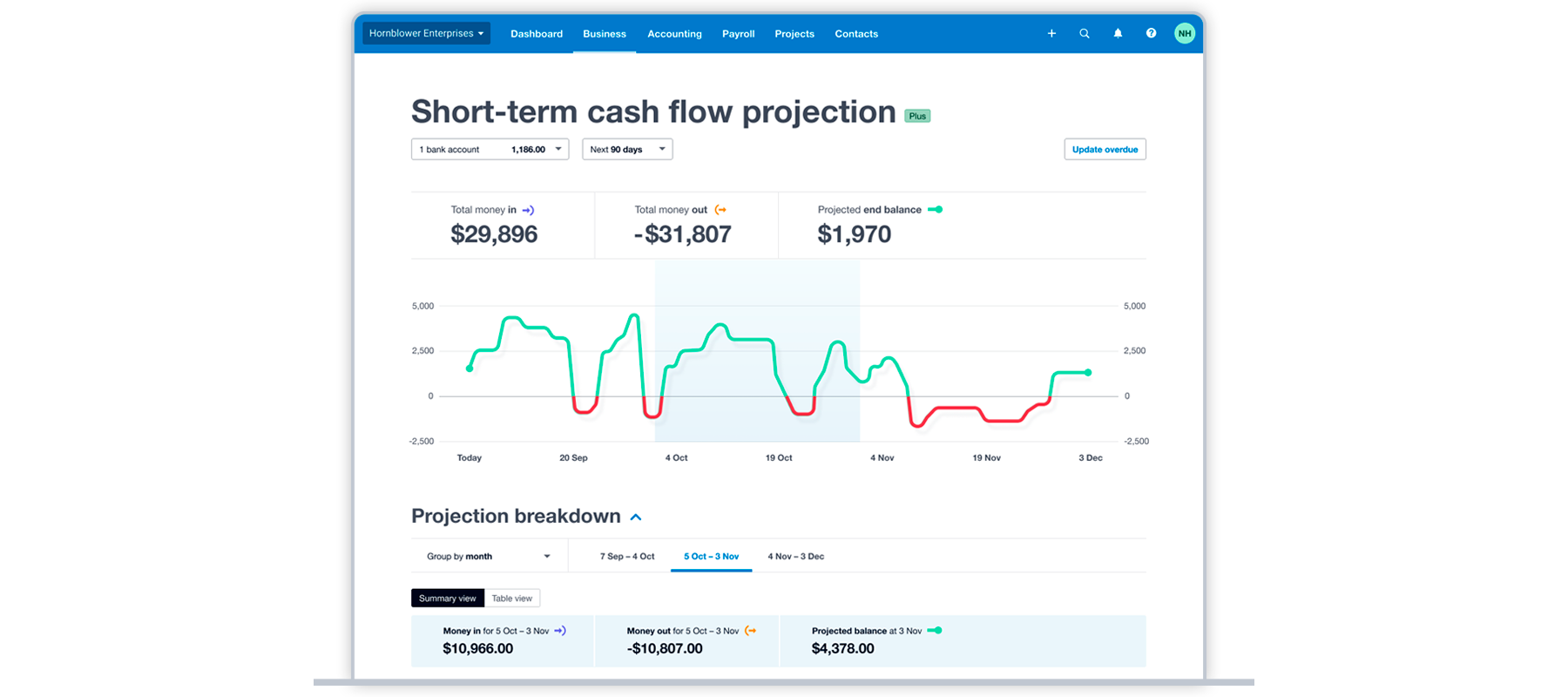
A cash flow dashboard shows how cash balances will rise and fall in response to expected transactions.
Direct vs indirect method
You can also choose between two methods for creating your forecast.
- Direct method: Tracks actual cash transactions as they happen. This approach works well if you have detailed records of every payment in and out.
- Indirect method: Starts with your profit and loss statement and adjusts for non-cash items. This approach suits businesses that want a broader view without tracking every transaction.
Most small businesses use the direct method for short-term forecasts and the indirect method for longer-term planning. This flexible approach is supported by international accounting rules, as the International Financial Reporting Standards (IFRS) for SMEs Standard does not explicitly encourage one method over the other.
Who is responsible for doing a cash flow projection?
Small business owners, bookkeepers, or accountants can all create cash flow projections.
Many owners do their own projections using a spreadsheet or accounting software. Others rely on a bookkeeper or accountant who can complete them quickly due to their experience with small business cash flow.
How to do a cash flow projection
To create a cash flow projection, estimate the size and timing of upcoming transactions and calculate their impact on your cash position. You can do this using a spreadsheet or accounting software.
Follow these steps to build your projection:
- Choose your forecasting period and note your starting balance
Decide if you want to forecast for a week, a month, or a quarter. Then, find your starting cash balance by checking how much money is in your bank account.
- List expected cash inflows
List all the money you expect to receive during the period. To improve accuracy for customer payments, you can assign these ballpark probabilities based on accounts receivable aging; for instance, an 80–90% collection probability for current invoices versus 10–30% for those over 90 days old. Also, include other income like loan funds or any other cash coming in.
- List expected cash outflows
List all the payments you expect to make. Include regular bills like rent and payroll, as well as other costs like inventory purchases, taxes, or loan payments.
- Calculate your closing balance
Take your starting balance, add all your cash inflows, and subtract all your cash outflows. The result is your projected closing balance for the period.
Doing a cash flow projection with spreadsheets
You can create cash flow projections using spreadsheet software. See an illustrated example of this approach.
Doing a cash flow projection with software
Accounting software can also generate cash flow projections automatically.
A cash flow dashboard shows how cash balances will rise and fall in response to expected transactions.
Accounting software can generate cash flow projections automatically. Adopting this technology can pay off quickly; according to research from Citi, a young business with a modern tech stack can achieve top-tier treasury performance in as little as 12 months. Xero, for example, tracks your incomings and outgoings and can create a projection with a few clicks.
Alternative methods of cash flow projections
Alternative methods use your balance sheet and income statement to generate projections. These typically provide longer-term guidance rather than day-to-day or week-to-week views.
These methods require accounting knowledge, so ask an advisor if you want to know more.
Cash flow projection example
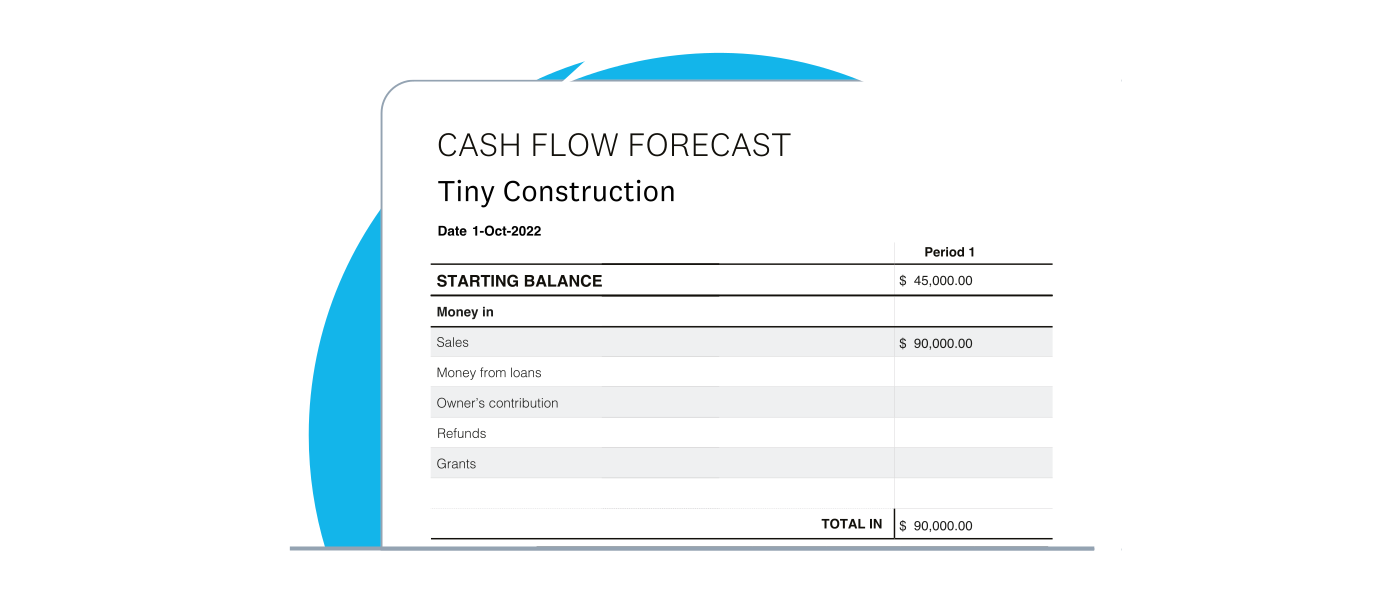
The finance manager of Tiny Construction wants to assess whether the business's cash flow will support a new equipment purchase next month. The equipment will cost R20,000.
Based on current bank balances and reconciliations:
- Starting balance: R45,000
- Expected incoming payments: R90,000 from sales within the next 30 days
- Other incoming payments: none
So the "money in" part of the cash flow projection will look like this:
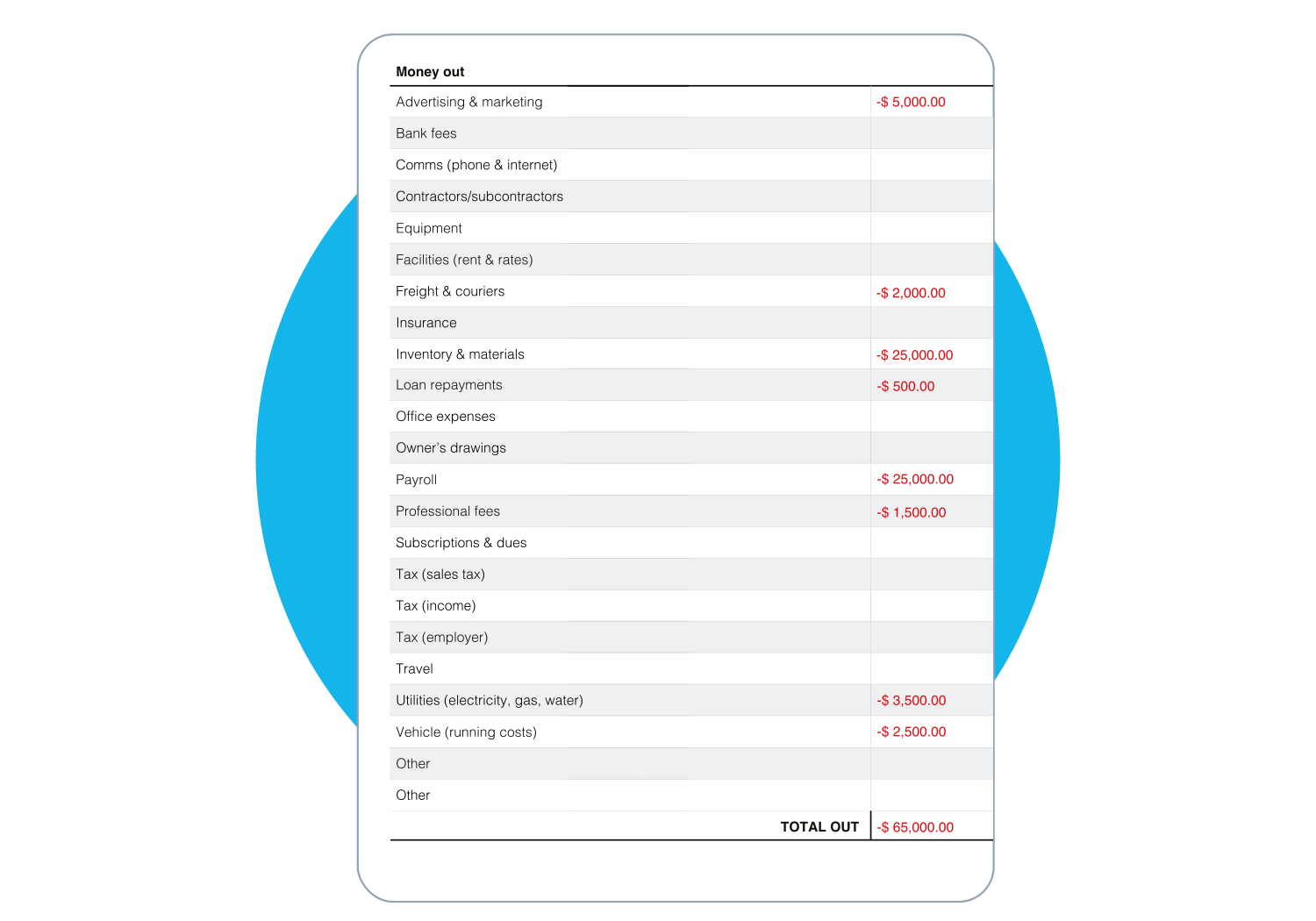
The "money out" part of the cash flow projection will look like this:
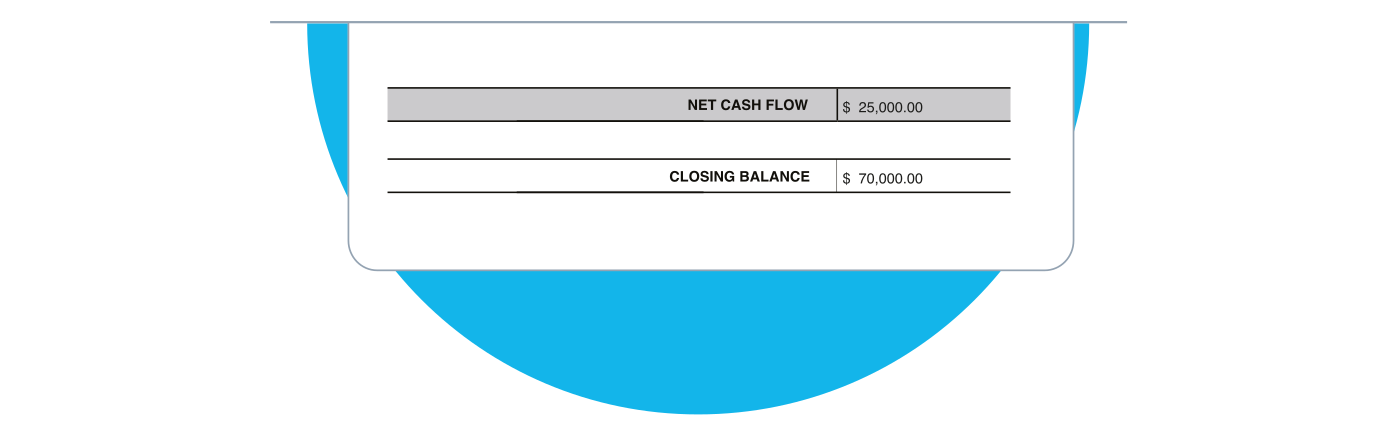
The "net cash flow" and "closing balance" will be shown here.
With incoming sales receipts of R90,000 and outgoings of R65,000, the company would add R25,000 in net cash flow for the period. Adding that to the R45,000 of existing cash means the business has R70,000 left at the end of the month. This becomes their starting balance the following month.
If they purchase the equipment with surplus cash, their starting balance for the next month would reduce to R50,000.
This example shows how businesses use cash flow projections to make investment decisions and estimate whether they can afford a purchase outright or need to consider financing.
How to analyze a cash flow projection
Once you've prepared a cash flow projection, spend time analysing it by checking:
- Closing balance: the amount of money you expect to have in reserve at the end of each period
- Net cash flow: the amount by which your cash reserves went up or down during the period
- Accuracy: compare your projection to what actually happens. If the projection was off, find out what you overestimated or underestimated. This process helps make your next projection more accurate.
How often should cash flow projections be done?
Refresh your cash flow projection regularly for the most accurate view. You can create projections for any timeframe, but accuracy decreases the further you look ahead.
For a 12-month projection with a column for each month, refresh it at the end of each month. Drop the last month off, add another month to the end, and check all projections in between to see if anything needs updating.
Common challenges with cash flow forecasting
Forecasting isn't always straightforward. Here are common challenges and how to address them:
- Estimating accuracy: Predictions are never perfect. Start with conservative estimates and refine them as you gather more data.
- Timing mismatches: Revenue may be recognised before cash arrives. Track when money actually hits your bank, not just when you invoice.
- Seasonal variations: Sales may spike or dip at certain times of year. Use historical data to anticipate these patterns.
- Unexpected expenses: Equipment breaks, suppliers raise prices, or emergencies happen. Build a buffer into your projections.
- Customer payment delays: Late-paying customers throw off your timing. Monitor payment patterns and follow up on overdue invoices promptly.
Review your forecasts against actual results regularly. Each comparison helps you improve accuracy over time.
Cash flow projections for small businesses
Cash flow is critical for small businesses. Research confirms financial literacy is one of the most significant determinants of SME success. Whether you're growing or maintaining financial stability, a cash flow projection helps you improve cash flow planning and take control of your financial health.
To reduce time spent collecting and updating cash flow data, automate the process with accounting software. Get one month free of Xero to see how automation simplifies your forecasting.
If you're not ready for software, start by downloading a free cash flow projection template.
FAQs on cash flow forecasting
Here are answers to common questions about cash flow forecasting.
What is the formula for forecasting cash flow?
Projected cash flow = projected cash inflows − projected cash outflows. Add your starting balance to see your closing cash position.
How accurate does a cash flow forecast need to be?
Forecasts don't need to be perfect. Aim for reasonable estimates and refine them over time as you compare projections to actual results.
Can I create a cash flow forecast if my business is brand new?
Yes. Use industry benchmarks, your business plan projections, and conservative estimates. Update your forecast as you gather real data.
What should I do if my forecast shows a cash shortfall?
A forecast gives you time to act. You could reduce non-essential spending, follow up on unpaid invoices, or talk to your bank about a line of credit before you need it.
What's the difference between a cash flow forecast and a budget?
A budget plans how you'll allocate money across categories. A cash flow forecast predicts when money will actually move in and out of your bank account.
Disclaimer
Xero does not provide accounting, tax, business or legal advice. This guide has been provided for information purposes only. You should consult your own professional advisors for advice directly relating to your business or before taking action in relation to any of the content provided.
Start using Xero for free
Access Xero features for 30 days, then decide which plan best suits your business.