Assets
Learn what assets are in accounting, the types of assets, how they're valued and why they matter for your business.
Published Wednesday 5 August 2026
Table of contents
Key takeaways
- Assets are resources your business owns or controls that have economic value and are expected to provide future benefits.
- The main types include current assets (cash, debtors, inventory) and non-current or fixed assets (property, equipment, vehicles), as well as tangible and intangible assets.
- Assets form one side of the accounting equation: assets = liabilities + owner's equity.
- Understanding your assets helps you make better decisions, secure financing and assess whether your business can meet its obligations.
What are assets in accounting?
Assets are resources a business owns or controls that have measurable economic value and are expected to bring future benefits. They're the opposite of liabilities, which represent what the business owes.
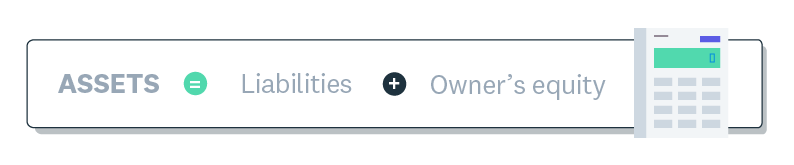
The accounting equation
Think of a plumber running a small business. Their assets might include:
- cash in the bank
- accounts receivable (money owed by customers)
- inventory such as pipes, fittings and tools
- equipment like a pipe bender or soldering kit
- a bakkie or building used for the business
If you're new to tracking finances, a guide on small business accounting basics can help you get started.
What counts as an asset?
Not everything valuable qualifies as an asset in your accounts. To be recorded as an asset, a resource must pass a three-part test.
- Owned or controlled: your business must own or have the right to use the resource.
- Has economic value: the resource must be measurable in rands.
- Brings future benefit: it must help generate income or reduce costs down the line.
Your staff are valuable, but they don't appear as assets on your balance sheet. Instead, the wages you pay them are recorded as an expense.
Types of assets
Assets can be grouped in several ways. Understanding these categories helps you read financial statements and manage resources.
Current vs non-current assets
The key distinction is how quickly an asset converts to cash.
- Current assets: expected to be used or converted to cash within one year or your operating cycle, for example cash, debtors, inventory and prepaid expenses.
- Non-current (fixed) assets: held for longer than a year, for example property, vehicles, machinery and equipment.
Fixed assets lose value over time through depreciation. For more detail, see the guide on what depreciation is and how it works.
Tangible vs intangible assets
Tangible assets have a physical form, while intangible assets do not.
- Tangible: buildings, machinery, vehicles, inventory
- Intangible: patents, trademarks, goodwill, software licences
Operating vs non-operating assets
Operating assets are used in day-to-day business activities. Non-operating assets generate income outside core operations.
- Operating: cash, inventory, equipment used to make products or deliver services
- Non-operating: investment property, shares held in other companies
Assets, liabilities and the accounting equation
The accounting equation is the foundation of double-entry bookkeeping. It states that assets equal liabilities plus owner's equity.
Assets = Liabilities + Owner's equity
For example, if your business has R500,000 in total assets and R300,000 in liabilities, your owner's equity is R200,000. This equation must always balance. When you buy a new piece of equipment on credit, both your assets and your liabilities increase by the same amount.
How assets appear on the balance sheet
On a balance sheet, assets are listed in order of liquidity, starting with the most liquid items first. Liquidity refers to how quickly an asset can be converted to cash.
A typical order looks like this:
- cash and bank balances
- accounts receivable (debtors)
- inventory
- prepaid expenses
- fixed assets such as property and equipment
This layout helps you see at a glance how easily your business could cover short-term obligations. For a fuller picture of reporting, read the guide on understanding financial statements.
How assets are valued
Assets can be recorded at cost (what you paid) or at their current book value after adjustments. Tangible fixed assets are reduced over time through depreciation. Intangible assets are reduced through amortisation.
Here's a simple example. You buy a delivery vehicle for R100,000 with an expected useful life of 10 years. Using straight-line depreciation, the vehicle loses R10,000 of value each year. After three years, its book value is R70,000.
Tracking depreciation correctly affects both your profit and loss statement and your balance sheet. Learn more about accumulated depreciation and how to record it.
Why assets matter for your business
Knowing what your business owns helps you make smarter decisions. Assets influence everything from daily cash flow to long-term growth plans.
- Decision-making: accurate asset records help you decide when to invest, replace equipment or cut costs.
- Raising finance: lenders often require collateral. Assets such as property or vehicles can secure a loan.
- Measuring solvency and liquidity: comparing assets to liabilities shows whether your business can meet its obligations now and in the future.
For a deeper dive into these measures, see the guide on liquidity vs solvency.
Manage your assets with Xero
Keeping track of assets doesn't have to be complicated. Xero's fixed asset register lets you record purchases, calculate depreciation automatically and see the current value of your assets in one place. Ready to simplify your books? Get one month free and see how Xero can help.
FAQs on assets
Below are common questions small business owners ask about assets.
Is cash an asset?
Yes. Cash is a current asset and the most liquid resource on your balance sheet because it's already in spendable form.
Do debtors (accounts receivable) count as an asset?
Yes. Money customers owe you is a current asset because you expect to collect it within a short period, usually 30 to 90 days.
Does labour count as an asset?
No. While employees add value, labour isn't recorded as an asset. The wages and salaries you pay are treated as expenses on your income statement.
What is the difference between current and fixed assets?
Current assets are expected to be used or turned into cash within one year. Fixed (non-current) assets are held for longer and typically lose value through depreciation over their useful life.
Related terms
Learn more about assets
Handy resources
Advisor directory
You can search for experts in our advisor directory
Xero Small Business Guides
Discover resources to help you do better business
Fixed assets in Xero
Manage your fixed assets with easy-to-use accounting software
Disclaimer
This glossary is for small business owners. The definitions are written with their requirements in mind. More detailed definitions can be found in accounting textbooks or from an accounting professional. Xero does not provide accounting, tax, business or legal advice.