Liabilities
Learn what business liabilities are, the main types, and how to calculate and manage what your business owes.
Published Wednesday 12 August 2026
Table of contents
Key takeaways
- Liabilities are financial obligations your business owes to others, including suppliers, lenders and SARS.
- Current liabilities are due within 12 months, while non-current liabilities extend beyond a year.
- The accounting equation (Assets = Liabilities + Equity) shows how liabilities fit into your overall financial picture.
- Managing liabilities well helps maintain a healthy debt-to-asset ratio and keeps your business financially stable.
What are liabilities?
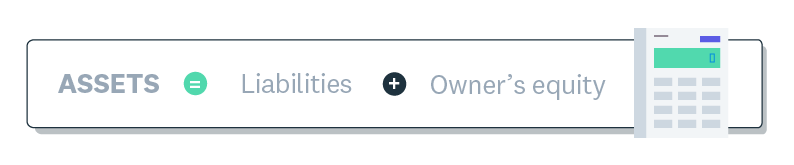
The accounting equation
Liabilities are amounts your business owes to others, representing legal or financial obligations that must be settled in the future. These debts arise from past transactions and typically require payment in cash, goods or services.
Liabilities form one side of the fundamental accounting equation: Assets = Liabilities + Equity. This equation shows that everything your business owns (assets) is funded either by what you owe (liabilities) or what you've invested and retained (equity). Along with assets and equity, liabilities are one of the three core elements of a balance sheet under IFRS and IFRS for SMEs.
Taking on debt isn't inherently bad for a small business. Liabilities can help fund growth, purchase essential equipment or manage cash flow gaps. The key is keeping your liabilities at a level your business can comfortably service.
Types of liabilities
Liabilities are classified based on when they come due. Understanding the difference helps you plan your cash flow and meet your obligations on time.
Current liabilities
Current liabilities are obligations due within 12 months. These short-term debts require careful cash flow management to ensure you can pay them when they fall due.
- Accounts payable (money owed to suppliers)
- Wages payable
- Short-term loans
- Income tax payable to SARS
- VAT payable (VAT collected from customers not yet remitted to SARS)
- PAYE and UIF payable
- Unearned revenue
Non-current liabilities
Non-current liabilities are obligations due beyond 12 months. These longer-term debts are often used to finance major purchases or investments in your business.
- Long-term loans
- Mortgage bonds
- Deferred tax liabilities
- Pension obligations
Contingent liabilities
Contingent liabilities are potential obligations that depend on the outcome of a future event, such as pending litigation or product warranty claims. Under IFRS or IFRS for SMEs (used by South African companies), a contingent liability is recognised as a provision under IAS 37 once the outcome is probable and the amount can be reliably estimated. Until then, it's disclosed in the notes to the financial statements rather than recorded on the balance sheet.
Examples of liabilities in business
Consider a South African landscaping business with the following liabilities.
- R8,500 accounts payable (owed to suppliers)
- R3,200 wages payable
- R1,800 VAT collected but not yet remitted to SARS
- R45,000 remaining on a five-year vehicle loan
- R120,000 on a commercial property mortgage bond
Current liabilities (due within 12 months) total R13,500. Non-current liabilities total R165,000. The business has total liabilities of R178,500.
If the business has R250,000 in assets, the accounting equation tells us that equity equals R71,500 (R250,000 − R178,500). This means the owner has about 29% outright ownership in the business, with the remaining 71% funded by debt.
Liabilities vs assets
Assets are what your business owns, while liabilities are what your business owes. The difference between them equals your equity, or the portion of the business you truly own.
For example, if you take out a R50,000 loan to buy a delivery vehicle, you create both a R50,000 asset (the vehicle) and a R50,000 liability (the loan). As you repay the loan, your liability decreases while the asset remains on your books (minus depreciation).
If your liabilities exceed your assets, you have negative equity. This is a warning sign that your business owes more than it owns and may struggle to meet its financial obligations.
Liabilities vs expenses
Expenses and liabilities are related but distinct concepts. An expense is a cost incurred to generate revenue during a specific period and appears on your income statement. A liability is an obligation to pay in the future and sits on your balance sheet.
For example, if your business buys a company car for R30,000 using a five-year loan, the outstanding loan balance is a liability. The monthly interest on the loan and the vehicle's depreciation are expenses that reduce your profit over time.
An unpaid utility bill starts as a liability (accounts payable) because you owe the money. Once you pay it, the payment becomes an expense recorded in the period when the utilities were used.
How to calculate your total liabilities
Calculating your total liabilities gives you a clear picture of what your business owes.
Add all your current liabilities to all your non-current liabilities from your balance sheet to get your total liabilities. You can also use the rearranged accounting equation: Liabilities = Assets − Equity. If you know your total assets and owner's equity, subtracting equity from assets gives you your total liabilities.
How to manage business liabilities
Keeping liabilities under control helps your business stay financially healthy and creditworthy.
One useful measure is the debt-to-asset ratio, calculated by dividing total liabilities by total assets. A ratio under 0.5 is generally considered healthy, meaning less than half your assets are funded by debt. According to Statistics South Africa, South African small enterprises carried a debt-to-asset ratio of 0.68 in 2024, meaning about 68% of their assets were funded by debt.
You can also track your gearing ratio (debt-to-equity) to understand how your debt compares to what you've invested in the business.
- Negotiate longer payment terms with suppliers to ease cash flow pressure
- Refinance high-interest debt to reduce interest expenses
- Build a cash reserve to cover short-term obligations
- Review your liabilities monthly to stay on top of upcoming payments
- Keep business and personal debt separate to protect your personal assets
For more strategies to manage your business debt, focus on maintaining steady cash flow and avoiding more debt than your business can comfortably carry.
Track your business liabilities with Xero
Xero gives you real-time balance sheet visibility so you can see exactly what your business owes at any moment. Automated bank feeds and reconciliation keep your liability accounts up to date without manual data entry.
Start tracking your liabilities and understanding your financial position today. Get one month free and see how Xero simplifies your business accounting.
FAQs on liabilities
Here are answers to common questions about business liabilities.
What are the three main types of liabilities?
The three main types are current liabilities (due within 12 months), non-current liabilities (due beyond 12 months) and contingent liabilities (potential obligations depending on future events).
Is a liability the same as debt?
Debt is a type of liability, but not all liabilities are debt. Liabilities include any obligation, such as wages owed to employees or VAT collected for SARS, while debt specifically refers to borrowed money.
Are liabilities good or bad for a business?
Liabilities aren't inherently good or bad. Manageable debt can fund growth and improve cash flow, but excessive liabilities can strain your finances and limit your ability to invest in opportunities.
How do you calculate total liabilities?
Add all current liabilities and non-current liabilities from your balance sheet. Alternatively, use the formula: Liabilities = Assets − Equity.
What is a contingent liability?
A contingent liability is a potential obligation that depends on a future event, such as a lawsuit outcome. Under IAS 37, it's recognised as a provision when the outcome becomes probable and the amount can be reliably estimated.
Related terms
Learn more about liabilities
Handy resources
Advisor directory
You can search for experts in our advisor directory
Xero Small Business Guides
Discover resources to help you do better business
Financial reporting
Keep track of your performance with accounting reports
Disclaimer
This glossary is for small business owners. The definitions are written with their requirements in mind. More detailed definitions can be found in accounting textbooks or from an accounting professional. Xero does not provide accounting, tax, business or legal advice.