Types of inventory: definitions, examples, and tips
Learn the types of inventory and when to use each to reduce costs, prevent stockouts, and improve your cash flow.
Written by Lena Hanna—Trusted CPA Guidance on Accounting and Tax. Read Lena's full bio
Published Friday 27 February 2026
Table of contents
Key takeaways
- Classify your inventory into the four main types—raw materials, work-in-progress, finished goods, and MRO supplies—to ensure accurate financial reporting and tax compliance.
- Track inventory location across four key areas (on shelf, in storage, in transit, and on consignment) to maintain accurate counts and make better purchasing decisions.
- Apply different management strategies for each inventory type, such as monitoring reorder points for raw materials and balancing stock levels against sales velocity for finished goods.
- Recognize that not all businesses need to track every inventory type—retailers typically handle finished goods and MRO supplies while manufacturers manage all four categories.
What is inventory?
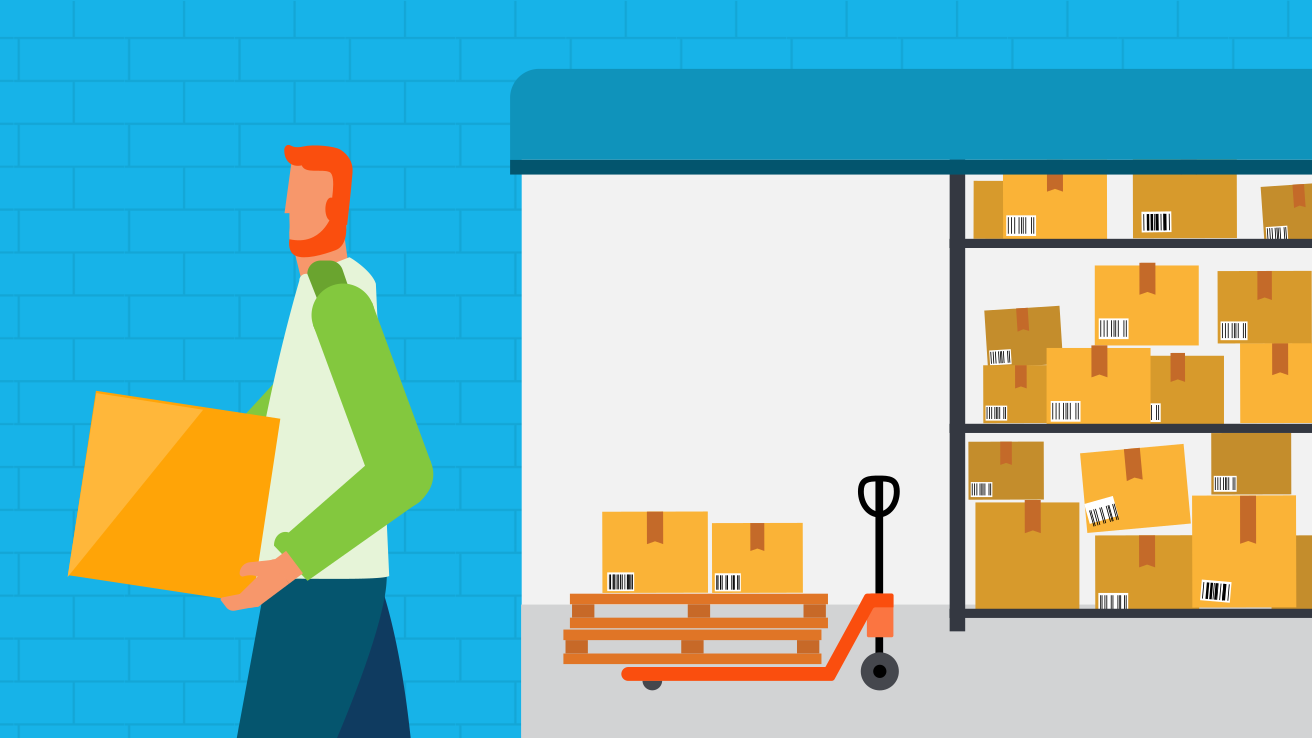
Inventory is the goods your business holds for sale or use in operations. This includes products you've purchased to resell, materials you'll use to create products, and supplies that keep your business running.
For accounting purposes, inventory is considered a current asset on your balance sheet. Its value directly affects your financial statements, tax obligations, and overall business health.
Why understanding inventory types matters
Classifying your inventory correctly affects how you value it, report it, and manage it. Getting it wrong can lead to inaccurate financial statements and tax problems.
Here's why it matters:
- Accurate valuation: Different inventory types may use different valuation methods for accounting
- Tax compliance: The IRS requires businesses with inventory to use specific accounting methods, such as rules determining the majority interest tax year for partnerships
- Cost control: Knowing what's raw materials versus finished goods helps you track production costs
- Software setup: Accounting software like Xero needs correct categories to generate accurate reports
- Cash flow visibility: Understanding where your money sits helps you make better purchasing decisions
Taking time to categorize inventory properly now saves headaches during tax season and helps you spot problems before they affect your bottom line.
The four types of inventory
Not every business has all four types. Retailers typically track finished goods and MRO supplies, while manufacturers manage all four categories. Service businesses that sell products alongside labor, such as mechanics, hairdressers, and contractors, typically deal with finished goods and MRO supplies. Understanding which types apply to your business helps you categorize stock correctly and avoid overlooking inventory.
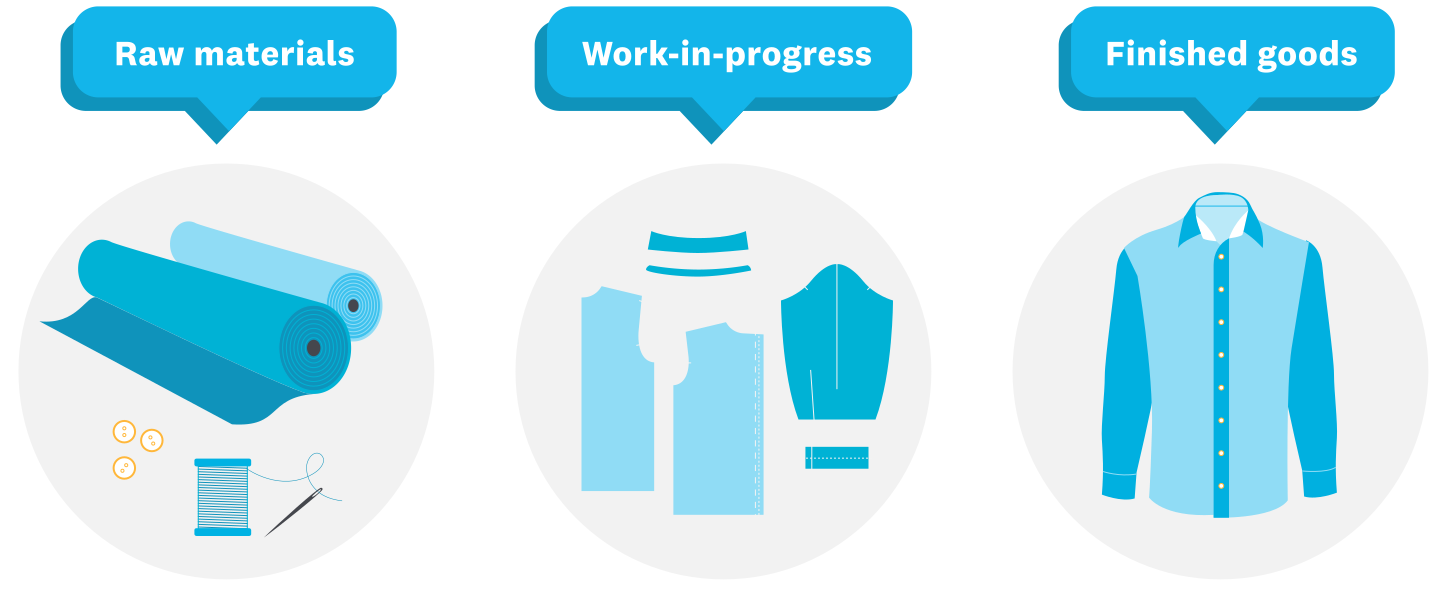
Raw materials
Raw materials are the basic components you purchase to create your products. These items haven't been processed or assembled yet.
Examples include:
- Manufacturing: wood for a furniture maker, fabric for a clothing brand, flour for a bakery
- Service businesses: hair color for a salon, lumber for a contractor
Raw materials become work-in-progress once you start using them in production.
Work-in-progress (WIP)
Work-in-progress (WIP) inventory includes items that are partially completed but not yet ready for sale. These goods are somewhere between raw materials and finished products.
Examples include:
- Partially assembled furniture waiting for finishing
- Baked goods cooling before packaging
- Custom orders in the middle of production
Most retailers and pure service businesses won't have WIP inventory. It's primarily relevant for manufacturers and businesses that assemble or customize products.
Finished goods
Finished goods are products that are complete and ready for sale. For manufacturers, these are items that have moved through the entire production process. For retailers, finished goods are the products you've purchased to resell.
For retailers, finished goods include everything on your shelves and in your stockroom. If you bought it to resell without modification, it's finished goods inventory. A hairdresser who stocks and sells hair products or a gardener who charges for fertilizers is selling finished goods alongside their services.
Examples include:
- A furniture maker's completed tables and chairs
- Clothing on a retailer's racks
- Packaged food products ready for distribution
- Hair products a salon sells to clients
Maintenance, repair, and operating (MRO) supplies
MRO supplies are items your business uses to support operations but doesn't sell directly to customers. These keep your business running but aren't part of your product.
A mechanic's gaskets and replacement parts used during repairs are MRO supplies if they support the service rather than being sold separately.
Examples include:
- Cleaning supplies and janitorial equipment
- Office materials like printer ink and paper
- Tools and equipment parts
- Safety gear and uniforms
- Packaging materials (if not sold separately)
MRO inventory is easy to overlook, but tracking it helps you control operating costs and avoid unexpected shortages.
Location of inventory
Inventory location refers to where your stock physically sits at any given time. Tracking location helps you maintain accurate counts and understand where your money is tied up.
Your inventory can be in one of four places:
- On the shelf: Displayed and ready for immediate sale
- In storage: Held in a stockroom, warehouse, or work vehicle
- In transit: Moving between your supplier and your location, or between your locations
- On consignment: In another business's location, where you retain ownership until it sells
Knowing where your inventory is helps you avoid stockouts, reduce shrinkage, and make better purchasing decisions.
Managing different inventory types
Effective inventory management means tracking what you have, where it is, and how fast it moves. The approach varies depending on which inventory types your business handles.
Key management practices by inventory type:
- Raw materials: Monitor reorder points to avoid production delays
- WIP: Track production stages to identify bottlenecks
- Finished goods: Balance stock levels against sales velocity to prevent overstocking or stockouts
- MRO supplies: Set minimum quantities for essential operating items
Signs you may need better inventory management tools:
- spending too much time on manual stock counts
- frequently running out of key items
- struggling to track inventory across multiple locations
- lacking visibility into what's selling and what's sitting
Understanding where your money is tied up helps you make smarter purchasing decisions and protect your investment.
How Xero simplifies inventory management
Managing different inventory types is easier with the right tools. Xero's inventory management features help you track stock levels, categorize items correctly, and see real-time data on what you have and where it is.
With Xero, you can:
- Track inventory quantities: Monitor stock levels across locations
- Categorize items: Organize inventory by type for accurate reporting
- See real-time data: Get visibility into what's selling and what's sitting
- Generate reports: Create inventory reports for tax time and business decisions
- Connect with apps: Integrate with specialized inventory apps for more advanced needs
Ready to simplify your inventory management? Get one month free and see how Xero makes tracking inventory easier.
FAQs on types of inventory
Here are answers to common questions about inventory types.
What's the difference between inventory types and inventory valuation methods?
Inventory types describe what your inventory is (raw materials, WIP, finished goods, MRO). Valuation methods like FIFO, LIFO, and weighted average determine how you calculate the cost of that inventory for accounting purposes.
Do I need to track all four types of inventory?
It depends on your business. Retailers typically only have finished goods and MRO supplies. Manufacturers usually deal with all four types. Track the categories that apply to your operations.
How do I know which inventory type applies to my products?
Use this quick guide:
- Finished goods: Items you sell as-is
- Raw materials: Components you'll use to make something
- WIP: Items partially through production
- MRO: Supplies that support operations but aren't sold
Does Xero support different inventory types?
Yes. Xero lets you track and categorize inventory items, generate reports, and connect with specialized inventory apps for businesses with more complex needs. Learn more about Xero's inventory management features.
What about packing materials and shipping supplies?
Packing materials typically fall under MRO supplies if you use them to ship your products. If you sell packing materials separately to customers, they're finished goods.
Disclaimer
Xero does not provide accounting, tax, business or legal advice. This guide has been provided for information purposes only. You should consult your own professional advisors for advice directly relating to your business or before taking action in relation to any of the content provided.
Guide to inventory
Inventory management is more than just knowing what’s been sold and what you’ve ordered. Find out what else is involved.
- What is inventory?
Your inventory is one of the most important purchases you’ll make. It’s the reason you’re in business.
- Types of inventory
Learn the types of inventory and when to use each to reduce costs, prevent stockouts, and improve your cash flow.
- Inventory management
A complete overview of your inventory will help your business run smoothly and profitably, so where do you start?
- Inventory management software
Inventory management software may give you the extra time you need, or the ability to take things to the next level.
Download the guide to inventory
Learn the strategies and techniques behind successful inventory management. Fill out the form to receive our inventory guide as a PDF.
Now that you have your guide.
From day one, managing finances can feel overwhelming. With Xero’s powerful tools, small businesses can stay organized and confident.