Cash vs accrual accounting
Compare cash vs accrual accounting, see how each records income and expenses, and choose the right method.
Published Monday 17 August 2026
Table of contents
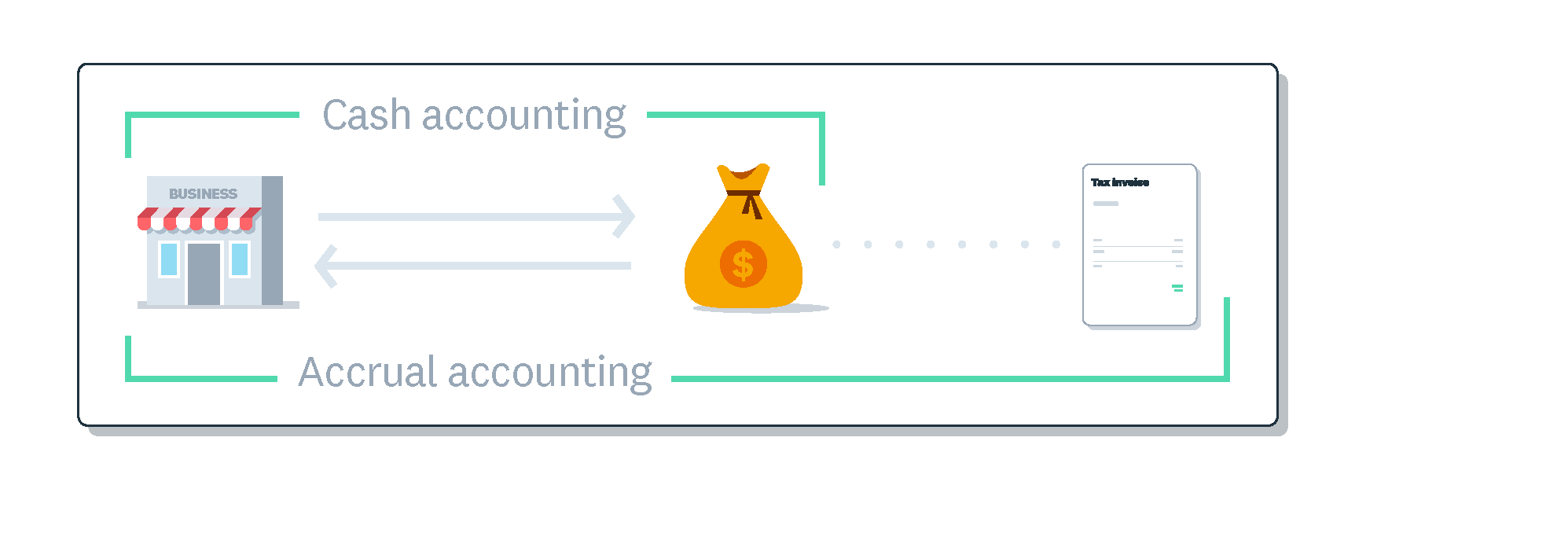
Cash accounting focuses only on cash changing hands, not outstanding bills or invoices.
Key takeaways
- Cash basis accounting records income and expenses when money changes hands. Accrual accounting records them when they are earned or owed, regardless of payment timing.
- Indonesian tax law (Article 28 of the KUP Law) lets you keep books on either the cash basis (stelsel kas) or the accrual basis (stelsel akrual), as long as you apply your chosen method consistently.
- Cash accounting is simpler and shows your real-time cash position, while accrual accounting gives a fuller picture of your financial health over time.
- If your business is growing, carries inventory, or needs financing, accrual accounting is usually the better long-term fit.
What is cash basis accounting?
Cash basis accounting records revenue when you receive payment and expenses when you pay them. It is the simpler of the two methods and focuses on actual cash flowing in and out of your business.
Most freelancers, sole proprietors, and small service businesses start with cash basis accounting. It is straightforward and does not require tracking unpaid invoices or bills separately. Under Indonesian tax law, cash basis is commonly used by small individual businesses and short-cycle service businesses such as transport, entertainment, and restaurants.
Here is a quick example. Say you are a freelance designer and you finish a Rp 50 million project in March, and your client pays you in April. With cash accounting, you would record that Rp 50 million as April income, because that is when the money reached your bank account.
The same logic applies to expenses. If you buy Rp 5 million in software in June but pay the bill in July, you would record the expense in July.
What is accrual accounting?
Accrual accounting records revenue when you earn it and expenses when you incur them, even if no money has changed hands yet. It gives you a fuller picture of your financial commitments at any point in time.
Growing businesses, companies that carry inventory, and businesses seeking loans or investment typically use accrual accounting. It is also the basis that Indonesia's accounting standards for small and medium entities (SAK EMKM) are built on, and the one most lenders expect to see.
Using the same example: you finish a Rp 50 million design project in March and get paid in April. With accrual accounting, you would record the Rp 50 million as March income, because that is when you earned it. The payment date does not change when the revenue is recognised.
For expenses, that Rp 5 million software purchase in June gets recorded in June, even if you do not pay until July. Your books reflect the obligation as soon as it exists.
Cash vs accrual accounting: key differences
The core difference between cash and accrual accounting comes down to timing. Here is how they compare across the areas that matter most.
Timing of revenue and expense recognition
The biggest difference is when each method records a transaction.
- Cash basis records transactions when money is received or paid
- Accrual basis records transactions when they are earned or incurred
- This timing gap can create very different financial snapshots of the same business
Financial accuracy
Each method paints a different picture of how your business is performing, which is why your choice affects the numbers in your financial statements.
- Cash basis shows your actual bank balance but may miss money you are owed or bills you have not paid
- Accrual basis gives a more complete view of profitability by matching revenue with the expenses that created it
- Accrual is generally seen as more accurate for measuring business performance over time
Bookkeeping complexity
The two methods require different levels of bookkeeping effort.
- Cash basis is simpler to set up and maintain, especially for small businesses without an accountant
- Accrual basis relies on double-entry bookkeeping to track receivables, payables, and adjusting entries
- Cloud accounting software like Xero makes accrual accounting much easier to manage day to day
Tax implications in Indonesia
Your accounting method affects how you calculate profit, but it does not change every tax you pay.
- Small businesses on the 0.5% final income tax (PPh Final) are taxed on gross turnover, so the choice between cash and accrual does not change that calculation
- Businesses taxed on net profit still need accurate income and expense timing, which accrual handles well
- Whichever method you use, you must still account for inventory and cost of goods sold when working out taxable income
Reporting standards
Your method also affects whether your financials meet Indonesia's reporting standards, known as Standar Akuntansi Keuangan (SAK) and set by the Indonesian Institute of Accountants.
- Indonesia uses a tiered SAK framework rather than a single standard: full SAK for listed companies, SAK for private entities, and SAK EMKM for micro, small, and medium entities
- SAK EMKM financial statements are prepared on the accrual basis
- Businesses seeking outside investment or loans usually need accrual-based, standards-compliant financials
Pros and cons of cash accounting
Cash accounting has clear strengths for small and simple businesses, though it also has limits that can hold you back as you grow.
Advantages of cash accounting
Cash accounting keeps things simple for day-to-day operations.
- Simple to set up and maintain with minimal bookkeeping knowledge
- Shows exactly how much cash you have right now
- Gives you some flexibility on timing by controlling when you receive payments or pay bills
- Works well for businesses with straightforward, pay-as-you-go transactions
Disadvantages of cash accounting
The simplicity of cash accounting comes with some trade-offs.
- Does not show money your customers owe you or bills you have not paid yet
- Can make profitable months look unprofitable, and the reverse, depending on payment timing
- Gives a limited basis for the standards-compliant financials that lenders and partners often want
- Harder to plan ahead because your books do not reflect future financial commitments
Pros and cons of accrual accounting
Accrual accounting gives you a more detailed financial picture, though it does come with added complexity.
Advantages of accrual accounting
Accrual accounting offers benefits that support long-term growth.
- Matches revenue with the expenses that generated it, giving a truer view of profitability
- Aligns with Indonesia's SAK standards, which investors, lenders, and partners often require
- Makes it easier to spot trends and plan for the future
- Scales with your business as transactions get more complex
Disadvantages of accrual accounting
Accrual accounting does require more hands-on management.
- More complex to set up and maintain, especially without accounting software
- Your profit and loss statement might show strong revenue while your bank balance is low
- Requires tracking receivables and payables, plus period-end adjustments
- May need professional help to manage correctly, which can add to your costs
What is modified cash basis accounting?
Modified cash basis is a hybrid method that blends elements of both approaches. It suits businesses that want simple day-to-day records with a bit more structure for bigger items.
It typically records everyday transactions on a cash basis, while using accrual methods for longer-term items like fixed assets and loans. Some small businesses find it a practical middle ground, but check with your accountant about whether it fits your reporting and tax obligations, since it does not fully meet SAK standards.
How to choose the right accounting method
The right method depends on your business today and where you want it to go. Think about the following factors before you decide.
Business size and growth plans
Your stage of growth is often the starting point for the decision.
If you are a freelancer or sole proprietor with simple finances, cash basis is often enough. If you are planning to hire, expand, or take on bigger projects, accrual gives you a stronger foundation.
Inventory
Carrying stock usually pushes a business towards accrual accounting.
If your business buys and sells products, accrual accounting helps you track inventory and cost of goods sold properly. For tax purposes in Indonesia, you can value inventory using only FIFO (first in, first out) or the weighted average method, so consistent records matter.
Turnover and bookkeeping obligations
Indonesian tax rules tie your record-keeping obligations to your turnover and your business type.
Individual business owners with annual gross turnover (peredaran bruto) below IDR 4.8 billion can use simple recording (pencatatan) with the deemed-profit norm instead of full bookkeeping. Companies (WP Badan) must keep full bookkeeping (pembukuan) regardless of turnover, whichever basis they choose, and individual owners must switch to full bookkeeping once turnover passes IDR 4.8 billion.
Financing and investor expectations
Outside funding often sets the standard you need to meet.
Banks and investors typically want to see accrual-based financial statements. If you plan to apply for a loan, seek funding, or bring on partners, accrual accounting makes your financials more credible.
When to switch between cash and accrual accounting
Many small businesses start with cash accounting and move to accrual as they grow. Here are a few signs it might be time to make the change, and how to do it.
Signs it's time to switch
Watch for these indicators that cash accounting no longer fits your needs.
- You are carrying inventory and need to track cost of goods sold
- Your annual turnover is approaching IDR 4.8 billion, the point where full bookkeeping is required
- You are applying for business loans or looking for investors
- Your cash flow timing makes it hard to see true profitability
- You need standards-compliant financials for contracts or partnerships
How to make the switch
Changing your bookkeeping method in Indonesia is not a self-service election. Under Article 28 of the KUP Law, you must apply to the Director General of Tax (Direktur Jenderal Pajak) for approval before the start of the fiscal year in which the change takes effect.
Plan your switch at the start of a new tax year to keep things clean, and work with an accountant to adjust your opening balances so income and expenses are not double-counted or missed. You can find an advisor in the Xero advisor directory, and cloud accounting software can make the transition smoother by tracking receivables and payables from day one.
Track your finances with confidence using Xero
Whether you use cash or accrual accounting, the right software makes managing your books faster and easier. Xero gives you real-time visibility into your finances, automates everyday tasks like bank reconciliation and invoicing, and helps you run clear financial reports as your needs change. Start with Xero today and get one month free.
FAQs on cash vs accrual accounting
Here are answers to frequently asked questions about cash vs accrual accounting in Indonesia.
What basis of accounting does Indonesian tax law allow?
Article 28 of the KUP Law lets taxpayers keep books on either the cash basis (stelsel kas) or the accrual basis (stelsel akrual). You must apply your chosen method consistently from year to year.
Can you switch from cash to accrual accounting in Indonesia?
Yes, but you need prior written approval from the Director General of Tax, submitted before the start of the fiscal year the change applies to. It is best to plan the switch with an accountant so your opening balances carry over correctly.
What is modified cash basis accounting?
It is a hybrid that records everyday transactions on a cash basis but uses accrual methods for longer-term items like fixed assets and loans. It does not fully meet SAK standards, so confirm it suits your obligations before adopting it.
Do small businesses in Indonesia have to use accrual accounting?
Companies (WP Badan) must keep full bookkeeping (pembukuan) regardless of turnover, though they can use either the cash or accrual basis. Individual owners with annual turnover below IDR 4.8 billion can use simple recording instead, until their turnover passes that threshold.
Do banks prefer cash or accrual accounting?
Banks generally prefer accrual accounting when reviewing loan applications. Accrual-based financials give a more complete picture of your revenue, expenses, and overall financial health.
Which is better, cash or accrual accounting?
Neither is universally better; it depends on your size and goals. Cash basis suits simple businesses that want an easy view of cash on hand, while accrual suits growing businesses that carry inventory or need standards-compliant financials.
Related terms
Learn more about small business accounting
Handy resources
Advisor directory
You can search for experts in our advisor directory
Xero Small Business Guides
Discover resources to help you do better business
Financial reporting
Keep track of your performance with accounting reports
Disclaimer
This glossary is for small business owners. The definitions are written with their requirements in mind. More detailed definitions can be found in accounting textbooks or from an accounting professional. Xero does not provide accounting, tax, business or legal advice.