Basis of accounting
Learn when to record income and expenses with cash, accrual, or hybrid accounting methods.
Published Monday 17 August 2026
Table of contents
Key takeaways
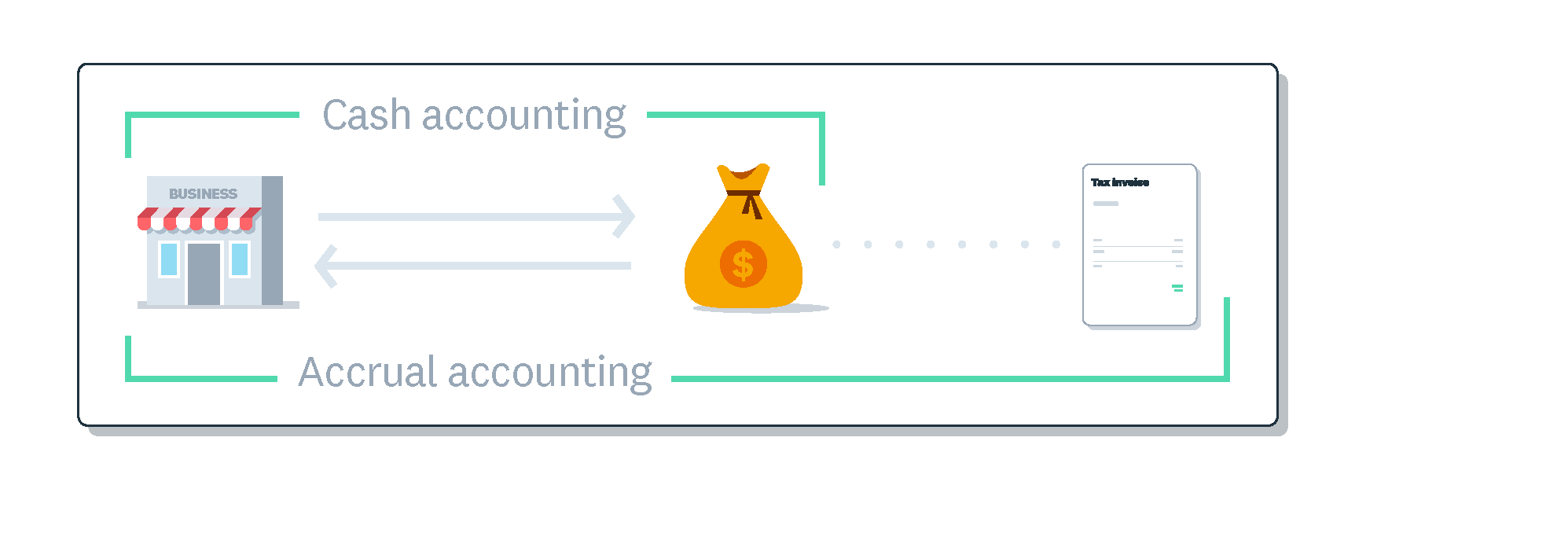
Basis of accounting determines the point at which you recognise transactions.
- A basis of accounting is the set of rules that determines when you record income and expenses in your books.
- Cash basis accounting records transactions when money changes hands, while accrual basis records them when they are earned or incurred.
- The hybrid (modified cash) basis combines elements of both methods and may have specific legal or tax requirements.
- Your choice affects financial reports, tax obligations, and how clearly you can see your business's true financial position.
What is a basis of accounting?
A basis of accounting is the method you use to decide when to record income and expenses in your financial records. It sets the rules for recognising revenue and costs in your books.
When you sell a product or service, there can be a gap between when you make the sale, when you deliver the goods, and when you receive payment. The same applies to expenses: you might receive supplies today but pay the invoice next month. Your basis of accounting determines which of these moments you use to record each transaction. This timing affects everything from your profit and loss reports to how much tax you owe.
The two main methods are cash basis and accrual basis. Some businesses use a hybrid approach. Each has different implications for how you manage your cash flow and report your finances.
Cash basis accounting
Cash basis accounting records income when you receive payment and expenses when you pay them. It focuses on when money actually moves in or out of your bank account.
For example, if you invoice a customer for Rp5,000,000 in March but receive payment in April, you record the income in April. If you receive a Rp2,000,000 bill in January but pay it in February, you record the expense in February.
Cash basis suits sole traders, freelancers, and small businesses with straightforward transactions and no inventory. It works well if your customers pay immediately or within short periods.
Pros:
- Simple to understand and maintain
- Shows actual cash available at any time
- Easier to manage without accounting software or expertise
- May allow you to time income and expenses to manage tax
Cons:
- Does not reflect money owed to you or bills you owe
- Can give a misleading picture of profitability
- May not meet reporting requirements for larger businesses
- Less useful for planning if you have credit sales or delayed payments
Accrual basis accounting
Accrual basis accounting records income when you earn it and expenses when you incur them, regardless of when cash changes hands. This approach follows the revenue recognition principle (recording income when the sale is made) and the matching principle (recording related expenses in the same period as the income they helped generate).
For example, if you deliver a service worth Rp10,000,000 in June and invoice the customer, you record the income in June, even if payment arrives in August. If you receive Rp3,000,000 worth of supplies in May on credit, you record the expense in May, even if you pay in July.
Accrual basis is common among businesses that carry inventory, offer credit terms, or need to present financial statements to lenders or investors. It gives a more complete view of your financial position over time.
Pros:
- Provides a clearer picture of profitability and financial health
- Matches income with related expenses in the same period
- Required by many tax authorities for businesses above certain thresholds
- Preferred by banks, investors, and stakeholders reviewing your finances
Cons:
- More complex to manage and requires careful tracking
- Does not show actual cash on hand
- Risk of reporting profits while cash is still outstanding
- May require professional accounting support
If you are new to bookkeeping, understanding the difference between cash and accrual methods is an important first step.
Hybrid (modified cash) basis accounting
The hybrid (or modified cash) basis combines elements of both cash and accrual accounting. A business might use cash basis for everyday income and expenses, but accrual basis for long-term assets or liabilities.
Rules for hybrid accounting vary by jurisdiction, and not all tax authorities accept it. It can be legally complex, so speak to an accountant or tax adviser before using this method. They can help you understand whether it is permitted for your business and how to apply it correctly.
Cash vs accrual: the key differences
Here is a summary of the main distinctions between cash and accrual accounting:
- Timing: Cash basis records transactions when payment occurs; accrual basis records them when earned or incurred.
- Liquidity view: Cash basis shows actual money in your account; accrual basis includes amounts owed to and by you.
- Profitability view: Accrual gives a truer picture of profit over time; cash basis may show uneven results.
- Complexity: Cash basis is simpler; accrual requires more detailed tracking, often using double-entry bookkeeping.
- Reporting and tax: Some tax authorities or stakeholders require accrual basis for larger or more complex businesses.
For a detailed comparison, see the guide on cash basis vs accrual basis accounting.
How to choose the right basis for your business
The right basis depends on your business size, complexity, and local requirements.
Consider cash basis if you are a sole trader or small business with simple transactions, no inventory, and customers who pay immediately. It is easier to maintain and gives a clear view of available cash.
Consider accrual basis if you carry inventory, offer credit terms, or plan to seek finance from banks or investors. It provides a more accurate view of profitability and is often required for businesses above a certain size or revenue.
Check your tax authority's requirements. Some jurisdictions mandate accrual accounting for businesses that exceed specific thresholds or operate in regulated industries. Your accountant can advise on which method meets local rules and suits your business needs.
Getting the basics of small business accounting right from the start makes managing your finances easier as you grow.
How your basis of accounting affects tax
Your basis of accounting affects when you report income and claim deductions, which in turn affects how much tax you owe each period.
With cash basis, you only pay tax on money you have actually received. This can help with cash flow, especially if customers are slow to pay. With accrual basis, you may owe tax on income you have invoiced but not yet collected.
Many tax authorities require accrual accounting for businesses above a certain size or with particular structures. Lenders and investors also tend to prefer accrual-based financial statements because they give a fuller picture of financial health.
Always confirm the requirements with your tax authority or accountant. Switching methods after you have started may require approval and could affect your reported results.
Simplify your accounting method with Xero
Whether you use cash or accrual accounting, keeping accurate records saves time and helps you stay on top of your tax obligations. Xero brings your income, expenses, and reports together in one place, so you can see where your business stands. Ready to get started? Get one month free and see how Xero can support your business finances.
FAQs on basis of accounting
Below are answers to common questions about choosing and using an accounting basis.
Which basis of accounting should a small business use?
Most small businesses with straightforward transactions start with cash basis because it is simpler. If you carry inventory, offer credit terms, or need financial statements for lenders, accrual basis is usually more appropriate.
Can I switch from cash basis to accrual basis?
Yes, but switching methods may require approval from your tax authority and adjustments to your records. Speak to an accountant before making the change to understand the implications for your tax and reporting.
Do I have to use the same basis for bookkeeping and tax?
In many cases, you must report tax using the same basis you use for your books. However, some jurisdictions allow different methods for internal records and tax filings. Check with your accountant or tax authority for the rules that apply to you.
Is cash or accrual accounting better?
Neither is universally better. Cash basis is simpler and shows actual cash on hand; accrual basis gives a more accurate view of profitability. The right choice depends on your business type, size, and regulatory requirements.
What is the modified cash basis?
The modified (or hybrid) cash basis blends cash and accrual methods. It typically uses cash basis for day-to-day transactions and accrual for certain items like fixed assets. Rules vary, so consult an accountant to see if it is allowed in your jurisdiction.
Related terms
Learn more about basis of accounting
Handy resources
Advisor directory
You can search for experts in our advisor directory
How to do bookkeeping
Learn about data entry, bank rec, reporting and tax prep in our guide to doing bookkeeping.
Online accounting with Xero
Automate your accounting in the cloud
Disclaimer
This glossary is for small business owners. The definitions are written with their requirements in mind. More detailed definitions can be found in accounting textbooks or from an accounting professional. Xero does not provide accounting, tax, business or legal advice.