Trial balance: What it is, how to prepare one and why it matters
A trial balance helps you catch errors and keep your books on track. Learn how to prepare one and why it matters.

Written by Jotika Teli—Certified Public Accountant with 24 years of experience. Read Jotika's full bio
Published Wednesday 22 April 2026
Table of contents
Key takeaways
- Prepare three distinct trial balances throughout your accounting cycle: an unadjusted trial balance to capture raw transaction data, an adjusted trial balance to reflect corrections for accruals and deferrals, and a post-closing trial balance to confirm your books are ready for the next period.
- Recognize that a balanced trial balance does not guarantee error-free books — you must still review for missing transactions, duplicate entries, and misclassified accounts that won't affect whether your debit and credit columns match.
- Use your adjusted trial balance as the foundation for preparing financial statements like balance sheets and income statements, ensuring your figures are mathematically correct before tax filings or audits.
- Use accounting software to automate trial balance preparation, reduce manual transcription errors, and get real-time access to accurate financial data without the time-consuming process of checking figures by hand.
Key takeaways
Prepare three distinct trial balances throughout your accounting cycle:
- Unadjusted: captures raw transaction data
- Adjusted: reflects corrections for accruals and deferrals
- Post-closing: verifies your books are ready for the next period
A balanced trial balance only confirms debits equal credits. You must still review for missing transactions, transcription errors, and misclassified accounts that won't show up in the totals.
Use trial balances as the foundation for preparing balance sheets, income statements, and other financial reports. Verify your books are mathematically correct before creating formal reports for tax compliance or audits.
Accounting software automates trial balance preparation and reduces manual errors. You get real-time access to accurate financial data without common transcription mistakes.
What is a trial balance?
A trial balance is a financial report that lists all account balances from your general ledger at a specific point in time. It verifies that your debits equal your credits before you prepare financial statements.
This report acts as a safety check for your books. It helps you catch errors early and gives you confidence that your financial data is accurate before tax time or audits.
Components of a trial balance
A trial balance uses a simple three-column layout:
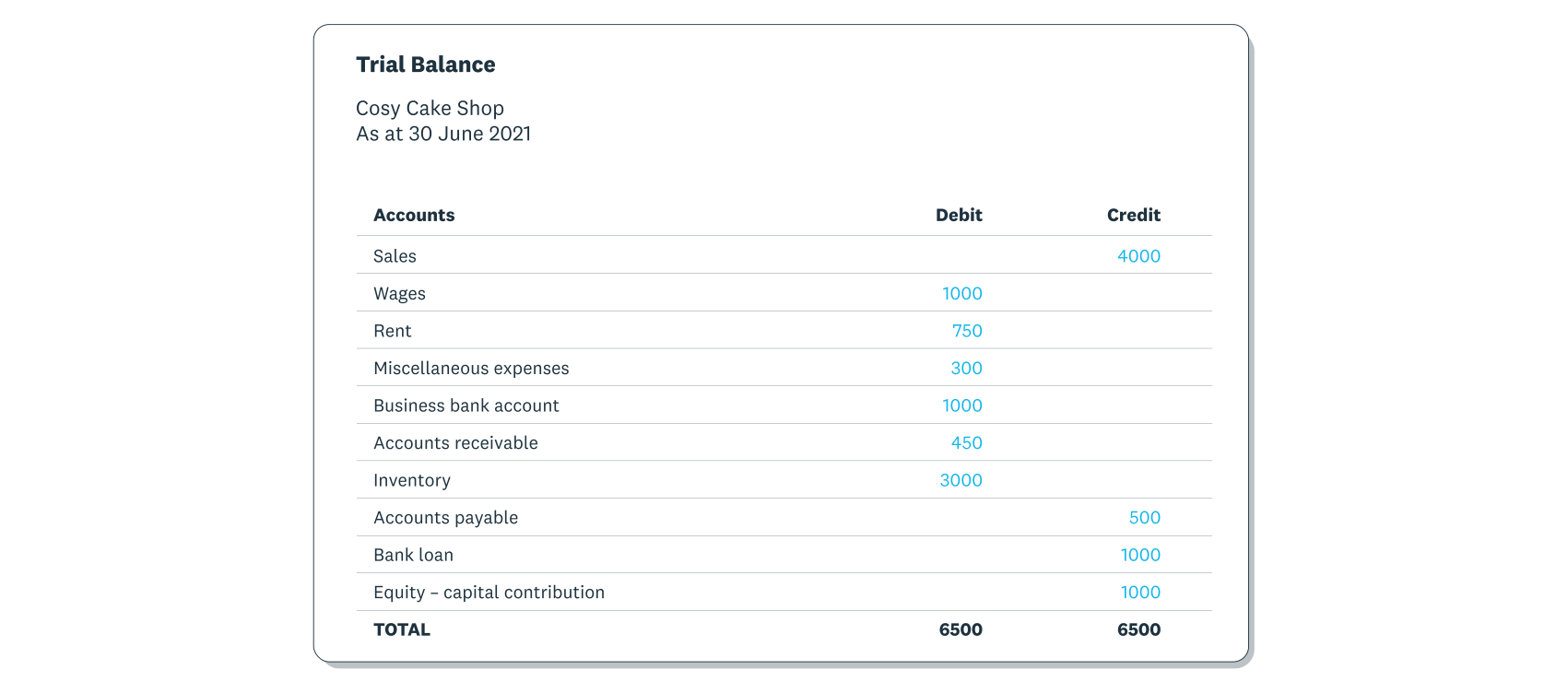
- Account names: enter all active accounts from your chart of accounts in the left column
- Debit balances: enter assets and expense account balances in the middle column
- Credit balances: enter liabilities, equity, and income account balances in the right column
The totals of the debit and credit columns should match.
Trial balance example
Here's an example of the trial balance format. It shows the closing balances of all accounts in the general ledger at the end of a financial period. Note that a fiscal period can't be longer than 53 weeks.
The account names go in the far left column. Enter all debit balances from the general ledger in the "Debit" column and all credit balances in the "Credit" column. As you can see, the debit and credit columns total the same amount.
The purpose of a trial balance
A trial balance verifies your books are mathematically accurate before you prepare financial statements. It confirms that every debit has a matching credit in your double-entry accounting system.
Preparing a trial balance helps you:
- catch errors early: spot transcription mistakes, missing entries, or calculation errors before they affect your reports
- save time at month-end: identify problems while they're fresh and easier to trace
- build confidence in your data: know your financial statements rest on accurate figures
- prepare for audits: give auditors a clear starting point for reviewing your books
Without a trial balance, errors can carry through to your income statement and balance sheet. This can lead to poor business decisions or incorrect tax filings. Corporations must submit tax filings within six months of the end of their fiscal period.
How to prepare a trial balance
Preparing a trial balance takes your general ledger data and organizes it into a format that reveals whether your books are in balance. Here's how to create one:
- Gather your general ledger: pull the ending balances for all accounts at your chosen date
- List each account: write account names in the left column, organized by type (assets, liabilities, equity, revenue, expenses)
- Enter debit balances: record balances for assets and expenses in the debit column
- Enter credit balances: record balances for liabilities, equity, and revenue in the credit column
- Total each column: add up all debits and all credits separately
- Compare the totals: if debits equal credits, your trial balance is complete. If not, review your entries for errors
This process produces an unadjusted trial balance. You'll then make adjusting entries for accruals, deferrals, and depreciation before creating your adjusted trial balance.
Types of trial balances
The three types of trial balances are unadjusted, adjusted, and post-closing. Each serves a specific purpose at different stages of your accounting cycle:
- unadjusted trial balance: shows raw data before any corrections
- adjusted trial balance: includes corrections and is used for financial statements
- post-closing trial balance: verifies your books are ready for the next period
Unadjusted trial balance
An unadjusted trial balance captures your raw transaction data before any corrections. This is your starting point for closing your books each period.
You'll then make adjustments for:
- accruals: unpaid bills or earned but uncollected income
- deferrals: income or expenses that belong to different periods
- depreciation: asset costs spread over multiple years
For most businesses in Canada, accrual accounting is required. You must report business income using the accrual method of accounting. However, specific groups like farmers, fishers, and commission agents can use the cash method instead. These adjustments give you a more accurate picture of your financial position.
Adjusted trial balance
An adjusted trial balance summarizes the final balances in all accounts after you've made corrections for accruals, deferrals, and depreciation. You prepare it after the unadjusted trial balance but before any other financial statements.
You (or your accountant) use this report to prepare your financial statements with accurate, corrected figures.
Post-closing trial balance
A post-closing trial balance verifies that all debit and credit balances are equal after you've closed your temporary accounts. You prepare it only after finalizing all financial statements.
Temporary accounts like revenue, expenses, and dividends move into your business's retained earnings as part of the closing process. This ensures a clear separation between old and new accounting periods.
The role of trial balances in financial statements
Trial balances serve as the foundation for your financial statements and audit processes. They verify that your books are mathematically correct before you create reports.
Your accountant and auditors use trial balances to:
- prepare financial statements: create balance sheets, income statements, and other reports
- verify accuracy: check that debit and credit column totals match
- identify errors: spot missing entries or transcription mistakes from the general ledger
Once your bookkeeper or accountant has corrected any mistakes, they can produce the adjusted trial balance and prepare your other financial statements. Even if totals match, you may still have issues such as missing transactions or incorrect account classifications.
Common trial balance errors
The three main types of trial balance errors are transcription errors, omission errors, and misclassification errors. Each can create serious problems for your business:
- transcription errors: mistyping amounts like $500 as $5,000
- omission errors: leaving transactions out completely
- misclassification errors: recording transactions in wrong accounts
Even small mistakes can distort your financial statements. Accurate records help you make confident decisions based on reliable data.
How to correct trial balance errors
Correcting trial balance errors is straightforward when you follow these steps:
- Double-check your numbers: review all amounts carefully and have someone else verify your work
- Verify source data: confirm your ledger figures are accurate before entering them
- Use accounting software: tools like Xero prevent data entry errors and automate calculations
How accounting software simplifies trial balances
Accounting software automates trial balance preparation and eliminates common manual errors. Instead of spending hours checking figures, you get accurate reports in minutes.
Cloud-based tools like Xero streamline your financial reporting and give you real-time insights into your business performance. Learn more in our planning and performance guide for accountants. You can prepare trial balances with confidence, knowing your debits and credits are automatically calculated and verified.
FAQs on trial balances
Here are answers to common questions about trial balances.
What's the difference between a trial balance and a balance sheet?
A trial balance lists all account balances to verify debits equal credits. A balance sheet is a formal financial statement that shows your assets, liabilities, and equity at a specific point in time. You create the balance sheet from your adjusted trial balance.
How often should I prepare a trial balance?
Prepare a trial balance at the end of each accounting period, typically monthly, quarterly, or annually. Many businesses create monthly trial balances to catch errors early and maintain accurate financial records.
Can a trial balance have errors even when it balances?
Yes. A balanced trial balance only confirms that debits equal credits. You can still have missing transactions, duplicate entries, or misclassified accounts that won't affect whether the columns balance.
Do I need accounting software to create a trial balance?
No, but accounting software makes the process faster and more accurate. Manual trial balances require careful calculation and checking. Software automatically generates trial balances from your general ledger and reduces the risk of transcription errors.
Disclaimer
Xero does not provide accounting, tax, business or legal advice. This guide has been provided for information purposes only. You should consult your own professional advisors for advice directly relating to your business or before taking action in relation to any of the content provided.
Start using Xero for free
Access Xero features for 30 days, then decide which plan best suits your business.