B2B meaning: definition, examples, B2B vs B2C guide
Learn the B2B meaning to find better customers, speed up sales, and grow your revenue.
Written by Shaun Quarton—Accounting & Finance Content Writer and Growth Marketer. Read Shaun's full bio
Published Tuesday 24 February 2026
Table of contents
Key takeaways
- Recognize that B2B transactions follow a structured five-step process: initial contact, negotiation, implementation, payment, and ongoing support to build successful business partnerships.
- Leverage B2B partnerships to reduce operational costs by 20–40% through shared resources, bulk purchasing power, and outsourcing specialized functions to expert providers.
- Build long-term relationships with multiple decision-makers since B2B sales cycles typically span 3–12 months and nearly half of B2B companies have three to five people on their buying teams.
- Access new technologies and industry insights through B2B collaborations to scale your business faster without heavy upfront investment or expanding your infrastructure.
Business-to-business definition
B2B (business-to-business) refers to companies selling products or services to other businesses rather than individual consumers. This model lets you focus on your core strengths while partnering with specialists for other functions.
B2B partnerships help you work more efficiently and save costs. For example, Xero accounting software helps businesses manage finances more efficiently, freeing up time for core operations.
How the B2B model works
The B2B model involves trading goods, services, or knowledge between businesses rather than selling directly to consumers. When businesses transact, they typically follow a structured process with multiple stakeholders.
Transactions in a B2B model
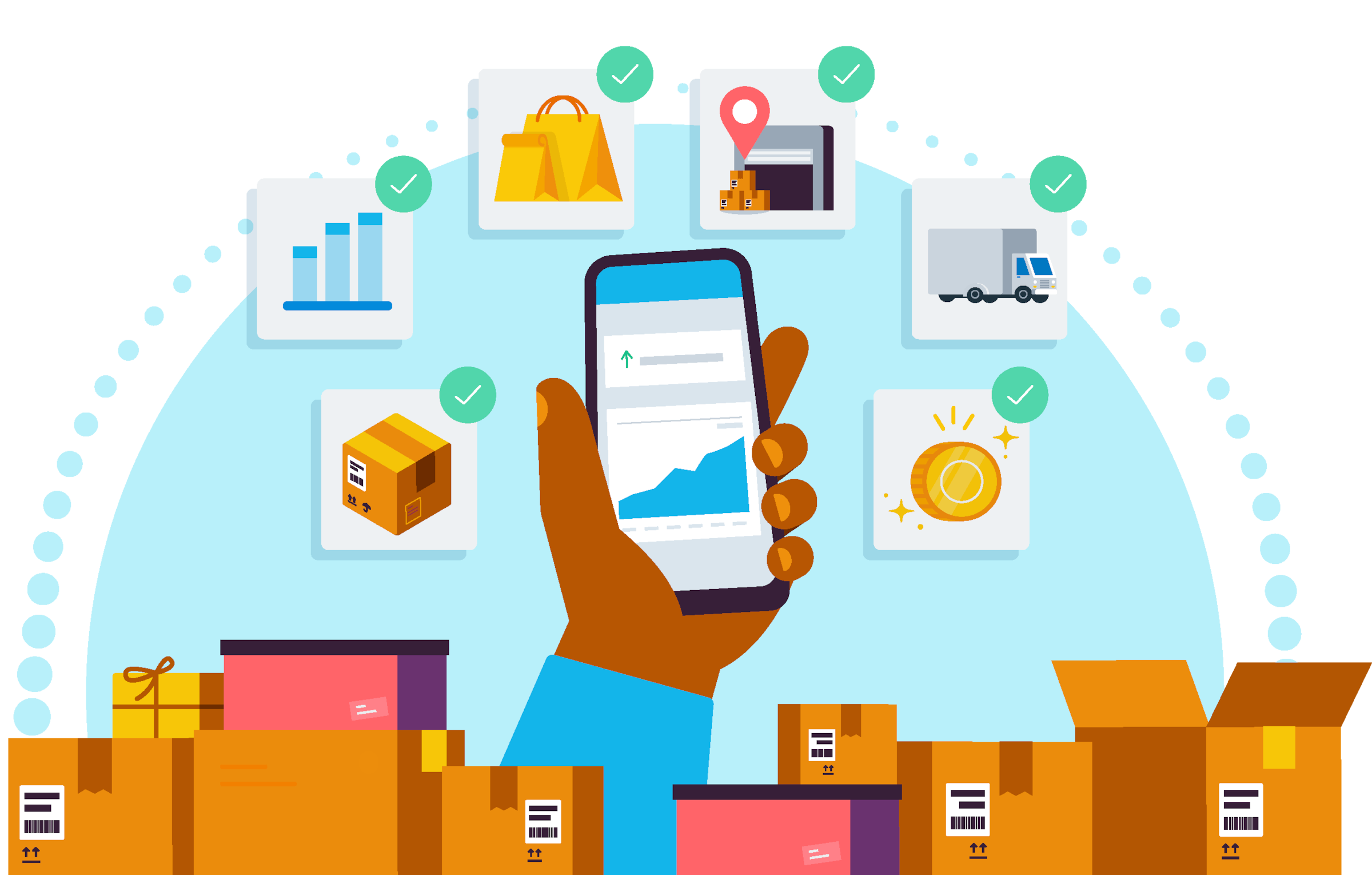
B2B transactions typically follow a five-step process:
- Initial contact: Identify your needs and reach out to potential suppliers.
- Negotiate: Agree on pricing, terms, and service levels.
- Implement: Receive products or services as specified.
- Payment: Process invoices according to agreed terms (such as net 30 days).
- Ongoing support: Maintain the relationship through regular service, updates, and reviews.
For example, a restaurant chain seeking catering equipment would contact suppliers, negotiate volume discounts, arrange installation and training, pay within agreed terms, and schedule regular maintenance.
B2B e-commerce
B2B e-commerce refers to online transactions between businesses, from ordering supplies to purchasing software subscriptions. Digital platforms have transformed how companies buy and sell, with one Gartner report predicting that 80% of B2B sales will occur through digital channels by 2025.
Today, research from McKinsey shows 71% of B2B businesses offer e-commerce options, with online sales projected to account for 34% of total revenue. These platforms help you automate orders, simplify how you procure goods, and reduce manual work.
Examples of B2B companies and industries
B2B companies operate across every industry. Here are common examples:
- Manufacturing and distribution: Source raw materials, components, and equipment to create finished products.
- Software and technology: Provide cloud computing, development tools, cybersecurity, and SaaS platforms (such as Xero and HubSpot).
- Financial services: Offer business consulting, payment processing, and financial analysis (such as Stripe and Accenture).
- Healthcare: Collaborate on patient referrals, share health data, and purchase specialised equipment.
- Education: Partner with technology providers and publishers to create learning resources and online platforms.
Types of B2B businesses
B2B businesses fall into several main categories based on what they provide:
- Producers: Make products that other businesses use as components (such as microchip manufacturers).
- Distributors and wholesalers: Buy finished goods in bulk and resell to retailers.
- Service providers: Offer professional services like accounting software, marketing, or consulting.
- Government suppliers: Provide goods and services to government agencies and institutions.
B2B vs B2C: what's the difference?
B2B (business-to-business) companies sell to other businesses, while B2C (business-to-consumer) companies sell directly to individual customers. Understanding how they differ helps you identify your business model and choose the right strategies.
Key differences between B2B and B2C
Here are the key differences between B2B and B2C:
Sales cycle:
- B2B: 3–12 months with multiple decision-makers, as research shows nearly half of B2B companies have three to five decision-makers on their buying teams
- B2C: Minutes to days with individual buyers
Customer relationships:
- B2B: Long-term partnerships with dedicated account management, which is crucial as nurtured leads are known to make 47% larger purchases
- B2C: Brand loyalty through marketing and emotional connection
Purchase motivation:
- B2B: ROI, efficiency, and business outcomes
- B2C: Personal preferences, emotions, and price
Examples of B2C companies include Apple, Ikea, Sony, and Netflix.
B2B vs B2C in practice
Here's how B2B and B2C differ in practice:
- B2B example: Xero provides accounting software to businesses with features like payroll management and financial reporting. Selling includes demos, free trials, and ongoing support.
- B2C example: Mint offers personal budgeting tools with a focus on simplicity and immediate value for individual users.
Why B2B matters for your business
B2B partnerships help small businesses lower costs and grow faster. Here's how these relationships benefit your bottom line.
Increase efficiency and productivity
B2B partnerships help you automate manual tasks and centralise business processes. The right tools and supplier partnerships free your team to focus on higher-value work.
Key benefits include:
- Reduced workload: Automate routine tasks to free up time.
- Better collaboration: Centralise systems to connect your teams.
- Faster decisions: Access real-time data when you need it.
For example, project management software centralises task tracking, file sharing, and team communication in one platform, reducing email chains and missed deadlines.
Reduce costs and improve profits
B2B partnerships reduce costs through shared resources and bulk purchasing power, often cutting expenses by 20–40%. Even reducing costs slightly can have a major impact; one procurement expert noted that reducing costs by 1% increased the company's profit by 20%.
Here are some cost-saving strategies:
- Rent equipment: Access expensive machinery without large capital investment.
- Share services: Split costs for specialised expertise with other businesses.
- Buy in volume: Get better pricing through combined purchasing power.
For example, a construction firm rents excavators for S$850 per week instead of purchasing for S$85,000, saving capital and maintenance costs.
Scale your business faster
B2B partnerships help you scale efficiently by outsourcing specialised functions to businesses that are more expert in those areas. You can grow without adding headcount or infrastructure.
For example, an eCommerce store uses a fulfilment centre to handle order surges without expanding its warehouse.
Access innovation and stay competitive
Collaborating with B2B partners lets you access new technologies and emerging trends, and gain industry insight without investing heavily upfront. SaaS providers, for example, release regular updates so you always have the latest tools.
Build valuable partnerships
Long-term B2B partnerships help both parties benefit and build trust. McKinsey research shows 44% of B2B businesses cite strong relationships as a driver of sustainable growth.
For example, a SaaS company offering white-labelled software trains its partner's sales team, strengthening both companies' market positions.
Managing your B2B finances with Xero
Whether you're selling to businesses or buying from suppliers, keeping your finances organised is essential for B2B success. Invoicing clearly, paying on time, and reporting in real time help you build trust with partners.
Xero helps B2B businesses manage their finances. Key features include:
- Automated invoicing: Save time on repetitive billing tasks.
- Real-time reporting: Get better visibility into cash flow.
- Seamless integrations: Connect with your existing business tools.
See how easy B2B financial management can be with Xero. Get one month free.
FAQs on B2B
Here are answers to common questions about B2B businesses.
What exactly does B2B mean?
B2B stands for business-to-business. It describes commercial transactions between companies rather than sales to individual consumers.
How do I know if my business is B2B or B2C?
Ask yourself who pays for your product or service. If other businesses are your primary customers, you're B2B. If individuals buy for personal use, you're B2C. Some businesses serve both.
Can a business be both B2B and B2C?
Yes. Many companies sell to both businesses and consumers. For example, a printer manufacturer might sell directly to consumers online while also supplying office equipment retailers.
What's an example of a B2B transaction?
A restaurant buying ingredients from a food wholesaler is a B2B transaction. The wholesaler sells to the restaurant (a business), not to individual diners.
Do B2B businesses need specialised accounting software?
B2B businesses often benefit from accounting software that handles invoicing, tracks payments across multiple clients, and manages longer payment terms. Features like automated reminders and real-time reporting help you stay on top of cash flow.
Start using Xero for free
Access Xero features for 30 days, then decide which plan best suits your business.