How to find a supplier for dropshipping and vet them
Find the right dropshipping supplier to save time, cut risk, and keep orders flowing on time and on budget.
Written by Jotika Teli—Certified Public Accountant with 24 years of experience. Read Jotika's full bio
Published Wednesday 1 April 2026
Table of contents
Key takeaways
- Use online directories like SaleHoo, Spocket, or AliExpress to quickly find pre-vetted suppliers, as these platforms streamline the search process and often integrate directly with your ecommerce store.
- Verify supplier legitimacy by checking they charge per order rather than monthly subscription fees, have verifiable business addresses, and provide transparent pricing structures before committing to any partnership.
- Order product samples and place small test orders to evaluate quality, packaging, and fulfilment processes firsthand before listing items in your store.
- Consider supplier location carefully, as overseas suppliers may extend delivery times by two to four weeks, which could impact customer satisfaction if fast shipping matters to your target market.
Key takeaways
- Dropshipping suppliers handle storage, packaging, and shipping so you can sell products without holding inventory
- Use online directories like SaleHoo, Spocket, or AliExpress to find pre-vetted suppliers quickly
- Evaluate suppliers by checking reviews, ordering samples, and verifying their business legitimacy
- Consider supplier location, as overseas suppliers may extend delivery times by two to four weeks
- Build strong supplier relationships through clear communication, flexibility, and professional conduct
What are dropshipping suppliers and companies?
Dropshipping is a low-cost ecommerce model where you sell products without holding inventory. While the strategy was first used in the 19th century, e-commerce popularised it and allowed third-party suppliers to handle storage, packaging, and shipping directly to your customers.
You focus on what matters most: building your storefront, managing sales, and marketing your products online.
While the concept is straightforward, outsourcing fulfilment requires careful supplier selection. Reliable suppliers help ensure timely shipping, quality products, and strong customer relationships. One study found that 93% of procurement leaders saw better outcomes when they had accurate supplier information.
Finding the right dropshipping supplier is one of the most important decisions you'll make when starting your business.
Dropshipping suppliers are businesses that store, package, and ship products directly to your customers on your behalf. They handle the physical fulfilment so you don't need to hold inventory.
Dropshipping companies (also called supplier directories or platforms) connect you to multiple suppliers and products in one place. They make it easier to browse, compare, and source products for your store.
Your supplier is your behind-the-scenes partner, handling everything from storage to delivery.
Here's how a typical dropshipping order works:
- A customer purchases a product from your store
- You forward the order details to your supplier
- The supplier packages and ships the product directly to the customer
- The customer receives the product with your branding
Dropshipping suppliers operate worldwide, giving you access to a broad range of products. However, choosing a supplier in a different country can extend delivery times significantly, sometimes by two to four weeks.
If fast shipping matters to your customers, prioritise suppliers located closer to your target market.
Types of dropshipping suppliers
Understanding the different types of suppliers helps you choose the right sourcing strategy for your business model and budget.
Manufacturers
Manufacturers produce the products themselves and sell directly to retailers or wholesalers. Working with manufacturers can offer lower per-unit costs.
- Pros: Lower prices, direct access to product source, potential for customisation
- Considerations: Often require bulk orders upfront, higher financial commitment when testing new products
Wholesalers
Wholesalers purchase products from manufacturers in bulk and resell them to retailers at a small markup. They don't make the products but maintain inventory.
- Pros: No minimum order requirements in many cases, lower commitment for testing products, established inventory
- Considerations: Higher per-unit costs than manufacturers, less control over product sourcing
Dropshipping directories and platforms
Dropshipping directories like SaleHoo and Spocket connect you to pre-vetted suppliers and products in one place. They simplify the search process and often integrate directly with ecommerce platforms.
- Pros: Access to thousands of suppliers, pre-vetted for reliability, platform integrations available
- Considerations: Monthly subscription fees, less direct supplier relationships, shared supplier base with competitors
How to find dropshipping suppliers
Finding reliable dropshipping suppliers requires exploring multiple channels. Here are the most effective methods:
- Online directories: Platforms like SaleHoo, Spocket, and Worldwide Brands list pre-vetted suppliers with product catalogues and shipping details. This is often the fastest way to get started.
- Search engines: Search for terms like "wholesale dropshipping," "dropshipping suppliers [your niche]," or "dropshipping suppliers [your region]" to find manufacturers and wholesalers who work with dropshippers.
- Third-party marketplaces: Browse Amazon, eBay, or Etsy for products in your niche. Sort by lowest price to identify potential suppliers, then research them to explore a direct relationship.
- Reverse engineering: Purchase from competitors you suspect are dropshipping. Check the return address on the package to identify their supplier.
- Trade shows and networking: Attend industry events to meet suppliers in person. Building personal relationships can lead to better pricing and priority service.
- Social media: Search LinkedIn, Facebook groups, and industry forums for supplier recommendations and reviews from other dropshippers.
Tips for contacting and negotiating with dropshipping suppliers
Building strong supplier relationships starts with clear communication and mutual respect. Here's how to approach negotiations:
- Research thoroughly: Check online reviews for product quality, shipping times, and customer service, even for suppliers listed in trusted directories.
- Communicate expectations clearly: State your requirements upfront, including order volumes, shipping standards, and response times.
- Stay flexible: Be firm on essentials but open to compromise on details. Finding common ground leads to better long-term partnerships.
- Propose a trial period: If you're not ready to commit long-term, suggest a trial arrangement to test product quality and reliability.
- Consider their perspective: Understand your supplier's profit margins and business constraints before negotiating on price.
- Be professional: Come prepared with your business details and treat all suppliers respectfully, whether you choose to work with them or not.
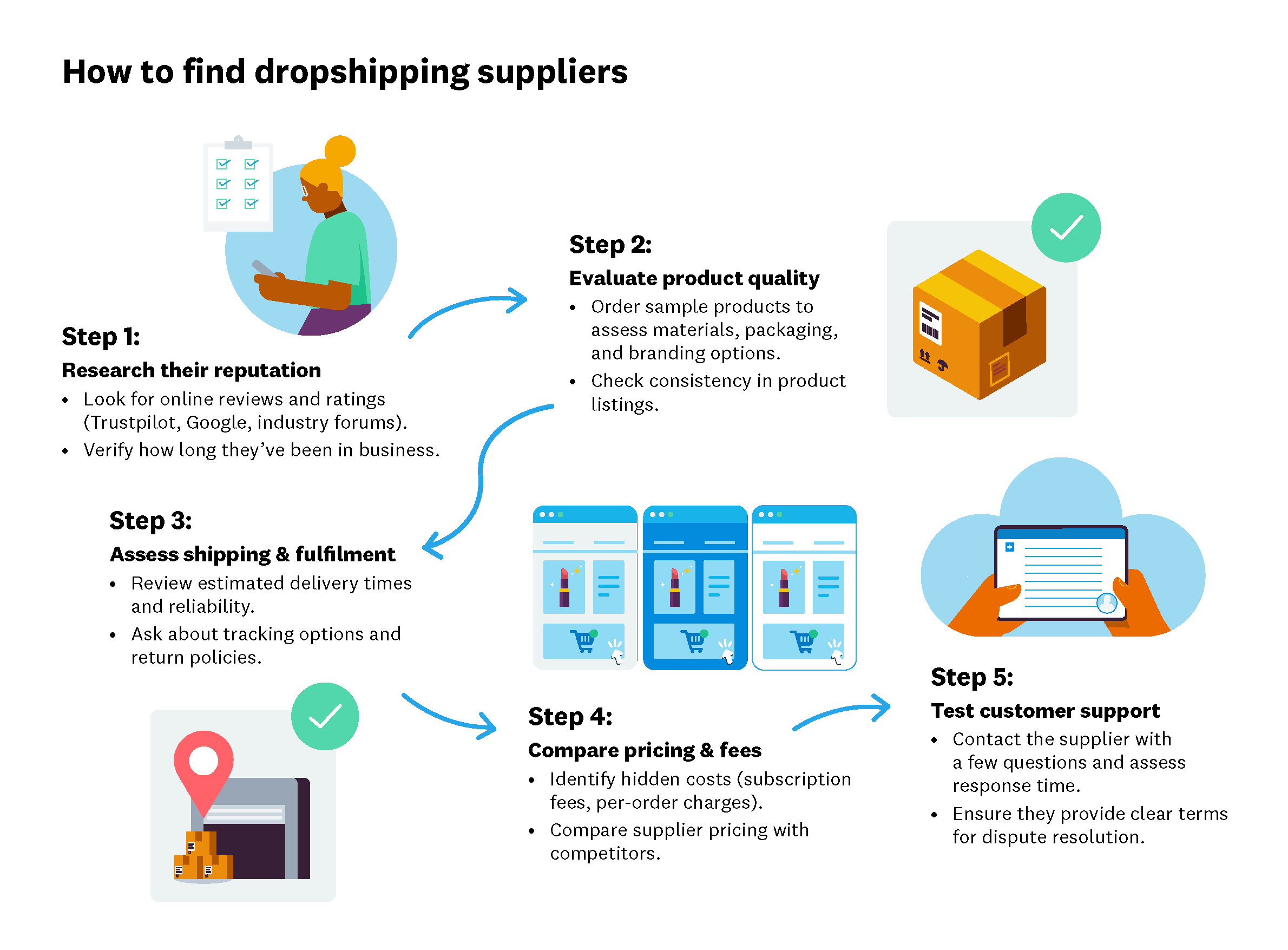
How to evaluate and vet dropshipping suppliers
Before committing to a supplier, verify their legitimacy and quality to protect your business and your customers. Taking time to vet suppliers upfront protects your investment, especially since research shows 86% of buyers will pay more for a great customer experience, which is heavily influenced by product quality.
Here are the characteristics of trustworthy suppliers.
Signs of legitimate suppliers
Trustworthy suppliers share certain characteristics that set them apart:
- Charge per order: Legitimate suppliers typically charge per order, not monthly subscriptions for basic access
- Sell to businesses only: Real wholesalers sell to businesses, not individual consumers
- Provide clear fee structures: Transparent pricing for products, shipping, and any handling charges
- Set minimum order requirements: Some suppliers require minimum purchases, which indicates they work with serious businesses
- Communicate professionally: Responsive customer service and clear documentation
What to verify before committing
Verify these aspects before partnering with any supplier:
- Fee structure: Confirm suppliers charge per order rather than monthly payments just to access their catalogue
- Business address: Confirm suppliers have physical locations you can verify
- Communication quality: Look for prompt responses and clear answers to direct questions
- References and reviews: Established suppliers have track records you can verify
- Pricing alignment: Prices should align with market rates, as this indicates authentic, quality products
How to test product quality
Before listing products in your store, verify quality firsthand:
- Order samples of products you plan to sell
- Assess packaging, product condition, and shipping time
- Test the product as your customer would use it
- Place a small test order to evaluate the fulfilment process
- Check that branding and invoicing match your requirements
Best dropshipping companies
Choosing the right dropshipping company depends on your product niche, target market, and ecommerce platform. Before committing, review customer feedback on product quality, shipping times, and supplier responsiveness.
Here's a comparison of popular dropshipping companies, including their strengths, limitations, and platform compatibility.
SaleHoo
SaleHoo offers two services: a supplier directory with over 8,000 pre-vetted suppliers, and a Shopify integration for direct product imports.
Here are the advantages:
Pros:
- Access wide product range: 2.5 million products across multiple categories
- Work with vetted suppliers: All suppliers are pre-screened for reliability
- Import flexibly: Import 500 products on Basic or unlimited on Premium
Here are the considerations:
Considerations:
- Choose from two plans: Only Basic and Premium tiers available
- Onboarding support: Dedicated account manager available on Premium plan only
- Trial period: Commitment required before testing the platform
Spocket
Spocket connects you to suppliers filtered by location, with a focus on US and EU-based options for faster shipping. You pay a monthly subscription plus product costs, with no commission fees.
Here are the advantages:
Pros:
- Order samples: Test product quality before listing items in your store
- Integrate with platforms: Works with Shopify, BigCommerce, WooCommerce, and Wix
- Work with verified suppliers: All suppliers are vetted for reliability
- Get 24/7 support: Chat support available on all plans
Here are the considerations:
Considerations:
- Note product limits: Starter plan restricts you to 25 unique products
- Supplier contact: Spocket manages all supplier communication on your behalf
AliExpress
AliExpress is a marketplace owned by Alibaba, offering access to over 100 million products from suppliers primarily based in China. As the most common wholesale site for dropshipping, it's popular for its low prices and variety, but requires careful supplier vetting.
Here are the advantages:
Pros:
- Pay-per-order model: Pay only for the products you order
- Integrate widely: Works with Shopify, WooCommerce, DSers, and other platforms
- Access low wholesale prices: Higher potential profit margins on each sale. For example, one case study of a store found a product sourced for $3.26 could be sold for $24.99.
Here are the considerations:
Considerations:
- Requires research: Finding quality products and reliable suppliers takes significant time
- Expect longer shipping times: Many suppliers ship from Asia, extending delivery by two to four weeks
- Vet suppliers carefully: Quality and reliability vary widely, so vetting is essential
Worldwide Brands
Worldwide Brands is a supplier directory established in 1999, offering access to verified wholesalers and over 16 million products. It's known for its rigorous supplier vetting process.
Here are the advantages:
Pros:
- Work with verified suppliers: All suppliers are screened for legitimacy and reliability
- Access large product catalogue: 16+ million verified wholesale products available
- Get lifetime access: One-time payment covers permanent membership
Here are the considerations:
Considerations:
- Requires upfront investment: US$299 one-time fee may be steep for new dropshippers
- Platform integrations: Manual product import required for Shopify, WooCommerce, and other ecommerce tools
- Consider shipping costs: US-based suppliers may charge extra for international delivery
Wholesale dropshipping
Wholesale dropshipping involves working directly with wholesalers rather than through a supplier directory. Wholesalers buy products from manufacturers in bulk at lower prices and maintain large product catalogues.
This approach suits established dropshippers with proven products and steady sales. By purchasing in bulk, you can negotiate better per-unit prices and improve your profit margins.
However, wholesale dropshipping requires more experience and capital. Many wholesalers require minimum order quantities, which means investing in stock before you know whether it will sell. If you're testing new products, starting with a directory-based supplier offers more flexibility.
Manage your dropshipping business with confidence
Finding the right dropshipping supplier sets the foundation for your business. Once you've established reliable supplier relationships, you'll need systems to track payments, manage cash flow, and monitor your margins.
FAQs on finding dropshipping suppliers
Still have questions about finding the right dropshipping supplier? Here are answers to common concerns.
How much does it cost to start dropshipping with a supplier?
Most dropshipping suppliers don't charge upfront fees. You pay for products as customers order them, plus any shipping costs. Some supplier directories charge monthly subscriptions ranging from $30 to $100, while others offer one-time lifetime access fees.
What should I verify when choosing a dropshipping supplier?
Look for suppliers who charge per order rather than monthly fees, have verifiable business addresses, respond promptly to enquiries, and offer prices aligned with market rates. These characteristics help you identify trustworthy partners.
Can I work with multiple dropshipping suppliers at once?
Yes, many successful dropshippers work with multiple suppliers to diversify their product range and reduce commitment. Using different suppliers for different product categories can also help you offer faster shipping options. However, be aware that if a customer orders products from different suppliers, it can lead to higher shipping costs and fragmented deliveries, which may affect customer satisfaction.
How long does it take to get approved by a dropshipping supplier?
Approval times vary by supplier. Directory-based platforms like SaleHoo or Spocket offer instant access after payment. Working directly with manufacturers or wholesalers may take one to two weeks while they verify your business details.
How can I maintain quality standards with my suppliers?
Communicate directly with your supplier first, documenting all correspondence. Keep backup suppliers ready so you can switch if needed. Regularly monitoring product quality and shipping times helps you maintain high standards for your customers.
Disclaimer
Xero does not provide accounting, tax, business or legal advice. This guide has been provided for information purposes only. You should consult your own professional advisors for advice directly relating to your business or before taking action in relation to any of the content provided.
Start using Xero for free
Access Xero features for 30 days, then decide which plan best suits your business.