What is a trial balance?
Learn what a trial balance is, its three types, and how to prepare one before your quarter-end close.

Written by Ebony-Storm Halladay — Freelance accounting copywriter, 10 years. Read Ebony's full bio
Published Friday 18 September 2026
Table of contents
Key takeaways
- A trial balance lists every account balance from your general ledger so you can check that total debits equal total credits
- It's a quick internal check that flags maths and posting mistakes before you build your financial statements
- You can run unadjusted, adjusted and post-closing versions at different points in your accounting cycle
- Accounting software builds the report automatically, saving you manual totting up ahead of the quarter-end close
What is a trial balance?
A trial balance is a report that lists the closing balance of every account in your general ledger at the end of an accounting period. It sorts those balances into debit and credit columns, so you can confirm the two sides agree before you prepare your financial statements.
Components of a trial balance
Every trial balance draws its account names from your chart of accounts, then sorts each balance into one of two columns. Here's what each part covers.
- Account names come from your chart of accounts and cover items such as cash, sales and accounts payable
- Debit balances hold your assets and expenses, like cash, equipment and rent paid
- Credit balances hold your liabilities, capital and income, like loans, owner's capital and sales
Trial balance example
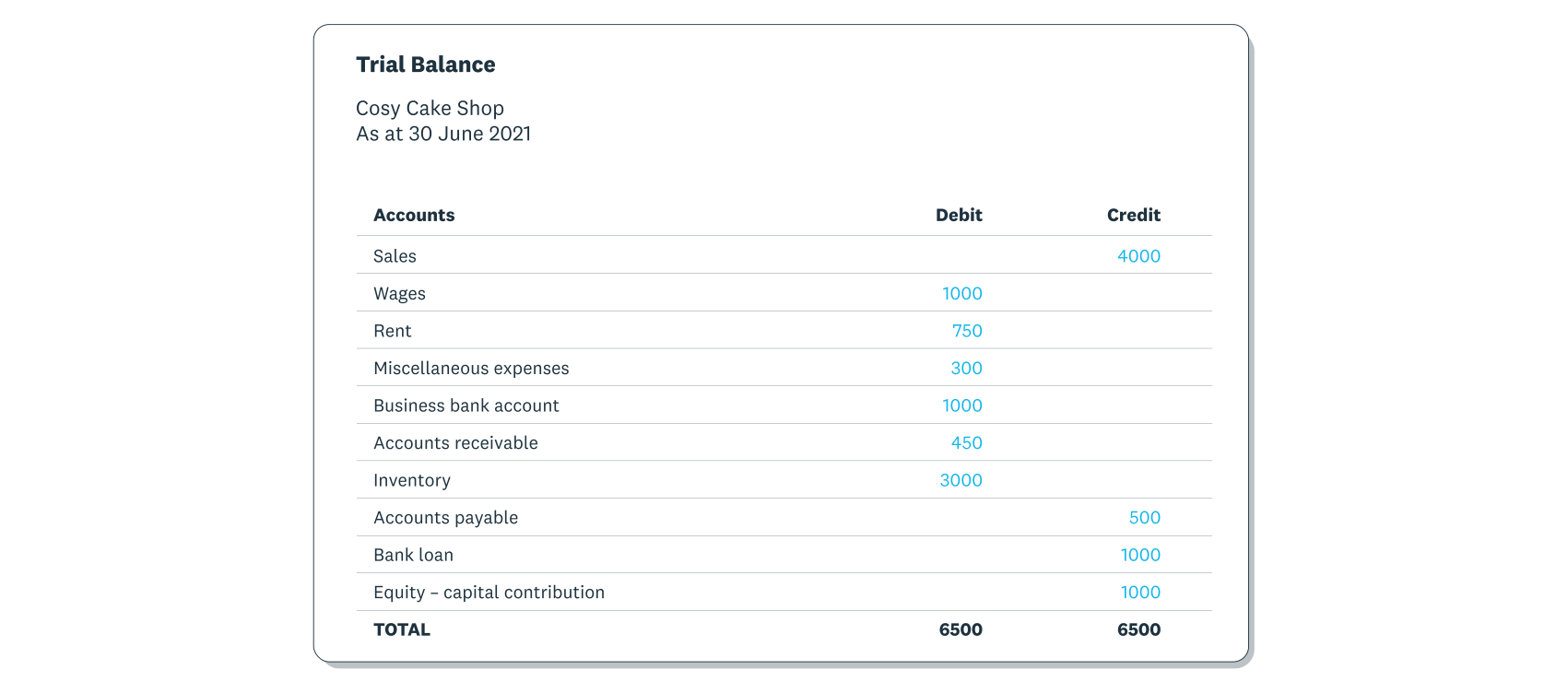
Here's a simplified trial balance for a small Singapore retailer. Each account sits in a debit or credit column, and the two totals come to the same figure.
- Cash: S$8,000 debit
- Equipment: S$5,000 debit
- Accounts payable: S$3,000 credit
- Capital: S$6,000 credit
- Sales: S$4,000 credit
Total debits come to S$13,000, and total credits also come to S$13,000, so the trial balance agrees.
Why trial balances matter for your business
A trial balance is a fast health check on your books. Running one regularly gives you a few practical benefits.
- Catches errors early, so unbalanced totals point you to a posting or maths mistake before it reaches your accounts
- Supports compliance with Accounting and Corporate Regulatory Authority (ACRA) reporting requirements, and with Singapore Exchange (SGX) rules for listed companies
- Gives you cleaner numbers to base your pricing, spending and cash flow decisions on
- Speeds up audit preparation, since balanced, organised ledgers are easier for an auditor to review
Types of trial balances
You'll prepare a trial balance at three points in your accounting cycle. Each version serves a different purpose.
- An unadjusted trial balance is your first run, taken straight from the ledger
- An adjusted trial balance follows once you've posted adjusting entries, such as accruals and depreciation
- A post-closing trial balance comes after you close your temporary accounts at period end
Unadjusted trial balance
This is the version you produce before any adjustments. It shows raw balances from your ledger and gives you a first look at whether debits and credits line up.
Adjusted trial balance
Once you post adjusting entries for prepayments, accrued expenses and depreciation, you run an adjusted trial balance. This version reflects the numbers you'll actually use to build your financial statements.
Post-closing trial balance
After you close your income and expense accounts for the period, a post-closing trial balance confirms only permanent accounts remain. It's the point where balances such as retained earnings carry forward into the next period.
How to prepare a trial balance
Preparing a trial balance by hand is straightforward once your ledger is up to date. Work through these four steps in order.
- Gather your general ledger balances for the period you're reporting on
- List each account and its closing balance in the debit or credit column
- Total your debit column and your credit column separately
- Verify that the two totals match, and if they don't, review your entries for the difference
If your columns don't agree, trace the gap back to how you recorded each journal entry, where a single missed or reversed posting is often the cause. Most businesses repeat this cycle three times, moving from an unadjusted to an adjusted and finally a post-closing version, though accounting software totals every column for you and flags mismatches as you go.
Common trial balance errors
A balanced trial balance doesn't guarantee your books are perfect, but the report does surface several common slip-ups. Watch for these.
- Transcription errors happen when you record a figure incorrectly, such as entering S$500 as S$5,000
- Omission errors happen when a transaction never makes it into the ledger at all
- Misclassification errors happen when a balance lands in the wrong account or column
How to correct trial balance errors
When your totals don't match, a methodical review usually finds the cause. Start with these checks.
- Recheck your column maths to rule out a simple addition mistake
- Verify each balance against its source ledger account
- Let accounting software recalculate the totals and highlight the mismatch
Trial balance vs balance sheet
People often mix up the trial balance and the balance sheet because both list account balances. They do different jobs, though.
- A trial balance is an internal check that every debit has a matching credit
- A balance sheet is a formal statement you share with lenders, investors and regulators
- A trial balance covers every account, while a balance sheet shows only assets, liabilities and equity
In practice, the trial balance is a working step and the balance sheet is the finished report. You confirm your numbers agree on the trial balance first, then use those figures to build a balance sheet that others can rely on.
How trial balances improve your financial reporting
A trial balance is the checkpoint between your day-to-day bookkeeping and the reports you rely on. Because it confirms total debits equal total credits, it validates the logic behind double-entry bookkeeping before any figure reaches your statements.
Running one at each stage of your accounting cycle keeps errors from compounding across the quarter. By the time you reach your quarter-end close, your profit and loss statement and balance sheet start from numbers you've already checked.
Simplify trial balances with Xero
Preparing a trial balance by hand takes time you'd rather spend running your business. Xero builds it for you, totalling every account and flagging mismatches automatically so your quarter-end close starts on solid ground. Sign up to a plan and get one month free to see how quickly your reports come together.
FAQs on trial balances
Here are quick answers to the questions small business owners ask most about trial balances.
What are the 3 rules of trial balances?
Every debit needs an equal credit, every account carries a normal debit or credit balance, and total debits must equal total credits. These rules trace back to the double-entry system Luca Pacioli documented in 1494.
How often should you prepare a trial balance?
Many businesses run one monthly, and always before a quarter-end or year-end close. More frequent checks make errors easier to trace while the transactions are still fresh.
Can accounting software automate trial balances?
Yes. Accounting software pulls balances from your ledger, totals both columns and updates the report in real time as you reconcile.
What happens if my trial balance doesn't balance?
It means a debit or credit was recorded incorrectly, omitted or duplicated somewhere in your ledger. You'll need to review your entries until the two totals agree.
What's the difference between a trial balance and a general ledger?
Your general ledger records every individual transaction, while a trial balance summarises the closing balance of each account in one report. The trial balance is drawn from the ledger, not a replacement for it.
Does a trial balance catch every error?
No. It confirms your debits and credits agree, but it won't flag a transaction posted to the wrong account or missed entirely when both sides were affected equally.
Disclaimer
Xero does not provide accounting, tax, business or legal advice. This guide has been provided for information purposes only. You should consult your own professional advisors for advice directly relating to your business or before taking action in relation to any of the content provided.
Start using Xero for free
Access Xero features for 30 days, then decide which plan best suits your business.