What are liabilities?
Learn what liabilities are, the main types, and how to track what your business owes.
Published Wednesday 30 September 2026
Table of contents
Key takeaways
- Liabilities are debts or obligations your business owes to others. They sit on your balance sheet alongside assets and equity.
- Current liabilities fall due within 12 months and non-current liabilities after that. Contingent liabilities depend on a future event, such as a legal claim.
- Under accrual accounting, an unpaid bill is an expense when you incur it and a liability until you pay it. Paying the bill settles the liability.
- Tracking what you owe and when it’s due helps you plan your cash flow. A lower debt-to-asset ratio means your business relies less on borrowing.
What are liabilities?
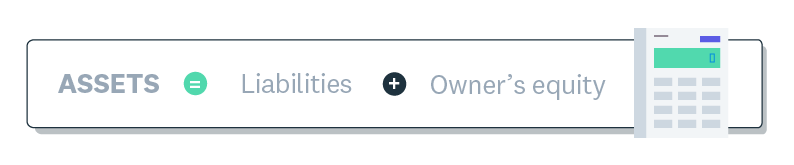
The accounting equation
Liabilities are present obligations your business has because of past events, which you’ll settle by giving up cash or other resources. In Indonesian, they’re called liabilitas.
Think of a liability as an IOU your business has signed. If a supplier delivers Rp20.000.000 of stock on 30-day terms, you owe that amount until you pay the invoice.
Liabilities are one of the core elements on your balance sheet. The accounting equation links them: Assets = Liabilities + Equity, so everything you own is funded by what you owe or what you’ve invested.
Borrowing to buy equipment or fund growth is common for small businesses. What matters is knowing what you owe and when each amount is due.
Key characteristics of liabilities
An item counts as a liability when it meets four tests. Items that meet all four go on your balance sheet as liabilities.
- Present obligation: you owe something now and can’t realistically avoid paying it
- Past event: the obligation comes from something that’s already happened, such as receiving stock or signing a loan
- Expected outflow: you expect to give up cash or other resources, such as goods or services, to settle it
- Measurable amount: you know the amount or can estimate it reliably
Obligations can be legal or constructive. A legal obligation comes from a contract or law, such as a supplier invoice or tax you owe.
A constructive obligation comes from your own established practice or public promise. For example, a long-standing policy of refunding unhappy customers creates an obligation even beyond what the law requires.
Types of liabilities
Liabilities fall into three main groups based on when they’re due and how certain they are. Knowing which ones apply to your business helps you prioritise payments and plan your cash flow.
Current liabilities
Current liabilities are debts due within 12 months, including taxes such as value added tax (VAT), called Pajak Pertambahan Nilai (PPN) in Indonesia. These are the current liabilities small businesses carry most often.
- Accounts payable: money you owe suppliers for goods or services you’ve already received
- Wages payable: salaries and wages you owe staff for work they’ve already done
- Short-term loans: business loans or credit lines due within one year
- Income tax payable: corporate or individual income tax your business owes to the Directorate General of Taxes (DJP)
- VAT (PPN) payable: output VAT collected from customers that you haven’t yet paid to the tax office
- Unearned revenue: payments from customers for products or services you haven’t delivered yet
Under Minister of Finance Regulation (PMK) 131/2024, the PPN rate is 12%, according to the Directorate General of Taxes. Non-luxury goods and services are taxed on 11/12 of their value, giving an effective rate of 11%, while luxury goods pay the full 12%.
Non-current liabilities
Non-current liabilities, also called long-term liabilities, are debts due after 12 months. They usually involve larger sums and longer repayment periods.
- Long-term business loans: loans with repayment terms longer than one year
- Commercial property loans: loans used to buy offices, shops, warehouses or land
- Lease liabilities: payments you owe under long-term leases of property or equipment
- Deferred tax liabilities: tax you’ll owe later because accounting and tax rules record income at different times
- Employee benefit obligations: long-term commitments such as post-employment and retirement benefits for staff
Contingent liabilities
Contingent liabilities are possible obligations that depend on the outcome of a future event, such as a legal claim or a warranty repair. You don’t owe anything yet, but you might later.
Say a customer takes legal action against your business over a damaged garden. The possible payout is a contingent liability until the case is decided. Product warranties work the same way, since you only pay for repairs if a customer makes a claim.
In Indonesia, Pernyataan Standar Akuntansi Keuangan (PSAK) 237 covers provisions, contingent liabilities and contingent assets; it was renumbered from PSAK 57 from 1 January 2024. Once payment is probable and reliably estimable, you’d record it as a provision under PSAK 237, Indonesia’s equivalent of International Accounting Standard (IAS) 37.
Until then, you disclose a contingent liability in the notes to your financial statements without recording it as a debt. Private businesses may report under SAK Entitas Privat (SAK EP), adapted from IFRS for SMEs, which replaced SAK ETAP from 1 January 2025.
Examples of liabilities in business
Imagine you run a landscaping business in Bandung. At the end of the quarter, your balance sheet shows five liabilities.
- Accounts payable: Rp85.000.000 owed to your equipment supplier
- Wages payable: Rp32.000.000 owed to staff for work already done
- VAT (PPN) payable: Rp18.000.000 collected from customers and not yet paid to the tax office
- Truck loan: Rp450.000.000 due after the next 12 months on a five-year loan
- Commercial property loan: Rp1.200.000.000 still owing on your yard and office
Your current liabilities total Rp135.000.000 and your non-current liabilities total Rp1.650.000.000, so you owe Rp1.785.000.000 in total. If your assets are worth Rp2.500.000.000, your owner’s equity is Rp715.000.000.
That means equity funds about 29% of your assets, and liabilities fund the rest.
Where liabilities appear on the balance sheet
Liabilities appear after assets and before equity on a balance sheet, or on the right-hand side in a two-column layout. The order tells you what’s due soonest.
Current liabilities come first, often starting with accounts payable, followed by non-current liabilities. Each group has a subtotal, then a total liabilities line adds them together.
Below that, equity shows what’s left for the owners. Total liabilities plus total equity always equals total assets, which is a quick check that your books balance.
Liabilities vs assets
Assets are what your business owns, and liabilities are what it owes. Assets include cash, stock, equipment and property; subtract total liabilities from total assets and what’s left is equity.
For example, a Rp500.000.000 loan to buy a delivery van adds a Rp500.000.000 asset and a Rp500.000.000 liability on the same day. Over time, the van depreciates while each repayment reduces the loan, so the two balances move apart.
Keeping total assets above total liabilities keeps your equity positive. Lenders and investors look at this gap when deciding whether to fund your business.
Liabilities vs expenses
An expense is a cost your business uses up to earn revenue in a period, while a liability is an amount you still owe. Expenses appear on your income statement (profit and loss), and liabilities appear on your balance sheet.
Say you buy a Rp300.000.000 company car with a five-year loan. The outstanding loan balance is a liability, while the monthly interest and the car’s depreciation are expenses.
The two often overlap. Under accrual accounting, a Rp4.500.000 electricity bill counts as an expense in the month you use the power. It also sits in accounts payable until you pay it.
Paying the bill settles the liability without adding a second expense. Knowing how debits and credits work helps you record each step correctly.
How to manage business liabilities
Managing liabilities starts with knowing how much of your business is funded by debt. These steps help you keep repayments under control and your cash flow steady.
- Divide total liabilities by total assets to find your debt-to-asset ratio. A lower ratio means less reliance on debt, though healthy levels vary by industry.
- Compare current assets with current liabilities using the current ratio. It shows whether you can cover bills due in the next 12 months.
- Negotiate longer payment terms with suppliers. Extra days to pay give customer payments more time to arrive.
- Refinance high-interest debt when lower rates are available. Lower interest cuts the cost of each repayment.
- Build a cash reserve. A buffer covers short-term obligations when customers pay late.
- Review your liabilities every month. Regular checks help you spot rising balances early.
- Keep personal and business debts separate. Separate accounts keep your balance sheet accurate and your tax reporting simpler.
Tracking both ratios also shows your solvency, or your ability to meet long-term debts. If repayments start to stretch your cash, an accountant or financial advisor can help you plan ahead.
Track your business liabilities with Xero
Knowing what you owe, and when, helps you plan with confidence. Xero brings in transactions through automated bank feeds and shows your loan balances and accounts payable in easy-to-read reports.
Start tracking your liabilities in Xero today and get one month free.
FAQs on liabilities
These quick answers cover common questions small business owners ask about liabilities.
What are the 3 types of liabilities?
The three types are current, non-current and contingent. A single loan can sit in two of them, with repayments due in the next 12 months shown as current and the rest as non-current.
Is a liability always bad for a business?
Liabilities are a normal part of running a business. A loan for equipment that earns more than the repayments cost can help you grow, as long as your cash inflows cover what’s due.
How do I know if something is a liability?
Ask whether you owe cash or other resources today because of something that’s already happened, such as receiving stock or taking a deposit. If you can’t avoid paying and can estimate the amount, record it as a liability.
Is accounts payable a liability?
Yes, accounts payable is a current liability made up of supplier bills you’ve received but haven’t paid yet. Paying suppliers on time helps you keep good credit terms.
What is the difference between a liability and a provision?
A provision is a type of liability where the timing or amount is uncertain, such as expected warranty repairs. You still record it on the balance sheet, using your best estimate of what you’ll pay.
What are examples of personal liabilities?
Personal liabilities include a home loan (Kredit Pemilikan Rumah, or KPR), a car loan, credit card balances and personal income tax owed. Keep these apart from business liabilities so your balance sheet shows only what the business owes.
Related terms
Learn more about liabilities
Handy resources
Advisor directory
You can search for experts in our advisor directory
Xero Small Business Guides
Discover resources to help you do better business
Financial reporting
Keep track of your performance with accounting reports
Disclaimer
This glossary is for small business owners. The definitions are written with their requirements in mind. More detailed definitions can be found in accounting textbooks or from an accounting professional. Xero does not provide accounting, tax, business or legal advice.