Petty cash: how to set it up, track it and control it
Learn how to manage petty cash, set spend limits, track receipts, and stay audit ready.

Written by Jotika Teli—Certified Public Accountant with 24 years of experience. Read Jotika's full bio
Published Thursday 2 April 2026
Table of contents
Key takeaways
- Establish a fixed petty cash fund using the imprest system to maintain a set amount that you replenish regularly, as this approach simplifies tracking and makes discrepancies easier to spot than fluctuating fund systems.
- Assign one designated custodian to manage the entire petty cash process, including distributing cash, collecting receipts, and maintaining records, while storing cash in a locked box with limited access to prevent misuse.
- Require receipts for every transaction without exception and reconcile your petty cash fund at least weekly by comparing receipts to your petty cash book before replenishing the fund.
- Set clear spending policies that define transaction limits, qualifying expense categories, and reimbursement procedures, then document these policies and share them with all employees who may request petty cash reimbursements.
What is petty cash?
Petty cash is a small reserve of cash that businesses keep on hand for minor, everyday expenses. It covers costs that are too small or urgent to process through normal payment channels, like buying office supplies, paying for parking, or reimbursing employees for small purchases.
The fund stays at a set amount, and you regularly replenish it to replace what's been spent.
Petty cash differs from your main business accounts because:
- it handles small transactions: typically under a set limit per expense
- it provides immediate access: no waiting for bank transfers or approvals
- it simplifies record-keeping: minor expenses are tracked separately from major transactions
Why use petty cash in your business?
Petty cash saves time and simplifies operations by giving you immediate access to funds for minor expenses. Instead of processing small payments through your bank account, you handle them on the spot.
Handle small urgent expenses
Unexpected costs come up regularly in any business. Petty cash lets you cover urgent needs immediately, whether that's replacing a broken stapler, buying refreshments for a client meeting, or paying a delivery fee.
Simplify daily operations
Processing every small expense through your bank account creates unnecessary admin work. Petty cash reduces the paperwork for minor transactions, so you can focus on running your business instead of chasing approvals.
Improve financial accuracy
When small expenses go untracked, they create gaps in your records. A well-managed petty cash system captures every transaction, making your bookkeeping more accurate and your tax reporting more complete.
How to set up a petty cash fund
Setting up a petty cash fund takes just a few steps. Once established, the system runs smoothly with minimal ongoing effort.
- Determine your fund amount: estimate your typical small expenses over two to four weeks. Most small businesses start with a modest amount that covers a few weeks of minor purchases, with experts suggesting a fund size typically ranging from $100 to $500.
- Designate a custodian: assign one person to manage the fund, distribute cash, collect receipts, and maintain records. In a small business, this is often the owner.
- Create your petty cash book: set up a simple spreadsheet or log to track every transaction, including date, description, amount, and running balance.
- Record the initial entry: withdraw cash from your bank account and record a debit to petty cash and a credit to your bank account in your general ledger.
- Establish clear policies: define spending limits per transaction, what expenses qualify, and how employees should submit receipts for reimbursement.
How does petty cash work?
Petty cash works through a simple cycle of funding, spending, and replenishing. Most businesses keep a set amount on hand, depending on their size and needs.
- Set up the fund: record a debit to your petty cash account and a credit to your bank account. If you withdraw $200 to start your fund, note this transfer in your general ledger.
- Handle expenses: when employees make small purchases, they bring receipts to the petty cash custodian. The custodian reimburses them from the fund and logs each expense in a petty cash book or spreadsheet.
- Replenish the fund: when cash runs low, the custodian tallies receipts against the petty cash book to confirm the balance. The bookkeeper then withdraws more cash from the bank and records the expenses to the correct accounts.
If you run a one-person business, you handle all these steps yourself: distributing cash, collecting receipts, tracking expenses, and updating your records.
Petty cash methods and systems
There are two main methods for managing petty cash: the imprest system and the fluctuating fund system. Understanding the difference helps you choose the right approach for your business.
Imprest system
The imprest system keeps your petty cash fund at a fixed amount. When you replenish the fund, you add exactly enough cash to restore it to the original balance.
This method works well because:
- tracking is straightforward: you always know what the fund should contain
- reconciling is simple: total receipts plus remaining cash should equal the fixed amount
- discrepancies are easy to spot: any imbalance signals an error or missing receipt
Fluctuating fund system
The fluctuating fund system allows the fund balance to vary. You add cash as needed without maintaining a set amount.
This method offers more flexibility but requires more effort to track. It's less common because reconciling requires more effort.
Which method is right for your business?
Most small businesses benefit from the imprest system because it simplifies record-keeping and makes errors easier to catch. The fluctuating system works best when your expenses vary significantly and you need more flexibility than a fixed fund allows.
How to record petty cash
Recording petty cash requires three key documents: vouchers, a petty cash book, and general ledger entries. Once you understand the basics, the process becomes routine.
Here's what you need to track petty cash accurately:
- petty cash voucher: document each expense with a description, business purpose, employee name, and receipt
- petty cash book: track your running balance by recording every expense and each time you replenish the fund
- general ledger entry: credit your petty cash account and debit the relevant expense account for each transaction
For example, if you spend $20 on office supplies, credit petty cash $20 and debit office supplies $20. Accounting software like Xero can simplify this process by automating your journal entries.
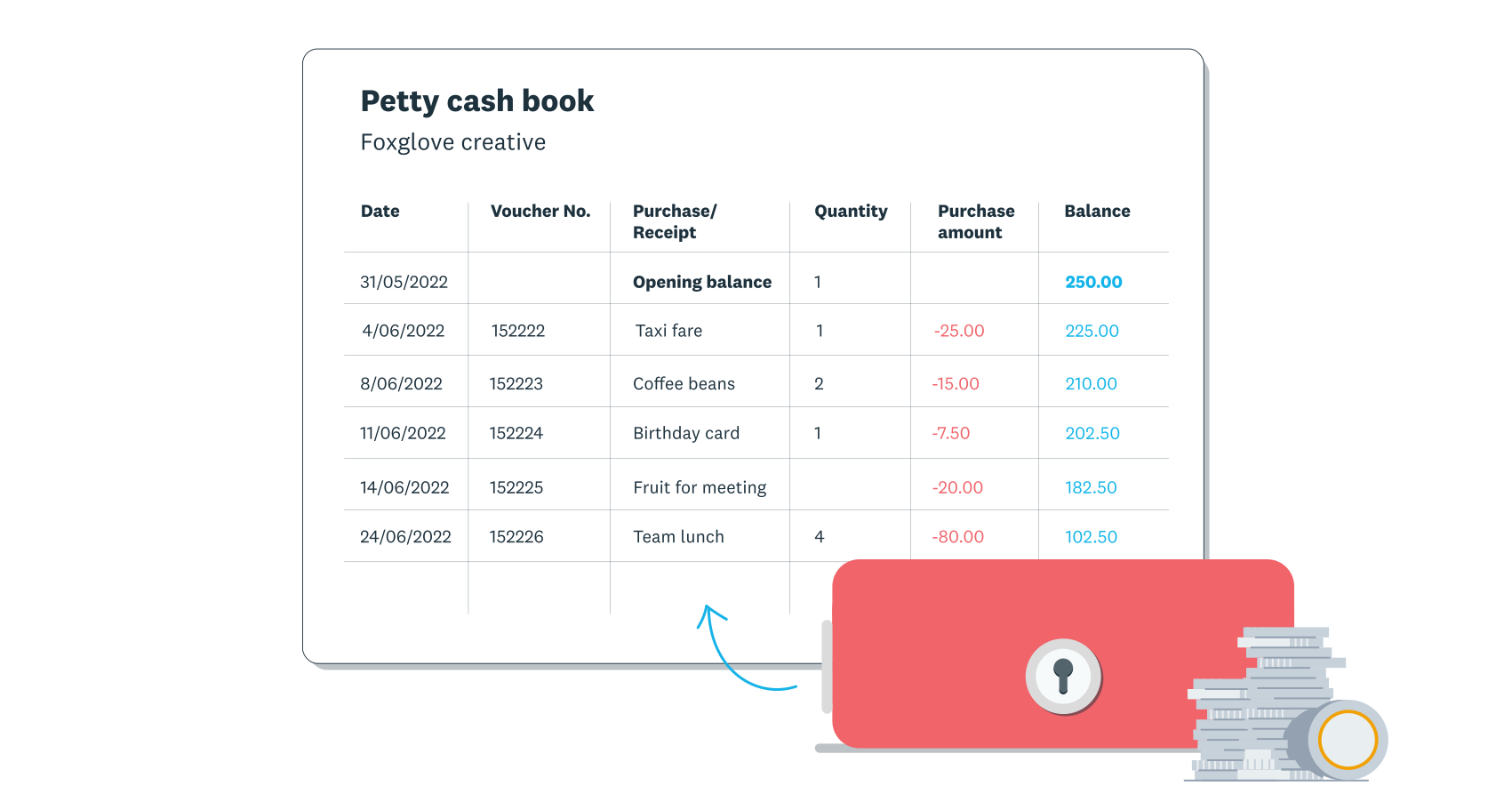
Here's an example of how to structure your petty cash tracking:
Example of petty cash book or spreadsheet format
A petty cash book is a simple log that tracks every transaction in your fund. Here's an example format:
Best practices for managing petty cash
Strong petty cash controls protect your business from errors, misuse, and headaches when reconciling, which is especially important given that petty cash misuse accounts for 14.5% of business fraud cases. Follow these practices to keep your fund running smoothly.
Here are key security measures to implement:
- Store cash in a locked box or drawer with limited access.
- Assign only one custodian to manage the fund.
- Require receipts for every transaction, no exceptions.
Here's how often to reconcile:
- Count and reconcile petty cash at least weekly.
- Compare receipts to your petty cash book before you replenish the fund.
- Investigate any discrepancies immediately.
Avoid these common mistakes:
- borrowing from petty cash for personal use
- accepting IOUs instead of receipts
- letting multiple people access the fund without oversight
- waiting too long between reconciling sessions
Follow these policy guidelines:
- Set a maximum amount per transaction that suits your business.
- Define which expense categories qualify for petty cash.
- Document your policies and share them with all employees who may request reimbursements.
Manage petty cash with confidence using Xero
Managing petty cash can be simpler than manual spreadsheets and paper vouchers. Xero's accounting software helps you track expenses, reconcile transactions, and keep your books accurate, all in one place.
Ready to simplify your financial management? Get one month free and see how Xero can help your business stay organised.
FAQs on petty cash
Here are answers to common questions about managing petty cash in your business.
What expenses should not be paid from petty cash?
Avoid using petty cash for large purchases, employee salaries, or personal expenses. Petty cash is for small, business-related costs only, typically under your set transaction limit.
How often should I reconcile petty cash?
Reconcile your petty cash fund at least weekly, or before you replenish it. Regular checks help you catch errors early and maintain accurate records.
What should I do if petty cash doesn't balance?
Review all receipts and entries in your petty cash book for errors. Check for missing receipts, duplicate entries, or calculation mistakes. If you can't find the discrepancy, record the difference as a cash shortage or overage.
Can I use petty cash for online purchases?
Petty cash is typically reserved for cash transactions. For online purchases, use a business credit card or bank transfer, which creates a clearer audit trail.
Do I still need petty cash if I use accounting software?
Yes, petty cash remains useful for immediate, small expenses even when you use accounting software. The software helps you track and reconcile your fund more efficiently, but doesn't eliminate the need for cash on hand.
Disclaimer
Xero does not provide accounting, tax, business or legal advice. This guide has been provided for information purposes only. You should consult your own professional advisors for advice directly relating to your business or before taking action in relation to any of the content provided.
Start using Xero for free
Access Xero features for 30 days, then decide which plan best suits your business.