What is revenue? Definition, formula and real examples
Learn what revenue is, how to calculate it, and why tracking it matters for your small business.

Written by Shaun Quarton—Accounting & Finance Content Writer and Growth Marketer. Read Shaun's full bio
Published Wednesday 27 May 2026
Table of contents
Key takeaways
- Revenue is every dollar your business takes in from selling products or services, before you subtract any costs. Calculate it by multiplying units sold by price per unit, then subtracting returns and discounts to find net revenue.
- Businesses earn operating revenue from core activities and non-operating revenue from secondary sources like interest or rental income. Understanding both helps you see the full picture of your earnings.
- Revenue is total money coming in before expenses; profit is what remains after all costs are deducted. Understanding both helps you set realistic goals and price effectively.
- Consistent revenue tracking with accounting software reduces errors, saves time, and gives you real-time insights to make confident financial decisions.
What is revenue?
Revenue is the total money your business earns from selling products or services before any expenses are deducted. It's also known as sales or turnover.
A retail shop's revenue comes from selling products. A freelancer earns revenue by billing clients for services. Revenue is the starting point for understanding your business's financial health and calculating profit.
Types of business revenue
Businesses generate revenue through several categories. The two main types are operating revenue from core business activities and non-operating revenue from secondary sources.
Operating revenue
Operating revenue is income from your primary business activities. It forms the foundation of your financial performance and is sometimes called gross revenue.
Examples include:
- Sales revenue: income from selling goods, like a bakery selling bread and pastries
- Service revenue: income from providing services, such as consulting or repair work
- Subscription revenue: recurring income from subscription models, such as gym memberships or streaming services
Sales revenue is often used as a catch-all term for income from selling goods or services. Service revenue is used when you want to track income from services separately, particularly if you offer both goods and services.
Non-operating revenue
Non-operating revenue is income from activities outside your core operations. These earnings are often irregular and not directly tied to ongoing performance.
Examples include:
- Interest income: earnings from investments, such as bank deposits
- Dividend income: returns from shares in other companies
- Rental income: leasing out property or equipment
- Gain on sale of assets: proceeds from selling equipment or property
- Licensing fees: payments for use of your intellectual property
Recurring revenue
Recurring revenue is predictable income that repeats on a regular schedule. It's common in subscription-based and membership businesses.
For example, a software company charging a monthly fee or a fitness studio selling annual memberships both earn recurring revenue. This type of income makes it easier to forecast cash flow and plan for growth because you can predict how much you'll earn each period.
Project-based revenue
Project-based revenue comes from one-time or fixed-term engagements. It's typical for consultants, contractors, and creative agencies.
Each project has a defined scope and payment structure. A web designer building a client's site or a renovation contractor completing a kitchen remodel both earn project-based revenue. Tracking it separately helps you understand how individual projects contribute to your total earnings.
How to calculate revenue
Follow these steps to calculate your business revenue accurately.
1. Use the basic revenue formula
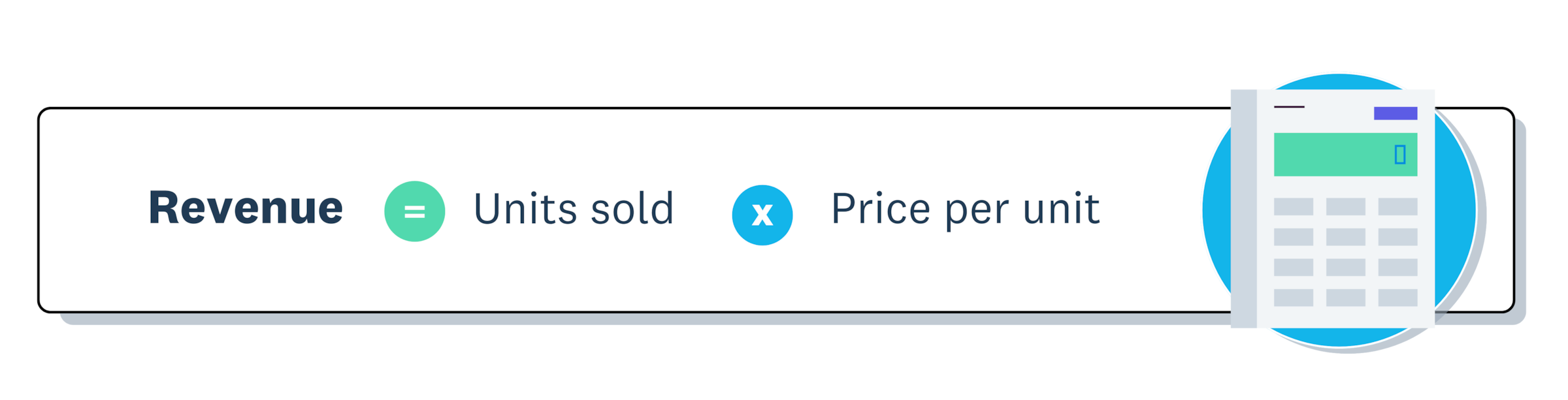
The standard formula is: Revenue = Units sold x Price per unit.
The formula has two components:
- Units sold: the quantity of products sold or services delivered
- Price per unit: the amount charged for each product or service
For example, if a bakery sells 100 loaves at $5 each: 100 x $5 = $500 in revenue.
2. Adjust for different business models
Revenue calculations vary by business type:
- Service-based: Revenue = Hourly rate x Hours worked
- Subscription-based: Revenue = Number of subscribers x Subscription price
- Ecommerce: track each transaction individually, as prices may vary
Xero automatically tracks revenue across all business models, so you can see your earnings in real time without manual calculations.
3. Calculate net revenue
Net revenue is your earnings after subtracting returns, discounts, and allowances.
Net revenue = Gross revenue - Discounts - Returns
This formula gives a clearer view of your actual income. It's the figure banks and investors rely on when assessing your business.
4. Track your revenue
Consistent tracking maintains accurate records and supports better decisions.
Choose a tracking method:
- Spreadsheets: best for very small businesses, but prone to errors
- Point of sale (POS) systems: ideal for physical stores with automatic data integration
- Accounting software: best for automation and advanced reporting
Record every sale correctly and promptly. Automate where possible to reduce errors and save time.
Revenue recognition: accrual vs cash accounting
Revenue recognition determines when you record income in your books. The method you choose affects your financial statements, tax reporting, and how you understand your business's performance.
With cash accounting, you record revenue when you actually receive payment. If you send an invoice in March but the client pays in April, the revenue appears in April. This method is simpler and gives you a clear view of the cash you have on hand.
With accrual accounting, you record revenue when you earn it, regardless of when payment arrives. Using the same example, the revenue appears in March when you deliver the service. This method gives a truer reflection of your financial position over time. If you receive payment before delivering a service, the payment is classified as unearned revenue until you fulfil the obligation.
Many Canadian small businesses start with cash accounting because it's straightforward. As your business grows, accrual accounting often becomes more useful because it matches revenue with the expenses incurred to earn it. The Canada Revenue Agency (CRA) accepts both methods for most small businesses, though some industries have specific requirements.
Understanding the basics of double-entry bookkeeping can also help you record revenue correctly. Talk to your accountant to decide which method suits your situation.
Revenue vs profit: key differences
Revenue shows how much money comes in. Profit reveals how much you keep after expenses. Both metrics measure different aspects of business performance.
Revenue:
- Calculation: total sales
- Focus: income generated before expenses
- Position: top of income statement (the "top line")
- Indicates: sales performance and market demand
Profit:
- Calculation: revenue minus all costs
- Focus: income remaining after expenses
- Position: bottom of income statement (the "bottom line")
- Indicates: financial health and sustainability
Learn more about calculating profit.
Why it matters
Understanding both metrics is essential for smart business decisions. Success requires balancing revenue with manageable expenses.
Knowing both helps you:
- Set realistic goals: base targets on profit, not just sales figures
- Price effectively: ensure prices cover costs and generate profit
- Plan for sustainability: focus on long-term profitability, not just revenue increases
Why tracking revenue is important for your small business
When you track revenue, you see how much money flows into your business before expenses. This data helps you measure growth, forecast earnings, and make smarter financial decisions.
Drive business growth
Steady revenue growth supports long-term sustainability. Even during challenging economic periods, many Canadian businesses continue to see steady revenue growth.
Revenue growth provides resources to reinvest in opportunities, expand operations, and attract investors. For example, a landscaping company with consistent revenue might use surplus funds to hire new staff or invest in better equipment.
Measure performance
When you track revenue, you can monitor progress toward financial goals. Ask yourself:
- Are you meeting revenue targets?
- Where can you improve?
- Which areas contributed most?
You can also benchmark against the market to gain valuable insights. Explore Xero Small Business Insights to see how businesses like yours are performing.
Gain insights and identify trends
Revenue data helps you make smarter inventory, marketing, and product development decisions by identifying key patterns:
- Are sales increasing or decreasing?
- Which products perform best?
- Are seasonal factors affecting revenue?
Make informed business decisions
When you decide based on data, you achieve better business outcomes. Revenue tracking helps you determine:
- Should you adjust your pricing strategy?
- Should you invest in new equipment?
- Should you expand into new markets?
Revenue and profitability are two different measures of business health. Learn more about strategies to increase your revenue.
Best practices for effective revenue tracking
Accurate data input ensures reliable financial statements. Consistent tracking leads to better decisions, healthier cash flow, and easier tax compliance. The Government of Canada requires businesses to report all income; keeping accurate records helps you meet this obligation and avoid a 10% penalty on unreported amounts.
Follow these best practices to ensure accuracy.
Maintain accurate records
Keep your records current and organized:
- Update daily: stay on top of transactions
- Reconcile monthly: review revenue with bank statements to spot discrepancies
- Keep supporting documents: maintain receipts for tax and auditing purposes, as official audits often find a lack of documented evidence for key financial controls
Categorize your revenue
Break down revenue to understand your income sources:
- Analyze product lines: identify which products generate the most income
- Compare sales channels: measure online versus in-store performance
- Review customer segments: determine which customer groups drive revenue
This breakdown reveals where your money comes from and supports better decisions.
Use tools for automation
Accounting software streamlines tracking and reduces human error. Automated systems save time on manual data entry, reduce calculation mistakes, and provide real-time financial insights.
More and more Canadian businesses are turning to financial technology to eliminate manual tasks and redirect time toward growth.
Xero automates bank reconciliation, invoicing, and expense tracking so you can focus on running your business instead of managing spreadsheets.
Review data regularly
Set aside time each month to review your revenue data:
- Compare revenue against targets and previous periods
- Spot trends in product or service performance
- Identify areas for improvement or growth opportunities
Track your revenue with Xero
Understanding revenue is the first step toward running a stronger business. From calculating your earnings to spotting trends, revenue data guides your strategy and gives you the clarity to act.
Xero gives you automated revenue tracking, real-time financial reports, and streamlined accounting in one platform. Try Xero today and get one month free.
FAQs on revenue
Here are answers to frequently asked questions about revenue.
What is a simple definition of revenue?
Revenue is the total money your business earns from selling products or services before any costs are subtracted. It appears first on your income statement, where it anchors your overall financial performance.
What does revenue tell you about your business?
Revenue shows your earning power and market demand. Tracking it over time reveals growth trends, seasonal patterns, and which products or services perform best.
How is revenue different from sales?
Revenue and sales are often used interchangeably, but revenue is the broader term. Sales refers specifically to income from selling goods and services, while revenue also includes non-operating income like interest or rental earnings.
Can a business have revenue but no profit?
Yes. A business with high startup costs, heavy reinvestment, or seasonal timing gaps can bring in strong revenue while still showing a loss on its income statement.
What's the difference between gross revenue and net revenue?
Gross revenue is total income before any deductions. Net revenue is income after subtracting returns, discounts, and allowances.
Are revenue and cash flow the same thing?
Revenue and cash flow measure different things. Revenue is income earned from sales, while cash flow tracks the actual movement of money in and out of your business.
Disclaimer
Xero does not provide accounting, tax, business or legal advice. This guide has been provided for information purposes only. You should consult your own professional advisors for advice directly relating to your business or before taking action in relation to any of the content provided.
Start using Xero for free
Access Xero features for 30 days, then decide which plan best suits your business.