What is profit?
Learn what profit is, the 3 types of profit, and how to calculate and improve it for your business.
Published Thursday 23 July 2026
Table of contents
Key takeaways
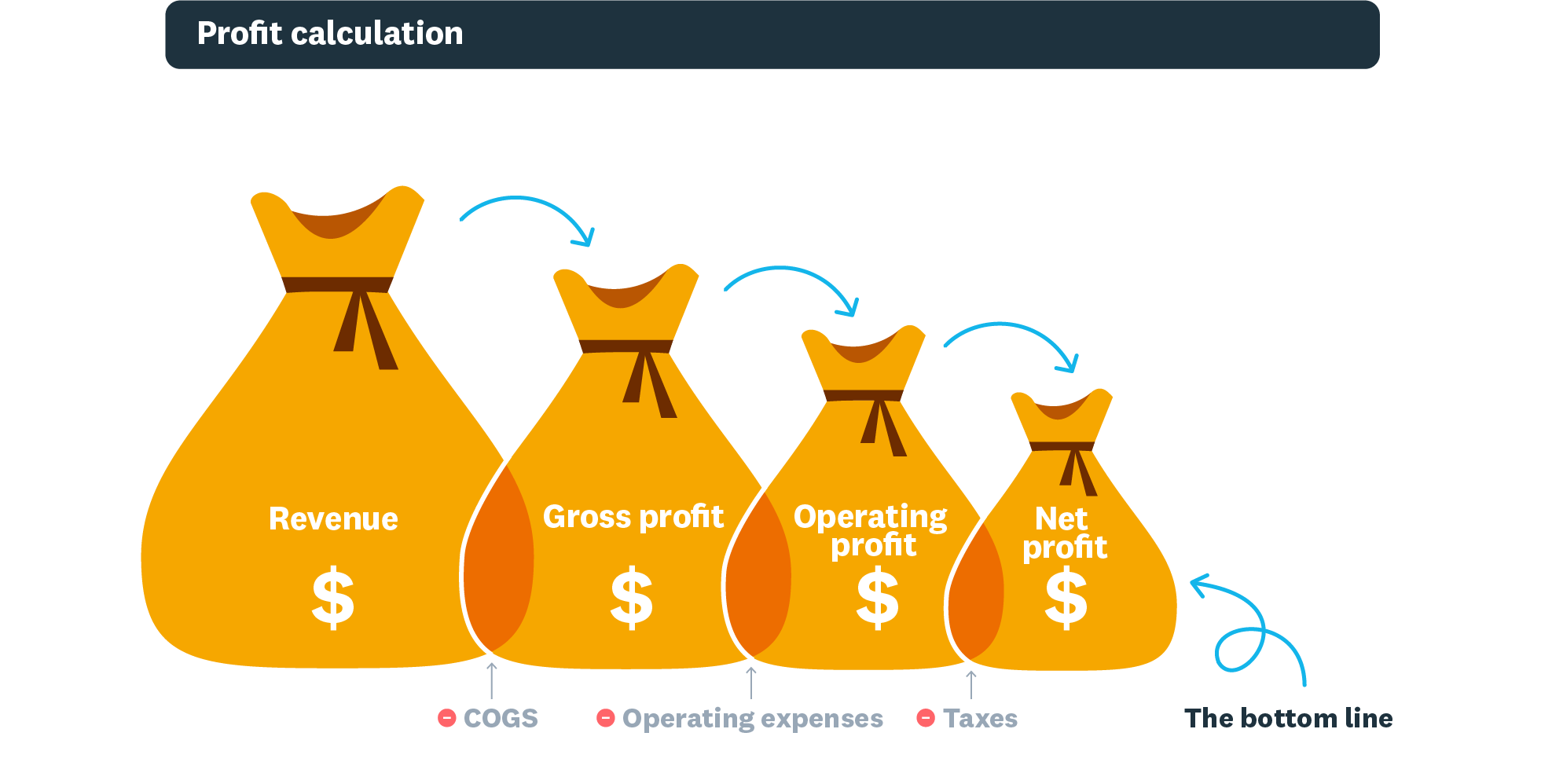
There are three types of profit. Net profit is what you get to keep.
- Profit is the money your business keeps after you pay all your expenses.
- There are 3 types of profit: gross profit, operating profit and net profit.
- Profit and revenue are different: revenue is your total income, and profit is what's left once costs come out.
- Healthy profit lets you reinvest, stay stable and attract funding to grow.
What is profit?
Profit is the money your business has left after paying all its expenses. It's what remains when you subtract your costs from the income you earn.
You use profit to measure how well your business performs. A positive result means you're earning more than you spend, while a negative result means your costs are higher than your income.
The three types of profit
Profit isn't a single figure. You track it at 3 levels, and each one tells you something different about how your business is doing.
Gross profit
Your gross profit is your revenue minus the cost of goods sold. It shows how much you make from your products or services before you cover your other running costs.
Operating profit
Your operating profit is your gross profit minus your operating expenses, such as rent, wages and utilities. It reflects how profitable your day-to-day operations are.
Net profit
Your net profit is what remains after all costs, including interest and taxes. Since profit is taxed as business income, net profit is the figure that shows your true bottom line.
How to calculate profit
You work out profit by subtracting your costs from your income. Each type of profit uses its own formula, and reviewing all 3 together in your profit and loss statement gives you the full picture.
- Gross profit: revenue minus cost of goods sold
- Operating profit: gross profit minus operating expenses
- Net profit: operating profit minus interest and taxes
Say your business earns $100,000 in revenue and your cost of goods sold is $40,000. Your gross profit is $60,000.
If your operating expenses come to $30,000, your operating profit is $30,000. After $5,000 in interest and taxes, your net profit is $25,000. Comparing that net profit to your revenue also gives you your profit margin.
Profit vs revenue
People often mix up profit and revenue, but they measure different things. Revenue is the total income your business brings in before any expenses, while profit is what's left after you subtract those expenses.
A business can earn high revenue and still make little profit if its costs are high. That's why you track both figures to understand your real financial health.
Why profit matters for your business
Profit is a clear signal that your business model works. It gives you the resources to keep going and to plan for what's next.
Strong profit lets you reinvest in new products, equipment or staff. It also builds financial stability so you can handle quiet periods, and it makes your business more attractive to lenders and investors who want to see you can generate returns.
How to improve your profit
You improve profit in 2 main ways: by increasing your revenue or by reducing your costs. Small, steady changes in each area can add up over time.
- Raise prices where the market allows
- Sell more to existing customers
- Attract new customers to grow sales
- Negotiate better rates with suppliers
- Cut waste and reduce overhead costs
Track your profit with Xero
Keeping an eye on profit is easier when your numbers sit in a single place. Xero brings your income and expenses together so you can see how your business is performing in real time.
With clear reports and automated bookkeeping, you spend less time on admin and more time acting on what the figures tell you. See your profit at a glance and start your free trial today. Get one month free.
FAQs on profit
Here are answers to some frequently asked questions about profit to help you understand the figure and how it works.
How do you calculate profit?
You calculate profit by subtracting your total costs from your total income. The type of profit depends on which costs you include, from cost of goods sold through to interest and taxes.
What is the difference between profit and revenue?
Revenue is the total income your business earns before any expenses. Profit is the amount that remains once you subtract your costs from that revenue.
Why is profit important for a small business?
Profit shows whether your business earns more than it spends, which is key to staying open. It also gives you funds to reinvest, build stability and attract funding.
How is business profit taxed in Canada?
Business profit is generally taxed as business income in Canada. The rates and rules depend on your business structure, so check your specific situation with the Canada Revenue Agency or an accountant.
Related terms
Learn more about profit
Handy resources
Advisor directory
You can search for experts in our advisor directory
Financial reporting
Keep track of your performance with accounting reports
Disclaimer
This glossary is for small business owners. The definitions are written with their requirements in mind. More detailed definitions can be found in accounting textbooks or from an accounting professional. Xero does not provide accounting, tax, business or legal advice.