Owner’s equity: What it is, how to calculate and track it
Learn how owner’s equity reveals your stake, guides decisions, and helps you plan profit, cash, and growth.
Written by Lena Hanna—Trusted CPA Guidance on Accounting and Tax. Read Lena's full bio
Published Thursday 5 February 2026
Table of contents
Key takeaways
- Calculate your owner's equity by subtracting everything your business owes (liabilities) from everything it owns (assets) to get a clear picture of your business's true financial worth.
- Monitor your owner's equity regularly to assess your business's financial health, as positive equity indicates your assets exceed debts while negative equity signals potential financial stress.
- Use your owner's equity position to support loan applications and strategic decisions, as lenders review this figure to determine if your business can handle additional debt.
- Track changes in your equity over time through the statement of changes in equity to understand how profits, owner contributions, and withdrawals affect your business's net worth.
What is owner's equity?
Owner's equity is the value of a business after you subtract what it owes from what it owns. It represents your book value or net worth, and you can calculate it at any time.
Owner's equity doesn't tell you what your business would sell for. That depends on negotiations with a buyer. But it gives you a clear picture of your financial position right now.
Why owner's equity matters
Owner's equity shows the financial health of your business at a glance. Tracking it helps you make confident decisions about growth, funding, and your business's future.
Here's why owner's equity matters for your business:
- Measures financial health: Positive equity means your assets exceed your debts. Negative equity signals financial stress.
- Supports loan applications: Lenders review your equity to assess whether your business can handle more debt.
- Helps value your business: Equity provides a starting point when selling your business or bringing in partners.
- Tracks growth over time: Rising equity shows your business is building wealth. Declining equity may signal problems to address.
- Informs strategic decisions: Knowing your equity helps you decide when to expand, invest, or pull back.
How to calculate owner's equity
To calculate owner's equity, use this formula: Assets minus Liabilities equals Owner's Equity.

Add up everything your business owns (assets), then subtract everything it owes (liabilities). What remains is your equity.
Understanding assets and liabilities
Count your assets and liabilities correctly to get an accurate equity figure.
Assets include everything your business owns:
- equipment and machinery
- real estate and property
- inventory and stock
- accounts receivable (money customers owe you)
- cash in the bank
- intangible items like intellectual property or brand value
Liabilities include everything your business owes:
- loans from lenders
- amounts owed to suppliers
- wages owed to employees
- taxes owed to the tax office
Examples of owner's equity
Personal example: house equity
Here's a simple example using a house:
- Asset: House worth R300,000
- Liability: Mortgage of R120,000
- Owner's equity: R300,000 − R120,000 = R180,000
The house is your asset. The mortgage is your liability. Subtract one from the other to find your equity: R180,000.
Business example: repair shop
Here's how it works for a small business:
Assets:
- Garage: R600,000
- Machinery: R50,000
- Inventory: R50,000
- Total assets: R700,000
Liabilities:
- Loan on premises: R300,000
Owner's equity: R700,000 − R300,000 = R400,000
Where to find owner's equity
You'll find owner's equity in two places on your financial statements:
- Balance sheet: Owner's equity appears as its own section, listed after assets and liabilities
- Statement of changes in equity: This report tracks how your equity changes over time
What is a statement of changes in equity?
A statement of changes in equity shows how your business's net worth changed over a period. According to International Financial Reporting Standards (IFRS), this statement provides a comparison of the recorded value of equity at the start and end of a period, showing changes from profits, owner investments, and dividends. It connects your profit and loss statement to your balance sheet by tracking how earnings affect your equity.
This statement is one of four basic financial statements:
- profit and loss statement
- balance sheet
- cash flow statement
- statement of changes in equity
The following examples show how the statement of changes in equity works for different business structures.
Statement shows closing equity is equal to the opening equity plus the year's net profit, minus owner withdrawals and taxes.
Statement of changes in equity for a sole proprietor
For a sole proprietor, the statement tracks opening equity, adds net profit for the year, and subtracts any owner withdrawals and taxes to arrive at closing equity.
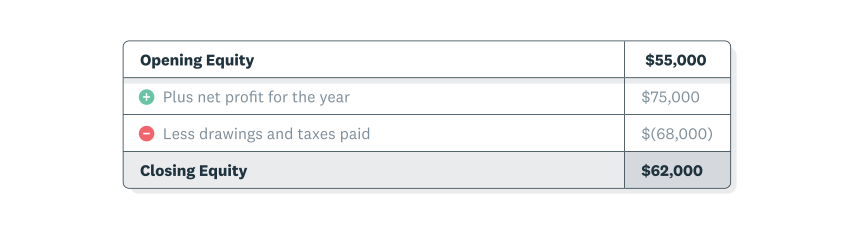
Statement shows closing equity is equal to the opening equity plus the year’s net profit, minus owner withdrawals and taxes.
Statement shows closing equity is equal to the opening equity plus the year's net profit and money introduced, minus owner withdrawals and taxes.
Statement of changes in equity for a partnership
In a partnership, the statement includes the same elements as a sole proprietor but also accounts for any additional money partners introduce to the business.
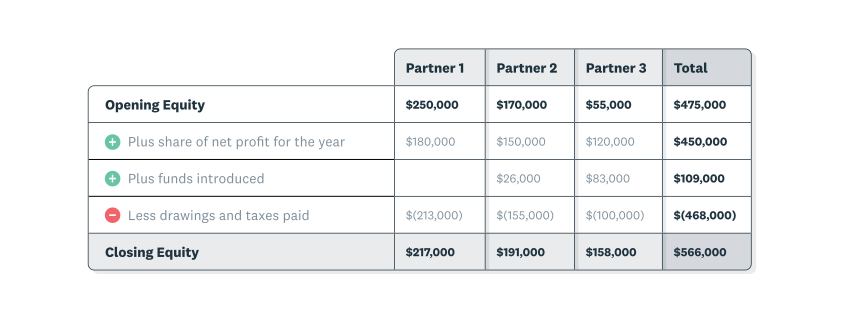
Statement shows closing equity is equal to the opening equity plus the year’s net profit and money introduced, minus owner withdrawals and taxes.
Statement shows closing equity is equal to the opening equity plus the year's net profit and money from investors, minus owner withdrawals and taxes.
Statement of changes in equity for a company
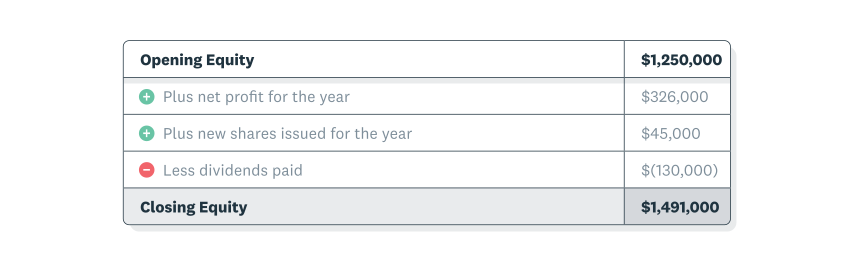
Statement shows closing equity is equal to the opening equity plus the year’s net profit and money from investors, minus owner withdrawals and taxes.
For a company, the statement tracks similar changes but includes money from investors rather than partner contributions.
How to use your statement of changes in equity
Most small business owners focus on the profit and loss statement and balance sheet for day-to-day decisions. The IFRS for SMEs standard allows some businesses to present a single statement of income and retained earnings instead of a separate statement of changes in equity. These reports contain the details you need to manage performance.
The statement of changes in equity is useful for tracking how your business value has grown over time. Use it when preparing for a sale, bringing in partners, or reviewing your annual progress.
Track your owner's equity with Xero
Understanding your owner's equity helps you monitor your business health and make informed financial decisions. With the right tools, tracking equity becomes simple.
Xero automatically calculates your owner's equity and updates your balance sheet in real time. You can view your statement of changes in equity whenever you need it, without manual calculations.
Get one month free and see how Xero keeps your finances organised.
FAQs on owner's equity
Here are answers to some common questions about owner's equity.
Is shareholder's equity the same as owner's equity?
Yes, shareholder's equity and owner's equity mean the same thing. Accounting standards like IFRS add further detail, requiring financial statements to show amounts attributable to owners of a parent company separately from those of non-controlling interests.
Sole proprietors and partnerships typically use "owner's equity." Companies and corporations call it "shareholder's equity." The calculation is identical: assets minus liabilities.
How do I calculate the owner's equity statement?
The owner's equity statement tracks changes in your business's net worth over a specific time period. It shows your opening equity, adds profits and contributions, subtracts withdrawals and losses, and arrives at your closing equity.
To create this statement, you need accurate balance sheet data from the start and end of your chosen period.
Do all transactions affect owner's equity?
Yes, most business transactions affect your owner's equity. Here's how common activities change your equity:
Transactions that increase equity:
- earning revenue from sales
- receiving owner contributions
- reducing liabilities by paying off debt
Transactions that decrease equity:
- paying business expenses
- owner withdrawals
- taking on new debt
What if my owner's equity is negative?
Negative equity means your business owes more than it owns. This happens when losses build up or when debt exceeds assets. It's a warning sign that may require reducing expenses, increasing revenue, or restructuring debt. For example, IFRS training materials for SMEs provide scenarios where a business might pay off the loan by issuing shares to the lender.
How often should I check my owner's equity?
Review your owner's equity at least quarterly when you run financial reports. Check it monthly if you're actively managing growth, seeking funding, or monitoring cash flow closely. Your balance sheet in Xero updates automatically, so you can check your equity position any time.
Disclaimer
Xero does not provide accounting, tax, business or legal advice. This guide has been provided for information purposes only. You should consult your own professional advisors for advice directly relating to your business or before taking action in relation to any of the content provided.
Start using Xero for free
Access Xero features for 30 days, then decide which plan best suits your business.