How to recession-proof your business
Practical steps to protect your small business from recession, from cash flow management to team resilience.
Written by Lena Hanna—Trusted CPA Guidance on Accounting and Tax. Read Lena's full bio
Published Friday 8 May 2026
Table of contents
Key takeaways
- Focus your business around essential goods or services that customers can't postpone, such as healthcare, home repairs, or financial services. These industries maintain steady demand even when consumer spending falls.
- Build cash reserves that cover 6 to 12 months of operating expenses, and use cash flow forecasting tools to spot financial problems early so you have time to act before they become critical.
- Keep marketing your business during a downturn. Many competitors will cut their spending, giving you a chance to strengthen customer relationships and gain market share while others go quiet.
- Send invoices promptly, offer online payment options, and talk to suppliers about extended deadlines if cash gets tight. Payment delays spread quickly through supply chains and can put serious pressure on your finances.
What is a recession-proof business?
A recession-proof business is one that maintains steady revenue and operations even when the broader economy slows down. These businesses typically offer essential products or services that customers continue to buy regardless of their financial situation.
No business is completely immune to economic shifts. However, recession-proof models are built to withstand market volatility, adapt to changing consumer habits, and protect their cash flow during tough times. Focus on offering something your customers genuinely need, not just want.
Recession-proof business ideas and industries
If you're looking to start a business or pivot your current offerings, certain industries naturally perform better during economic downturns. Here are some recession-proof business ideas to consider.
Financial and professional services
During a recession, businesses and individuals need help managing their money, taxes, and legal obligations. Accounting firms, financial advisors, and legal services remain in high demand as people navigate complex financial challenges.
Healthcare and wellness services
Healthcare is a fundamental need. Medical practices, pharmacies, and wellness clinics typically see consistent demand because people prioritise their health regardless of the economic climate.
Essential home services
When appliances break or pipes leak, homeowners can't delay repairs. Plumbing, electrical work, and HVAC services are essential, making them highly resilient to economic shifts.
Discount retail and value-focused businesses
As consumers tighten their budgets, they look for ways to stretch their money. Discount retailers, second-hand shops, and repair services often see an increase in customers looking for affordable alternatives.
Affordable luxuries and small indulgences
Even when money is tight, people still want to treat themselves. Businesses that offer small, affordable luxuries like speciality coffee, cosmetics, or streaming entertainment often maintain steady sales.
Business support services
Companies look for ways to cut costs and improve efficiency during a downturn. B2B services like IT support, outsourced payroll, and operational consulting become valuable assets for businesses trying to stay lean.
Pet services
Pet ownership in the UK continues to grow, and owners rarely cut back on their animals' needs. Veterinary care, pet grooming, and dog walking services tend to hold steady during recessions because pet owners treat these as essentials rather than luxuries.
Education and tutoring
Demand for education and skills training often rises during economic downturns. Parents invest in tutoring for their children, and adults look to upskill or retrain for new career opportunities. Online tutoring platforms and specialist coaching services can thrive when the job market tightens.
What makes a business recession-proof
Recession-proof businesses share specific characteristics that help them maintain stability during economic downturns. While no business is completely immune to recessions, certain traits significantly improve your chances of survival and growth.
According to Bank of England data, UK small businesses that entered recent downturns with strong cash reserves and diversified income were far more likely to survive. Recession-proof businesses share several key characteristics:
- Providing essential services that people can't postpone
- Drawing income from multiple sources to reduce dependence on any single market
- Holding enough funding to cover 6 to 12 months of reduced income
- Adjusting expenses quickly without damaging core operations
- Building strong customer relationships that withstand competitive pricing pressure
Diversifying geographically also helps. Exporters often weather local recessions better by spreading risk across multiple economies.
Understanding economic downturns
A slowdown occurs when consumer spending levels off. A recession is typically defined as two consecutive quarters of declining gross domestic product (GDP). Understanding this difference helps you prepare the right response for your business.
Slowdowns and recessions are a natural part of the economic cycle. Marc Cowling, professor of economics and productivity at Oxford Brookes University, notes there are generally more ups than downs.
"Recessions are felt for about 12 to 18 months, then they're followed by a two-year recovery, a four-year boom, a year of overheating, and then a new recession," Cowling explains.
What happens during a slowdown
Economic downturns create predictable business impacts that you can prepare for:
- Sales decline first: Customers reduce spending, immediately affecting your revenue. During the 2009 recession, 45% of small and medium-sized enterprises (SMEs) reported a fall in turnover, according to ONS survey data. That was more than double the previous year's figure.
- Profit margins shrink: Sales volumes drop faster than price increases can compensate. Even when you raise prices to cover inflation, tightening profit margins remain a major issue for most SMEs during tough economic conditions.
- Cash flow tightens: Revenue growth slows while expenses continue, creating immediate financial pressure.
Specialist small business consultant Grant Anderson says dwindling profits tend to hit cash flow. "Money dries up and businesses tighten their belts. They cut costs, carry less inventory, and limit payroll where they can." Research from the ICAEW supports this trend, showing one in three businesses has restructured and reviewed its headcount.
How inflation affects your business
Mark Koziel, CEO of AICPA & CIMA (the Association of International Certified Professional Accountants), says the good news is that slowdowns cool off inflation. "Declining sales allow under-pressure supply chains to catch up with demand and alleviate prices."
But he warns that businesses may face a challenging period. "Sales have to drop before prices will, so businesses will feel the twin effects of shrinking sales and inflationary prices for a while."
Preparing for declining sales
Sales downturns during recessions follow predictable patterns that you can address strategically. Recognising how customer behaviour shifts helps you respond before revenue drops too far.
During recessions, customer behaviour changes in predictable ways:
- Spending reduces: Customers buy less of everything, prioritising essentials
- Price sensitivity increases: Customers compare prices more carefully and seek better deals
- Brand loyalty weakens: Customers switch to cheaper alternatives, often favouring larger competitors
How to protect your business against declining sales
Follow these steps to protect against declining sales:
- Adjust production to match current reality
- Continue marketing during downturns
Managing delayed payments
Payment delays accelerate during economic crunches. When customers slow their payments, the problem spreads quickly through supply chains.
Xero data shows payment wait times leapt 11% after the 2018 US-China trade tensions and 15% after the first Covid outbreak. Louise Southall, economist at Xero, notes the problem is self-perpetuating: "A business that's paid late will then struggle to pay their bills on time, and so the problem spreads quickly."
How to protect your business against delayed payments
Follow these steps to manage payment delays:
- Nail down your invoicing process
- Give customers flexibility
- Stay on top of accounts payable
Protecting your cash flow
Cash flow is the movement of money in and out of your business. It's the single biggest factor in whether a small business survives a downturn. When cash flow turns negative, you can't pay staff, suppliers, or rent, regardless of how profitable you look on paper.
Cash flow problems accelerate quickly during economic downturns. Xero's 2022 Crunch report shows 94% of UK small businesses suffer at least one month of negative cash flow per year. The average UK small business already faces more than four months of negative cash flow stress annually. That makes this a critical vulnerability to address before a recession hits.
Cash flow problems typically progress through these stages:
- Sales drop: Revenue falls 10% or more, creating immediate pressure
- Payment delays: Customers take longer to pay invoices
- Fixed costs continue: Expenses for employees, suppliers, utilities, and loans remain constant
- Stress compounds: Financial pressure affects decision-making and team morale
How to protect your business against cash flow problems
Follow these steps to protect your cash flow:
- Use cash flow forecasting
- Be clear about who owes what
- Match production to demand
- Maintain flexibility with debt
- Review spending strategically
Maintaining profit margins during inflation
Your profit margins are the clearest measure of how well your business absorbs rising costs. As Koziel has explained, input costs like inventory and energy stay high even after sales start to fall. Protecting your margins means acting on several fronts at once.
Renegotiate supplier contracts
Start by reviewing your existing supplier agreements. Many suppliers would rather offer a discount or extended terms than lose a reliable customer. Compare quotes from alternative providers, and use those benchmarks when you negotiate.
Consolidating orders with fewer suppliers can also unlock volume discounts. If your suppliers are struggling too, a longer-term commitment in exchange for better pricing can benefit both sides.
Review your pricing strategy
Raising prices across the board can push customers away. Instead, review which products or services deliver the best margin and adjust selectively. Consider bundling lower-margin items with higher-margin ones to protect your overall profitability.
Be transparent with customers about price changes. Explain what has changed and why. Customers are more likely to stay loyal when they understand the reasons behind a price increase.
Focus on high-margin products and services
Not every line of your business will be equally profitable during a downturn. Identify your highest-margin offerings and direct your marketing and resources towards them.
Cowling says retaining workers could be a better strategy this time. "Employees have been so hard to find in recent years that letting them go now could create problems when the economy recovers. Consider keeping your team and finding other ways to manage costs."
Building a recession-resilient team
Your team is one of your most valuable assets during a downturn. Keeping skilled employees and investing in their development can give you a significant advantage when the economy recovers.
Retain your best people
Replacing an employee costs far more than retaining one. During a recession, offer flexibility where you can, such as adjusted hours or remote working options. Even small gestures like transparent communication about the business's position build trust and loyalty.
Upskill and cross-train
A quieter period is the ideal time to invest in training. Cross-training employees across different roles makes your business more resilient if someone leaves or workloads shift. It also gives your team new skills they can apply when growth returns.
Consider affordable online training platforms and government-backed skills programmes. Upskilling your workforce during a downturn means you're better positioned to take on new opportunities when demand picks up.
Communicate openly with your team
Uncertainty damages morale faster than bad news does. Share honest updates about the business's financial position and involve your team in finding solutions. Employees who feel informed and valued are more likely to stay committed during difficult times.
Using technology to stay ahead
Adopting the right technology during a recession can help you reduce manual work, cut costs, and make faster decisions. Businesses that invest in operational efficiency during a downturn often emerge stronger than those that don't.
Automate routine financial tasks
Cloud accounting software can handle bank reconciliation, invoice reminders, and expense tracking automatically. This frees up your time to focus on strategy rather than admin. Real-time data also means you can spot problems earlier and respond faster.
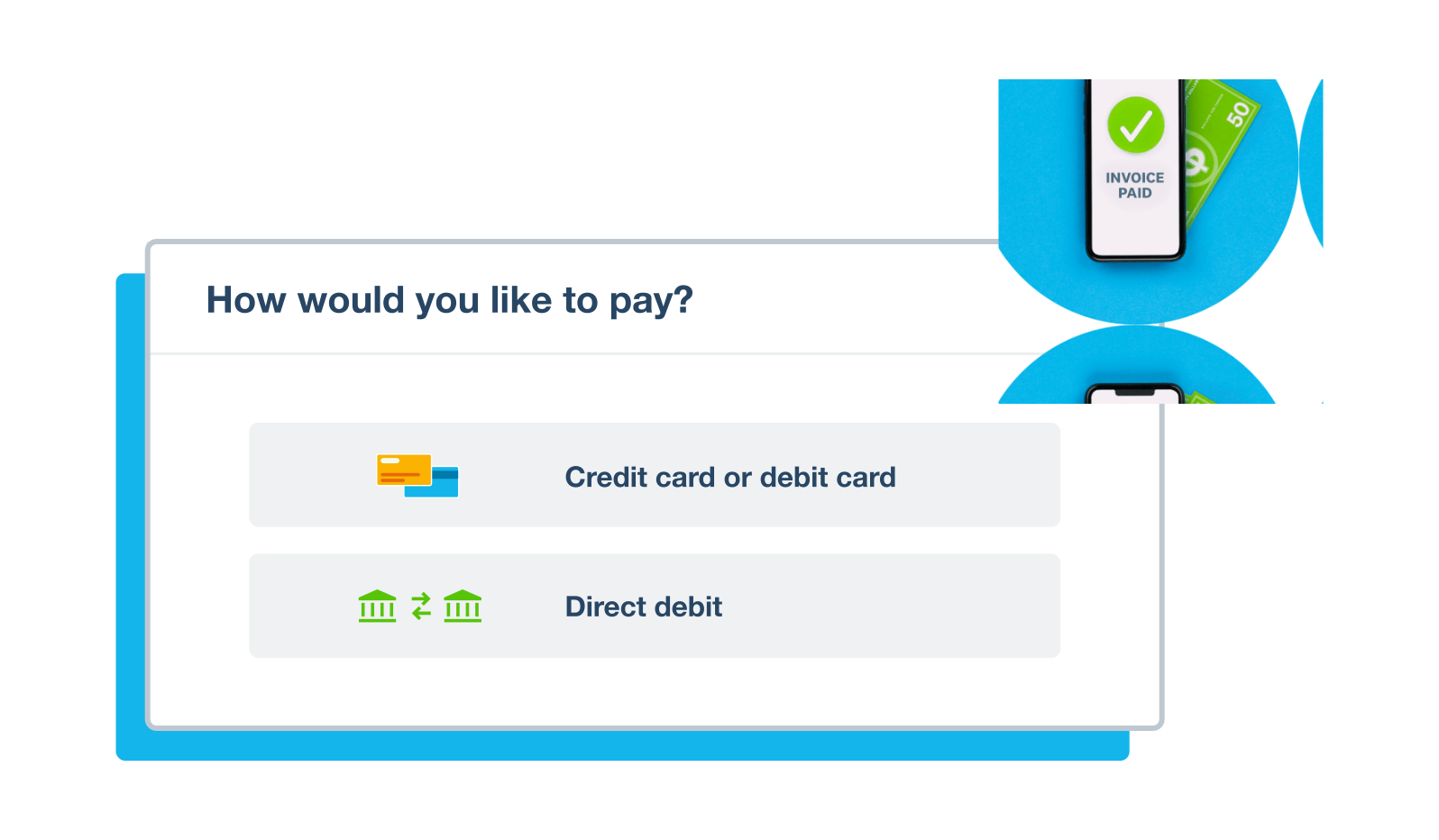
Online invoices allow customers to click straight through and pay instantly, which can reduce wait times for the vendor.
Use real-time reporting to make better decisions
Waiting until month-end to review your finances can be costly during a downturn. Real-time dashboards and reporting tools let you track cash flow, revenue, and expenses as they happen. Xero's reporting features, including Xero Analytics Plus, give you a clear picture of your financial position at any point.
Connect your business tools
Integrating your accounting software with other tools you use, such as payment platforms, inventory systems, or payroll, reduces duplication and errors. A connected system gives you a single source of truth for your business finances, which is especially important when conditions change quickly.
Strengthen your business finances with Xero
Preparing for a recession starts with having a clear, real-time view of your finances. Xero brings your invoicing, cash flow, expenses, and reporting into one place so you can spot risks early and act with confidence.
With features like automated bank reconciliation, real-time cash flow tracking, and customisable reports, Xero helps you stay in control even when conditions are uncertain. Connect with an accountant or bookkeeper through the Xero advisor directory for expert guidance tailored to your business.
Ready to take control of your business finances? Get one month free and see how Xero can help you build a more resilient business.
FAQs on recession-proof businesses
Here are answers to frequently asked questions about building and maintaining a recession-proof business.
What makes a business truly recession-proof?
No business is completely immune to recessions. However, businesses that provide essential services, maintain diverse revenue streams, and hold strong cash reserves are best positioned to weather economic downturns.
Which industries perform best during recessions?
Healthcare, essential home repairs, financial services, pet care, education, and discount retail typically maintain steady demand. These industries succeed because they provide necessities or help customers save money.
How much cash should I keep in reserve?
Aim to hold enough cash to cover 6 to 12 months of operating expenses. This gives you time to adjust your business model without making rushed decisions.
Should I cut marketing during a recession?
Continue marketing during downturns. Many competitors will reduce their spending, creating opportunities for you to strengthen visibility and gain market share at a lower cost.
How can I protect my cash flow during a downturn?
Send invoices promptly, track payment times closely, and offer online payment options for faster collection. Use cash flow forecasting tools to identify potential problems before they become critical.
How can technology help my business during a recession?
Cloud accounting software automates routine tasks like bank reconciliation and invoicing, reducing manual work and costs. Real-time reporting tools help you make faster, better-informed decisions when conditions change quickly.
Disclaimer
Xero does not provide accounting, tax, business or legal advice. This guide has been provided for information purposes only. You should consult your own professional advisors for advice directly relating to your business or before taking action in relation to any of the content provided.
Get one month free
Purchase any Xero plan, and we will give you the first month free.