How to start a handyman business: Steps for success
Learn how to start a handyman or handywoman business, set prices, win clients, and get paid fast.

Written by Jotika Teli—Certified Public Accountant with 24 years of experience. Read Jotika's full bio
Published Saturday 31 January 2026
Table of contents
Key takeaways
- Research your local market thoroughly to identify your target customers, understand what services are in high demand, and analyze competitor pricing before launching your handyman business.
- Check provincial licensing requirements and register for necessary business taxes, as specialized trades like plumbing and electrical work require proper certification while basic handyman services typically don't need licenses.
- Set competitive pricing by calculating your true costs including labor, materials, overhead expenses, profit margin, and taxes to ensure profitability while remaining attractive to customers.
- Invest in essential business protection including general liability insurance, commercial auto coverage, and professional liability insurance, as most clients expect proof of insurance before hiring you.
Why start a handyman business
A handyman business provides home repair and maintenance services to residential customers. Starting one can be profitable if you have practical skills and enjoy helping homeowners solve problems.
This business model offers flexibility and low startup costs, but requires physical work and customer management skills.
Pros
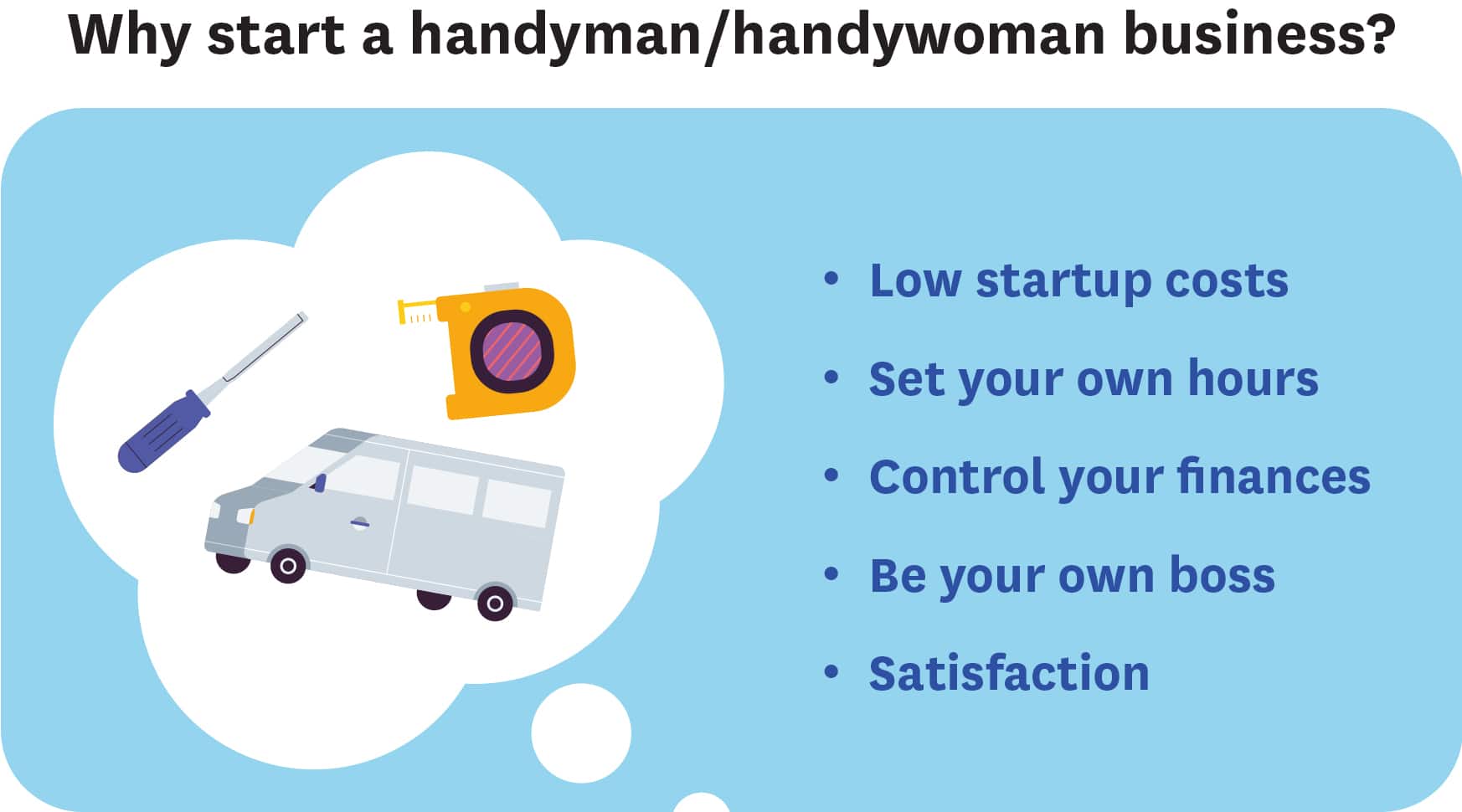
Starting a handyman business offers several advantages:
- Low startup costs: Use tools you already own to get started quickly
- Flexible schedule: Set your own hours and choose full-time or part-time work
- Service control: Pick which jobs to take and which services to offer
- Independence: Work for yourself with direct customer relationships
- Job satisfaction: Help customers improve their homes while earning income
Cons
Consider these challenges before starting:
- Physical demands: Manual labor can be physically demanding
- Technical skills required: Need mechanical abilities and tool expertise
- Licensing requirements: Some jobs require professional certification
- Customer acquisition: Finding steady work takes time and marketing effort
- Variable income: Earnings fluctuate seasonally and between jobs
- Equipment costs: Initial tool and vehicle investments can be significant
How to start a handyman business step by step
Handyman work usually covers smaller home repair and maintenance jobs that do not need specialized trade licences. You typically take on tasks that are simpler than a general contractor’s projects and rely on hands-on experience rather than formal trade training.
Licensing requirements vary by province. Most basic handyman services don't need licenses, but specialized work like plumbing, electrical, or HVAC requires proper certification. Check your provincial regulations for dollar limits on unlicensed work.
Once you've decided to take the leap, it's time to get down to business. Following a clear plan helps you cover all your bases and start on the right foot. Here's a step-by-step guide to get your handyman business up and running.
1. Research your local market
Before you start, get to know your local area. Who are your potential customers? Are they homeowners, landlords, or property managers? What services are in high demand?
Look at your competition to see what they offer and how much they charge. This research helps you find your niche and define your target market.
Your target market defines the customers most likely to hire your handyman services. Understanding them helps you price services correctly and focus marketing efforts effectively.
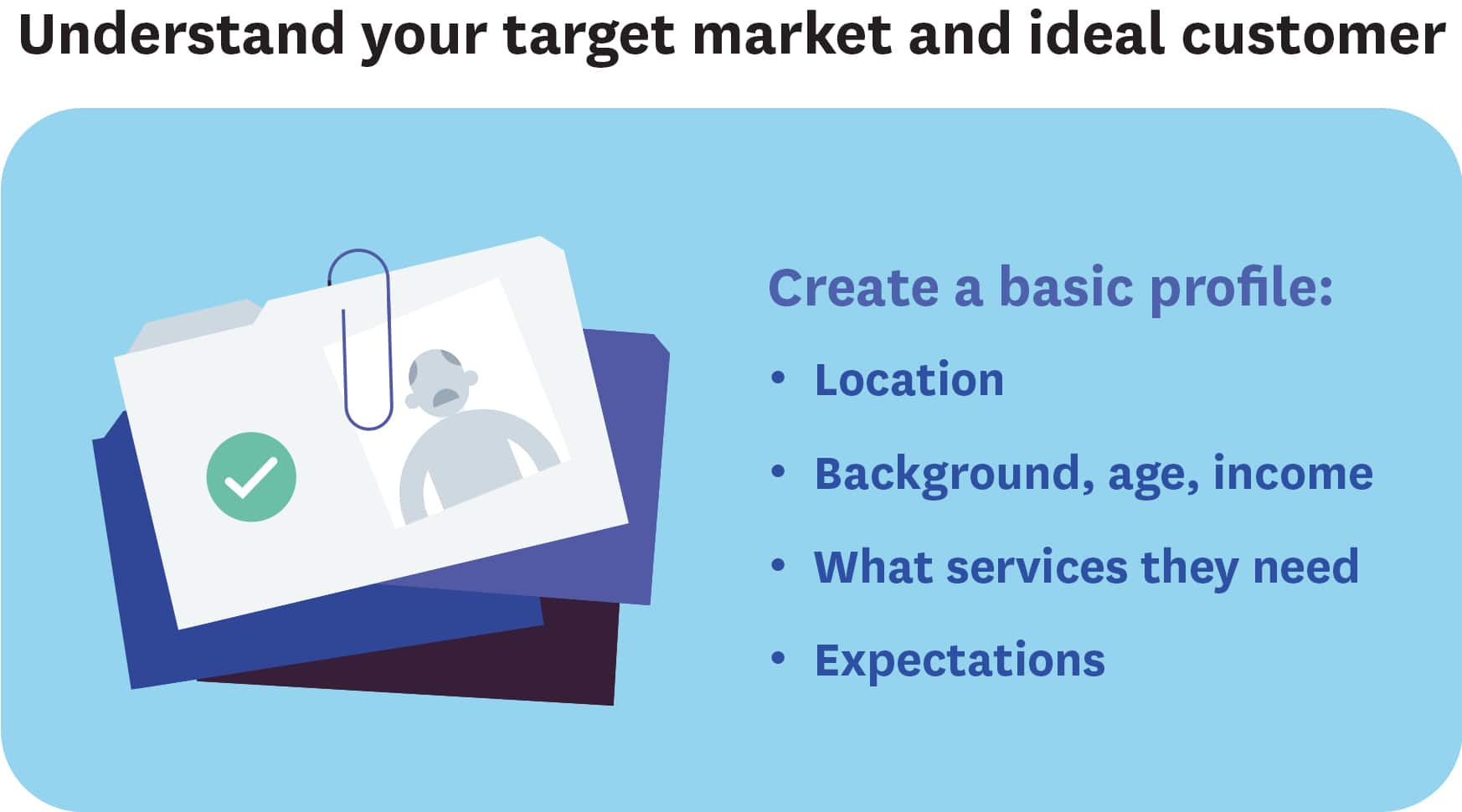
Define your ideal customers by:
- Demographics: Age, income level, and family status
- Location: Geographic area you'll serve
- Service needs: Types of repairs and maintenance they require
- Preferences: What they value most (speed, quality, price, reliability)
Make sure your services match your customers’ expectations. For example, customers may be looking for someone affordable who can do quality work at a reasonable price.
2. Create a business plan
A business plan maps out your handyman business strategy and helps secure financing. It identifies your target market, competitive advantages, and financial projections.
Your business plan should include:
- Executive summary: One-page overview of your business concept
- Market analysis: Local competition and customer demand assessment
- Service offerings: Specific handyman services you'll provide
- Financial projections: Startup costs, pricing, and revenue forecasts
- Marketing strategy: How you'll attract and retain customers
You may want to work with a lawyer to draft a service contract for clients to sign, especially for larger jobs. A service contract sets out what work you will do, how and when you will be paid, and helps protect you and your client. Its purpose is to clarify client expectations and minimize the risk of legal disputes by laying out payment terms.
3. Choose your business structure
Business structure determines how you pay taxes and your legal liability. Most new handyman businesses start as sole proprietorships because it's the simplest option and the default if you don't choose otherwise.
Main structure options:
- Sole proprietorship: Simplest setup, personal liability for business debts
- Partnership: Shared ownership with one or more partners
- Corporation: Separate legal entity, more complex but limits personal liability
Sole proprietorship
A sole proprietorship is an unincorporated business. It has one owner, and it is the simplest type of business structure. As a sole proprietor, there's no legal separation between your personal assets and your business assets and expenses. As a result, you're personally responsible for all of the debts and obligations of your business.
Individuals doing contract work, such as freelancers or consultants, often choose to file their business taxes as sole proprietors. It is the simplest option and does not involve the cost of incorporating a company.
Partnership
A partnership is owned by two or more people. There are no rules about how it's divided. One partner can own 99% of the business. It's easy to set up as a partnership, though it's recommended you have an official letter that sets out the agreement between partners. Tax is simple too. You just declare your share of business income on your personal tax return.
4. Get required licenses and register for taxes
Check your provincial licensing requirements before starting work. Most basic handyman services don't require licenses, but specialized trades do.
Use BizPaL to find required permits and licenses for your location. Some provinces limit unlicensed work to projects under specific dollar amounts.
Register for business taxes with the Canada Revenue Agency and your provincial tax office.
Tax registration requirements:
- Federal: Business number from CRA for income tax and GST/HST
- Provincial: Register for provincial sales tax if applicable
- Automatic registration: Some provinces provide business numbers when you incorporate
5. Define your services
Your service offerings determine your revenue potential and target market. Focus on services matching your skills and local demand.
Popular handyman services include:
- Assembly and installation: Furniture, fixtures, and appliances
- Repair work: Minor plumbing, electrical, and appliance fixes
- Painting and finishing: Interior touch-ups and cabinet refinishing
- Outdoor maintenance: Fence repairs, gutter cleaning, and mailbox fixes
- Home safety: Childproofing and accessibility modifications
You can choose which services you want to specialize in, if any. Even something as simple as assembling furniture can be profitable.
6. Set your pricing strategy
Set competitive prices by researching local competitors and calculating your true costs. Proper pricing ensures profitability while remaining attractive to customers.
Price calculation includes:
- Labor costs: Your hourly rate multiplied by job time
- Material costs: Supplies and parts needed for the job
- Overhead expenses: Vehicle, insurance, marketing, and administrative costs
- Profit margin: Additional percentage for business growth and unexpected costs
- Tax planning: Set aside money for income and sales taxes
7. Get business insurance
Business insurance protects you from liability claims and property damage while working in customers' homes. Most clients expect proof of insurance before hiring you.
Essential coverage includes:
- General liability: Protects against property damage and injury claims
- Commercial auto: Covers your vehicle used for business purposes
- Professional liability: Covers mistakes in your work or advice
8. Set up your finances
Keep your personal and business finances separate. A business bank account keeps your business expenses apart from your personal spending and makes accounting and tax filing more straightforward.
Startup cost planning helps you determine how much money you need and identify funding sources. Calculate costs for tools, vehicle, insurance, and initial marketing.
Funding options include:
- Personal savings: Use existing funds to maintain full control
- Family loans: Borrow from relatives at favorable terms
- Government grants: Research federal and provincial funding programs
- Business loans: Apply for traditional bank financing or lines of credit
- Credit cards: Use for small initial expenses (monitor interest rates)
9. Buy essential tools and equipment
Whatever your client's home improvement project, you will need the right equipment, a roadworthy vehicle, and the necessary supplies to meet your client's needs. These include:
- Tools and equipment: You'll need basic tools like an extension ladder, basic tool kit, sander, cordless drill, handsaw, and safety equipment for every job.
- Transportation: Having your own vehicle, either owned or rented, in good working order is a must.
- Local suppliers: Find a reliable local supplier for items such as nails, paint, and anything else that you may need.
10. Market your handyman business
Effective marketing generates steady customer flow and builds your reputation. Focus on channels where homeowners actively search for handyman services.
Key marketing strategies:
- Word of mouth: Ask satisfied customers for referrals and online reviews
- Online presence: Create Google Business Profile and social media accounts
- Local advertising: List services in community newspapers and bulletin boards
- Professional networks: Connect with real estate agents and property managers
Managing your handyman business finances
Staying on top of your finances is key to running a successful handyman business. It's not just about the work you do, but also about how you manage the money you earn. Keeping clear records of your income and expenses helps you understand your profitability and makes tax time less stressful.
Using cloud accounting software simplifies your financial work. You can send professional invoices from your phone as soon as a job is done, which helps you get paid faster. By connecting your business bank account, you can see your cash flow in real time and easily track every expense, from fuel to new tools. This helps you make smart decisions and run your business, not your books.
Ready to simplify your business finances? Start a free trial and see how easy managing your money can be.
Growing your handyman business
Once your business is established, you can start thinking about growth. This could mean expanding the services you offer, hiring your first employee, or investing in new tools to take on bigger jobs. Listen to customer feedback to identify new opportunities and improve your service.
As you grow, technology can help you stay organized and efficient. From scheduling jobs to managing your finances, the right tools can automate tasks and free up your time. This allows you to focus on delivering great work and building strong customer relationships, which are the foundations of a thriving business.
Try Xero for free to streamline your accounting so you can focus on building your business.
FAQs on starting a handyman business
Here are answers to some common questions about starting a handyman business.
Do you need a license to be a handyman in Ontario?
In Ontario, you generally do not need a specific ‘handyman licence’ for basic repairs like painting or assembling furniture. However, specialized trades such as electrical, plumbing, and gas fitting require specific licenses and certifications. Always check with your local municipality for any additional business licensing requirements.
What services can a handyman business legally provide?
A handyman can typically provide a wide range of repair, maintenance, and installation services that do not require a specialized trade licence. This includes tasks like drywall repair, painting, minor carpentry, and fixture installation. The specific scope of work can vary by province, so it's important to understand your local regulations.
How much should I charge as a handyman in Canada?
Handyman rates in Canada vary based on location, experience, and the type of work. They typically range from $50 to $100 per hour or higher. Research local competitors to get a sense of the market rate. You can also charge a flat fee for standard jobs. Your pricing should cover your costs, time, and expertise.
What's the difference between a handyman and a contractor?
A handyman usually handles smaller repair and maintenance jobs, often working on multiple small tasks within a single project. A general contractor typically manages larger projects, like renovations or new construction, and coordinates various subcontractors (like plumbers and electricians).
You can use this construction business plan template if you decide to move into that type of work. Contractors often require more extensive licensing and insurance.
How do I track expenses and income for my handyman business?
The best way to track your finances is with accounting software. It allows you to record all income, capture receipts for expenses like tools and materials, and see your profitability at a glance. Keeping your business finances organized from the start makes managing your cash flow and filing taxes much easier.
Start using Xero for free
Access Xero features for 30 days, then decide which plan best suits your business.