Cash accounting
Learn what cash accounting is, how it works, and when South African small businesses should use it.
Published Wednesday 12 August 2026
Table of contents
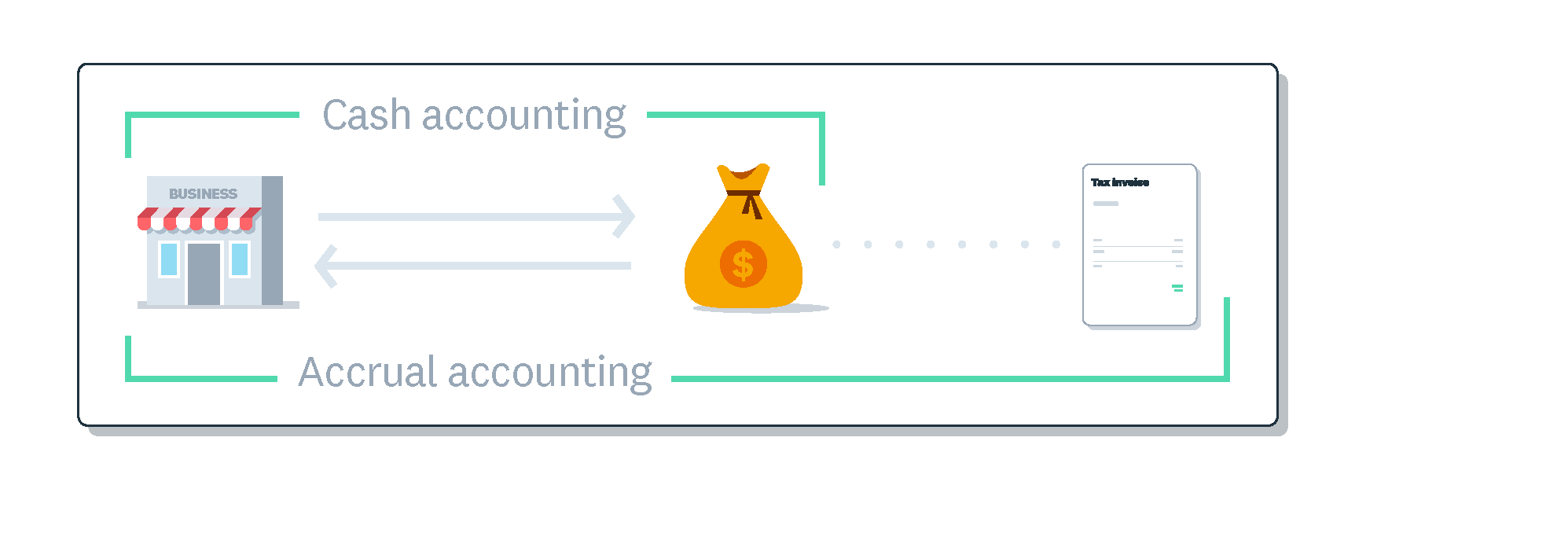
Cash accounting focuses only on money, not bills or invoices.
Key takeaways
- Cash accounting records income when you receive payment and expenses when you pay them, giving you a clear picture of actual cash on hand.
- This method suits sole traders, freelancers, and small service businesses that want simple bookkeeping without tracking invoices owed.
- Cash accounting can ease tax timing because you only account for money that has actually changed hands.
- The main drawback is that it ignores money owed to you or by you, which can hide cash flow problems from lenders and investors.
What is cash accounting?
Cash accounting is a method that records income and expenses only when money actually changes hands. You record income when you receive payment and expenses when you make payment, not when you issue or receive an invoice. The alternative is accrual accounting, which records transactions when they're earned or incurred, regardless of when payment occurs.
How cash accounting works
Under cash accounting, your books reflect the money moving in and out of your bank account. You don't track accounts receivable (money owed to you) or accounts payable (money you owe).
Here's how it works in practice:
- You record income when a client pays you, not when you send the invoice.
- You record an expense when you pay a bill, not when you receive it.
- Your financial records show your actual bank balance at any point in time.
Cash accounting example
A concrete example helps illustrate how cash accounting affects your records.
Suppose you're a freelance designer. In June, you invoice a client R15,000 for a completed project. The client pays you in July. Under cash accounting, you record the R15,000 income in July (when payment arrives), not in June (when you issued the invoice).
The same principle applies to expenses. You receive a R4,000 supplier bill in June but pay it in July. Under cash accounting, you record the R4,000 expense in July when the payment leaves your account.
Cash accounting vs accrual accounting
The key difference between these two methods is timing. Cash accounting records transactions when payment occurs, while accrual accounting records them when they're earned or incurred.
Cash accounting:
- Records income when you receive payment
- Records expenses when you pay them
- Shows your actual cash position
- Simpler to maintain
Accrual accounting:
- Records income when you earn it (when you invoice)
- Records expenses when you incur them (when you receive a bill)
- Shows a fuller picture of financial commitments
- Required for larger businesses and IFRS reporting
For a detailed comparison, see the guide to cash vs accrual accounting.
Advantages of cash accounting
Cash accounting offers several benefits for small businesses with straightforward finances.
- Simplicity: you only need to track money as it moves in and out of your bank.
- Clear cash view: your records reflect exactly how much cash you have available.
- Tax timing: you account for tax on money you've actually received, not on invoices you've sent.
- Lower admin: no need to track outstanding invoices or unpaid bills in your accounting records.
If you're starting out, the small business accounting guide covers the basics of setting up your books.
Disadvantages of cash accounting
Cash accounting has limitations that can cause problems as your business grows.
The main drawback is that it only shows a short-term view. Your records ignore accounts receivable (money clients owe you) and accounts payable (money you owe suppliers). This blind spot can mislead lenders and investors who want to understand your true financial position. Cash accounting also isn't suitable for businesses that need IFRS-based reporting.
That blind spot matters in South Africa, where overdue invoices are common: National Treasury payment data reported by Business Partners showed 95,399 government invoices older than 30 days, worth a combined R12.4 billion, still unpaid at the end of the second quarter of 2025.
For strategies to handle late payments and maintain healthy finances, see the guide to managing cash flow.
Which businesses use cash accounting in South Africa?
Cash accounting suits businesses with simple financial structures and minimal inventory.
Typical users include:
- Sole traders
- Freelancers and consultants
- Small service businesses
- Businesses that receive payment at the time of sale
These businesses benefit from cash accounting's simplicity because they don't need to track complex inventory or large volumes of outstanding invoices. For guidance on keeping your records organised, see the small business bookkeeping guide.
Cash accounting and your tax
Understanding how cash accounting affects your tax obligations is important for compliance.
In South Africa, most VAT vendors must account for VAT on the invoice basis. However, sole traders and certain other vendors whose annual taxable supplies are under R2.5 million can apply to SARS for approval to account for VAT on the payments basis (also called the cash basis). This can ease cash flow for businesses with slow-paying clients because you only pay VAT on money you've actually received.
Tax rules can be complex, so confirm your situation with SARS or an accountant. For more on capturing your transactions correctly, see the guide to recording accounting transactions.
Simplify cash accounting with Xero
Xero makes it easy to track the money flowing in and out of your business. Bank feeds pull transactions into your account automatically, so you can see your cash position in real time. You can match payments to invoices, reconcile your accounts, and run reports that show exactly where your money is going. Try Xero today and get one month free.
FAQs on cash accounting
Here are answers to common questions about cash accounting in South Africa.
Is cash accounting allowed for VAT in South Africa?
Yes, but only with SARS approval. Vendors with annual taxable supplies under R2.5 million can apply to use the payments basis for VAT, which aligns VAT payments with when you actually receive money from clients.
What is the difference between cash and accrual accounting?
Cash accounting records transactions when payment occurs. Accrual accounting records them when earned or incurred, regardless of payment timing. Accrual gives a fuller financial picture but requires more administration.
Who should use cash accounting?
Cash accounting works well for sole traders, freelancers, and small service businesses without inventory. It's ideal if you want simple bookkeeping and your clients typically pay promptly.
What are the disadvantages of cash accounting?
It ignores money owed to you and money you owe, which can mask cash flow problems. This limited view may not satisfy lenders, investors, or IFRS reporting requirements.
Can I switch from cash to accrual accounting?
Yes, you can switch methods, but the transition requires careful adjustment of your records to avoid double-counting or missing transactions. Consult an accountant to ensure the changeover is handled correctly.
Related terms
Learn more about cash accounting
Handy resources
Advisor directory
You can search for experts in our advisor directory
How to do bookkeeping
Learn about data entry, bank rec, reporting and tax prep in our guide to doing bookkeeping.
Online accounting with Xero
Automate your accounting in the cloud
Disclaimer
This glossary is for small business owners. The definitions are written with their requirements in mind. More detailed definitions can be found in accounting textbooks or from an accounting professional. Xero does not provide accounting, tax, business or legal advice.