Accrual accounting
What accrual accounting is, how it differs from cash accounting, and when your business should use it.
Published Friday 24 July 2026
Table of contents
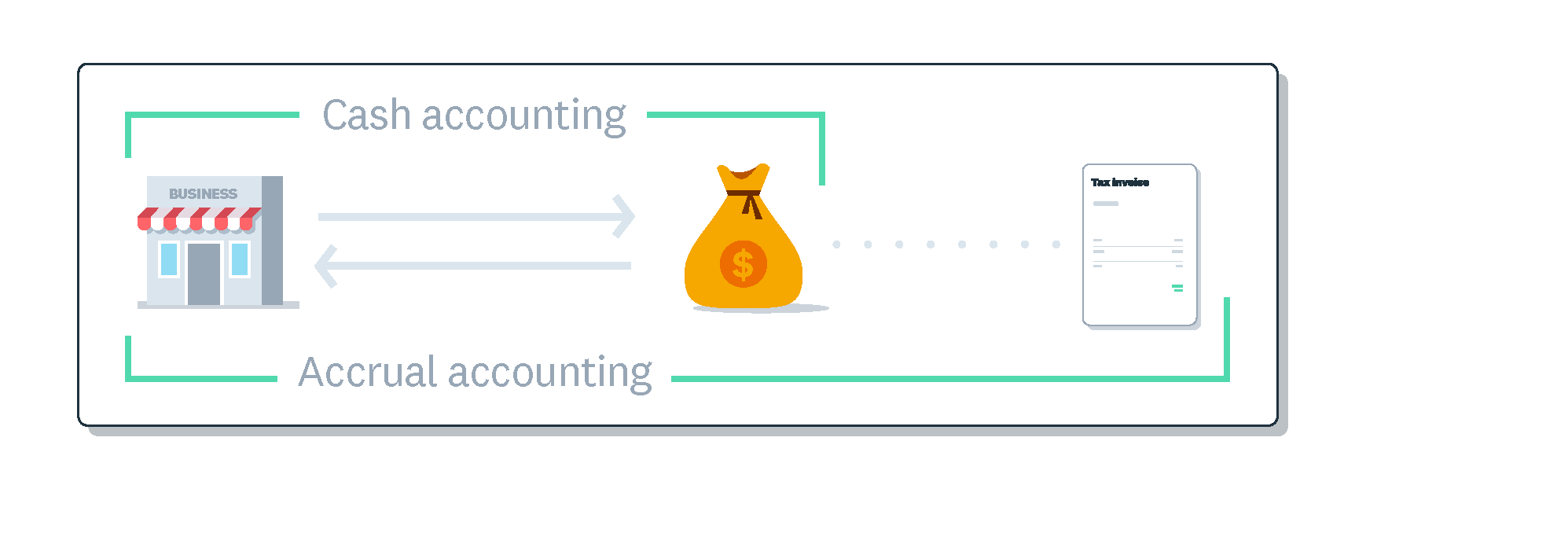
Accrual accounting keeps tabs on bills and sales invoices that are yet to be paid.
Key takeaways
- Accrual accounting records income when you earn it and expenses when you incur them, no matter when the cash moves.
- It follows the matching principle, so revenue sits in the same period as the costs that helped create it.
- Cash accounting is simpler, but accrual accounting gives a fuller view of profitability and what you owe.
- Accrual accounting suits businesses that sell on credit, hold stock, or plan to seek finance.
What is accrual accounting?
Accrual accounting is a method that records income when it's invoiced and expenses when they're billed, regardless of when money actually changes hands. This differs from cash accounting, which records income and expenses only when cash is received or paid.
The method sits at the heart of how most growing businesses track performance. If you want a plain-English primer on the wider concept, the guide to cash vs accrual accounting is a helpful starting point.
How does accrual accounting work?
Accrual accounting works by recording revenue when it's earned and expenses when they're incurred, then matching the two in the same period. This is known as the matching principle, and it gives you a clearer measure of profit for each month.
Here's a simple worked example. Say you invoice a client R10,000 in March for work you finished that month, but they only pay you in April.
Under accrual accounting, you record the R10,000 as revenue in March, when you earned it. Cash accounting would record it in April, when the payment lands in your account.
The same logic applies to costs: a supplier bill dated in March counts as a March expense, even if you settle it later. To see how these entries flow through your books, read how to record accounting transactions.
Accrual accounting vs cash accounting
The core difference is timing: accrual accounting records transactions when they happen, while cash accounting records them when money moves. Both are valid, and the right choice depends on how you sell and how much detail you need.
The points below sum up how the two methods compare in day-to-day use.
- Cash accounting records income and expenses only when money actually moves in or out.
- Accrual accounting records them when they're earned or incurred, whatever the payment timing.
- Cash accounting is simpler to run and shows your real-time cash position.
- Accrual accounting gives a fuller view of profitability and the amounts you owe or are owed.
Which method you can use also depends on the basis of accounting your business reports on. For more on that idea, see the glossary entry for cash accounting.
Types of accruals
Accruals are the adjustments that keep income and expenses in the right period. There are four common types, and each captures a timing gap between the transaction and the cash.
These are the accruals you'll come across most often:
- Accrued revenue: income you've earned but haven't yet invoiced or been paid for
- Accrued expenses: costs you've incurred but haven't yet paid, such as wages or electricity
- Deferred (unearned) revenue: money received in advance for goods or services you haven't delivered yet
- Prepaid expenses: costs paid ahead of time, such as insurance or rent, that apply to future periods
Advantages and disadvantages of accrual accounting
Accrual accounting gives you a more accurate view of performance, but it asks for more effort to maintain. Weighing both sides helps you decide whether it fits your business.
Advantages of accrual accounting
The main benefit is accuracy: accrual accounting shows how your business is really doing over a period. These are the advantages that matter most for planning and growth.
- Shows a more accurate picture of profitability across a period
- Matches income with the costs that helped generate it
- Supports better cash flow planning and forecasting
- Meets the reporting standards that lenders and investors expect
Disadvantages of accrual accounting
The trade-off is complexity, because accrual accounting takes more time and know-how than a cash approach. Keep these drawbacks in mind before you commit.
- Takes more time and bookkeeping knowledge to maintain
- Masks your actual cash position if you read the profit figure alone
- Requires you to track accounts receivable and accounts payable
- Adds cost if you rely on an accountant or software to manage it
Good habits make the method far easier to run, so it helps to get the basics of small business bookkeeping in place first.
When should your business use accrual accounting?
Use accrual accounting when you need an accurate month-by-month view of profit and you deal in credit, stock, or outside finance. It's the method most businesses move to as they grow beyond simple cash in and cash out.
Accrual accounting tends to suit your business if you:
- sell goods or services on credit
- hold stock or inventory
- want accurate monthly profit and loss figures
- plan to seek funding or attract investors
Larger businesses, and those that report under recognised accounting standards, are often required to use it rather than choosing it. Your business size and structure, along with what tax authorities such as SARS expect, will guide the final decision. If you're setting things up from scratch, this guide on how to do bookkeeping walks through the fundamentals.
Simplify accrual accounting with Xero
Accrual accounting gets far simpler when your invoices, bills, and bank transactions live in one place. Xero tracks what you're owed and what you owe, and keeps your income and expenses in the right period automatically.
You can try it for yourself and get one month free to see how accrual accounting fits into your day-to-day admin.
FAQs on accrual accounting
Here are answers to some frequently asked questions about accrual accounting to help you decide if it's right for your business.
Is accrual accounting the same as double-entry bookkeeping?
No, they're related but not the same. Double-entry is the system of recording each transaction in two accounts, while accrual is the timing rule that decides when those entries are recorded.
Can a small business switch from cash to accrual accounting?
Yes, and many businesses do so as they grow or start selling on credit. You'll need to add opening balances for amounts owed and owing so the periods line up correctly.
Does accrual accounting affect my tax?
It can change the period in which income and expenses fall, which affects the timing of what you report. Check with your accountant or the relevant tax authority about the rules that apply to your business.
Is accrual accounting required in South Africa?
It depends on your business size, structure, and reporting obligations rather than a single fixed rule. Smaller businesses may have a choice, while those reporting under recognised accounting standards are usually expected to use it.
Related terms
Learn more about accrual accounting
Handy resources
Advisor directory
You can search for experts in our advisor directory
How to do bookkeeping
Learn about data entry, bank rec, reporting and tax prep in our guide to doing bookkeeping.
Online accounting with Xero
Automate your accounting in the cloud
Disclaimer
This glossary is for small business owners. The definitions are written with their requirements in mind. More detailed definitions can be found in accounting textbooks or from an accounting professional. Xero does not provide accounting, tax, business or legal advice.