What is a pro forma invoice? A UK guide for small businesses
Learn what a pro forma invoice is, when to use one, and how it differs from other business documents.

Written by Jotika Teli—Certified Public Accountant with 24 years of experience. Read Jotika's full bio
Published Monday 15 June 2026
Table of contents
Key takeaways
- A pro forma invoice is a preliminary bill of sale that outlines expected costs before a transaction is finalised. It's not legally binding and doesn't request payment.
- Pro forma invoices are commonly used for cost estimates, international customs clearance, and internal procurement approvals.
- A pro forma invoice is not a Value Added Tax (VAT) invoice. It doesn't create a tax point, and you should always label it "This is not a VAT invoice" to stay compliant with HMRC guidance.
- You can convert a pro forma invoice into a regular invoice by updating the details, adding an official invoice number, and including full tax information.
What is a pro forma invoice?
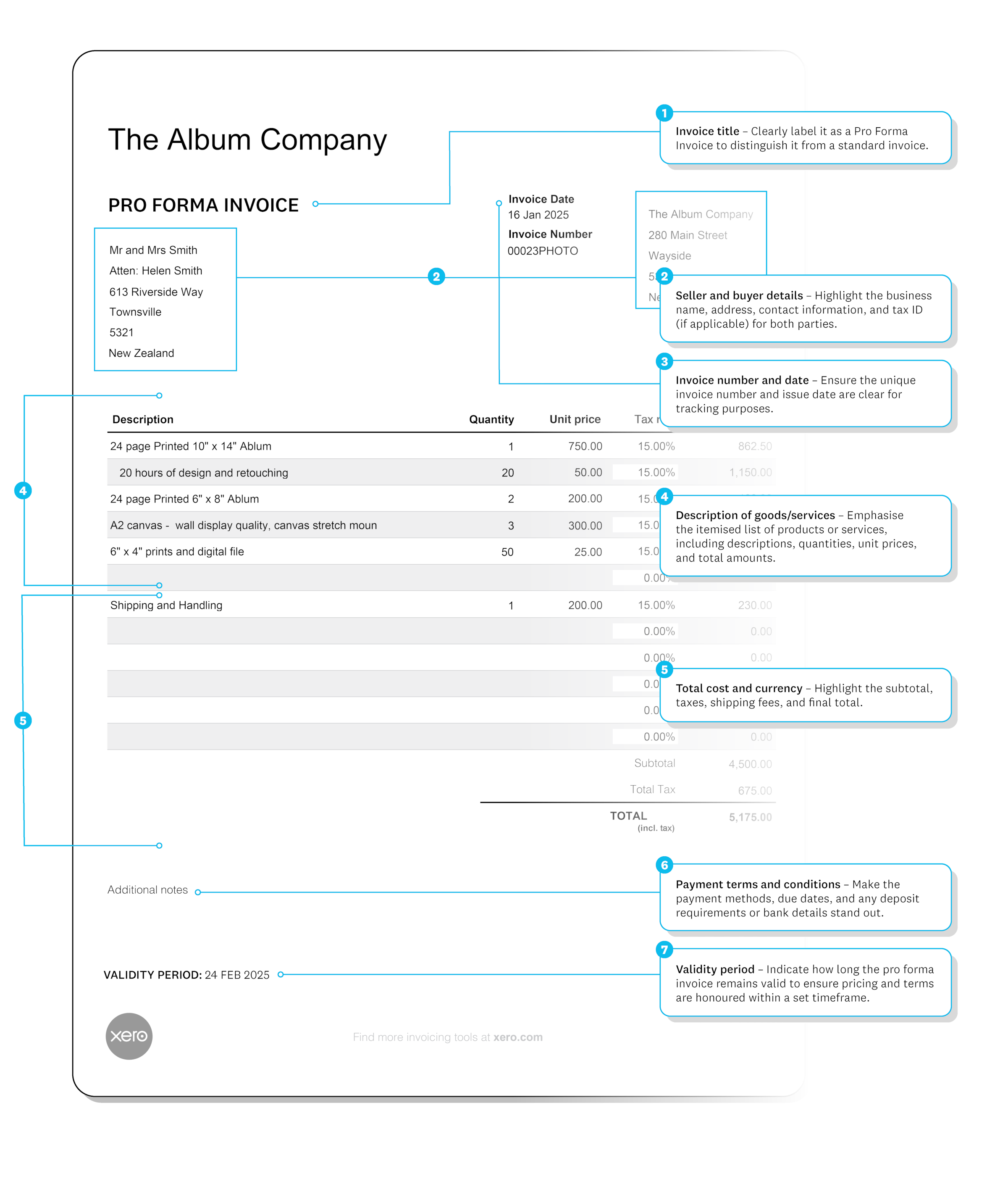
A pro forma invoice is a preliminary bill of sale sent to a buyer before a transaction is complete. It outlines the expected products, services, and costs without requesting payment.
It's a detailed preview of what the final invoice will look like, giving both parties a clear picture of the transaction before anything is confirmed.
Here are the key features of a pro forma invoice:
- Not legally binding : it's an estimate, not a contract or demand for payment
- Uses a reference number : not an official invoice number, since it's not a finalised document
- Not recorded in accounts receivable : because no payment is due, it stays off your books until a final invoice is raised
- Sent before the sale is finalised : it helps both sides agree on terms before committing
- Labelled clearly : the document should state "pro forma invoice" so there's no confusion with a standard invoice
When to use a pro forma invoice
Pro forma invoices are useful at several points in the sales process. They bridge the gap between a quote and a final invoice, giving buyers the detail they need to move forward.
Cost estimates and financing
When a buyer needs a detailed breakdown of costs before committing, a pro forma invoice is the right document. It helps them secure financing, plan budgets, or get internal sign-off on spending.
For example, a buyer might share the pro forma with their bank to arrange a letter of credit for an international purchase.
International shipping and customs clearance
Customs authorities often require a pro forma invoice to assess duties and taxes on imported goods. The document helps customs officers understand the shipment's value, contents, and origin before the goods arrive.
Without one, your shipment could face delays at the border. Including the right details upfront keeps things moving smoothly.
Procurement and internal approvals
Many organisations require formal cost documentation before approving a purchase. A pro forma invoice gives procurement teams the specifics they need to raise a purchase order or get management approval.
It sits neatly between a quote and a final invoice in the invoicing lifecycle. A quote opens the conversation, the pro forma locks in the expected costs, and the final invoice requests payment once the sale is complete.
What to include on a pro forma invoice
A well-prepared pro forma invoice includes all the details the buyer needs to understand the transaction. Keeping your invoice format consistent makes the document easier to read and more professional.
Here's what to include as standard:
- Seller's details : business name, address, and contact information
- Buyer's details : name, address, and any reference numbers they've provided
- Description of goods or services : clear line items with quantities, unit prices, and totals
- Reference number : a unique identifier for the pro forma (not an official invoice number)
- Payment terms : expected payment method, currency, and conditions
- "This is not a VAT invoice" label : required per HMRC guidance so the document isn't mistaken for a tax invoice
- Validity period : an expiry date so the buyer knows how long the quoted prices hold
If you're sending goods internationally, you'll also want to include:
- Weights and measurements : gross and net weight of the shipment
- Shipping costs : freight, insurance, and handling charges
- HS codes : Harmonised System codes that classify the goods for customs
- Incoterms : the agreed delivery terms (for example, FOB, CIF, or DDP)
Pro forma invoice example
Seeing how a pro forma invoice works in practice can make the details easier to grasp. Here's a realistic scenario for a UK-based small business.
Imagine a furniture maker in Bristol receives an enquiry from a buyer in the Netherlands. The buyer wants 20 handcrafted oak dining chairs. Before placing a formal order, they request a pro forma invoice to confirm costs and arrange customs paperwork.
The furniture maker's pro forma invoice would include:
- Seller details : Bristol Oak Furniture Ltd, full UK address, VAT registration number, and contact details
- Buyer details : the Dutch buyer's company name and shipping address
- Reference number : PF-2026-047 (a unique pro forma reference, not an invoice number)
- Date and validity : issued 15 May 2026, valid for 30 days
- Line items : 20 x handcrafted oak dining chairs at £185 each, totalling £3,700
- Shipping costs : £420 for freight and insurance to Rotterdam
- Total amount : £4,120
- HS code : 9401.69 for wooden-framed seats
- Incoterms : CIF Rotterdam
- Weights : gross weight 240 kg, net weight 200 kg
- Payment terms : 50% deposit on order confirmation, balance before shipment
- "This is not a VAT invoice" : clearly labelled at the top of the document
The buyer can use this document to arrange financing, prepare customs declarations, and confirm the order. Once both sides agree, the furniture maker issues a final sales invoice with an official invoice number and full tax details.
How a pro forma invoice differs from other documents
Pro forma invoices can look similar to other business documents, but they serve a distinct purpose. Understanding the differences helps you use the right document at the right time.
Pro forma invoice vs sales invoice
A sales invoice and a pro forma invoice differ mainly in timing and legal weight. A sales invoice is a formal request for payment issued after goods or services have been delivered, creating a legal obligation for the buyer to pay.
A pro forma invoice, by contrast, is sent before the transaction is finalised. It doesn't request payment, isn't legally binding, and shouldn't appear in your accounts receivable.
Pro forma invoice vs commercial invoice
A commercial invoice is the official document used in international trade to declare the value of goods crossing a border. Customs authorities use it to calculate duties and taxes.
While a pro forma invoice can accompany goods for customs purposes (and may support postponed VAT accounting on imports), it's a preliminary document. The commercial invoice replaces it once the sale is confirmed. Commercial invoices carry legal weight; pro forma invoices don't.
Pro forma invoice vs quote
A quote (or quotation) is a seller's offer to provide goods or services at a stated price. It's typically the first step in a negotiation.
A pro forma invoice goes further. It includes more detail, such as shipping terms, delivery timelines, and payment conditions. Buyers often use a pro forma invoice to arrange financing or customs clearance, which a simple quote wouldn't support.
Pro forma invoice vs purchase order
A purchase order is a document the buyer sends to the seller to formally request goods or services. It confirms what the buyer wants to purchase and at what price.
A pro forma invoice works the other way round: the seller sends it to the buyer as a cost estimate before the sale is agreed. The purchase order typically follows after the buyer reviews the pro forma and decides to proceed.
Benefits of using a pro forma invoice
Pro forma invoices offer practical advantages for both buyers and sellers. Here are the main reasons to use them in your sales process.
- Cost transparency : buyers get a complete breakdown of costs, including shipping and duties, before they commit to a purchase. This reduces surprises and builds trust.
- Smoother negotiations : a pro forma invoice gives both parties a concrete document to review and discuss. It's easier to negotiate specific line items than to go back and forth over vague estimates.
- Faster approvals : procurement teams and finance departments can use a pro forma invoice to get internal sign-off quickly. The detailed format satisfies the documentation requirements most organisations have in place.
- Streamlined customs clearance : for international transactions, a pro forma invoice helps customs authorities assess duties and taxes before goods arrive. This keeps shipments moving and avoids costly delays at the border.
- Reduced disputes : by setting clear expectations upfront, pro forma invoices lower the risk of disagreements when the final invoice is issued. Both sides have a written record of what was agreed.
Pro forma invoices and VAT
Getting the VAT treatment right on a pro forma invoice is essential. Mistakes here can cause confusion with HMRC or your customers.
Here are the key points to keep in mind:
- A pro forma invoice is not a VAT invoice. It doesn't meet the legal requirements for a VAT invoice under HMRC rules.
- No VAT tax point is created. A tax point only arises when goods are delivered, services are performed, or a VAT invoice is issued. A pro forma invoice triggers none of these.
- Always label it clearly. Include the statement "This is not a VAT invoice" on the document so there's no doubt about its status.
- VAT liability begins with the final invoice. You only need to account for VAT when you issue the official sales invoice or receive payment, whichever comes first.
You can show estimated VAT amounts on a pro forma invoice to give the buyer a realistic total. Just make sure it's clear these are estimates, not a formal VAT charge. For help calculating VAT amounts, check the current rates and rules.
If your business is registered for Making Tax Digital (MTD), pro forma invoices don't feed into your digital VAT records. Only finalised sales invoices count towards your VAT return submissions. MTD for Income Tax is also rolling out from April 2026 for sole traders and landlords, so keeping clean records now will make that transition smoother.
How to create a pro forma invoice
Creating a pro forma invoice is straightforward once you know what to include. Follow these 4 steps to get it right.
1. Start with a template
Using a template saves time and keeps your documents consistent. Choose one that includes all the standard fields, or adapt an existing invoice template. A good template helps you create an invoice that looks professional and covers all the essentials.
2. Fill in the required details
Add your business details, the buyer's information, a unique reference number, and a full description of the goods or services. Include quantities, unit prices, totals, payment terms, and a validity period. For international transactions, add shipping costs, weights, HS codes, and Incoterms.
3. Label the document clearly
Mark the document as "Pro forma invoice" at the top. Include the statement "This is not a VAT invoice" to comply with HMRC guidance. Clear labelling prevents the buyer or their accountant from treating it as a formal tax document.
4. Keep it off your accounts
Keep pro forma invoices out of your accounts receivable and sales ledger. They're estimates, not confirmed sales. Only book the transaction when you issue the final sales invoice and the sale is complete.
Can you convert a pro forma invoice to a regular invoice?
Yes, you can turn a pro forma invoice into a regular invoice once the sale is confirmed. The process involves creating a new document based on the pro forma, not simply changing a label.
Here's what to do:
- Update the details : confirm final quantities, prices, and any changes agreed since the pro forma was issued
- Add an official invoice number : assign a sequential number from your invoicing system to replace the pro forma reference number
- Include full tax information : add VAT amounts, your VAT registration number, and any other details required for a valid VAT invoice
- Relabel the document : change the title from "Pro forma invoice" to "Invoice" or "Sales invoice" and remove the "This is not a VAT invoice" disclaimer
Treat this as a new document rather than an edit of the original. The pro forma should remain on file as a record of the preliminary agreement. The final invoice is the one that goes into your accounts and creates a tax point for VAT purposes. Once it's ready, you can send the invoice to your customer promptly.
Manage your invoicing with Xero
Strong invoicing practices start with getting the basics right, from pro forma invoices through to final payment collection. When your invoicing process is organised, you spend less time chasing paperwork and more time growing your business.
Xero's invoicing tools help you create, send, and track invoices in one place, so you can spend less time on paperwork and more time on what matters. Get one month free.
FAQs on pro forma invoices
Here are answers to frequently asked questions about pro forma invoices.
Is a pro forma invoice legally binding?
No, a pro forma invoice is not legally binding. It's an estimate of costs and terms, not a contract or a demand for payment.
Can a pro forma invoice be cancelled?
Yes, either party can cancel or revise a pro forma invoice before a formal order is placed. If circumstances change, you can issue an updated pro forma with new terms or let the original expire.
Should you sign a pro forma invoice?
There's no legal requirement to sign a pro forma invoice. However, some international buyers or customs authorities may request a signature to verify the document's authenticity.
Does a pro forma invoice have a tax point?
No, a pro forma invoice doesn't create a tax point for VAT purposes. A tax point is only established when goods are delivered, services are completed, or a valid VAT invoice is issued.
What are the advantages of pro forma invoices?
Pro forma invoices give buyers a clear, detailed preview of costs before they commit. They're useful for securing financing, getting internal approvals, and preparing customs documentation for international shipments.
Is it OK to pay a pro forma invoice?
It's possible, but not standard practice. If you do pay based on a pro forma, ask the seller to issue a proper sales invoice for your records and VAT claims.
Related content
What is an invoice?
Get the lowdown on invoices.
How to send an invoice
Find out when and how to send an invoice.
How to make an invoice
Let’s walk through the process of making an invoice.
Disclaimer
Xero does not provide accounting, tax, business or legal advice. This guide has been provided for information purposes only. You should consult your own professional advisors for advice directly relating to your business or before taking action in relation to any of the content provided.
Get one month free
Purchase any Xero plan, and we will give you the first month free.