Xero launches NZ’s first data-based SME productivity measurement
Data reveals New Zealand small businesses less productive than Australia, United Kingdom
Wellington — 18 June, 2026 — Xero, the global small business platform, today released its first ever small business productivity measurement backed by data from Xero Small Business Insights (XSBI).
Xero’s data calculates the dollar amount produced per hour worked for a typical worker in a small business, and reveals a challenging picture with New Zealand small business productivity a step behind Australia and the United Kingdom.
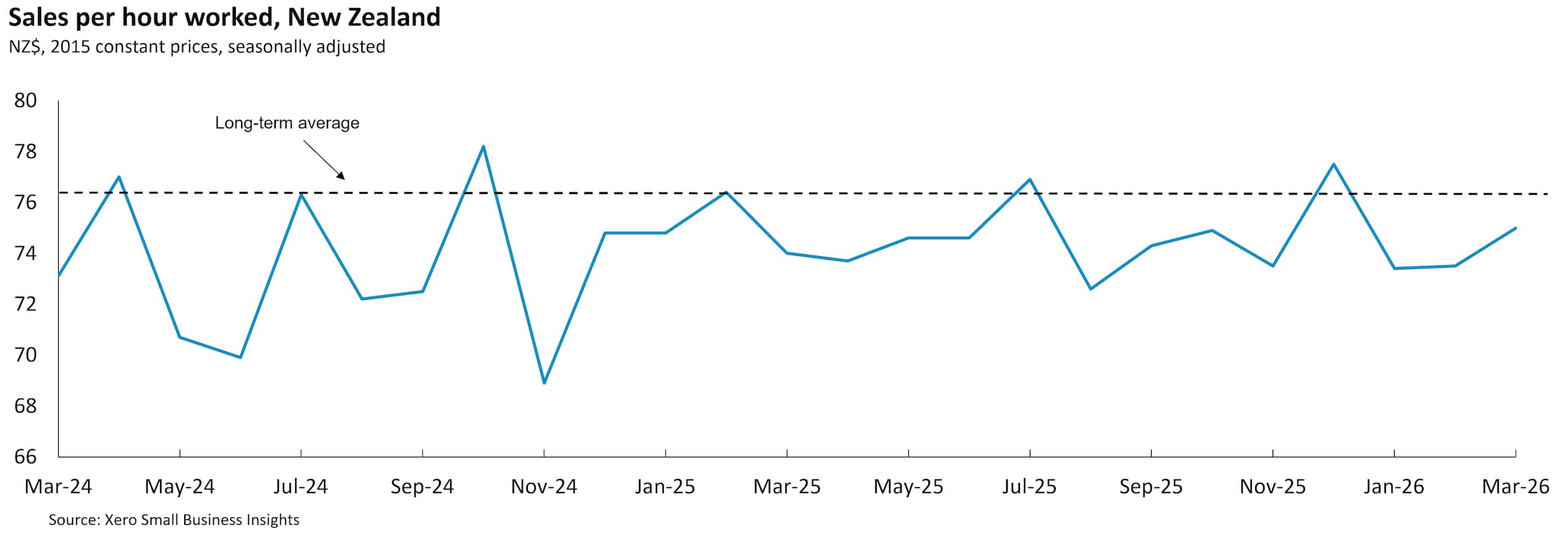
In the March quarter, small business labour productivity averaged $74.00NZD per hour worked, down from $75.30 per hour in the December quarter.
This is broadly in line with the prior six months ($74.50/hour) but remains below the long-term average of $76.30/hour, highlighting a continued period of muted productivity growth.
Bridget Snelling, Country Manager - Aotearoa New Zealand at Xero, said while its positive productivity was not substantially declining, the lack of meaningful improvement remained a concern.
“It’s disappointing we’re not seeing the kind of improvement needed to lift the small business economy,” says Snelling.
Productivity per employee also softened, averaging $9,168.90 per employee in the March quarter, down from $9,389.30 in the previous quarter, and sitting close to the long-term average of $9,137.00.
International comparisons highlight gap
International XSBI comparisons show New Zealand’s small business productivity continues to trail Australia and the UK, reinforcing the scale of the challenge.
While performance between Australia and the UK has fluctuated in recent years, New Zealand has remained consistently behind both — underlining the importance of sustained focus on lifting productivity across the small business sector.
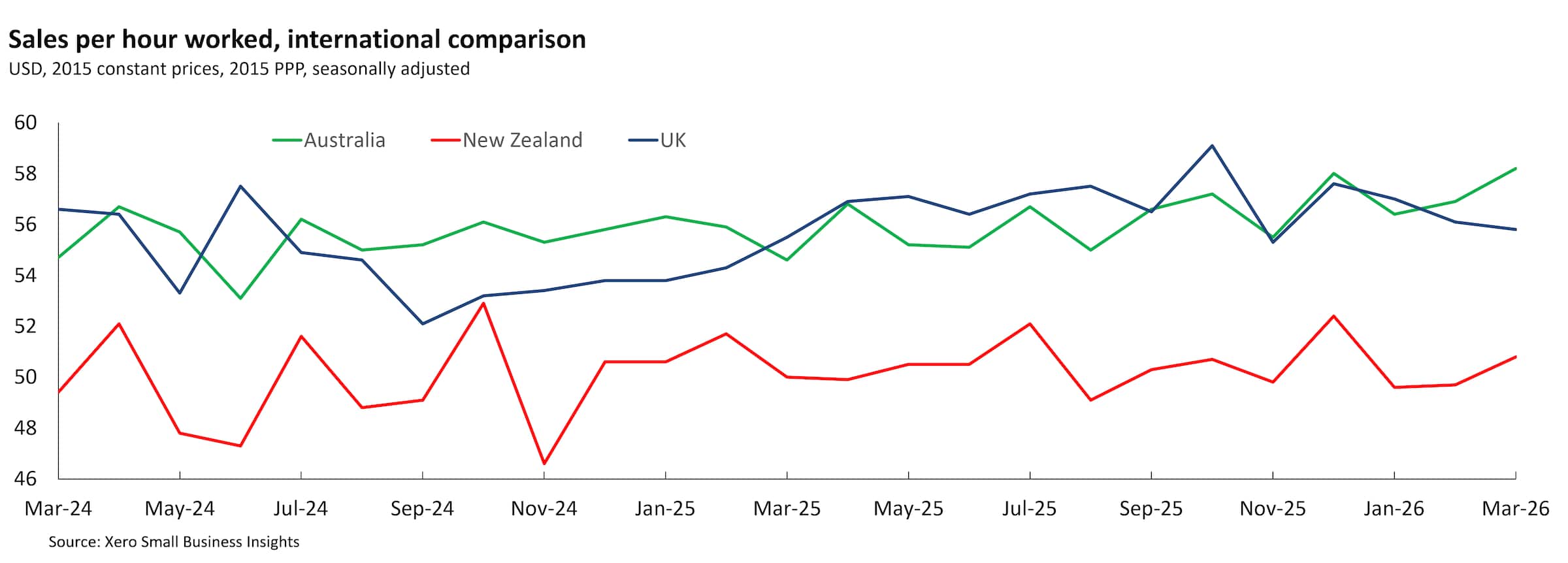
“Falling behind international peers like Australia and the UK is a reminder that lifting productivity needs to be a long-term priority,” says Snelling.
“The encouraging part is that there are clear levers — from digital adoption to skills and process improvements — that can help close that gap over time. Our small businesses can’t afford to sit still, this needs to be a priority.”
Industry trends show clear winners and laggards
Productivity levels varied significantly across industries, with manufacturing, construction and real estate services continuing to rank among the most productive sectors, while hospitality remained consistently at the bottom of the rankings by a considerable margin.
These patterns are broadly consistent with international trends, although New Zealand tends to show greater variability given its smaller economy and industry mix.
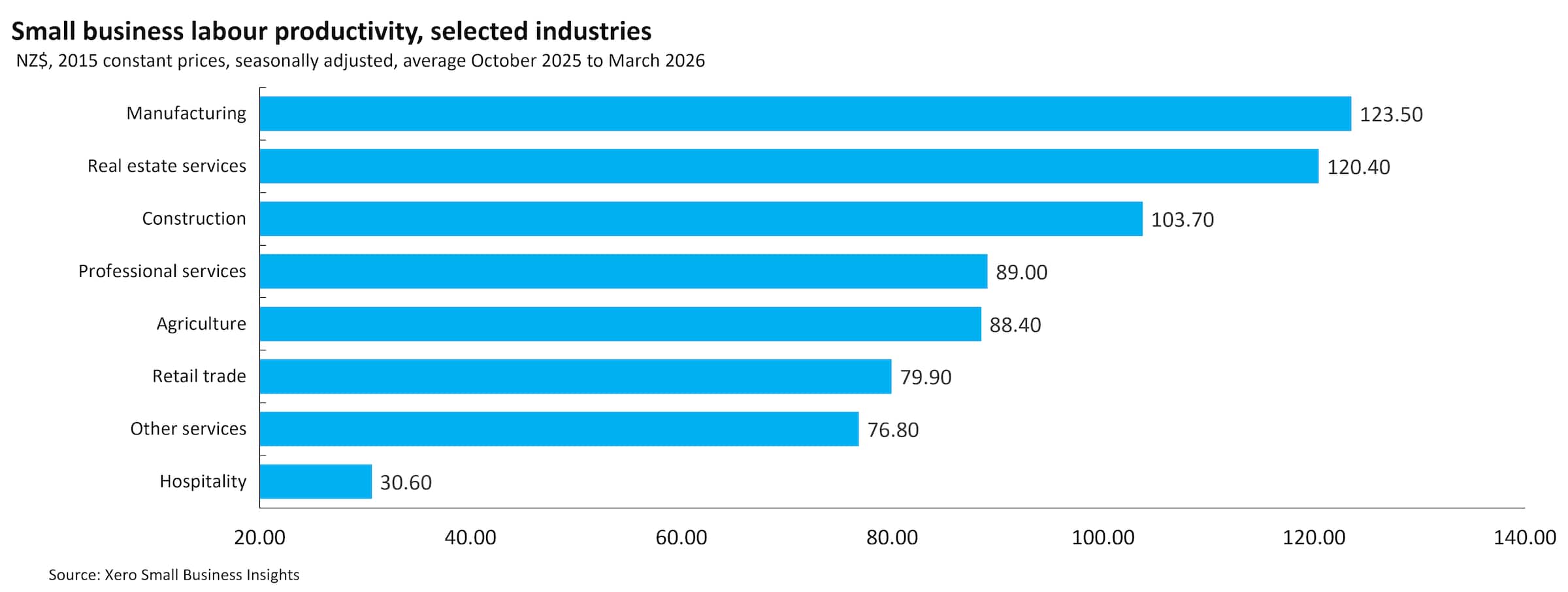
Retail trade recorded the strongest improvement, with productivity rising 9.1% year-on-year over the past six months, significantly outpacing other sectors.
This growth reflects retailers increasing sales without a corresponding lift in hours worked — effectively doing more with the same amount of labour.
Regional differences reflect local economies
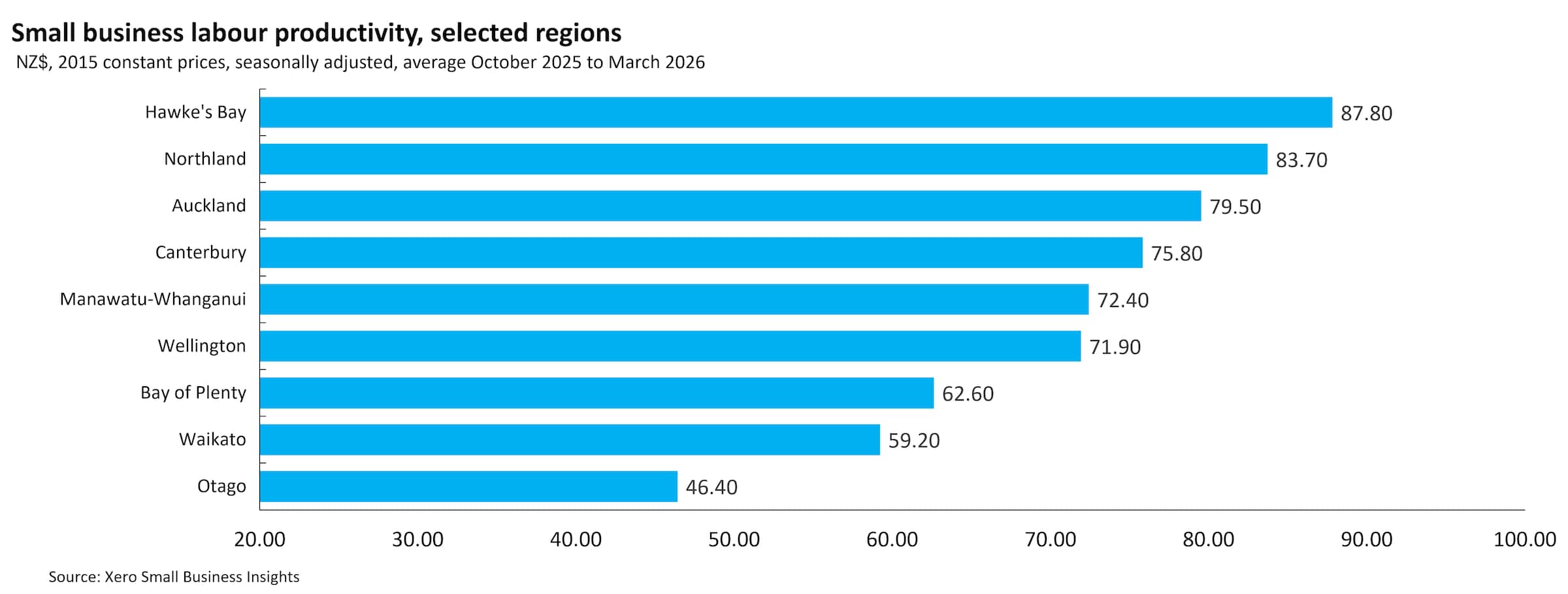
Regional productivity outcomes were also mixed, largely reflecting industry composition.
Manufacturing‑focused Hawke’s Bay recorded the highest productivity levels, while tourism-heavy Otago lagged behind other regions.
Encouragingly, Otago saw the strongest productivity growth over the past six months (+7.4% year-on-year), as tourism continues to recover and help narrow the gap.
“For small business owners, improving productivity isn’t just an economic concept — it’s a practical way to grow profits and lift wages, regardless of wider conditions,” says Snelling.
“There are clear opportunities here. Businesses that invest in the right processes, skills and digital tools are better placed to free up time, focus on customers, and drive growth.”
Focus needed across policy and business
Snelling says improving productivity will require continued focus from both government and business.
“Policy settings that support skills development, infrastructure and digital adoption play a key role in lifting productivity across the economy, while targeted attention in lower-performing sectors such as hospitality could help unlock further gains,” says Snelling.
“We recently released a survey looking at attitudes towards AI for small businesses, and we know they are already leaning into AI and digital tools to save time and work smarter - but confidence remains a real barrier to going further.
“At the same time, small business owners can take practical steps to improve productivity through refining operations and adopting technology. Digital tools — including AI-powered solutions — can automate time-intensive tasks, helping businesses focus more on generating revenue.”
ENDS
Media Contact
Xero New Zealand | Jess Brophy, Director of Communications ANZ | +61 431 268 549 | jess.brophy@xero.com
About Xero
Xero is a global small business platform that helps customers supercharge their business by bringing together the most important small business tools, including accounting, payroll and payments — on one platform. Xero’s powerful platform helps customers automate routine tasks, get timely insights, and connects them with their data, their apps, and their accountant or bookkeeper so they can focus on what really matters. Trusted by millions of small businesses and accountants and bookkeepers globally, Xero makes life better for people in small business, their advisors, and communities around the world. For further information, please visit xero.com.
About Xero Small Business Insights
The aim of Xero Small Business Insights is to create insights to help inform decision makers in support of the small business economy as a whole. The principal source of small business insights in this report is customer data from Xero - a small business platform that supports online accounting and a range of other applications. Xero is a responsible custodian of our customers' sensitive data and does not release any data that could identify individual businesses. The data used is aggregated and anonymised to ensure the privacy of Xero subscribers, and their counterparts.
As part of the program, we publish regular blogs and research notes and deep-dive Special Reports on specific small business topics. These can all be found atxero.com/xerosbi.
Related media and enquiries
For all media enquiries, please contact the Xero media team.
- Media release
Privacy, trust, time: Main barriers preventing Kiwi SME AI adoption
Xero and ASB launch free AI bootcamp programme to upskill Kiwi business owners
- Media release
Xero data: Continued sales growth recorded for Kiwi small businesses
Encouraging signs of recovery seen prior to Middle East conflict
- Media release
Strongest small business sales growth in three years recorded in December
End‑of‑year spending delivers welcome boost to small businesses
Start using Xero for free
Access Xero features for 30 days, then decide which plan best suits your business.