How to measure profitability
Learn to measure gross, operating and net profit margins, with worked Rupiah examples for your small business.

Written by Lena Hanna—Trusted CPA Guidance on Accounting and Tax. Read Lena's full bio
Published Tuesday 6 October 2026
Table of contents
Key takeaways
- Track your gross profit margin, operating profit margin and net profit margin monthly to spot declining trends before they become cash flow problems and give yourself time to adjust pricing or cut costs.
- Calculate profitability using your profit and loss statement by dividing each type of profit (gross, operating or net) by total revenue and multiplying by 100 to get the percentage.
- Compare your margins against industry benchmarks and your own historical performance to understand whether your current profitability levels are healthy for your business type.
- Use declining margins as an early warning signal to take action through three main approaches: increase your prices, reduce your cost of goods sold or cut operating expenses.
What profitability means in small business
Profitability measures how efficiently your business turns revenue into profit. It shows what percentage of your sales you keep after paying costs.
The main profitability metrics are gross profit margin and net profit margin. Each reveals how much revenue remains after different types of expenses.
Here's what different profitability levels can tell you:
- High profitability (fat margins): You keep a large share of revenue as profit. This is generally positive, though it may signal room to lower prices and boost sales volume.
- Low profitability (thin margins): Most of your revenue covers expenses. This could mean costs are too high, prices are too low, or you're competing in a price-sensitive market.
Profit vs profitability and their significant differences
Profit and profitability measure different things:
- Profit: The amount your business keeps after paying expenses
- Profitability: The percentage of revenue you retain versus what you spend
Why does this matter? High profitability only improves your bottom line when paired with strong revenue. You need both healthy margins and solid sales to grow sustainably.
Why measuring profitability matters
Regular profitability tracking reveals your business's true financial health beyond revenue alone. For example, Netflix's 2025 annual report shows revenue grew 16% to US$45.2 billion. Its operating margin rose to 29.5%, up from 26.7% in 2024.
When margins tighten, cash flow often follows, and stress increases. Here's why consistent measurement matters:

- Early warning signs: Spot margin declines before they become cash flow problems
- Pricing confidence: Know whether your prices cover costs and deliver healthy returns
- Cost control: Identify when expenses are eating into profits
- Sustainable growth: Maintain margins that give you breathing room to invest
Margins shift regularly due to factors like raw material costs, energy prices, transport, interest rates and rent. They also show how much of fast-growing revenue a business actually keeps. In fiscal 2026 (year ended 25 January 2026), NVIDIA reported revenue of US$215.9 billion, up 65%.

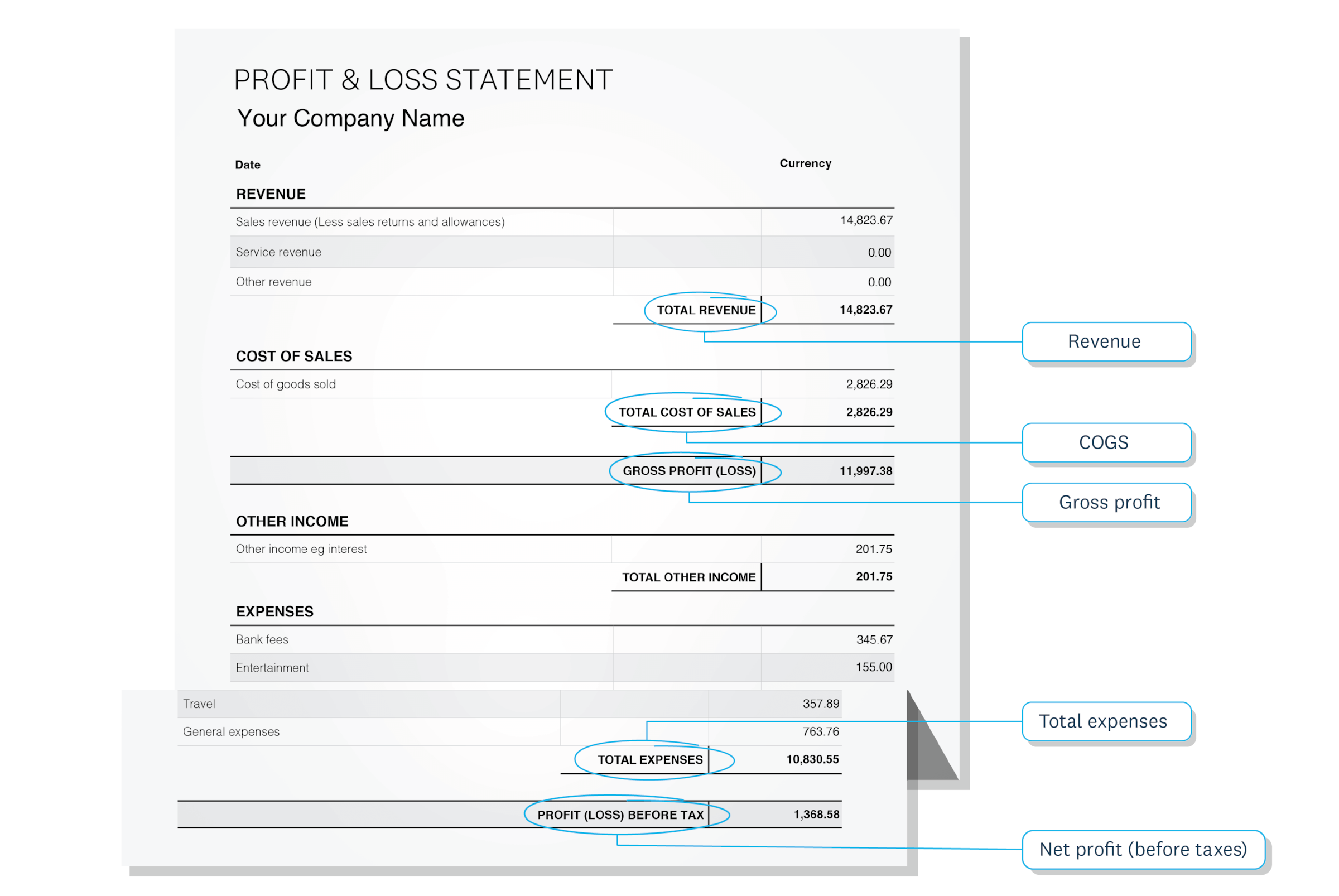
*Net profit can be quoted before or after taxes. If quoting after-tax net profit then you need to also subtract taxes.
Its gross margin under generally accepted accounting principles (GAAP) was 71.1%. That means NVIDIA kept about 71 cents of every revenue dollar after direct costs. Tracking profitability helps you respond before small changes become big problems.
Profitability metrics
Profitability metrics, also called profitability ratios, show how effectively your business converts revenue into profit. The examples below use one business with revenue of Rp1.000.000.000 and cost of goods sold (COGS) of Rp600.000.000. It also has Rp200.000.000 in operating expenses and Rp50.000.000 in interest plus tax.
These are the three key metrics to track:
- Gross profit margin: measures the share of revenue left after COGS, the direct costs like materials, production labour and shipping. The formula is (gross profit ÷ revenue) × 100, where gross profit is revenue minus COGS. Rp1.000.000.000 minus Rp600.000.000 leaves Rp400.000.000 gross profit, a 40% margin that funds your rent, utilities, marketing and administration.
- Operating profit margin: measures what's left after COGS and operating expenses such as rent, salaries and insurance, but before interest and tax. The formula is (operating profit ÷ revenue) × 100, where operating profit is gross profit minus operating expenses. Rp400.000.000 minus Rp200.000.000 leaves Rp200.000.000 operating profit, a 20% margin that shows how efficiently you run your core operations.
- Net profit margin: measures your bottom-line profitability after every cost, including COGS, operating expenses, interest and tax. The formula is (net profit ÷ revenue) × 100, where net profit is revenue minus all expenses. Rp200.000.000 minus Rp50.000.000 leaves Rp150.000.000 net profit, a 15% margin you can reinvest in growth or distribute to owners.
Each metric reveals a different layer of your business's financial health. Operating margin separates day-to-day performance from financing decisions and tax, so it's useful for comparing businesses in the same industry.
Your COGS figure depends on your accounting method. When prices are rising, the last in, first out (LIFO) inventory method gives a higher reported COGS than first in, first out (FIFO). That higher COGS lowers your gross profit margin.
You can quote net profit before or after tax. The example above subtracts tax, so its 15% is an after-tax margin. To run your own numbers, try the gross margin calculator or the net profit margin calculator.
How to use profitability metrics
Calculating profitability is just the first step. Here's how to turn those numbers into action:
- Track trends: Compare margins month-over-month and year-over-year to spot patterns before they become problems
- Benchmark against your industry: Research typical margins for your business type to understand where you stand
- Evaluate pricing: If margins are thin, consider whether your prices cover costs and deliver adequate returns
- Control costs: Identify which expenses are growing faster than revenue and address them early
- Know when to act: Declining margins over two or more periods signal it's time to adjust pricing, cut costs, or both
Regular profitability analysis helps you make informed decisions about pricing, spending and growth investments.
Tools to measure profitability
You'll find the numbers you need for profitability calculations on your profit and loss (P&L) statement. This report shows your revenue, COGS, operating expenses and net profit for any period.
Accounting software generates P&L reports automatically from your transactions. Here's what you can do with Xero:
- Automatic P&L reports: Generate profit and loss statements for any date range
- Real-time margin tracking: View profitability metrics in Xero Analytics
- Built-in calculators: Use the gross margin and net profit margin calculators
- Custom period comparisons: Compare margins month-over-month or year-over-year
If you prefer manual tracking, download an income statement template and enter your figures by hand.
How to manage profitability
Once you've measured your margins, use them to guide business decisions. Here's how:
- Set benchmarks: Identify your target margin and compare against industry norms. An accountant or bookkeeper in your sector can help.
- Track regularly: Measure profitability monthly, and more often when costs change or you're adjusting prices.
- Take action when margins drop: You have three main levers: increase prices, reduce cost of goods sold, or cut operating expenses.
For more strategies, see ways to grow your profits.
Measure profitability with confidence
Measuring profitability gives you the visibility to make confident business decisions. By tracking your gross, operating and net profit margins regularly, you'll spot trends early and act before small issues become big problems.
Your daily transactions automatically generate these metrics in Xero. You can view margins in real-time dashboards, compare periods and access insights anytime.
Get one month free and start measuring profitability with confidence.
FAQs on measuring profitability
Here are answers to common questions about measuring and understanding profitability.
What's a good profit margin for a small business?
A good net profit margin varies widely by industry, business model and size, so there's no single target. Compare your margins to businesses in your sector for a meaningful benchmark.
How often should I measure profitability?
Measure profitability monthly at minimum. Track more frequently when costs are volatile, you're testing new prices, or your business is growing rapidly.
What are profitability ratios?
Profitability ratios compare your profit to your revenue or resources, and include gross, operating and net profit margin. They also include return ratios such as return on assets (ROA) and return on equity (ROE), which show the profit you earn on what's invested.
What's the difference between profitability ratios and liquidity ratios?
Profitability ratios measure how efficiently you turn revenue into profit. Liquidity ratios measure your ability to pay short-term obligations. Both are important but track different aspects of financial health.
Can my business be profitable but still have cash flow problems?
Yes. Profit is calculated on an accrual basis, while cash flow reflects actual money movement. A Yale School of Management case on small business cash describes how 30% growth used up so much cash that the owner felt uneasy. A profitable sale on 60-day payment terms doesn't help pay bills due today.
What KPIs should I track alongside profitability?
Track revenue growth, cash flow, customer acquisition cost, and operating expenses as a percentage of revenue. Profitability is one piece of your overall financial picture.
Disclaimer
Xero does not provide accounting, tax, business or legal advice. This guide has been provided for information purposes only. You should consult your own professional advisors for advice directly relating to your business or before taking action in relation to any of the content provided.
Start using Xero for free
Access Xero features for 30 days, then decide which plan best suits your business.