What is a pro forma invoice? How and why to use it
Learn when to use a proforma invoice to set clear terms, speed approvals, and protect cash flow.

Written by Jotika Teli—Certified Public Accountant with 24 years of experience. Read Jotika's full bio
Published Monday 30 March 2026
Table of contents
Key takeaways
- Use pro forma invoices to support customer needs like securing financing, clearing customs, or meeting procurement requirements, but remember they aren't legally binding and don't request payment.
- Label your document clearly as 'Pro Forma Invoice' at the top and include all standard invoice details except don't record it in your accounts receivable since the sale isn't final.
- Send pro forma invoices only after customers accept your quote and request one, typically for international transactions where they need to calculate import duties or satisfy internal processes.
- Wait for customer confirmation before processing the sale or shipping products, as pro forma invoices are preliminary documents that can still be changed or cancelled.
What is a pro forma invoice?
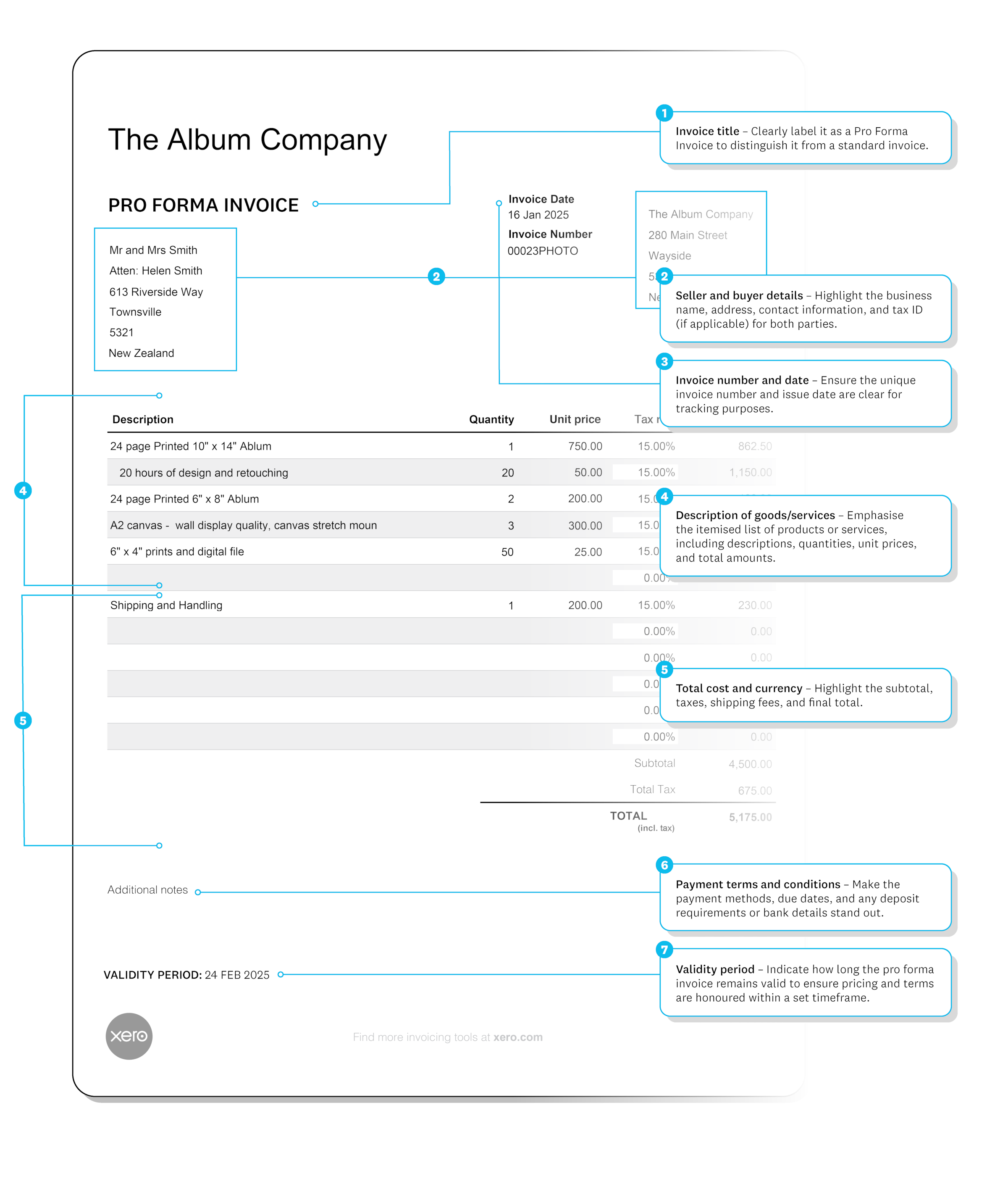
A pro forma invoice is a preliminary document sent to a buyer before a sale is final. It outlines the products, quantities, and prices involved in a transaction, giving both parties a clear picture of what to expect.
Unlike a standard invoice, a pro forma invoice isn't a request for payment. It has no invoice number, no due date, and isn't recorded as accounts receivable in your books.
How is a pro forma invoice different from other invoices (and quotes)?
A pro forma invoice shouldn't be confused with a sales invoice, commercial invoice, or quote. Here's how they differ:
- Sales invoice: Requests payment after a sale is final. It includes a due date and records as accounts receivable. A pro forma invoice is sent before the sale and doesn't request payment.
- Commercial invoice: Serves as a legal document exchanged between importers and exporters that finalises a sale. It includes tariff information and buyer/seller responsibilities. A pro forma invoice helps estimate customs duties but doesn't confirm the transaction. Some countries mandate their submission before granting an import licence to ensure compliance with local trade policies.
- Quote: Outlines proposed prices during negotiations. A pro forma invoice typically comes after agreement and supports administrative tasks like customs clearance, financing, or procurement.
Three common reasons for issuing a pro forma invoice
Businesses use pro forma invoices to support specific customer needs and administrative requirements. Here are the most common reasons:
- Financing arrangements: Buyers use pro forma invoices to confirm order costs before securing funding for the purchase.
- Customs clearance: Pro forma invoices state the value of imported goods, which customs officials require to clear shipments in many countries.
- Procurement compliance: Some buyers request pro forma invoices as part of their internal processes because they're considered more definite than quotes.
What should a pro forma invoice look like?
A pro forma invoice looks like a regular invoice but must be clearly labelled 'Pro Forma Invoice' at the top. Include the following standard information:
- Seller and buyer details: Include names, addresses, and contact information for both parties.
- Product information: Include description, quantities, and unit prices for each item.
- Sale terms: Include payment terms, delivery conditions, and any applicable warranties. For international trade, this may include terms like FOB (Free on Board) or CIF (Cost, Insurance, and Freight), which provide a standardised framework that helps reduce misunderstandings.
- Reference number: Add a tracking number for easy retrieval (not an official invoice number).
For international transactions, importers may also require weights, measurements, and shipping costs.
When to send a pro forma invoice
Send a pro forma invoice when a customer requests one, typically after they've accepted your quote and both parties are committed to the deal. Common reasons customers request them include:
- calculating import duties before shipment
- satisfying internal procurement requirements
- securing financing for the purchase
If your customer is an importer, ask whether they need a pro forma invoice before proceeding.
Important: The sale isn't final at this stage. Get confirmation from your customer before processing the sale, shipping products, or issuing a final invoice.
How to create a pro forma invoice
Creating a pro forma invoice is straightforward. Follow these steps:
- Start with a standard invoice template and complete all required fields.
- Label the document 'Pro Forma Invoice' clearly at the top so your customer knows it's not a final invoice.
- Add a reference number for tracking purposes (this isn't an official invoice number).
- Include buyer and seller details, product descriptions, prices, and sale terms.
- Don't enter it into your accounts receivable ledger since the sale isn't confirmed yet.
- If you're using accounting software like Xero, check how to create a pro forma invoice without accidentally recording it as income.
Simplify your invoicing with Xero
Understanding when and how to use pro forma invoices helps you meet customer requirements, support international transactions, and keep your accounting accurate.
You can manage all your invoice types simply with Xero. Create professional invoices, track payments, and keep your books organised in one place. Whether you're sending quotes, pro forma invoices, or final sales invoices, you can stay on top of your cash flow.
Ready to streamline your invoicing? Get one month free.
FAQs on pro forma invoices
Here are answers to common questions about pro forma invoices and how to use them.
Is a pro forma invoice legally binding?
No, pro forma invoices aren't legally binding. They're good-faith estimates created before you deliver products or services, not formal requests for payment.
Can a pro forma invoice be cancelled?
Yes, you can cancel or discard a pro forma invoice at any time. Since it's not recorded in your accounts, there's no formal cancellation process required if the sale doesn't proceed.
Can you turn a pro forma invoice into a commercial invoice?
No, they serve different purposes. A commercial invoice is a legal document that finalises an international sale and includes specific regulatory details for customs brokers, freight forwarders, and banks. You'll need to create a separate commercial invoice once the sale is confirmed.
Should you pay a pro forma invoice?
Wait for an official sales invoice before making payment, as prices and terms may still change.
What are the advantages of using pro forma invoices?
Pro forma invoices offer several benefits for your business:
- Clear expectations: Confirm products, prices, and terms with buyers before finalising the sale.
- Customs compliance: Provide the documentation importers need to clear goods through customs.
- Flexibility: Make changes to quantities, prices, or terms without affecting your accounting records.
- Customer requirements: Meet the needs of importers, procurement departments, and buyers arranging finance.
Related content
What is an invoice?
Get the lowdown on invoices.
How to send an invoice
Find out when and how to send an invoice.
How to make an invoice
Let’s walk through the process of making an invoice.
Disclaimer
Xero does not provide accounting, tax, business or legal advice. This guide has been provided for information purposes only. You should consult your own professional advisors for advice directly relating to your business or before taking action in relation to any of the content provided.
Start using Xero for free
Access Xero features for 30 days, then decide which plan best suits your business.