Accounting period
Learn what an accounting period is, its main types, and how they work for South African businesses.
Published Friday 24 July 2026
Table of contents
Key takeaways
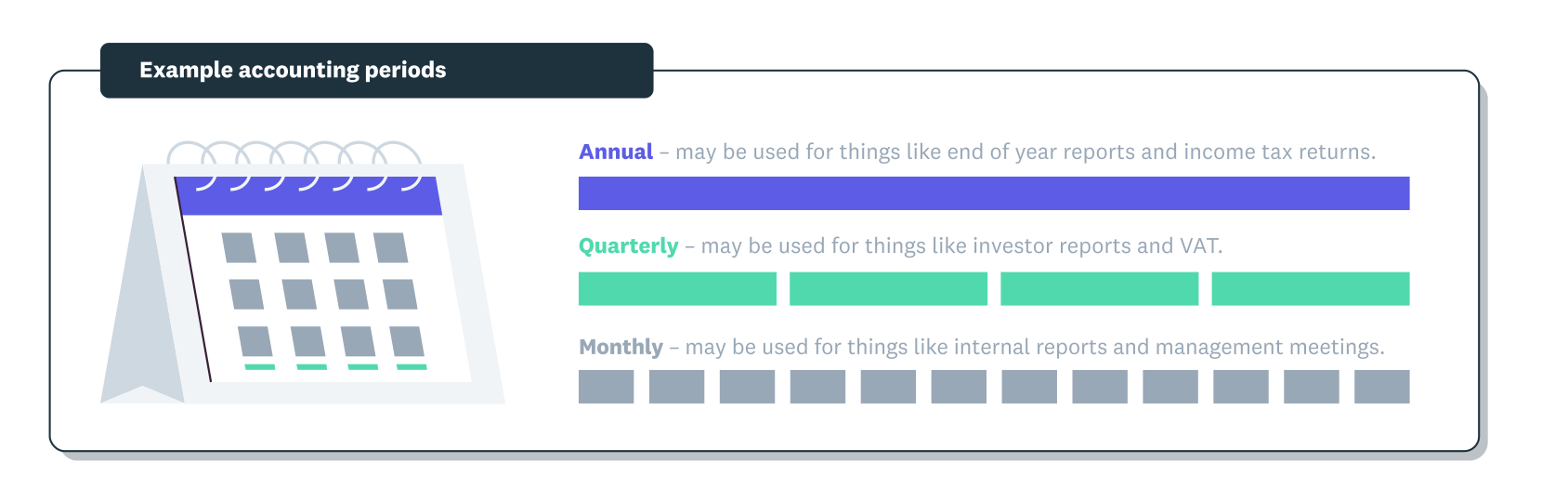
Annual accounting periods don’t have to start in January. Nor do monthly accounting periods have to start on the first of the month.
- An accounting period is any time frame you use to record transactions and prepare financial reports, and it's often 12 months long.
- Common periods include the calendar year, a financial year, quarters, and months, so you can track performance at the level that suits your business.
- In South Africa, SARS refers to your income tax window as a year of assessment, while VAT is reported in separate tax periods.
- Closing each period lets you produce financial statements and compare your results over time.
What is an accounting period?
An accounting period is any time frame used for financial reporting. Transactions that fall within a given date range form part of the statements or reports for that accounting period.
An accounting period, or reporting period, is often 12 months. You may run different accounting periods for various tasks. For example, you might have one for income tax, another for VAT, and others for internal reporting.
Handy resources
Advisor directory
You can search for experts in our advisor directory
Xero Small Business Guides
Discover resources to help you do better business
Try Xero for free
Try Xero’s fast, simple, powerful online accounting software for your small business
Disclaimer
This glossary is for small business owners. The definitions are written with their requirements in mind. More detailed definitions can be found in accounting textbooks or from an accounting professional. Xero does not provide accounting, tax, business or legal advice.
Why accounting periods matter
Handy resources
Advisor directory
You can search for experts in our advisor directory
Xero Small Business Guides
Discover resources to help you do better business
Try Xero for free
Try Xero’s fast, simple, powerful online accounting software for your small business
Accounting periods give your numbers a clear start and end, so you can measure how the business is doing. Without them, you'd have no consistent way to compare one stretch of trading with the next.
A defined period also lets you report to the people who need it. That includes SARS for tax, a bank or investor reviewing your books, and you as the owner making day-to-day decisions.
Types of accounting periods
Businesses use different periods depending on what they're measuring and how often they report. Common accounting periods include:
- the calendar year, which runs from 1 January to 31 December
- a financial year, also called a fiscal year, which is any 12-month cycle a business chooses
- quarters, which split a year into 4 blocks of 3 months each
- months, which suit closer tracking of cash flow and performance
- weekly variants, such as the 52/53-week year and the 4-4-5 calendar used by some retailers
Calendar year vs financial year
A calendar year and a financial year both cover 12 months, but they don't have to start on the same date. This is the distinction that trips up the most people.
A calendar year always runs from 1 January to 31 December. A financial year can start in any month you choose, so a business might run its financial year from 1 March to the end of February the next year.
Accounting periods and South African tax
Your accounting period sits at the centre of how you report tax in South Africa. A few local terms are worth knowing so your reporting lines up.
South African companies set a financial year, usually 12 months long. The South African Revenue Service (SARS) refers to the period it assesses your income as a year of assessment.
If you're registered for value-added tax (VAT), you report it in separate tax periods rather than once a year. Your VAT periods can run on a different cycle to your financial year, so it helps to track them side by side.
Accounting principles that rely on periods
Several core accounting principles only work when you have a defined period to measure against. They decide which transactions belong to which reporting window. These principles include:
- accrual basis: recording income and expenses when they're earned or incurred, not when cash changes hands
- matching principle: reporting expenses in the same period as the income they helped generate
- revenue recognition: recording revenue in the period you actually earn it
What happens at the end of an accounting period
At the end of an accounting period, you close the books so the figures are final. This is the point where the period's numbers stop changing.
You reconcile your accounts, check that income and expenses are recorded in the right period, and then prepare your reports. The result is a set of financial statements that show how the business performed over that time frame.
Example accounting periods
Accounting periods are flexible, so they don't all follow the same start date. Here's a simple example.
Annual accounting periods don't have to start in January. Nor do monthly accounting periods have to start on the first of the month.
Stay on top of your accounting periods with Xero
Keeping each accounting period tidy is easier when your records update as you go. Xero brings your transactions, reconciliation, and reports together in one place, so closing a period doesn't turn into a year-end scramble.
You can see where a period stands at any time and pull the reports you need in a few clicks. When you're ready to get organised, you can get one month free on a plan that suits your business.
FAQs on accounting periods
Here are some frequently asked questions about accounting periods to help you apply the basics to your own business.
Can an accounting period be shorter than 12 months?
Yes, a period can be shorter, for example when a business starts partway through the year or changes its financial year-end. These shorter windows are often called stub periods.
Can I change my company's financial year?
You can change your financial year-end, though you'll usually need to notify SARS and follow the relevant company rules. It's worth checking with your accountant before you make the change.
Is an accounting period the same as a tax year?
They often line up, but they can differ. Your financial year is set for reporting, SARS uses a year of assessment for income tax, and VAT follows its own tax periods.
Why do some businesses use a 4-4-5 calendar?
Retailers use it so each period ends on the same weekday, which makes week-to-week comparisons cleaner. It splits a quarter into 3 months of 4, 4, and 5 weeks.
What's a reporting period?
It's another name for an accounting period, the window a set of financial reports covers. A business can run several at once for different purposes.